
George Orwell’s chilling dystopian novel Nineteen Eighty-Four introduced the concept of Newspeak, a totalitarian government’s engineered language designed to control thought by restricting the range of expression. In the world of Oceania, Newspeak wasn’t merely a simplified vocabulary; it was a psychological weapon aimed at making dissident thought impossible by removing the very words needed to conceive of rebellion or freedom. While Orwell’s vision was a stark warning against political extremism, the principles underpinning Newspeak offer a profoundly insightful lens through which to examine modern brand strategy, corporate identity, and marketing communications.
In the contemporary landscape, where brands strive to shape narratives, influence perceptions, and cultivate loyal communities, the echoes of Newspeak’s linguistic manipulation can be surprisingly resonant. From the deliberate simplification of complex concepts to the crafting of exclusive jargon and the artful use of euphemism, brand communications often employ strategies that, while not inherently malicious, share a structural similarity with the linguistic control mechanisms described by Orwell. This article delves into the core tenets of Newspeak and explores how its principles manifest in the strategic creation and deployment of brand language, examining the ethical implications and the pursuit of authentic communication in a world saturated with carefully constructed messages.
The Core Principles of Newspeak: Linguistic Control and Thought Manipulation
At its heart, Newspeak was a tool of absolute control, meticulously crafted to align thought with the Party’s ideology. Its effectiveness lay in a few key principles that, when viewed through a branding lens, reveal fascinating parallels with modern communication strategies.
The Eradication of Nuance and Synonymy
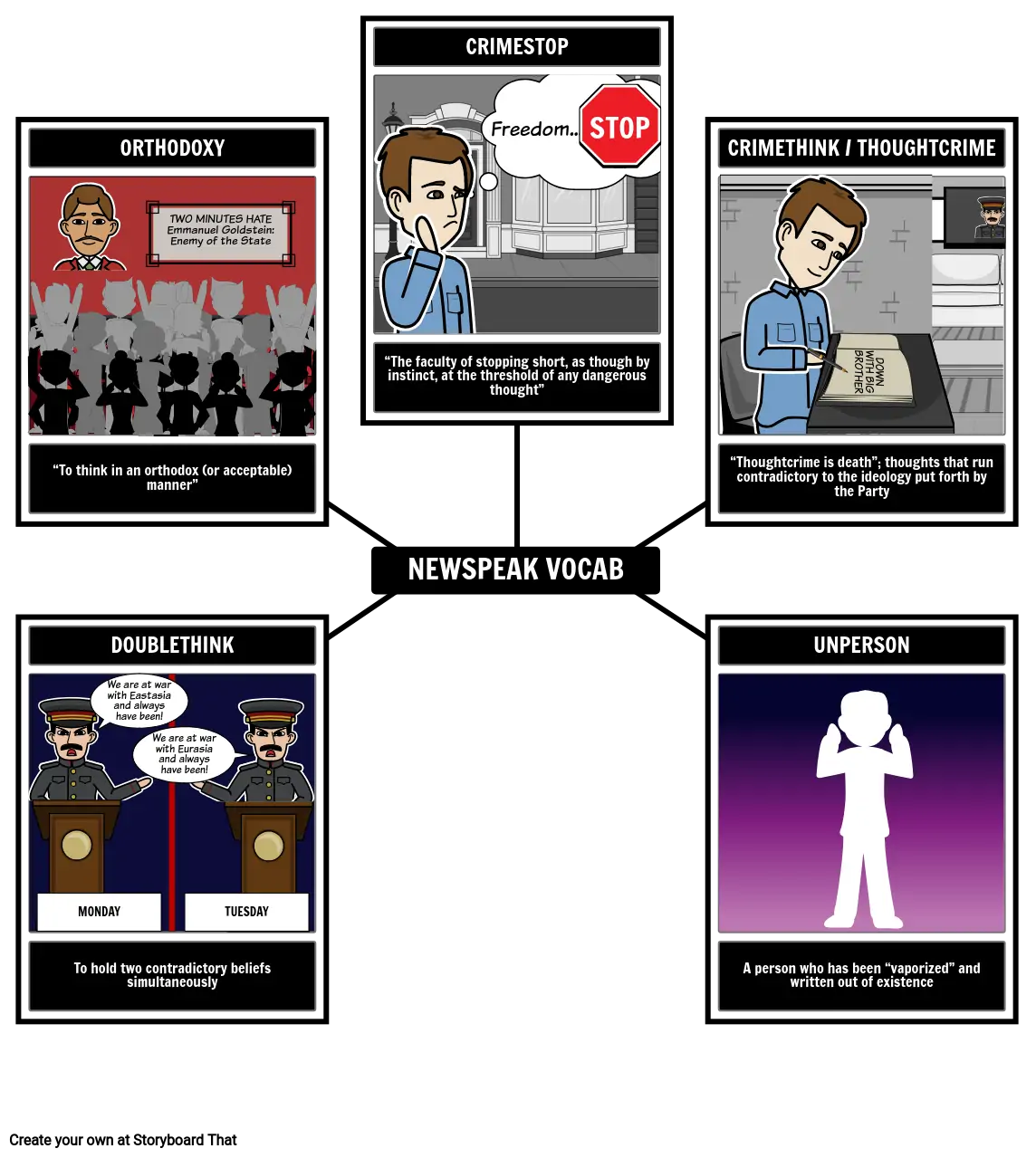
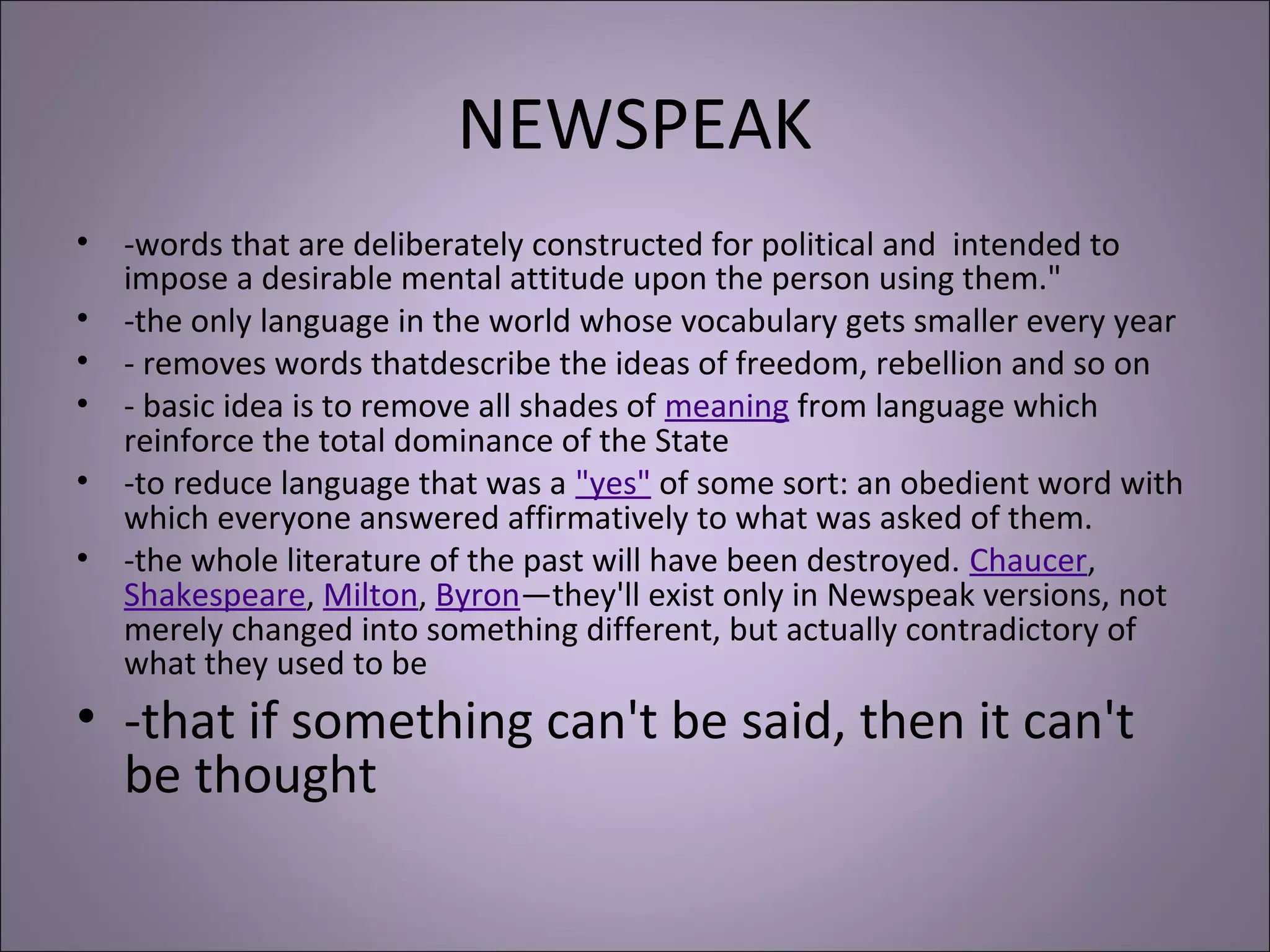
One of Newspeak’s primary objectives was the reduction of vocabulary. By systematically eliminating synonyms and antonyms, and by collapsing complex ideas into single, often crude, terms, Newspeak aimed to make nuanced thought impossible. For instance, words like “free” were retained only in contexts like “the dog is free of fleas,” not “political freedom.” The objective was to eliminate the very concept of individual liberty from the collective consciousness.
In brand strategy, we often see a similar drive towards extreme simplification. While sometimes born of a desire for clarity and accessibility, this simplification can also strip away nuance. Brands aim for pithy slogans, easily digestible soundbites, and a streamlined message that cuts through noise. However, this pursuit of simplicity can inadvertently flatten complex realities, presenting a one-dimensional view of a product, service, or corporate mission. Consider how intricate technological innovations are often reduced to a single “magical” benefit, or how complex social issues a brand purports to address are distilled into a catchy hashtag. While necessary for communication, such reductionism can limit deeper understanding or critical engagement, much like Newspeak curtailed the range of thought.
Doublethink and the Creation of Contradictory Realities
“Doublethink” is arguably the most insidious aspect of Newspeak, requiring Party members to simultaneously hold two contradictory beliefs and accept both as true. The Ministry of Truth, for example, engaged in continuous historical revisionism, yet citizens were expected to accept the altered past as always having been true, while also remembering the original version. This mental gymnastics was essential for maintaining the Party’s infallibility.
Brands, too, sometimes navigate contradictory narratives or present an idealized version of their reality that stands in stark contrast to observable facts. This isn’t necessarily deliberate malice but can arise from marketing hype clashing with operational realities, or aspirational branding diverging from actual corporate practices. A brand might champion sustainability while its supply chain practices are questionable, or promote inclusivity while its internal culture struggles with diversity. The sophisticated consumer is often presented with these contradictions and, not unlike the citizens of Oceania, is subtly encouraged to reconcile them or simply ignore the dissonance in favor of the curated brand image. Managing stakeholder perceptions amidst conflicting truths requires a delicate balance, often verging on a form of corporate doublethink, where the brand narrative must simultaneously acknowledge and gloss over inconvenient realities.
The Unpersoning of Undesirable Concepts
Newspeak also functioned by removing words associated with rebellious or undesirable concepts. If the word for “revolution” or “individualism” ceased to exist, the very idea of these concepts would eventually wither away. This pre-emptive linguistic cleansing was a powerful way to control future actions by controlling current thought.
In brand management, we observe a similar, albeit less totalitarian, tendency to “unperson” undesirable terms or associations. Crisis communication often involves swift efforts to remove negative keywords from online search results, distance the brand from controversial figures, or actively reframe incidents using sanitized language. Terms that highlight ethical lapses, environmental damage, or labor exploitation are meticulously avoided or replaced with euphemisms. The goal is to prevent any linguistic pathway that could lead consumers to associate the brand with negative ideas. Furthermore, brands actively curate the language used by their communities, often setting guidelines for online forums or social media interactions to steer conversation away from critical or potentially damaging topics, thus attempting to control the “lexicon” of their brand sphere.
Newspeak in Modern Brand Strategy: Crafting the Corporate Lexicon
Beyond these foundational principles, the practical application of Newspeak offers a framework for understanding how brands meticulously craft their language to achieve strategic objectives, from market differentiation to internal culture building.
Simplifying Language for Mass Consumption
Modern marketing often champions simplicity. Complex technologies are explained with accessible metaphors, financial instruments are made “user-friendly,” and intricate services are presented as effortless solutions. While beneficial for breaking down barriers to entry and expanding market reach, this simplification can sometimes border on obfuscation.
Consider the prevalence of buzzwords and jargon within specific industries – “synergy,” “disruptive innovation,” “blockchain solutions,” “AI-powered analytics,” “optimizing ecosystems.” These terms, while seemingly conveying expertise, often serve to create an illusion of advanced understanding without necessarily providing concrete, actionable insights. For those outside the inner circle, such language can be intimidating, implying a sophistication that is exclusive and thus desirable. For those within, it becomes a shared lexicon, a new “Newspeak” that reinforces group identity and distinguishes them from outsiders. The risk, however, is that this specialized language becomes a barrier to genuine understanding and critical evaluation, much like Newspeak reduced citizens’ ability to articulate complex thoughts.
The Power of Euphemism and Rebranding Unpopular Truths
Newspeak was adept at using euphemism to mask harsh realities. “Joycamp” was a forced labor camp, and the Ministry of Peace waged war. This linguistic whitewashing made unpleasant truths more palatable, reducing the emotional and critical impact of genuine suffering or oppression.
Brands frequently employ euphemism to soften blows or rebrand unpopular truths. “Downsizing” sounds less harsh than “layoffs.” “Right-sizing” suggests efficiency rather than job cuts. “Enhanced user experience” can sometimes mask increased data collection. “Sustainable harvesting” might gloss over significant environmental impact. The strategic use of such language isn’t just about sounding polite; it’s about managing public perception and minimizing negative associations. By shifting the semantic framing, brands can subtly alter the emotional resonance and perceived gravity of various situations, guiding consumers towards a preferred interpretation. This re-languaging can be a powerful tool for reputation management, but it also treads a fine ethical line between persuasion and deliberate misdirection.
Cultivating Brand Loyalty through Exclusive Terminology
In Nineteen Eighty-Four, Newspeak solidified the Party’s grip by creating an exclusive linguistic domain. Those who spoke it understood the world in the Party’s terms, reinforcing their loyalty and isolating them from any alternative worldview.
Many successful brands cultivate a similar sense of belonging and exclusivity through their own unique lexicon. Apple’s “ecosystem” of devices, “iCloud,” “FaceTime,” and “AirDrop” are not just product names; they form a shared vocabulary that users internalize. Similarly, specific gaming communities, fashion brands, or tech startups often develop their own jargon, acronyms, and inside jokes. This exclusive terminology fosters a strong sense of community, makes members feel like insiders, and strengthens brand loyalty. It creates a subtle barrier to entry for non-users and reinforces the unique identity of the brand and its adherents. This “brand-speak” can be a powerful differentiator, making the brand feel more like a lifestyle or a club than just a product or service.
The Ethics of Linguistic Control: Balancing Persuasion and Manipulation
The examination of Newspeak’s principles within brand strategy naturally leads to a critical discussion about the ethics of communication. Where does persuasive language end and manipulative language begin?
Transparency vs. Obfuscation
A key ethical challenge for brands is balancing the need to simplify complex information with the imperative to remain transparent. While marketing aims to highlight benefits and minimize drawbacks, there’s a point where simplification becomes obfuscation, and strategic omission becomes misleading. Truly ethical brand communication strives for clarity, even when discussing less flattering aspects, understanding that long-term trust is built on honesty rather than carefully constructed illusions. Brands that deliberately use vague or technical language to hide negative information or mask questionable practices ultimately erode consumer trust and risk significant reputational damage.
Consumer Empowerment and Critical Decoding
In a world saturated with carefully crafted brand messages, the onus also falls on consumers to develop critical decoding skills. Understanding the strategic intent behind brand language – recognizing euphemisms, questioning simplifications, and identifying exclusive jargon – empowers individuals to make more informed choices. This involves not just understanding what is being said, but how it’s being said, and why specific words are chosen over others. Educating oneself on industry-specific “Newspeak” and applying a healthy skepticism to marketing claims are vital tools for navigating the modern information landscape.
Brand Authenticity and Long-Term Trust
While short-term marketing gains might be achieved through linguistic manipulation, sustained brand success is increasingly tied to authenticity and genuine connection. Brands that speak truthfully, admit imperfections, and align their language with their actions tend to build stronger, more resilient relationships with their audience. Consumers are becoming more adept at detecting inauthenticity, and a brand’s “Newspeak” that rings hollow can quickly lead to distrust and disengagement. Ethical branding prioritizes clear, empathetic, and consistent communication that builds a foundation of trust, rather than relying on linguistic tricks that may alienate in the long run.
Beyond the Buzzwords: Building Brands on Substantial Meaning
The parallels with Newspeak serve as a powerful reminder that language, in the hands of any entity, holds immense power – not just to inform, but to shape perception, influence thought, and control narratives.
The Perils of Semantic Overload
Just as Newspeak aimed to create a rigid, controlled environment, an over-reliance on buzzwords, jargon, and overly simplified messaging can lead to semantic overload. When every brand claims to be “innovative,” “disruptive,” or “customer-centric,” these terms lose all meaning. Consumers become fatigued by the constant barrage of identical-sounding claims, leading to a general distrust of corporate language. This dilution of meaning ultimately harms the very brands attempting to differentiate themselves. The absence of specific, concrete language creates a void that consumers fill with skepticism.
Crafting a Narrative of Value, Not Just Vocabulary
Instead of merely crafting catchy phrases or exclusive terminology, truly impactful brand strategy focuses on articulating genuine value and purpose. This means moving beyond superficial linguistic cleverness to communicate the core benefits, the unique selling proposition, and the authentic story behind the brand. It’s about demonstrating, through consistent action and clear communication, why a brand exists and what real problems it solves, rather than just using a specialized vocabulary to sound important. A brand’s “language” should be an extension of its true identity and mission, not a deceptive mask.

The Future of Brand Language: Clarity, Empathy, and Shared Understanding
The lessons from Newspeak, when applied to the brand context, highlight the urgent need for a more conscious and ethical approach to communication. The future of brand language should lean towards clarity, empathy, and the fostering of shared understanding, rather than linguistic control. This involves:
- Plain Language: Prioritizing straightforward, accessible communication that genuinely informs.
- Authenticity: Ensuring brand language reflects actual practices, values, and commitments.
- Dialogue, Not Monologue: Engaging in two-way communication that values consumer feedback and diverse perspectives.
- Ethical Storytelling: Crafting narratives that inspire and connect, without resorting to manipulation or misdirection.
In conclusion, while George Orwell’s “Newspeak” depicted a terrifying tool of political oppression, its underlying principles offer a profound analytical framework for understanding the mechanisms of linguistic control in contemporary brand strategy. From the simplification of language to the use of euphemism and the creation of exclusive lexicons, brands subtly (and sometimes not so subtly) shape our perceptions and influence our thoughts. Recognizing these parallels is not to accuse all brands of totalitarian intent, but rather to highlight the immense power of language in shaping reality. For brands, this recognition underscores an ethical imperative for transparency and authenticity. For consumers, it demands vigilance and critical decoding, ensuring that we remain active participants in understanding the world, rather than passive recipients of a carefully constructed brand-speak. The pursuit of clear, honest, and meaningful communication remains a vital challenge in an age saturated with crafted messages, moving us towards a future where language empowers, rather than controls, thought.
aViewFromTheCave is a participant in the Amazon Services LLC Associates Program, an affiliate advertising program designed to provide a means for sites to earn advertising fees by advertising and linking to Amazon.com. Amazon, the Amazon logo, AmazonSupply, and the AmazonSupply logo are trademarks of Amazon.com, Inc. or its affiliates. As an Amazon Associate we earn affiliate commissions from qualifying purchases.