
For the majority of households, a vehicle represents the second-largest financial investment after a primary residence. Yet, unlike real estate, which traditionally appreciates over time, automobiles are depreciating assets that require sophisticated management to preserve capital. Understanding the precise answer to the question “What is my car worth?” is not merely a matter of curiosity; it is a fundamental component of proactive personal finance. For nearly a century, the Kelley Blue Book (KBB) has served as the gold standard for vehicle valuation, providing the data necessary for consumers to make informed decisions regarding trade-ins, private sales, and insurance settlements.

In an era of significant market volatility, where used car prices have defied historical trends, leveraging financial tools like KBB is essential for maintaining a healthy balance sheet. By treating a vehicle as a strategic asset rather than a sunk cost, individuals can optimize their timing for upgrades, minimize the impact of depreciation, and ensure they are not leaving thousands of dollars on the table during a transaction.
The Financial Architecture of Vehicle Valuation
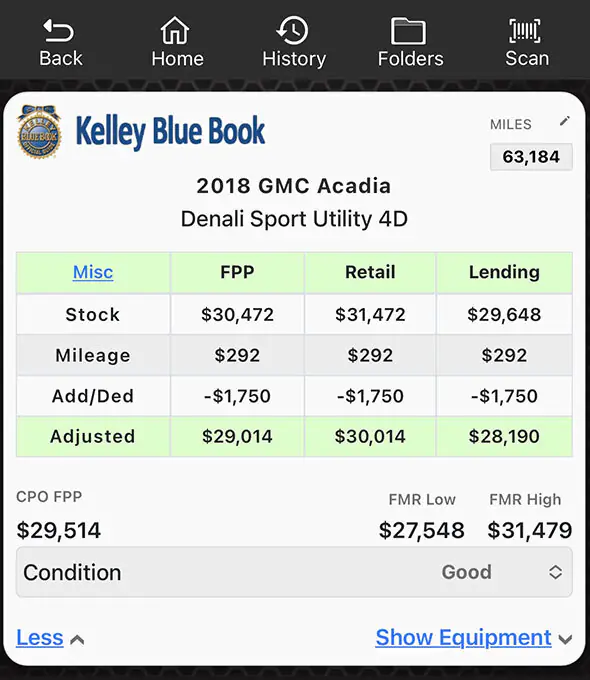
To use Kelley Blue Book effectively, one must first understand the financial architecture behind its numbers. KBB does not simply pull numbers from a vacuum; it utilizes massive datasets including actual wholesale auctions, dealer sales, and private party transactions across various geographic regions. This data is then processed through proprietary algorithms to produce a “Fair Market Range.”
Deciphering the Valuation Types
When a consumer asks what their car is worth, they are actually asking for one of three distinct financial figures, each serving a different purpose in a personal finance strategy:
-
Trade-In Value: This is the amount a dealership is willing to credit toward your next purchase. Financially, this is usually the lowest figure because the dealer must account for reconditioning costs and a profit margin for resale. However, in many jurisdictions, trading in a vehicle offers a significant tax advantage, as the sales tax on the new purchase is only calculated on the “net” price after the trade-in credit.
-
Private Party Value: This is what you can expect to receive when selling the vehicle to another individual. This figure is invariably higher than the trade-in value, often by 10% to 20%. From a wealth-building perspective, selling private party is the superior choice, provided the seller has the time and risk tolerance to manage the transaction.
-
Suggested Retail Value: This is the price a consumer should expect to pay at a dealership. This is the highest number and includes the “dealer premium”—the cost of inspections, warranties, and the convenience of a physical lot.
The Impact of Condition and Mileage on Equity
The “condition” of a vehicle is a subjective measure that carries objective financial consequences. KBB categorizes cars into Fair, Good, Very Good, and Excellent. A common financial mistake is overestimating a vehicle’s condition; statistics show that very few cars truly qualify as “Excellent.” Understanding the threshold between “Good” and “Fair” can mean a difference of $1,500 to $3,000 in your net worth calculations. Accurate reporting is the first step in honest financial planning.
Navigating the Spectrum of Trade-In vs. Private Party Sales
Choosing between a trade-in and a private party sale is a classic exercise in opportunity cost. In personal finance, time is money, and the convenience of a trade-in often offsets the lower valuation for those with high-income careers or busy schedules. However, for those looking to maximize their liquid capital, the private party route is the clear winner.
The Math of the Trade-In Tax Credit
In most U.S. states, the “trade-in tax credit” is a powerful financial lever. For example, if you are buying a $40,000 car and trading in a vehicle worth $20,000, you only pay sales tax on the remaining $20,000. In a state with an 8% sales tax, this saves you $1,600. If your KBB private party value is only $1,000 higher than the trade-in offer, you are actually financially better off trading the car in. Calculating the “break-even” point between the tax savings and the higher private sale price is a hallmark of sophisticated financial management.
The Instant Cash Offer (ICO)
KBB has evolved from a static guide to a dynamic financial tool through its “Instant Cash Offer” feature. This provides a fixed price that participating dealers are contractually obligated to pay for your car. This serves as a “liquidity floor”—a guaranteed minimum value that can be used as leverage when negotiating with other buyers or dealerships. Having a firm cash offer in hand changes the power dynamic of a transaction from one of speculation to one of informed negotiation.

Integrating Car Equity into Your Comprehensive Financial Plan
A car should never be viewed in isolation. It is a component of your total assets. Knowing your car’s worth allows you to manage “negative equity”—a situation where you owe more on a car loan than the vehicle is worth.
Managing the “Underwater” Loan
Being “underwater” or “upside down” on a car loan is a significant financial risk. If the car is totaled in an accident, insurance companies generally use KBB-style valuations to determine the payout. If that payout is $15,000 but your loan balance is $20,000, you are suddenly liable for a $5,000 “deficiency balance” on an asset you no longer own. Regularly checking your KBB value against your loan balance allows you to see if you need to make principal-only payments to bridge the gap and protect your credit score.
The Role of Depreciation in Retirement Planning
While we don’t often think of cars in the context of retirement, the “cost of ownership” over 40 years of driving can be the difference between a comfortable retirement and an extra five years of work. By using KBB to track the “sweet spot” of the depreciation curve—typically years three through six of a vehicle’s life—consumers can strategically exit a vehicle before repairs become costly and while residual value remains high. This “cycle management” keeps more money in investment accounts and less in a depreciating driveway asset.
Strategic Selling: Timing the Market for Maximum Return
Market timing is notoriously difficult in the stock market, but in the automotive world, it follows predictable seasonal and economic patterns. KBB data reflects these shifts, allowing savvy owners to sell when demand is highest.
Seasonality and Vehicle Class
The value of a vehicle fluctuates based on the time of year. Convertibles and sports cars see a valuation spike in the spring and early summer. Conversely, four-wheel-drive SUVs and trucks often command a premium as winter approaches. By monitoring KBB values quarterly, an owner can identify the peak demand window for their specific vehicle type, potentially capturing an extra 5% to 8% in value simply by choosing the right month to list the car for sale.
The Impact of Economic Volatility
Macroeconomic factors such as interest rate hikes and supply chain disruptions significantly impact used car valuations. When interest rates rise, the monthly cost of financing a vehicle increases, which can suppress used car prices as demand cools. However, if new car inventory is low due to manufacturing delays, used car values often skyrocket. Using KBB as a barometer for these trends allows a vehicle owner to act as their own “portfolio manager,” deciding whether to hold onto a car during a slump or liquidate it during a bubble.
Protecting Your Investment: Maintenance and Documentation
The final value you receive for your car is a direct result of how you managed that asset during your period of ownership. A car is a “documented asset,” and its value on KBB is a starting point that can be enhanced or diminished by your maintenance records.
The ROI of Maintenance Records
From a financial perspective, a well-documented service history is an insurance policy for your vehicle’s value. When selling a car, being able to provide a comprehensive folder of receipts allows you to justify the “Very Good” or “Excellent” KBB price point. Buyers are willing to pay a premium for “reduced risk.” In many cases, spending $500 on a professional detail and a full service right before selling can result in a $1,500 increase in the final sale price—a 200% return on investment.
Insurance Claims and Total Loss Valuations
In the unfortunate event of an accident, your knowledge of KBB values becomes your primary tool for financial defense. Insurance adjusters are tasked with minimizing the company’s payout. If they offer a settlement that is significantly lower than the KBB “Fair Market Range” for your region, you have the data-backed evidence required to contest the claim. Treating an insurance settlement as a negotiation rather than a fixed offer is crucial for preserving your net worth after a loss.
In conclusion, the question “What is my car worth?” is the entry point into a broader strategy of asset management. By utilizing Kelley Blue Book not just as a lookup tool, but as a financial compass, individuals can navigate the complexities of depreciation, taxation, and market timing. In the landscape of personal finance, every dollar saved in a transaction and every bit of equity preserved contributes to long-term wealth. Mastery over your vehicle’s value is mastery over one of the most significant pillars of your financial life.
aViewFromTheCave is a participant in the Amazon Services LLC Associates Program, an affiliate advertising program designed to provide a means for sites to earn advertising fees by advertising and linking to Amazon.com. Amazon, the Amazon logo, AmazonSupply, and the AmazonSupply logo are trademarks of Amazon.com, Inc. or its affiliates. As an Amazon Associate we earn affiliate commissions from qualifying purchases.