
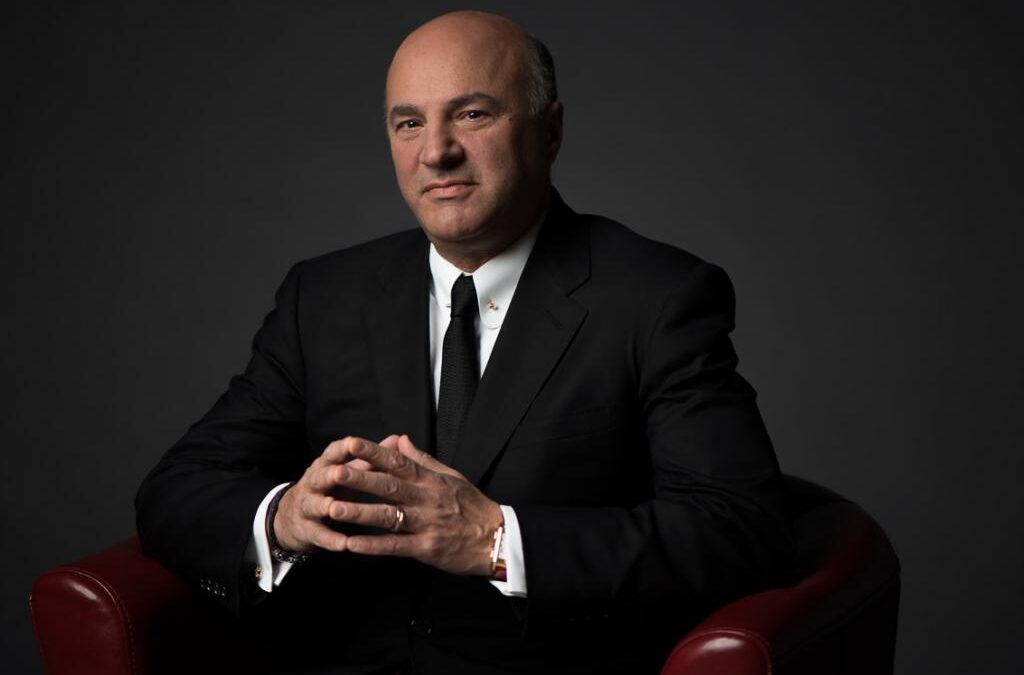
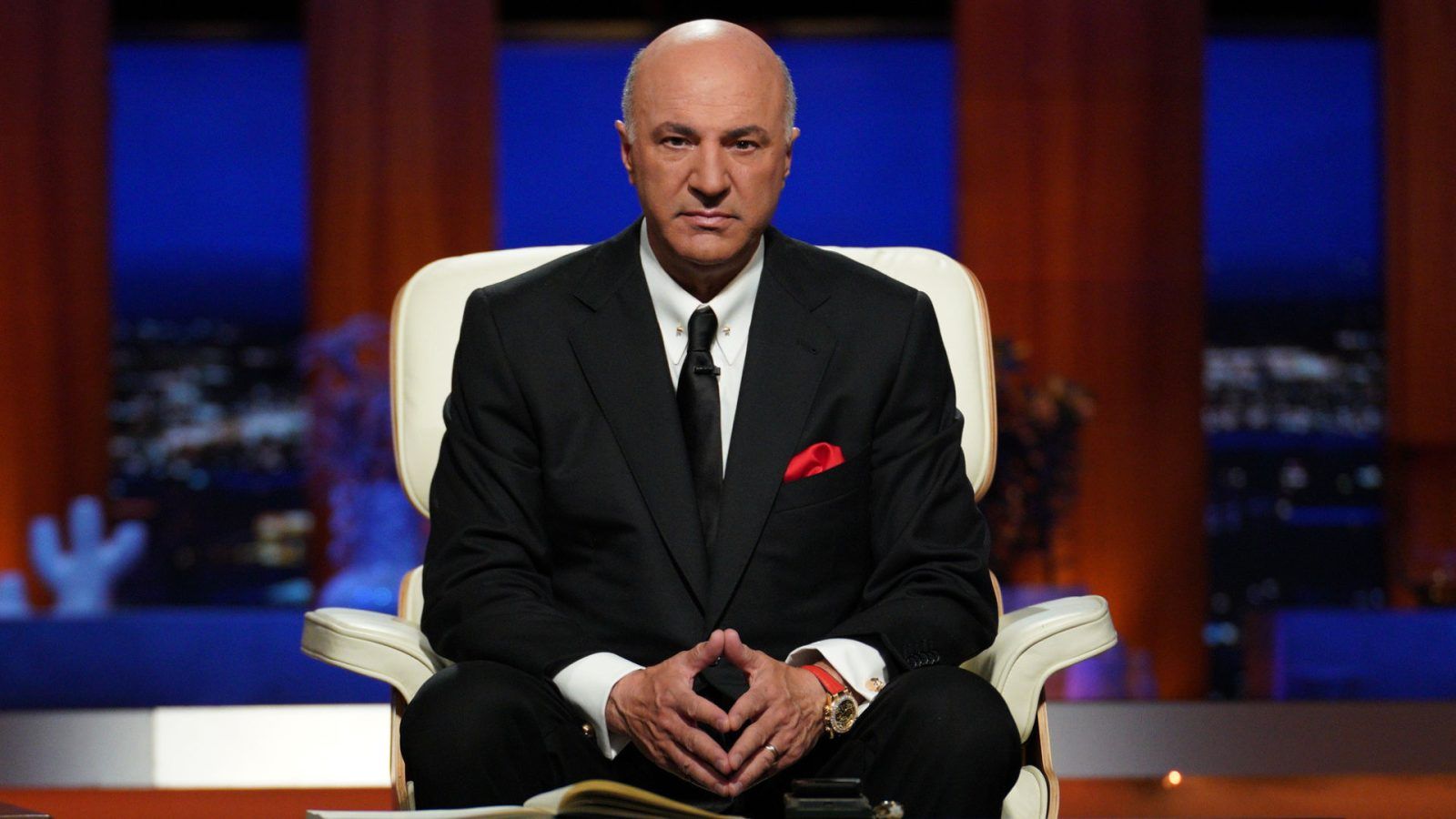
Kevin O’Leary, affectionately—or perhaps infamously—known as “Mr. Wonderful,” has become a household name as the blunt, money-focused judge on ABC’s Shark Tank. Beyond the television cameras and the sharp-tongued critiques of hopeful entrepreneurs, O’Leary is a titan of industry with a financial portfolio that spans decades of software development, mutual fund management, and venture capital. As of 2024, Kevin O’Leary’s net worth is estimated to be approximately $400 million.
Understanding how O’Leary amassed this fortune requires a look beyond the “Shark” persona. His wealth is a testament to the power of strategic exits, disciplined dividend-focused investing, and a relentless pursuit of cash flow. This article explores the architecture of his financial empire, the pivotal deals that defined his career, and the investment philosophy that keeps his net worth growing.
The Foundation of Wealth: From SoftKey to Mattel
The cornerstone of Kevin O’Leary’s massive net worth was laid long before he became a television personality. His journey into the upper echelons of wealth began in a basement in Toronto, where he co-founded SoftKey Software Products in 1986.
The Early Years and the Genesis of SoftKey
SoftKey was founded during the dawn of the home computer era. O’Leary, alongside partners John Freeman and Gary Babitsky, recognized a massive gap in the market: educational software was expensive and difficult for the average family to afford. SoftKey’s strategy was disruptive yet simple—they bundled low-cost software and sold it through high-volume retail channels like Costco and Walmart.
O’Leary’s aggressive approach to growth involved acquiring competitors. By the early 1990s, SoftKey had absorbed several major players in the educational software space, including WordStar and Spinnaker Software. This consolidation strategy transformed SoftKey into a powerhouse of the “edutainment” sector.
The $4.2 Billion Exit That Defined a Career
The defining moment of O’Leary’s financial life occurred in 1995 when SoftKey acquired The Learning Company (TLC) for $606 million. Adopting the TLC name, the company became a dominant force in the industry. In 1999, at the height of the dot-com boom, Mattel purchased The Learning Company for a staggering $4.2 billion.
While the acquisition later became known as one of the most disastrous in corporate history for Mattel—resulting in O’Leary’s departure shortly after—the financial windfall for O’Leary was undeniable. He walked away with millions of dollars in his pocket and a reputation as a ruthless negotiator who knew how to scale a business for a massive exit. This liquidity served as the “war chest” for his future investments.
The Shark Tank Effect: Venture Capital and Strategic Investing
For many, Kevin O’Leary’s wealth is synonymous with his role on Shark Tank. However, for O’Leary, the show is more than just entertainment; it is a high-volume deal-flow engine that allows him to deploy capital into high-growth startups.
Identifying Value in the “Tank”
O’Leary’s investment strategy on the show is distinct from his peers like Mark Cuban or Lori Greiner. He is notoriously obsessed with “the money.” While other sharks might invest based on emotion or a desire to mentor, O’Leary looks strictly at margins, scalability, and the path to liquidity.
His portfolio through the show includes dozens of companies, ranging from cupcakes to high-tech logistics. By diversifying his venture capital across various sectors, O’Leary mitigates the inherent risk of startup investing. He often seeks “royalty deals,” a financial structure where he receives a percentage of every unit sold until his initial investment is repaid, often with a multiple. This ensures he generates cash flow regardless of whether the company eventually sells or goes public.
Notable Wins and the Power of Royalties
One of O’Leary’s most famous successes is Plated, a meal-kit delivery service. Although the deal faced hurdles, the company was eventually acquired by Albertsons for $200 million, netting the investors a significant return. Another standout is Wicked Good Cupcakes, which O’Leary famously backed using a royalty structure. The company’s success and subsequent acquisition by Hickory Farms proved that O’Leary’s “income-first” approach to venture capital could yield massive dividends.
These deals contribute significantly to his net worth, not just through the appreciation of equity, but through the constant stream of distributions that he reinvests into other asset classes.
O’Leary Financial Group: Modern Wealth Management and ETFs

Beyond private equity, a substantial portion of Mr. Wonderful’s net worth is managed through the O’Leary Financial Group. This umbrella organization encompasses his public market investments, mutual funds, and Exchange Traded Funds (ETFs).
The Philosophy of Yield and Dividends
If there is one mantra O’Leary repeats more than any other, it is: “I never buy a stock that doesn’t pay a dividend.” His investment philosophy is rooted in the belief that capital appreciation is uncertain, but a dividend check is a tangible return on investment.
This philosophy led to the creation of O’Shares Investments, a suite of ETFs designed for conservative investors seeking wealth preservation and income. The funds focus on “quality” stocks—companies with strong balance sheets, low volatility, and a history of increasing dividends. By managing his own funds, O’Leary not only benefits from the performance of the underlying assets but also from the management fees and the institutional credibility that comes with being a fund sponsor.
Diversification Across Asset Classes
O’Leary does not believe in keeping all his eggs in one basket. His personal wealth is diversified across:
- Public Equities: Focused on mid-cap and large-cap dividend payers.
- Fixed Income: Bonds and debt instruments that provide steady interest.
- Alternative Investments: Including commercial real estate and a world-renowned collection of luxury watches and fine wines, which he views as appreciating assets rather than mere hobbies.
This multi-layered approach to finance ensures that his net worth is insulated from market volatility in any single sector.
Breaking Down the $400 Million Net Worth
To understand the scale of a $400 million net worth, one must look at the liquidity and asset allocation that O’Leary frequently discusses in financial interviews.
Liquid Assets vs. Private Equity
A common mistake among high-net-worth individuals is being “asset rich but cash poor.” O’Leary avoids this by maintaining a significant portion of his wealth in liquid assets. He has often stated that he keeps enough cash and liquid securities to weather a multi-year economic downturn. This liquidity allows him to act quickly when market crashes present buying opportunities—a tactic he used effectively during the 2008 financial crisis and the 2020 market volatility.
His private equity holdings—those companies he owns a piece of through Shark Tank or private deals—represent the “growth” engine of his net worth. While these are less liquid, they offer the potential for 10x or 20x returns that public markets rarely provide.
Real Estate and Alternative Investments
O’Leary owns several high-value properties, including a primary residence in Toronto, a cottage in Muskoka (often referred to as the “Malibu of the North”), and properties in Geneva and Boston. Real estate serves as both a lifestyle asset and a hedge against inflation.
Furthermore, O’Leary’s foray into the “NFT” and “Crypto” space in recent years showed his willingness to adapt to new financial tools, though he remains a vocal advocate for regulation. Despite the volatility of the crypto market, his diversified portfolio ensures that even significant hits to one sector do not derail his overall financial standing.
Lessons in Financial Literacy from Mr. Wonderful
Kevin O’Leary’s net worth isn’t just a result of luck; it is the result of a disciplined financial framework. For those looking to build their own “money mountain,” O’Leary’s career offers several vital lessons in personal and business finance.
The “Cold, Hard Truth” About Debt
O’Leary is a staunch opponent of “bad debt”—specifically credit card debt and high-interest consumer loans. He argues that you cannot build wealth if you are paying 20% interest to a bank. His advice to young investors is always the same: pay off your debt first, then start the process of compounding interest. He views every dollar as a “soldier” sent out to capture more dollars; if those soldiers are being used to pay off interest, they are being “killed in action.”
Building a Legacy Through Compounding
The true secret to O’Leary’s $400 million net worth is the power of compounding over forty years. By reinvesting dividends, avoiding unnecessary luxury purchases in his early years, and focusing on cash-flow-positive businesses, he allowed the mathematics of finance to do the heavy lifting.
He often advocates for the “50/30/20” rule or variations of it, where a significant portion of income is automatically diverted into investments before one ever has the chance to spend it. This disciplined automation of wealth-building is what separates the wealthy from the middle class in O’Leary’s worldview.
Conclusion
Kevin O’Leary’s net worth of $400 million is a testament to a career built on the fundamentals of finance: aggressive growth, strategic exits, and a religious devotion to income-producing assets. From his early days in software to his current status as a global investment icon, “Mr. Wonderful” has demonstrated that while his personality may be polarizing, his financial logic is incredibly sound. For the modern investor, O’Leary’s journey serves as a blueprint for transforming entrepreneurial success into a lasting financial dynasty.
aViewFromTheCave is a participant in the Amazon Services LLC Associates Program, an affiliate advertising program designed to provide a means for sites to earn advertising fees by advertising and linking to Amazon.com. Amazon, the Amazon logo, AmazonSupply, and the AmazonSupply logo are trademarks of Amazon.com, Inc. or its affiliates. As an Amazon Associate we earn affiliate commissions from qualifying purchases.