
Minimum wage legislation serves as a cornerstone of the American economic framework, representing the baseline for labor compensation and a critical metric for personal financial planning. In New York State, the minimum wage is not a static figure but a dynamic policy that has seen significant shifts over the last decade. For employees, understanding these rates is essential for budgeting and career advocacy. For business owners, these figures are the foundation of labor cost projections and long-term financial strategy.
As of January 1, 2024, New York has entered a new phase of its multi-year plan to raise the wage floor, reflecting the rising cost of living and the inflationary pressures that have reshaped the national economy. This guide provides a detailed analysis of the current rates, future scheduled increases, and the broader financial implications for the New York market.
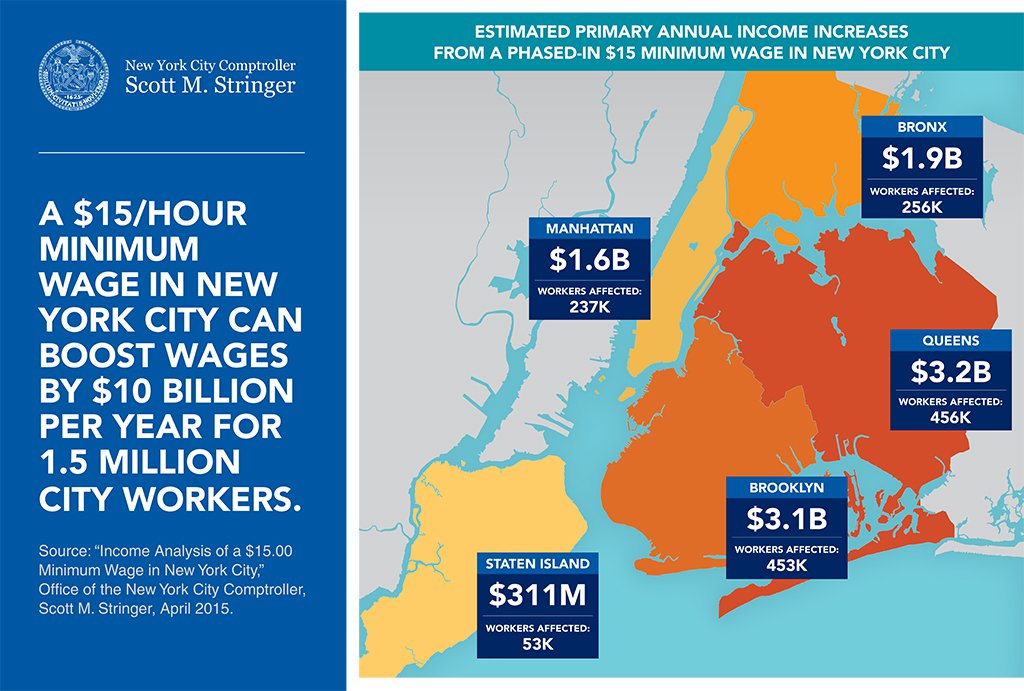
Understanding the Current Minimum Wage Structure in New York State
New York’s approach to the minimum wage is characterized by a geographic tier system. This recognizes that the cost of living in Manhattan or the Hamptons is significantly higher than in rural regions like the Southern Tier or the North Country. Consequently, the state is divided into two primary zones for wage regulation.
The Geographic Divide: Downstate vs. Upstate Rates
Starting January 1, 2024, the minimum wage in New York City, Long Island, and Westchester County (collectively referred to as the “Downstate” region) rose to $16.00 per hour. This increase acknowledges the intense housing and utility costs associated with the metropolitan area.
In contrast, the remainder of New York State (the “Upstate” region, including cities like Buffalo, Rochester, Albany, and Syracuse) saw its minimum wage increase to $15.00 per hour. While lower than the downstate rate, this $15.00 threshold represents a major milestone in the “Fight for $15” movement that began over a decade ago. For workers, this $1.00 difference per hour equates to approximately $2,000 per year for a full-time employee, a margin that businesses must account for when managing multi-location payrolls.
Historical Context and the Road to $15 and Beyond
To understand the current “Money” landscape in New York, one must look at the trajectory of these increases. New York was one of the first states to legislate a path toward a $15.00 minimum wage through the 2016 state budget. At that time, the rates were as low as $9.00 per hour.
The strategy was to implement incremental raises to prevent a “price shock” to the business community while steadily increasing the purchasing power of low-wage earners. By analyzing these historical shifts, financial planners can see a clear trend: New York is committed to maintaining a “living wage” that tracks closer to actual expenses than the federal minimum wage, which has remained stagnant at $7.25 since 2009.
Future Projections: The Scheduled Increases Through 2026
The 2024 increase is part of a larger legislative package designed to provide predictability for both households and corporate balance sheets. Understanding the roadmap for 2025 and 2026 is vital for anyone engaged in business finance or personal career mapping.
Annual Adjustments and the Consumer Price Index (CPI)
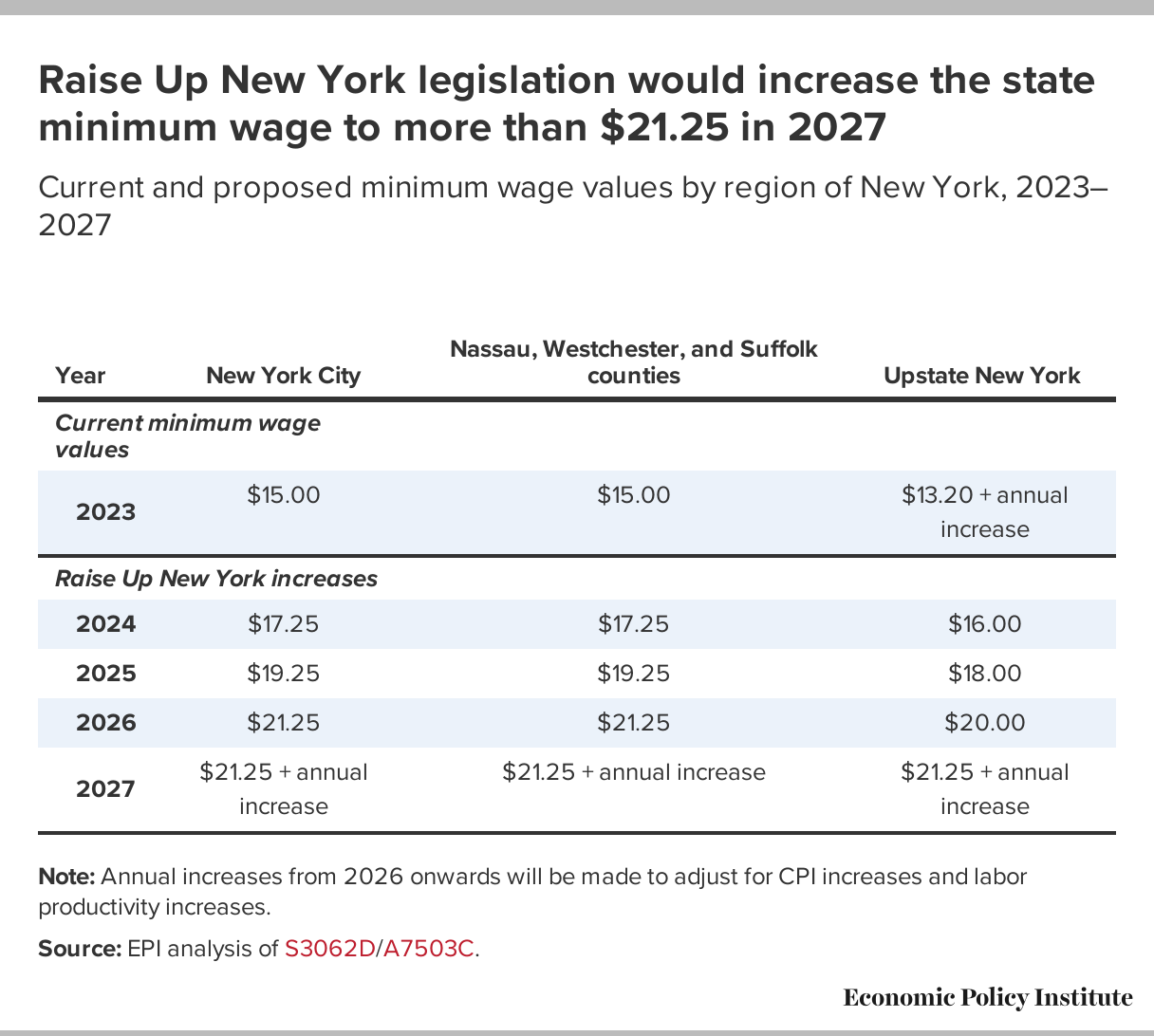
The New York State budget plan outlines specific, mandatory increases for the next two years. On January 1, 2025, the minimum wage will increase by another $0.50, bringing the Downstate rate to $16.50 and the Upstate rate to $15.50. This will be followed by another $0.50 increase on January 1, 2026, resulting in a $17.00/hour rate for NYC/Long Island/Westchester and a $16.00/hour rate for the rest of the state.
However, the most significant financial shift occurs in 2027. From that point forward, the minimum wage will no longer be determined by fixed legislative numbers but will be indexed to inflation. Specifically, the rate will be tied to the Consumer Price Index for Urban Wage Earners and Clerical Workers (CPI-W) for the Northeast Region. This ensures that as the price of goods and services rises, the wage floor moves in tandem, protecting the real value of workers’ earnings.
Long-term Financial Planning for Small Business Owners
For small business owners, these scheduled hikes require proactive financial modeling. Labor is often the largest line item on a profit and loss (P&L) statement. Business owners must look at their 2025 and 2026 budgets now to determine if they need to adjust pricing structures, optimize staffing levels, or invest in efficiency-boosting tools.
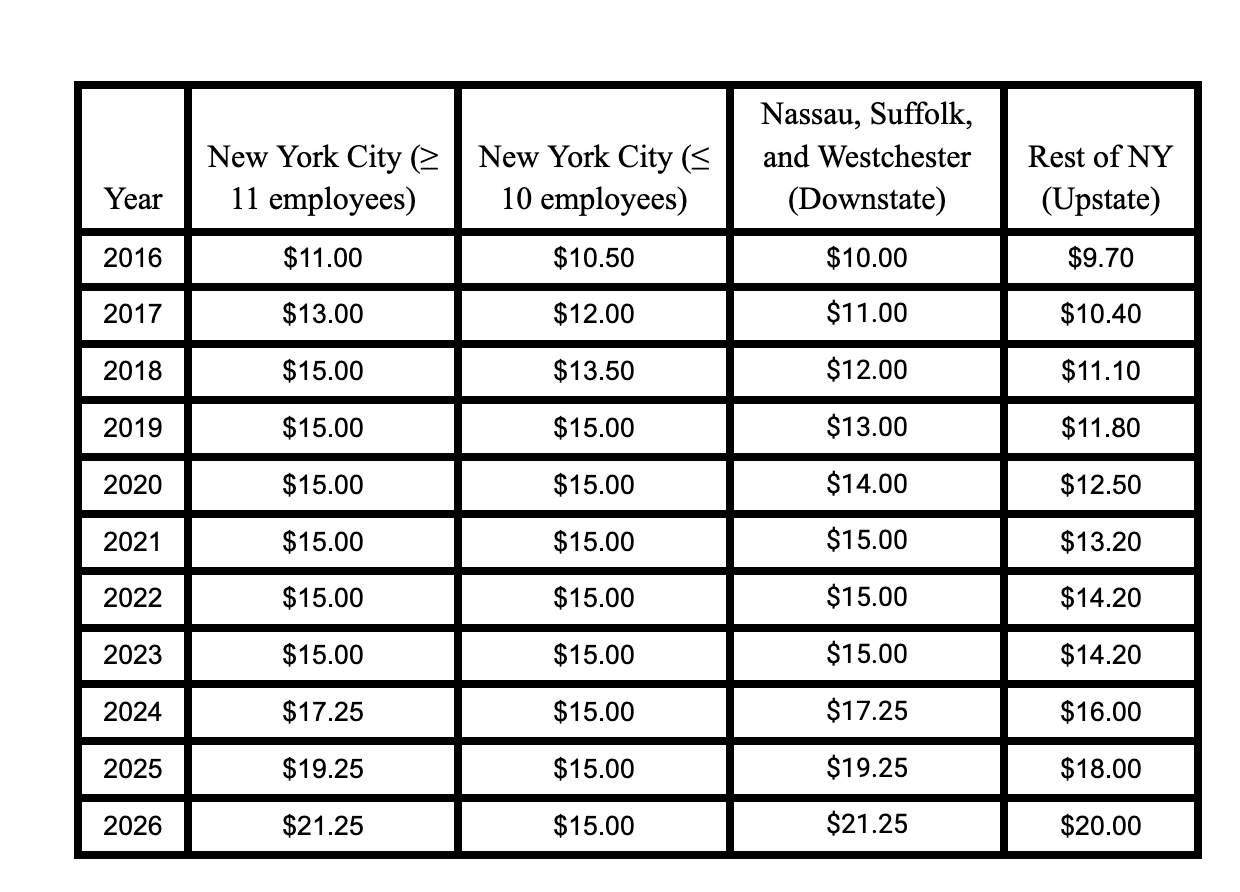
An increase from $16.00 to $17.00 represents a 6.25% increase in base labor costs over two years. When you factor in the associated increase in payroll taxes and workers’ compensation premiums, the “fully burdened” cost of an employee rises even further. Proactive businesses are using this time to renegotiate vendor contracts or refine their service offerings to maintain profit margins despite rising overhead.
Industry-Specific Variations and Exemptions
While the general minimum wage applies to the vast majority of workers, New York law includes specific provisions for certain industries. These nuances are critical for financial compliance and for workers to ensure they are being paid fairly.
The Tipped Wage Credit and the Hospitality Sector
In the restaurant and hospitality industry, employers are often permitted to pay a lower “cash wage” provided that the employees’ tips bring them up to the statutory minimum wage. This is known as the “tip credit.”
As of 2024, the tip credit rules have become more stringent. For most service employees in NYC, the cash wage is $13.35 with a $2.65 tip credit. For food service workers specifically, the rules are even more distinct. It is a common misconception that tipped workers can be paid less than the minimum wage indefinitely; if an employee’s total earnings (cash wage plus tips) do not equal the state minimum wage at the end of a shift or pay period, the employer is legally obligated to “top off” the pay to meet the $16.00 or $15.00 threshold.
Fast Food Workers and the Evolution of Sector-Specific Pay
Historically, fast food workers in New York were on a different, accelerated path toward higher wages compared to general retail or office workers. However, as the general minimum wage has caught up, these distinctions have largely merged.
Today, the financial focus for the fast-food sector has shifted from “base pay” to “predictive scheduling” and “overtime protections.” In New York, the “Spread of Hours” rule is a unique financial regulation: if a worker’s shift spans more than 10 hours (including breaks), the employer must pay an additional hour of pay at the minimum wage rate. This is a crucial detail for side-hustlers and hourly workers trying to maximize their take-home pay.
The Economic Ripple Effect: Personal Finance and Business Strategy
The increase in minimum wage does not happen in a vacuum. It creates a “ripple effect” throughout the entire economy, influencing everything from the cost of a latte to the competitive landscape for “middle-skill” jobs.
Managing Cost of Living in High-Inflation Environments
For the individual, a higher minimum wage is a tool for debt reduction and increased savings capacity. However, in a state like New York, the “Money” challenge is often the “inflationary catch-up.” As wages rise, local service providers often raise prices to cover their increased payroll.
To capitalize on wage increases, New Yorkers must practice disciplined personal finance. This includes treating a wage hike not as “lifestyle creep” (increased spending) but as an opportunity to bolster an emergency fund or contribute to a Roth IRA. When the baseline pay increases, the “opportunity cost” of not working also increases, making side hustles and overtime more financially lucrative than in previous years.
Strategic Budgeting: How Businesses Are Adapting to Rising Labor Costs
On the corporate side, the increase in the wage floor is driving a shift toward “value-based” business models. Companies can no longer compete solely on being the “lowest cost” provider if their labor costs are mandated by the state.
Instead, businesses are focusing on employee retention. It is often more financially sound to pay $18.00 or $20.00 an hour to a highly productive, seasoned employee than to pay the $16.00 minimum to a constant revolving door of new hires. The “turnover cost”—which includes recruiting, onboarding, and lost productivity—can range from 16% to 20% of an employee’s annual salary. By viewing the minimum wage as a starting point rather than a ceiling, savvy business owners are building more resilient, loyal teams that drive higher long-term revenue.
In conclusion, the minimum wage in New York is a vital economic indicator that requires constant monitoring. Whether you are an employee looking to secure your financial future or a business owner navigating the complexities of New York’s regulatory environment, staying informed about the $16.00 and $15.00 benchmarks—and the increases coming in 2025 and 2026—is essential for sound financial decision-making. As the state moves toward inflation-indexing in 2027, the relationship between labor, cost of living, and business profitability will remain at the heart of New York’s economic story.
aViewFromTheCave is a participant in the Amazon Services LLC Associates Program, an affiliate advertising program designed to provide a means for sites to earn advertising fees by advertising and linking to Amazon.com. Amazon, the Amazon logo, AmazonSupply, and the AmazonSupply logo are trademarks of Amazon.com, Inc. or its affiliates. As an Amazon Associate we earn affiliate commissions from qualifying purchases.