
Meta Platforms, Inc., formerly known as Facebook, Inc., stands as one of the most significant and influential technology conglomerates of the 21st century. More than just a collection of social media applications, Meta represents a colossal technological ecosystem built on principles of connectivity, community, and increasingly, immersive digital experiences. Its evolution from a singular social networking site to a multifaceted tech giant driving the vision of the metaverse encapsulates a dynamic journey of innovation, ambition, and profound technological development. At its core, Meta is a company dedicated to building technologies that help people connect, find communities, and grow businesses, continuously pushing the boundaries of what digital interaction can be.
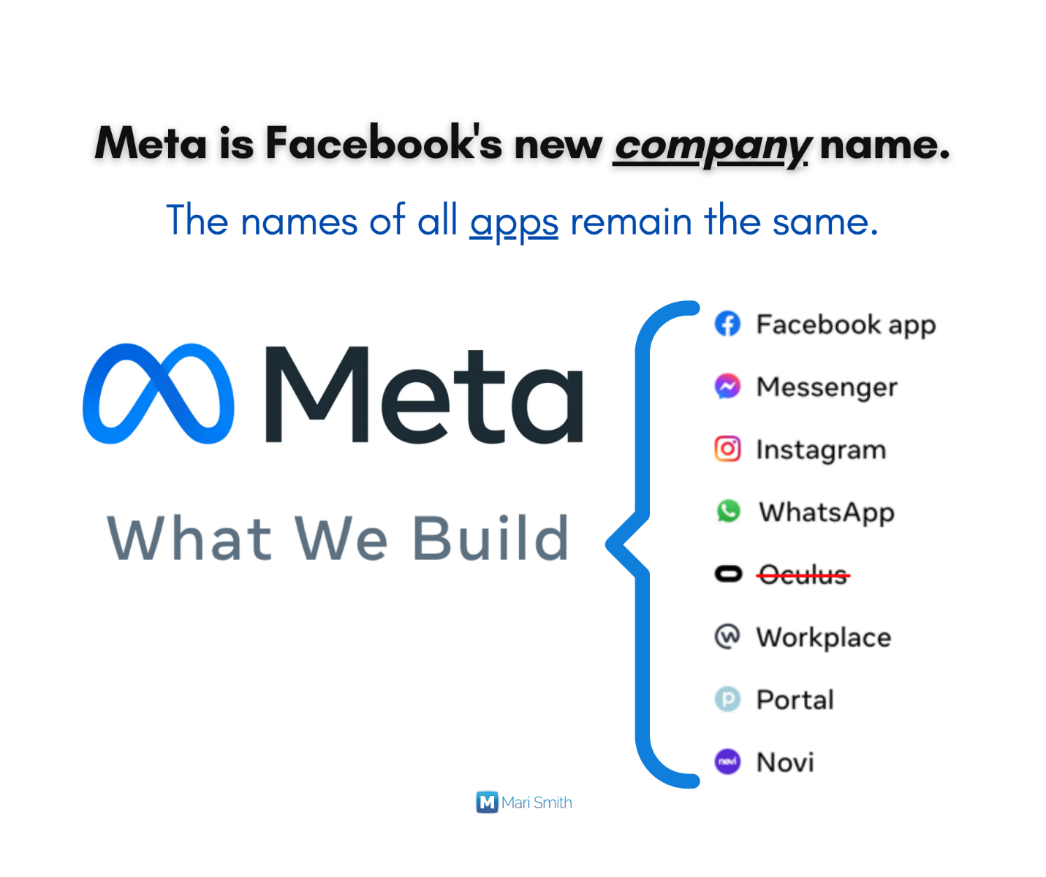
The rebranding in October 2021 signaled a pivotal strategic shift, emphasizing the company’s long-term commitment to the metaverse—a persistent, interconnected virtual realm. This move underscored a recognition that while its social platforms remain immensely powerful, the next frontier of digital experience would demand a new technological paradigm. Consequently, understanding “what Meta Platform is” today involves appreciating its current suite of widely used technological products, its foundational engineering prowess, and its ambitious, future-oriented investments in cutting-edge areas like virtual reality, artificial intelligence, and sophisticated networking infrastructure.
From Social Media Giant to Metaverse Pioneer: A Technological Evolution
Meta Platforms’ trajectory is a testament to relentless technological innovation and strategic adaptation. What began as a nascent social network on college campuses rapidly scaled into a global phenomenon, necessitating an unparalleled degree of engineering ingenuity to support its growth.
The Genesis: Facebook’s Technological Foundations
The foundation of Meta Platforms was laid with Facebook, a platform that, from its inception, presented formidable technological challenges. Scaling a service to billions of users required groundbreaking work in distributed systems, database management, and network architecture. Early Facebook engineers pioneered methods for efficient data storage, real-time content delivery, and personalized content feeds—technologies that are now ubiquitous across the internet. The sheer volume of user-generated content, from photos and videos to status updates and messages, demanded sophisticated content delivery networks and robust server infrastructure capable of handling petabytes of data traffic daily. Furthermore, the development of algorithms for news feed ranking and friend recommendations marked early forays into machine learning and AI, laying the groundwork for the advanced AI systems that power Meta’s platforms today. The acquisition of Instagram and WhatsApp further solidified Meta’s (then Facebook’s) technological dominance, integrating their distinct technical architectures and user bases into a cohesive, albeit complex, ecosystem.
Rebranding and the Metaverse Pivot: A Strategic Technological Redirection
The rebranding to Meta Platforms in late 2021 was not merely a cosmetic change but a profound declaration of intent regarding the company’s future technological direction. It symbolized a strategic pivot from being primarily a social media company to becoming a “metaverse company.” This shift acknowledges that while social media connects people through screens, the metaverse aims to immerse them in shared virtual spaces. This redirection is inherently a technological gamble and a massive undertaking. It involves a fundamental reimagining of human-computer interaction, requiring advancements in areas far beyond traditional web and mobile development. Meta’s commitment to the metaverse signifies an investment in building foundational technologies for this next computing platform, encompassing everything from hardware devices like VR/AR headsets to the software ecosystems, development tools, and underlying network infrastructure necessary to support truly immersive, persistent, and interoperable digital worlds. This pivot represents an ambitious effort to shape the next era of digital interaction, moving beyond the two-dimensional screen to truly spatial and embodied computing.
The Core Pillars: Meta’s Diverse Technological Ecosystem
Meta’s technological prowess is distributed across several key areas, forming a comprehensive ecosystem that serves billions globally while simultaneously exploring future computing paradigms.
Connecting the World: Social Media and Messaging Technologies
The foundation of Meta’s current technological empire rests upon its suite of social media and messaging applications: Facebook, Instagram, and WhatsApp. These platforms are engineering marvels in their own right, managing unprecedented scale and complexity.
- Facebook: As the progenitor, Facebook’s underlying technology stack is immense. It handles billions of daily active users, petabytes of data, and millions of concurrent interactions. Its infrastructure relies on highly optimized data centers, custom-built servers, and a sophisticated network of distributed databases. Key technological challenges include real-time data synchronization across geographies, efficient content delivery (text, images, video), and robust security protocols. Its personalized News Feed is powered by advanced machine learning algorithms that rank content based on user preferences and engagement signals, constantly evolving to improve relevance and user experience.
- Instagram: Acquired by Facebook in 2012, Instagram’s success is tied to its powerful image and video processing capabilities. The platform excels at rapid media upload, sophisticated filter application, and efficient delivery of visual content to a global audience. Its explore page and recommendation engine are prime examples of AI-driven content discovery, leveraging vast datasets to surface relevant photos and videos tailored to individual users. The shift towards Reels and short-form video has further pushed its video streaming and encoding technologies.
- WhatsApp: This messaging platform, acquired in 2014, is distinguished by its end-to-end encryption, a significant cryptographic achievement that secures user communications by default. Handling billions of messages daily, WhatsApp’s strength lies in its highly scalable messaging infrastructure, ensuring reliable and private delivery even in areas with inconsistent network connectivity. Its technological backbone prioritizes low latency and high availability, making it a critical communication tool worldwide.
These platforms continuously evolve, integrating new features like live streaming, augmented reality filters (Spark AR), and e-commerce functionalities, all demanding ongoing innovation in network infrastructure, data processing, and user interface technologies.
Building Immersive Worlds: Virtual and Augmented Reality Innovations
Central to Meta’s metaverse strategy is its investment in virtual and augmented reality (VR/AR) hardware and software. This represents a significant technological pivot and a long-term bet on the future of spatial computing.
- Meta Quest (formerly Oculus): Meta’s flagship VR hardware, the Meta Quest line, showcases cutting-edge advancements in consumer VR. These devices integrate sophisticated display technology, spatial audio, precise tracking systems (inside-out tracking, hand tracking), and powerful mobile processors to deliver untethered VR experiences. The engineering challenges involve optimizing battery life, reducing motion sickness through low-latency rendering, and achieving ergonomic comfort for extended use. The development spans optical engineering, haptics, computer vision for tracking, and efficient power management.
- Horizon Worlds and Developer Tools: On the software front, Meta is building platforms like Horizon Worlds, a social VR experience where users can create, explore, and interact. This requires robust real-time multiplayer networking, avatar rendering, physics engines for virtual objects, and intuitive content creation tools within VR. Beyond its own applications, Meta is heavily investing in SDKs (Software Development Kits) and developer tools to foster an ecosystem of third-party content creators, understanding that a rich library of experiences is crucial for the metaverse’s adoption. This includes developing AI-powered tools for content generation and environment building to lower the barrier to entry for creators.
The Power Behind the Scenes: AI and Infrastructure
Underpinning all of Meta’s ventures, from social media recommendations to metaverse development, are its formidable capabilities in artificial intelligence and global infrastructure.

- Artificial Intelligence: AI is the nervous system of Meta’s operations. It powers content moderation, personalized advertising, news feed ranking, and recommendation systems across Facebook and Instagram. For the metaverse, AI is critical for generating realistic avatars, understanding natural language in virtual environments, creating intelligent non-player characters (NPCs), and optimizing virtual world performance. Meta is a leader in developing large language models, computer vision, and reinforcement learning, pushing the boundaries of what AI can achieve in complex, real-time interactive environments. This involves massive computational resources and specialized AI hardware.
- Global Infrastructure: To support its billions of users and ambitious metaverse vision, Meta operates one of the largest and most advanced global infrastructures. This includes massive hyperscale data centers, a sprawling network of fiber optic cables (including subsea cables), and edge computing nodes that bring content closer to users. This infrastructure is custom-built and highly optimized for Meta’s specific workloads, emphasizing energy efficiency, redundancy, and scalability. The challenges involve managing extreme data throughput, ensuring low latency for interactive experiences, and maintaining continuous availability across diverse global network conditions.
The Metaverse Vision: Meta’s Ambitious Technological Frontier
The metaverse represents Meta’s most ambitious technological endeavor, aiming to transcend current digital interactions by creating a seamless, immersive, and persistent digital realm.
Defining the Metaverse: A Persistent, Interconnected Digital Realm
Meta’s vision of the metaverse is a persistent, interconnected set of virtual spaces where users can interact with each other, digital objects, and AI-driven entities in real-time. It’s envisioned not as a single product, but as the next evolution of the internet—a three-dimensional, embodied internet where presence and shared experiences are paramount. Technologically, this means moving beyond static webpages and isolated apps to dynamic, living digital worlds that are always “on.” Key characteristics include:
- Presence: The feeling of being truly present with others in a digital space, facilitated by VR/AR hardware and realistic avatars.
- Interoperability: The ability to seamlessly move digital assets (avatars, items) and identities across different virtual platforms and experiences, regardless of who created them. This is one of the most significant technological challenges, requiring industry-wide standards and open protocols.
- Persistence: Digital worlds and objects that remain even when a user logs off, reflecting real-time changes and user contributions.
- Embodied Internet: Interactions that are intuitive and natural, leveraging spatial computing rather than traditional screen-based interfaces.
Enabling Technologies: Hardware, Software, and Interoperability Challenges
Realizing the metaverse requires breakthroughs across numerous technological domains.
- Hardware: Next-generation VR/AR headsets that are lighter, more comfortable, offer higher resolution, wider fields of view, and advanced sensor suites (eye-tracking, facial tracking, haptics). This also extends to haptic feedback devices, brain-computer interfaces (BCIs), and advanced input methods that blur the lines between physical and digital.
- Software and Development Tools: Robust 3D engines capable of rendering complex, dynamic environments in real-time with high fidelity. Sophisticated AI for character generation, environmental simulation, and intelligent agent behavior. Cloud computing infrastructure capable of hosting vast, persistent virtual worlds. User-friendly creation tools that empower a broad range of developers and users to build and customize their metaverse experiences.
- Interoperability and Open Standards: Perhaps the greatest technological hurdle is achieving true interoperability. This requires developing and advocating for open standards for avatar formats, digital asset ownership, identity management, and cross-platform communication protocols. Meta recognizes that no single company can build the metaverse alone, making collaborative technological development and standardization critical. This is a complex undertaking, as it involves coordinating across numerous industry players and defining shared technical specifications.
Economic and Societal Implications of the Metaverse
From a technological perspective, the metaverse offers new paradigms for digital economies and social interaction. It enables new forms of digital commerce, ownership (e.g., NFTs for digital assets), and work collaboration in persistent virtual spaces. The underlying blockchain and distributed ledger technologies could play a role in securing digital asset ownership and facilitating transactions. Socially, the metaverse promises richer, more immersive connections, but also presents significant challenges related to digital safety, privacy, and moderation within complex, real-time virtual environments. Developing robust AI-powered moderation tools and secure identity systems will be crucial for fostering a safe and inclusive metaverse.
Navigating the Future: Technological Challenges and Opportunities
As Meta continues its journey, it faces a landscape of complex technological challenges alongside immense opportunities to define the next era of digital interaction.
Advancing AI and Machine Learning for Next-Gen Experiences
The future of Meta’s platforms, especially the metaverse, is inextricably linked to advancements in AI and machine learning. Opportunities abound in creating more intelligent and adaptable AI that can power realistic non-player characters, understand complex human intentions in natural language, and generate dynamic content on the fly. Meta is investing heavily in foundational AI research, including self-supervised learning, multimodal AI (processing text, image, audio simultaneously), and ethical AI frameworks to ensure fairness and transparency. The goal is to build AI that enhances user experiences without compromising privacy or safety, from generating personalized metaverse content to ensuring effective content moderation at scale.
Data Privacy, Security, and Ethical AI Development
With its vast user base and ambitious plans for the metaverse, Meta faces immense technological and ethical challenges in data privacy and security. Developing robust encryption, secure identity management systems, and privacy-enhancing technologies (PETs) that allow for personalized experiences without excessive data collection are paramount. Furthermore, the ethical development of AI is a continuous undertaking. This includes mitigating algorithmic bias, preventing the spread of misinformation and hate speech through AI-powered detection and moderation systems, and ensuring user agency over their data and digital identities. Building the metaverse responsibly necessitates a proactive approach to these complex societal and technological issues, integrating safety by design into all new platforms and features.
The Path to Interoperability and Open Standards in the Metaverse
One of the most significant long-term technological hurdles for Meta’s metaverse vision is achieving true interoperability. For the metaverse to be a truly open and expansive platform, users must be able to move their avatars, digital assets, and identities seamlessly between different virtual worlds, regardless of who created them. This requires industry-wide collaboration on open standards and protocols, which is a monumental task involving competing interests and diverse technological approaches. Meta is actively participating in and advocating for open standards bodies, but the path to a truly interoperable metaverse will require overcoming significant technical and political obstacles. Developing common APIs, asset formats, and identity verification systems will be critical to fostering a vibrant, interconnected digital future.
In essence, Meta Platforms is a technology powerhouse that has revolutionized how people connect and interact. While its past is deeply rooted in social networking, its future is firmly focused on pioneering the technologies that will underpin the metaverse—a vision that demands continuous innovation across AI, VR/AR, and global infrastructure, all while navigating complex ethical and societal considerations.
aViewFromTheCave is a participant in the Amazon Services LLC Associates Program, an affiliate advertising program designed to provide a means for sites to earn advertising fees by advertising and linking to Amazon.com. Amazon, the Amazon logo, AmazonSupply, and the AmazonSupply logo are trademarks of Amazon.com, Inc. or its affiliates. As an Amazon Associate we earn affiliate commissions from qualifying purchases.