
The Master of Education (M.Ed) has traditionally been viewed as the gold standard for teachers seeking to advance their classroom skills or transition into school administration. However, as the 21st-century classroom evolves into a high-tech ecosystem, the definition of an M.Ed is undergoing a radical transformation. Today, an M.Ed is increasingly defined by its focus on Educational Technology (EdTech), instructional design, and the digital systems that power modern learning.
In this guide, we explore the M.Ed degree through the lens of technology, examining how this advanced qualification prepares educators to master the tools, software, and digital strategies that are reshaping the global educational landscape.
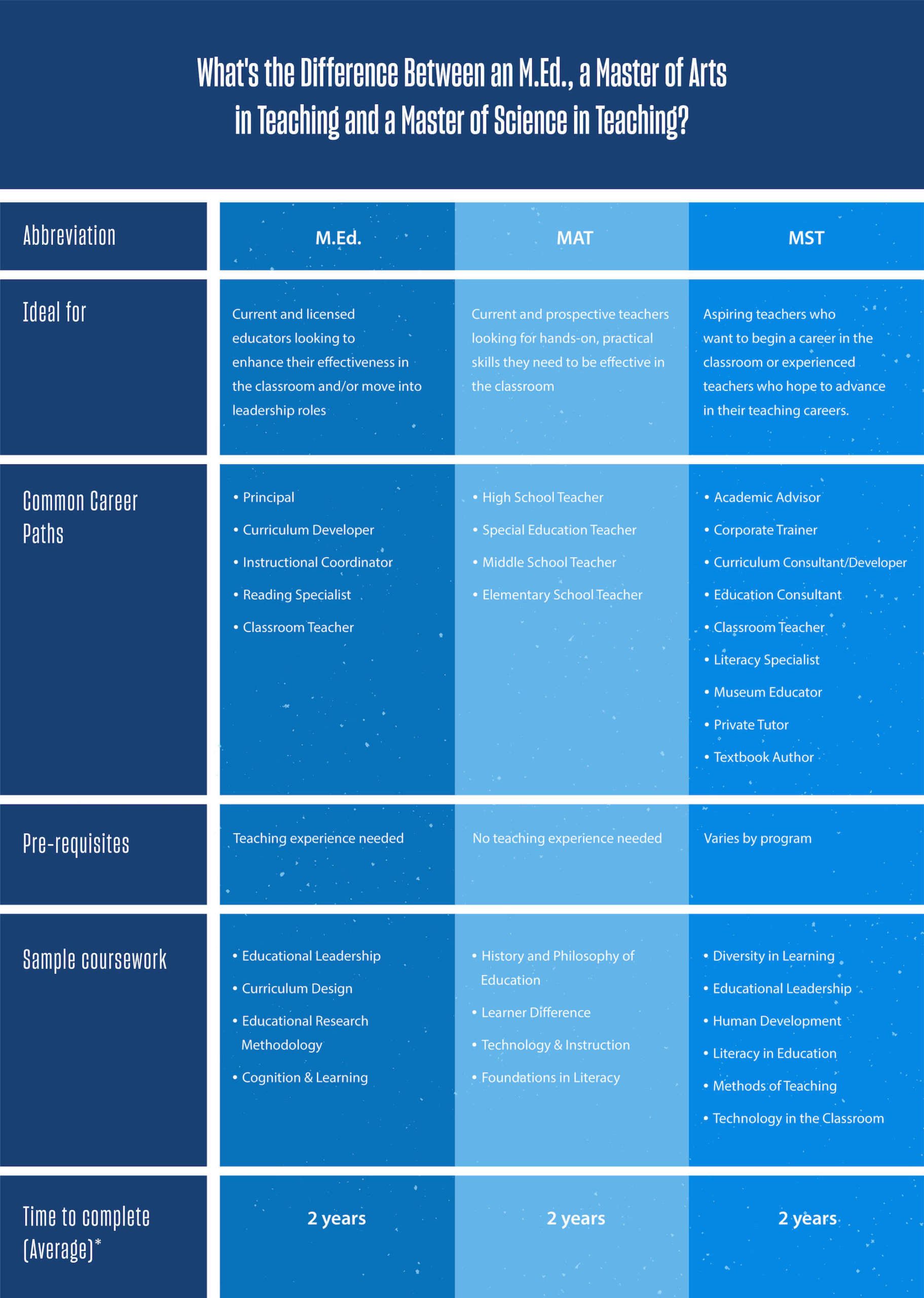
The Evolution of the M.Ed: From Traditional Pedagogy to EdTech Mastery
In its original form, the M.Ed was designed to deepen a teacher’s understanding of educational psychology, curriculum theory, and student assessment. While these core tenets remain, the modern M.Ed has pivoted toward the integration of technology as a foundational element of teaching. This shift reflects a world where “literacy” now includes digital literacy, coding, and the ability to navigate complex software environments.
Integrating Instructional Design and Learning Management Systems (LMS)
One of the most significant components of a tech-focused M.Ed is the study of Instructional Design (ID). This field focuses on the systematic development of instructional specifications using learning and instructional theory to ensure the quality of instruction. In an M.Ed program, students learn to use professional-grade authoring tools and Learning Management Systems (LMS) like Canvas, Moodle, Blackboard, and Google Classroom.
Mastering these platforms involves more than just uploading PDFs. M.Ed candidates learn to build “digital learning pathways” that incorporate asynchronous modules, automated grading scripts, and interactive multimedia. By understanding the backend architecture of an LMS, educators can create a more seamless and accessible user experience for their students, ensuring that the technology facilitates rather than hinders the learning process.
The Role of Educational Software in Modern Curriculum Development
A modern M.Ed degree emphasizes the curation and implementation of educational software. Educators are no longer just consumers of software; they are evaluators. Programs now include coursework on how to vet “SaaS” (Software as a Service) platforms for pedagogical efficacy. Whether it is a math-focused AI tutor or a language-learning app, M.Ed graduates are trained to analyze software data to determine if a tool is actually improving student outcomes or if it is merely a digital distraction.
Specialized Tech Pathways within the Master of Education
For those pursuing an M.Ed, the choice of specialization is crucial. While some may choose “Curriculum and Instruction,” those leaning toward the tech sector often find themselves in specialized tracks that mirror the roles found in the corporate tech world.
Master’s in Educational Technology and Media
This specific M.Ed track is essentially a bridge between computer science and education. Students in this niche focus on the “hardware” and “software” of the classroom. They study how different media—from video production to podcasts—impact cognitive load and retention. This pathway often prepares graduates for roles such as “Director of Technology” or “Instructional Technologist,” where they are responsible for overseeing a school district’s entire digital infrastructure.
The curriculum often includes “Media Literacy,” teaching educators how to guide students through the complexities of the internet, identifying misinformation, and understanding the algorithms that dictate social media feeds. This is a critical technological skill set that moves the M.Ed beyond the textbook and into the real-world digital environment.
Focus on Cybersecurity and Data Privacy in Schools
As schools store more student data on the cloud, the need for educators who understand digital security has skyrocketed. An M.Ed with a focus on educational leadership now frequently includes modules on cybersecurity protocols. Graduates must understand the legal and technical frameworks—such as COPPA (Children’s Online Privacy Protection Act) and GDPR—that govern how educational apps collect and use student information.
This technological expertise is vital for school administrators. An M.Ed degree today provides the training necessary to implement “Secure by Design” principles in schools, ensuring that the digital tools used in the classroom do not compromise student safety or data integrity.
How an M.Ed Empowers Educators with AI and Emerging Tools
The rise of Generative Artificial Intelligence (AI) has forced a reckoning in education. An M.Ed degree provides the framework for educators to move from a position of “AI apprehension” to “AI integration.”
Leveraging Generative AI for Personalized Learning
Modern M.Ed programs are incorporating AI into their core curriculum, teaching educators how to use Large Language Models (LLMs) to generate lesson plans, differentiate instruction, and create rubrics in seconds. However, the degree goes deeper than just using the tools; it explores the ethics and limitations of AI.
M.Ed candidates study how to train “tutor bots” that provide personalized feedback to students based on their specific learning gaps. This use of technology allows for a level of individualized instruction that was previously impossible in a 30-student classroom. By understanding the “prompt engineering” required to get the best results from these models, M.Ed holders become the tech-savvy leaders who define how AI is used in their institutions.
Gamification and Virtual Reality (VR) in the Classroom
Another technological frontier covered in advanced education degrees is the use of immersive environments. Gamification—the application of game-design elements in non-game contexts—is a major focus. M.Ed students learn how to use software like Classcraft or Minecraft: Education Edition to build engaging, interactive worlds that teach complex concepts in physics, history, or coding.
Furthermore, Virtual Reality (VR) and Augmented Reality (AR) are becoming staples of M.Ed research. The degree explores how “spatial computing” can be used to take students on virtual field trips to ancient Rome or into the molecular structure of a cell. This isn’t just about the “wow factor” of the gadgets; it’s about the pedagogical application of 3D modeling and immersive tech to improve spatial reasoning and empathy.
Practical Applications: Implementing Digital Transformation Projects
An M.Ed is often a “practitioner’s degree,” meaning it culminates in a capstone project that addresses a real-world problem. In a tech-centric M.Ed, this often takes the form of a “Digital Transformation Project.”
Leading School-Wide Hardware Integration
When a school district decides to go “1:1” (providing a laptop or tablet to every student), the success of that rollout depends on leaders with an M.Ed degree. These professionals manage the intersection of hardware and human behavior. They are trained to handle the logistical challenges of “device management” (MDM) software, ensuring that devices are updated, filtered for content, and used effectively in the classroom.
The M.Ed provides the project management skills needed to lead teachers through the “SAMR” model (Substitution, Augmentation, Modification, and Redefinition), which helps schools move from simply replacing paper with screens to using technology to do things that were previously inconceivable.
Evaluating the ROI of Educational Apps
Schools have limited budgets, and the tech market is saturated with “edutainment” apps that promise much but deliver little. A core skill taught in the M.Ed is the “Educational Technology Audit.” Graduates learn how to use data analytics tools to track student engagement and progress within specific apps. By analyzing this data, they can provide a technical and financial justification for which software licenses to renew and which to cut, acting as the “Chief Information Officers” of their learning environments.
The Future of the M.Ed: Navigating the Hybrid Education Landscape
The M.Ed degree is no longer just for those who stand at the front of a physical classroom. The proliferation of “Hybrid” and “Fully Remote” learning models has created a massive demand for educators who are tech experts.
Preparing for the Metaverse and Immersive Environments
As we look toward the future, M.Ed programs are beginning to explore the concept of the “Metaverse” in education. This involves creating persistent digital campuses where students can interact as avatars. While this might sound like science fiction, the technological foundations—blockchain for secure credentialing, decentralized autonomous organizations (DAOs) for school governance, and 3D environment design—are already being discussed in high-level M.Ed seminars.
The M.Ed degree provides the theoretical and technical “anchor” for these innovations. It ensures that as we move into more complex digital spaces, the focus remains on the “Human-Computer Interaction” (HCI) and the psychological wellbeing of the learners within those spaces.

Conclusion: The M.Ed as a Tech Credential
What is an M.Ed degree? In the current era, it is a master-level certification in Learning Engineering. It is a degree that proves an individual can synthesize the latest technological trends—from AI and LMS architecture to cybersecurity and VR—with the timeless principles of how humans learn.
For the modern professional, an M.Ed is more than just a step up the salary scale; it is an entry point into the high-growth world of EdTech. It equips you with the tools to build the future of education, ensuring that technology serves as a bridge to knowledge rather than a barrier. Whether you are aiming to be a tech-integrated classroom teacher, a corporate instructional designer, or a digital transformation leader, the M.Ed is the definitive degree for the digital age.
aViewFromTheCave is a participant in the Amazon Services LLC Associates Program, an affiliate advertising program designed to provide a means for sites to earn advertising fees by advertising and linking to Amazon.com. Amazon, the Amazon logo, AmazonSupply, and the AmazonSupply logo are trademarks of Amazon.com, Inc. or its affiliates. As an Amazon Associate we earn affiliate commissions from qualifying purchases.