
The determination of the maximum allowable piping length is a critical aspect of engineering design in various industrial sectors, including oil and gas, chemical processing, power generation, and HVAC systems. This parameter is not an arbitrary number but rather a meticulously calculated value derived from a complex interplay of physical principles, material science, safety standards, and operational efficiency considerations. The “method” for establishing this maximum length is, therefore, a sophisticated engineering process, increasingly reliant on advanced technological tools and analytical techniques to ensure systems are both safe and performant.
At its core, identifying the maximum allowable piping length involves striking a delicate balance. On one hand, designers aim for efficiency, minimizing the number of pipe supports, expansion joints, and overall material usage to reduce capital expenditure and simplify construction. On the other hand, they must contend with inherent physical constraints that mandate limits on length to prevent catastrophic failures, ensure fluid delivery specifications, and maintain structural integrity. The evolution of computational power and simulation software has profoundly transformed these methodologies, moving from conservative rule-of-thumb calculations to highly precise predictive modeling.

The Fundamental Engineering Principles Governing Piping Length
Understanding the limitations of piping length necessitates a deep dive into several interconnected engineering principles. Each factor independently, and in combination, dictates how long a pipe can safely and efficiently extend.
Pressure Drop and Flow Efficiency
One of the primary considerations in designing any fluid conveyance system is the pressure drop across the length of the pipe. As fluid flows through a pipe, friction between the fluid and the pipe walls, as well as internal fluid friction, causes a reduction in pressure. This phenomenon, known as head loss, is exacerbated by increased pipe length, tighter bends, rougher internal surfaces, and higher flow velocities.
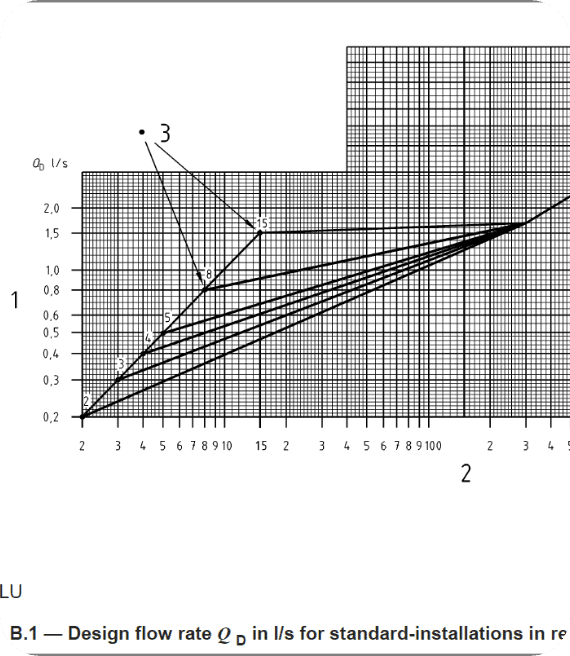
The maximum allowable piping length is often limited by the permissible pressure drop within the system. Exceeding this limit would necessitate more powerful and thus more energy-intensive pumps or compressors, leading to increased operational costs and potentially insufficient flow rates at the delivery point. Modern methods heavily leverage Computational Fluid Dynamics (CFD) software to accurately model fluid behavior, predict pressure losses, and optimize pipe diameters and lengths to meet specified flow rates and terminal pressures with minimal energy expenditure. CFD simulations can account for complex geometries, varying fluid properties, and transient conditions, providing a level of accuracy unachievable with manual calculations.
Thermal Expansion and Contraction Stress
Piping systems are rarely subjected to constant temperatures. Fluctuations in ambient temperature, as well as the temperature of the fluid being transported, cause pipes to expand and contract. If these thermal movements are unrestrained, they induce significant stresses within the pipe material, connections, and support structures. Excessive length without proper accommodation for thermal expansion can lead to buckling, overstressing of joints, or fatigue failure over time.
The methods for addressing thermal expansion include incorporating expansion loops, bellows, or utilizing strategic pipe routing and flexible supports. Determining the maximum allowable length between these accommodations is crucial. Finite Element Analysis (FEA) has become the gold standard here. FEA software allows engineers to model the pipe system in 3D, apply thermal loads, and analyze the resulting stress distribution, displacement, and forces on supports. This enables the precise sizing and placement of expansion joints or loops and validates that pipe segments, even at their maximum allowable lengths, remain within material yield strength limits under worst-case temperature differentials.
Structural Integrity and Support Requirements
The weight of the pipe itself, its contents, insulation, and external loads (like wind or seismic activity) must be adequately supported along its length. If the distance between supports is too great, the pipe will sag excessively, potentially leading to overstressing at the supports, damage to insulation, or pooling of fluid. Conversely, too many supports can increase material and labor costs.
The maximum allowable span between supports, and by extension, the overall maximum allowable length between major anchors, is determined by the pipe material’s strength, diameter, wall thickness, and the acceptable deflection. Engineering software like CAD systems with integrated structural analysis modules assist in calculating these spans, considering material properties and specified load conditions. These tools can also optimize the location and type of supports, ensuring structural integrity while minimizing costs.
Vibration and Dynamic Loads
Piping systems can be subject to various sources of vibration, including fluid pulsation from pumps or compressors, flow-induced turbulence, or external mechanical vibrations. Resonant vibrations, especially in long, unsupported spans, can lead to fatigue failure, noise, and damage to equipment. Dynamic loads, such as those from water hammer (sudden pressure surges), also need to be accounted for.
Vibration analysis and dynamic stress analysis are critical components of the method for determining maximum allowable lengths. Advanced simulation software can perform modal analysis to identify natural frequencies of piping segments and predict responses to anticipated dynamic loads. This helps engineers design appropriate damping solutions or adjust pipe lengths and support locations to avoid resonance and ensure long-term reliability.
The Transformative Role of Technology in Piping Length Determination
The methodologies for determining maximum allowable piping length have evolved dramatically, propelled by advancements in computational technology. What was once a laborious process of manual calculations and reliance on conservative guidelines is now a precise, data-driven, and highly optimized discipline.
Computer-Aided Design (CAD) and 3D Modeling
CAD software forms the foundational layer for modern piping design. Systems like AutoCAD Plant 3D, AVEVA PDMS, or Bentley MicroStation allow engineers to create detailed 3D models of entire piping networks. These models are not just visual representations; they contain rich data about pipe dimensions, material specifications, connection types, and routing. By visualizing the layout in 3D, designers can identify potential clashes, optimize routes, and perform preliminary length assessments much more efficiently than with 2D drawings. The 3D model serves as the single source of truth for the geometric aspects of the piping system, feeding data directly into subsequent analytical tools.
Finite Element Analysis (FEA) for Stress and Strain
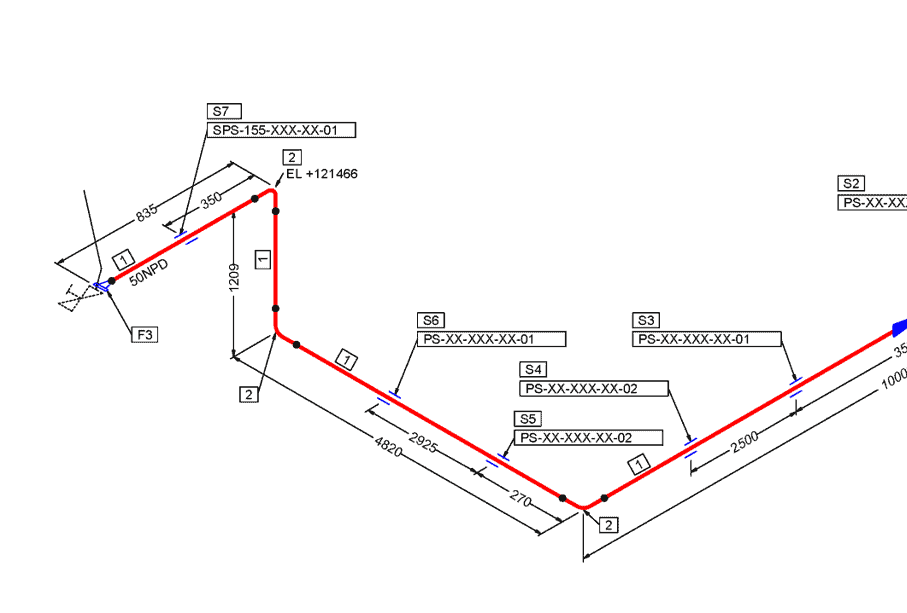
FEA is arguably the most impactful technological advancement in pipe stress analysis. Software packages such as Caesar II, AutoPIPE, or ROHR2 utilize FEA to break down complex piping geometries into a mesh of discrete elements. By applying material properties, temperature differentials, internal pressures, and external loads (gravity, wind, seismic), the software calculates the stress, strain, and displacement at every point in the system. This allows engineers to:
- Accurately predict stresses due to thermal expansion and contraction, ensuring that pipe segments and connections remain below allowable stress limits.
- Analyze the impact of support reactions and validate the structural integrity of both pipes and their supporting structures.
- Evaluate potential fatigue life under cyclic loading conditions.
- Optimize the placement and type of expansion joints or loops, minimizing their number while maximizing allowable straight runs.
FEA provides a quantitative, high-fidelity method to determine if a proposed piping length is structurally sound under all anticipated operating conditions, moving beyond the often overly conservative approximations of earlier methods.
Computational Fluid Dynamics (CFD) for Flow Optimization
As mentioned, CFD software (e.g., Ansys Fluent, OpenFOAM, STAR-CCM+) is indispensable for understanding fluid flow characteristics. Beyond simply calculating pressure drop, CFD can:
- Visualize flow patterns, identify areas of high turbulence, recirculation zones, and potential erosion.
- Optimize pipe diameters, valve selections, and bend radii to minimize head loss and maximize flow efficiency.
- Analyze multi-phase flow, heat transfer, and chemical reactions within the pipeline.
By providing detailed insights into fluid behavior, CFD enables engineers to push the boundaries of allowable piping length by precisely identifying the hydraulic limits and ensuring the system meets performance requirements without excessive energy consumption or operational issues.
Building Information Modeling (BIM) for Integrated Project Delivery
BIM platforms (like Autodesk Revit, Bentley OpenBuildings Designer) extend beyond individual engineering analyses to integrate all aspects of a project. For piping design, BIM facilitates a holistic approach by consolidating data from architectural, structural, mechanical, and electrical disciplines into a single, collaborative model. While not directly calculating maximum length, BIM streamlines the entire design process, ensuring consistency and coordination. It aids in:
- Clash detection, preventing physical interference between piping and other building elements.
- Automated extraction of bills of materials, improving cost estimation.
- Facilitating design reviews and approvals.
- Providing a foundation for digital twins, which can monitor real-time performance and predict maintenance needs for long piping runs.
This integrated environment reduces errors, improves efficiency, and indirectly supports the effective implementation of maximum allowable length methods by ensuring design consistency and data integrity.
Advanced Simulation Software and Digital Twins
The synergy of these technologies paves the way for advanced simulation and the concept of digital twins. A digital twin is a virtual replica of a physical piping system, continuously updated with real-time operational data. This allows for:
- Continuous monitoring of stress, pressure, temperature, and flow across long piping networks.
- Predictive maintenance, identifying potential issues before they lead to failure.
- Scenario planning, simulating changes in operating conditions to understand their impact on piping integrity and performance.
For maximum allowable length, a digital twin can validate design assumptions against real-world performance, fine-tuning the understanding of system limits and potentially enabling even longer, safer, and more efficient piping runs in future designs.
Practical Applications and Future Trends
The rigorous determination of maximum allowable piping length, heavily supported by technology, has profound practical implications across industries.
Ensuring Safety and Reliability in Critical Infrastructure
In sectors like nuclear power, petrochemicals, and pharmaceutical manufacturing, pipe failures can have catastrophic environmental, economic, and human costs. Precise methods for calculating allowable lengths are fundamental to designing highly reliable systems that can withstand extreme conditions, ensuring public safety and environmental protection. The detailed analysis provided by FEA and CFD helps mitigate risks associated with overstressing, fatigue, and leaks.
Optimizing Performance and Reducing Costs
Beyond safety, optimizing piping length directly impacts operational efficiency and project costs. By accurately determining the maximum length, engineers can:
- Minimize the number of supports, expansion joints, and fabrication components, reducing material and labor expenses.
- Optimize pump/compressor sizing, leading to lower energy consumption and reduced operating costs over the system’s lifespan.
- Shorten construction schedules through more efficient design and fewer rework cycles.
The technology-driven methods allow for a lean design process, balancing safety margins with economic viability.
AI and Machine Learning in Predictive Analysis
The future of determining maximum allowable piping length methods lies in the integration of Artificial Intelligence (AI) and Machine Learning (ML). These technologies can analyze vast datasets from historical projects, operational data from digital twins, and simulation results to:
- Identify complex correlations and predict optimal lengths more rapidly and accurately than traditional methods.
- Automate design optimization processes, exploring a wider range of design parameters.
- Detect subtle patterns indicative of potential failures or inefficiencies in existing long piping runs, leading to proactive maintenance.
AI could revolutionize pipe routing and sizing by learning from past successes and failures, leading to generative design approaches that suggest optimal solutions for given constraints.
Modular Construction and Prefabrication Considerations
The trend towards modular construction and prefabrication in industrial projects also impacts piping length methods. Large sections of piping are fabricated off-site in controlled environments, then transported and assembled. This necessitates extremely precise design and length calculations to ensure modules fit together seamlessly on-site. The detailed 3D models and simulation capabilities offered by current technology are crucial for this precision, allowing for the pre-validation of complex assemblies and their maximum allowable lengths within the modular units.
In conclusion, the “maximum allowable piping length method” is a multifaceted engineering discipline, fundamentally transformed by technological innovation. From CAD for detailed modeling to FEA for stress analysis, CFD for fluid dynamics, and BIM for integrated project delivery, technology empowers engineers to design piping systems that are not only safe and reliable but also maximally efficient and cost-effective. As AI and machine learning continue to mature, these methods will only become more sophisticated, enabling even greater optimization and pushing the boundaries of what is possible in fluid transportation infrastructure.
aViewFromTheCave is a participant in the Amazon Services LLC Associates Program, an affiliate advertising program designed to provide a means for sites to earn advertising fees by advertising and linking to Amazon.com. Amazon, the Amazon logo, AmazonSupply, and the AmazonSupply logo are trademarks of Amazon.com, Inc. or its affiliates. As an Amazon Associate we earn affiliate commissions from qualifying purchases.