
Understanding the structure of minimum wage in Massachusetts is essential for both employers operating in the Commonwealth and employees seeking to maximize their financial health. Massachusetts has consistently maintained one of the highest state-mandated minimum wage levels in the United States, reflecting the state’s commitment to addressing the high cost of living in the region. Navigating these regulations requires a clear grasp of current hourly rates, specific industry exemptions, and the future trajectory of pay adjustments.
The Current State of Massachusetts Minimum Wage
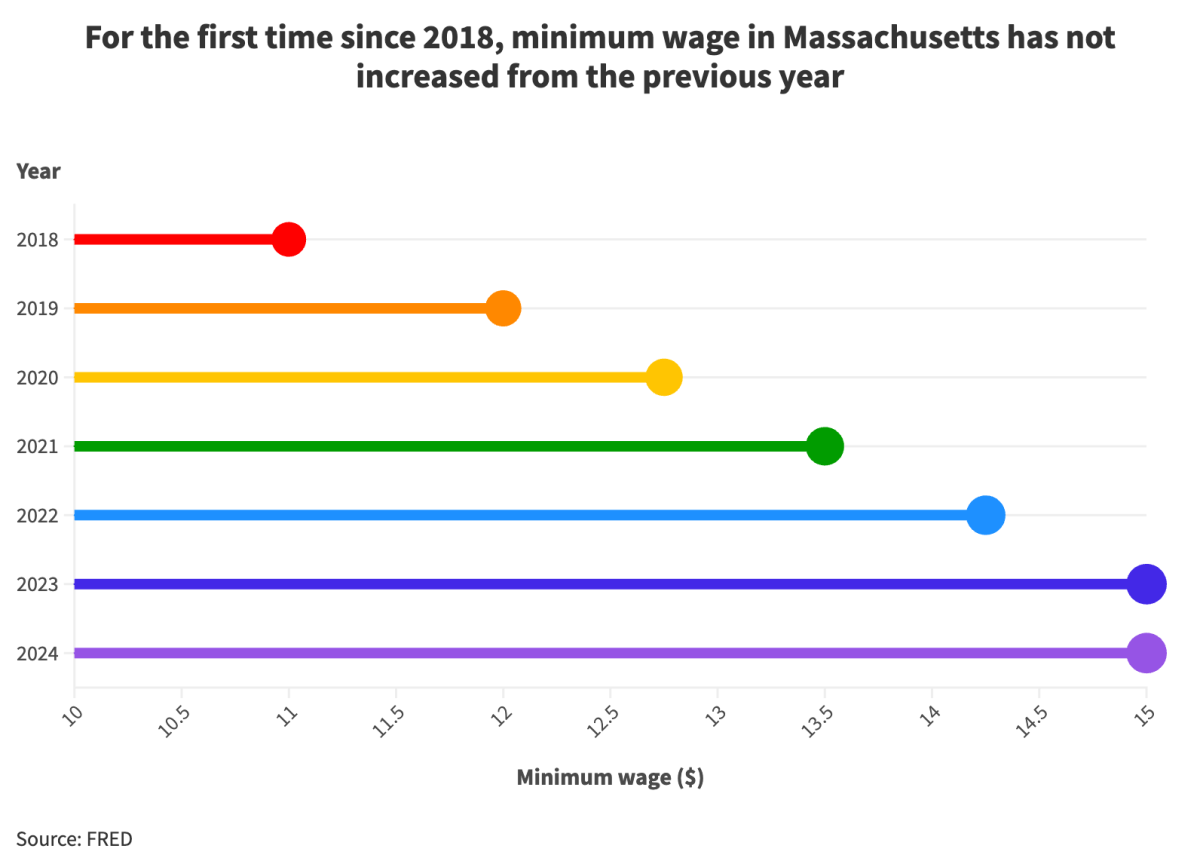
As of January 1, 2024, the standard minimum wage in Massachusetts is $15.00 per hour. This rate applies to the vast majority of non-exempt workers across all industries. This milestone represents the culmination of a multi-year legislative effort, known as the “Grand Bargain” of 2018, which systematically increased the wage floor from $11.00 per hour in a series of annual increments.

Applicability and Coverage
The $15.00 mandate applies to almost every worker in the state, regardless of the size of the business. Unlike federal law, which provides various exemptions based on gross annual sales or business volume, Massachusetts law is comprehensive. Whether an individual works for a small local boutique, a massive retail chain, or a professional service firm, they are entitled to the state-mandated minimum.
The Distinction Between State and Federal Law
It is vital to recognize that the Fair Labor Standards Act (FLSA) sets the federal minimum wage at a significantly lower $7.25 per hour. In instances where state and federal laws differ, the law that provides the higher benefit to the employee prevails. Consequently, because Massachusetts law mandates a higher rate, the $15.00 per hour figure is the legally binding floor for all employers in the state.
Tipped Employees and the Service Industry
One of the most complex areas of Massachusetts labor law involves employees who receive tips as part of their compensation. The state maintains a specific “service rate” for these workers, which is distinct from the standard minimum wage.
Understanding the Service Rate
For employees who receive more than $20 a month in tips, the minimum wage is currently $6.75 per hour. This is often misunderstood as a “tip credit.” However, employers must ensure that the combination of the service rate and the tips received by the employee equals at least the standard minimum wage of $15.00 per hour for every hour worked.
The “Tip Pool” Regulation
Massachusetts has strict laws regarding how tips are handled. Management is prohibited from participating in tip pools. Only employees who provide direct service to customers—such as waitstaff, bartenders, and bussers—can be part of a tip-sharing arrangement. If an employer fails to ensure that a tipped employee earns an average of $15.00 per hour during a pay period through base pay plus tips, the employer is legally obligated to make up the difference.
Calculating the Difference
Employers are required to track tips carefully to ensure compliance. If a server’s tips fall short on a slow night, the employer must bridge the gap to reach the $15.00 benchmark. This creates a financial safety net for service workers, ensuring their income remains stable regardless of fluctuating customer volume.
Exemptions, Deductions, and Special Classifications
While the law is broad, there are specific classifications where the standard $15.00 rate does not apply in a traditional sense. Understanding these nuances is crucial for both payroll departments and individual contractors.
Agricultural Workers
Agriculture has long held a different status under labor law. While agricultural workers in Massachusetts are entitled to a minimum wage, the rate for these positions is currently $8.00 per hour. This is a significant departure from the standard rate and reflects the unique, seasonal nature of the agricultural economy.
Independent Contractors vs. Employees
A frequent point of friction in the modern labor market is the distinction between an employee and an independent contractor. Under the Massachusetts Independent Contractor Law (often referred to as the “ABC test”), it is notoriously difficult for a company to classify a worker as an independent contractor. To do so, the company must prove that:
- The individual is free from control and direction in connection with the performance of the service.
- The service is performed outside the usual course of the business of the employer.
- The individual is customarily engaged in an independently established trade, occupation, profession, or business of the same nature as that involved in the service performed.
If these criteria are not met, the worker is considered an employee by default, and they must be paid at least the minimum wage, provided with unemployment insurance, and covered by workers’ compensation.
Deductions from Wages
Under Massachusetts law, an employer is generally prohibited from deducting money from an employee’s paycheck for items like broken equipment, register shortages, or uniform costs. Wages are considered the property of the employee, and the state’s Wage Act is one of the most stringent in the nation. Unauthorized deductions can lead to triple damages and the payment of the employee’s attorney fees if a lawsuit is filed.
Compliance and Enforcement for Employers
For business owners, compliance with Massachusetts wage laws is not optional. The Department of Labor Standards (DLS) and the Office of the Attorney General actively monitor and enforce these regulations.
Recordkeeping Requirements
Employers must maintain accurate payroll records for at least three years. These records must include the name, address, occupation, amount paid each pay period, and hours worked by each employee. Failure to produce these records during an audit or investigation is a serious offense and often serves as a red flag for regulators.
The Cost of Non-Compliance
The Wage Act is designed to protect workers, and the penalties for violations are intentionally punitive to discourage employer misconduct. If an employee successfully sues for unpaid wages, the employer is often liable for “treble damages”—three times the amount of the unpaid wages—plus interest and legal fees. This financial risk makes diligent payroll management a top-tier business priority.
Monitoring Changes
The legislative landscape in Massachusetts is dynamic. While the $15.00 rate is current, labor advocates frequently propose legislation to adjust this figure further to reflect the rising cost of housing and consumer goods. Business owners should subscribe to updates from the Massachusetts Executive Office of Labor and Workforce Development to ensure they remain ahead of any future legislative adjustments.
Why the Minimum Wage Matters for Personal Finance
From a personal finance perspective, the Massachusetts minimum wage serves as the foundation upon which an individual builds their budget. While $15.00 per hour is the baseline, the high cost of living in Massachusetts—particularly in the Greater Boston area—often necessitates a proactive approach to financial planning for those earning at or near this level.
Maximizing Take-Home Pay
Understanding gross versus net pay is the first step in effective budgeting. Even at minimum wage, payroll taxes, Social Security, and Medicare contributions will reduce the final paycheck. Utilizing tax-advantaged accounts, such as an employer-sponsored 401(k) or a Health Savings Account (HSA), can help lower an individual’s tax burden while simultaneously building personal wealth.
Career Progression and Skill Development
The minimum wage is intended to be a starting point, not a career ceiling. Many individuals use entry-level positions to gain experience before transitioning into higher-paying roles. Recognizing that minimum wage is a floor, not a target, is critical. Seeking professional development, certifications, or technical training in high-demand fields like healthcare, technology, or specialized trades is the most effective way to move beyond the minimum wage bracket.

Financial Tools and Resources
For those earning minimum wage, accessing government assistance programs or state-sponsored financial literacy resources can provide much-needed breathing room. The Commonwealth offers various programs for workforce training and educational subsidies that can help individuals increase their earning potential over time.
By maintaining a clear understanding of the law and its application, workers can ensure their rights are protected, and employers can cultivate a compliant, ethical, and stable work environment. As the economic landscape of Massachusetts continues to evolve, staying informed about these fundamental wage mandates remains a cornerstone of financial stability.
aViewFromTheCave is a participant in the Amazon Services LLC Associates Program, an affiliate advertising program designed to provide a means for sites to earn advertising fees by advertising and linking to Amazon.com. Amazon, the Amazon logo, AmazonSupply, and the AmazonSupply logo are trademarks of Amazon.com, Inc. or its affiliates. As an Amazon Associate we earn affiliate commissions from qualifying purchases.