
In the modern landscape of commerce, the distinction between a struggling enterprise and a global powerhouse often lies in how management is perceived. While many view leadership as an innate “art” or a collection of soft skills, the most successful business leaders treat management as a rigorous science. Under the umbrella of “Money”—encompassing business finance, resource allocation, and financial optimization—management as a science represents the application of the scientific method to the complexities of organizational operations.
By treating management as a science, businesses can move beyond guesswork and “gut feelings” toward a systematic framework of observation, experimentation, and data-driven verification. This approach is essential for anyone looking to master business finance, scale a side hustle into a corporation, or optimize a portfolio of assets. It is about establishing universal principles that, when applied correctly, yield predictable, repeatable, and profitable results.
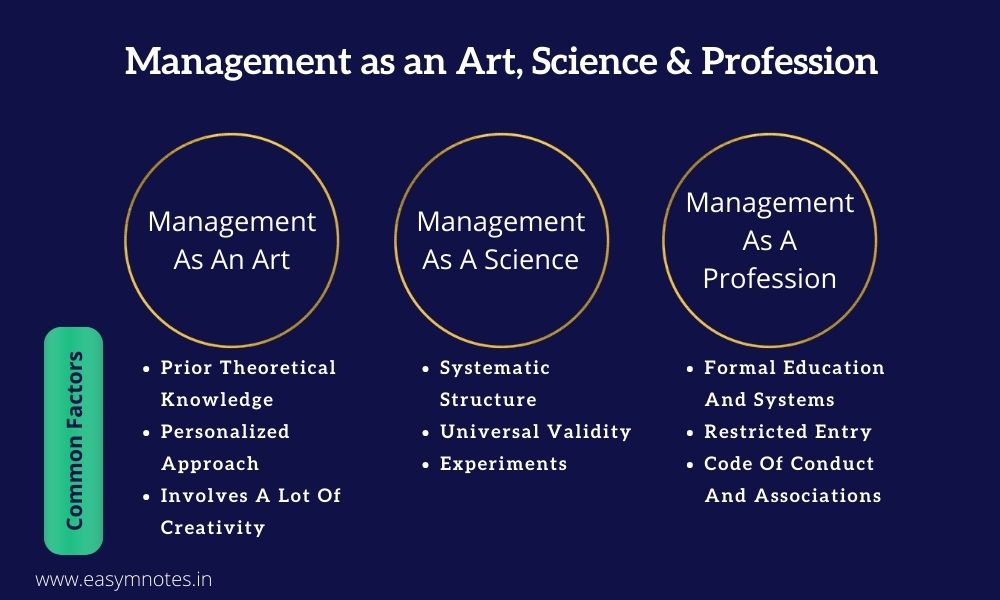
The Foundations of Management as a Science in Business Finance
The concept of management as a science is rooted in the belief that organizational efficiency can be measured and improved through systematic study. In the context of business finance, this means looking at every dollar spent and every hour worked as a variable in a mathematical equation.
Defining the Scientific Approach to Resource Management
Management as a science involves the development of a body of knowledge based on logical consistency and empirical evidence. In a financial context, this translates to the creation of standardized procedures for capital allocation. Rather than deciding where to invest based on a whim, a scientific manager uses historical data, market trends, and risk assessment models. This systematic approach ensures that resources—both human and financial—are utilized to their highest potential, minimizing waste and maximizing the internal rate of return (IRR).
The Shift from Intuition to Empirical Data
Historically, business decisions were often made by charismatic leaders relying on intuition. However, the “science of money” requires a shift toward empiricism. Empirical management relies on verifiable data. For instance, instead of assuming a new marketing campaign will drive revenue, a scientific manager runs A/B tests, analyzes conversion metrics, and calculates the Customer Acquisition Cost (CAC) against the Lifetime Value (LTV). This move toward data-driven management allows for objective decision-making that is independent of personal bias, making the business more resilient to market volatility.
Quantitative Methodology: The Core of Financial Science
At the heart of any science is quantification. To manage a business scientifically is to speak the language of numbers. In business finance, this involves the rigorous application of mathematical models to predict outcomes and assess the health of an organization.
Data-Driven Decision Making and ROI
The primary goal of scientific management is to optimize the Return on Investment (ROI). This is achieved by establishing clear, measurable Key Performance Indicators (KPIs). By identifying the specific variables that lead to profit—such as lead conversion rates, inventory turnover, or overhead ratios—management can apply scientific principles to tweak those variables for better outcomes. If a business can isolate a specific factor that increases profit margin by 2%, and that factor can be replicated across departments, the management has successfully applied a scientific principle to financial growth.
Financial Modeling as a Scientific Tool
Modern business finance relies heavily on financial modeling, which is essentially the scientific method in spreadsheet form. These models act as controlled environments where managers can test hypotheses. “What happens to our cash flow if interest rates rise by 1%?” or “How does a 10% increase in production cost affect our break-even point?” By constructing these models, management can anticipate financial hurdles before they occur, allowing for proactive rather than reactive financial planning. This level of foresight is a hallmark of management as a science, turning uncertainty into calculated risk.
Systematizing Operations for Maximum Profitability
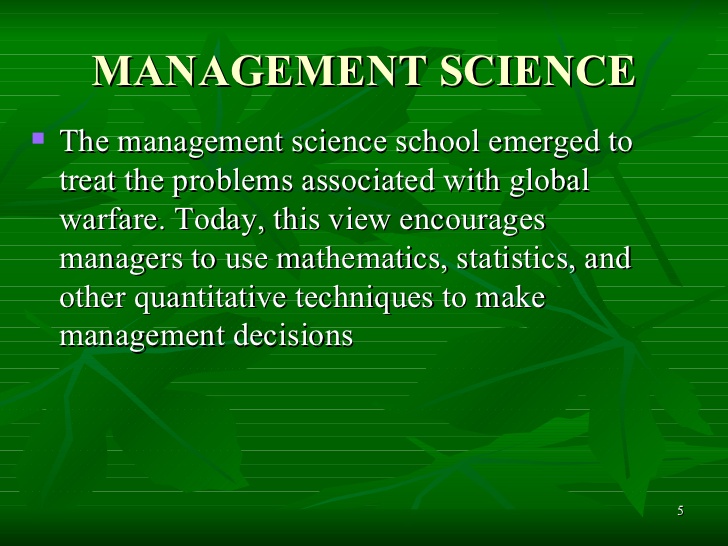
A science requires a laboratory, and in the world of business finance, the “laboratory” is the operational workflow of the company. To manage scientifically, one must view every business process as a repeatable experiment that can be refined for greater efficiency.
Process Optimization and Waste Reduction
One of the pioneers of management as a science, Frederick Taylor, introduced the idea of “Scientific Management” by breaking down tasks into their smallest components to find the most efficient way to work. In modern finance, this is reflected in “Lean” methodologies and “Six Sigma” practices. By identifying and eliminating non-value-added costs—whether it’s redundant software subscriptions, inefficient supply chains, or excessive administrative layers—a company can significantly boost its bottom line. This isn’t just about cutting costs; it’s about the scientific refinement of processes to ensure that every cent of capital is working toward a financial objective.
The Role of Performance Metrics and KPIs
In any scientific endeavor, measurement is the only way to track progress. Scientific management utilizes a rigorous framework of KPIs to monitor the financial pulse of the company. These metrics might include the “Current Ratio” to assess liquidity, “Debt-to-Equity” to assess leverage, or “Net Profit Margin” to assess overall efficiency. By setting benchmarks and constantly measuring actual performance against these standards, management can identify “variances.” Analyzing these variances allows managers to diagnose problems with scientific precision, much like a doctor uses vital signs to diagnose an illness.
The Evolution of Management: From Taylorism to FinTech Integration
As technology and financial tools evolve, so too does the science of management. What began as simple stopwatch studies in factories has evolved into complex algorithmic management driven by financial technology (FinTech).
Classic Principles in a Modern Economy
While the tools have changed, the core principles of management as a science remain the same: standardization, specialization, and systematic observation. Today, these principles are applied to digital side hustles and global conglomerates alike. Standardization now looks like automated accounting workflows, while specialization might involve outsourcing non-core financial functions to expert agencies. The goal remains the same: to create a “money machine” that operates with as little friction as possible, governed by laws of efficiency rather than the moods of the manager.
Automation and Predictive Analytics in Financial Management
The “science” part of management has been supercharged by the rise of predictive analytics and automated financial tools. Today’s managers use software to perform complex regression analyses, predicting future sales with startling accuracy based on historical patterns. Automation takes the scientific principle of “repeatability” to its logical extreme. By automating payroll, invoicing, and tax compliance, a business removes human error from the equation. This creates a more stable financial environment, allowing management to focus on higher-level scientific inquiries, such as market expansion and long-term capital strategy.
Why Management as a Science is Essential for Scaling Revenue
For a business to scale—meaning it grows revenue much faster than costs—it must move away from artisanal, “one-off” management styles toward a scientific, scalable model. This is where the intersection of management and money becomes most apparent.
Mitigating Risk through Systematic Analysis
Investing and business finance are fundamentally about risk management. The scientific approach to management views risk not as something to be feared, but as a variable to be quantified. Through techniques like Monte Carlo simulations or sensitivity analysis, scientific managers can determine the probability of various financial outcomes. This allows a business to take “smart risks”—those where the potential reward is scientifically justified by the probability of success. In the world of money, the ability to mitigate risk through systematic analysis is what separates high-growth firms from those that stagnate.

Building a Sustainable Financial Legacy
Finally, treating management as a science ensures the longevity of an enterprise. Because the system is based on principles and data rather than the unique personality of a single founder, the business becomes “antifragile.” It can survive leadership changes, market shifts, and economic downturns because its financial foundations are built on tested truths. For those looking to build lasting wealth, understanding management as a science is the key to creating a self-sustaining asset. It transforms a business from a chaotic job into a precision-engineered financial instrument.
In conclusion, management as a science is the disciplined application of logic, mathematics, and empirical observation to the pursuit of financial excellence. By adopting this mindset, managers and entrepreneurs can navigate the complexities of the modern economy with a clear roadmap, ensuring that every financial decision is backed by the weight of evidence and the rigor of systematic thought. In the pursuit of money and business growth, science is the most powerful tool at our disposal.
aViewFromTheCave is a participant in the Amazon Services LLC Associates Program, an affiliate advertising program designed to provide a means for sites to earn advertising fees by advertising and linking to Amazon.com. Amazon, the Amazon logo, AmazonSupply, and the AmazonSupply logo are trademarks of Amazon.com, Inc. or its affiliates. As an Amazon Associate we earn affiliate commissions from qualifying purchases.