
In the rapidly evolving landscape of competitive gaming, the integrity of software is the foundation upon which multi-billion dollar industries are built. However, where there is sophisticated code, there are often those looking to exploit it. Among the most notorious and technically fascinating exploits in the realm of First-Person Shooters (FPS) is the “Magic Bullet” cheat. Unlike standard aimbots or wallhacks, the Magic Bullet represents a sophisticated manipulation of game engine logic and network protocols. This article explores the technical architecture of this exploit, how it bypasses traditional security, and the ongoing technological arms race between cheat developers and cybersecurity firms.
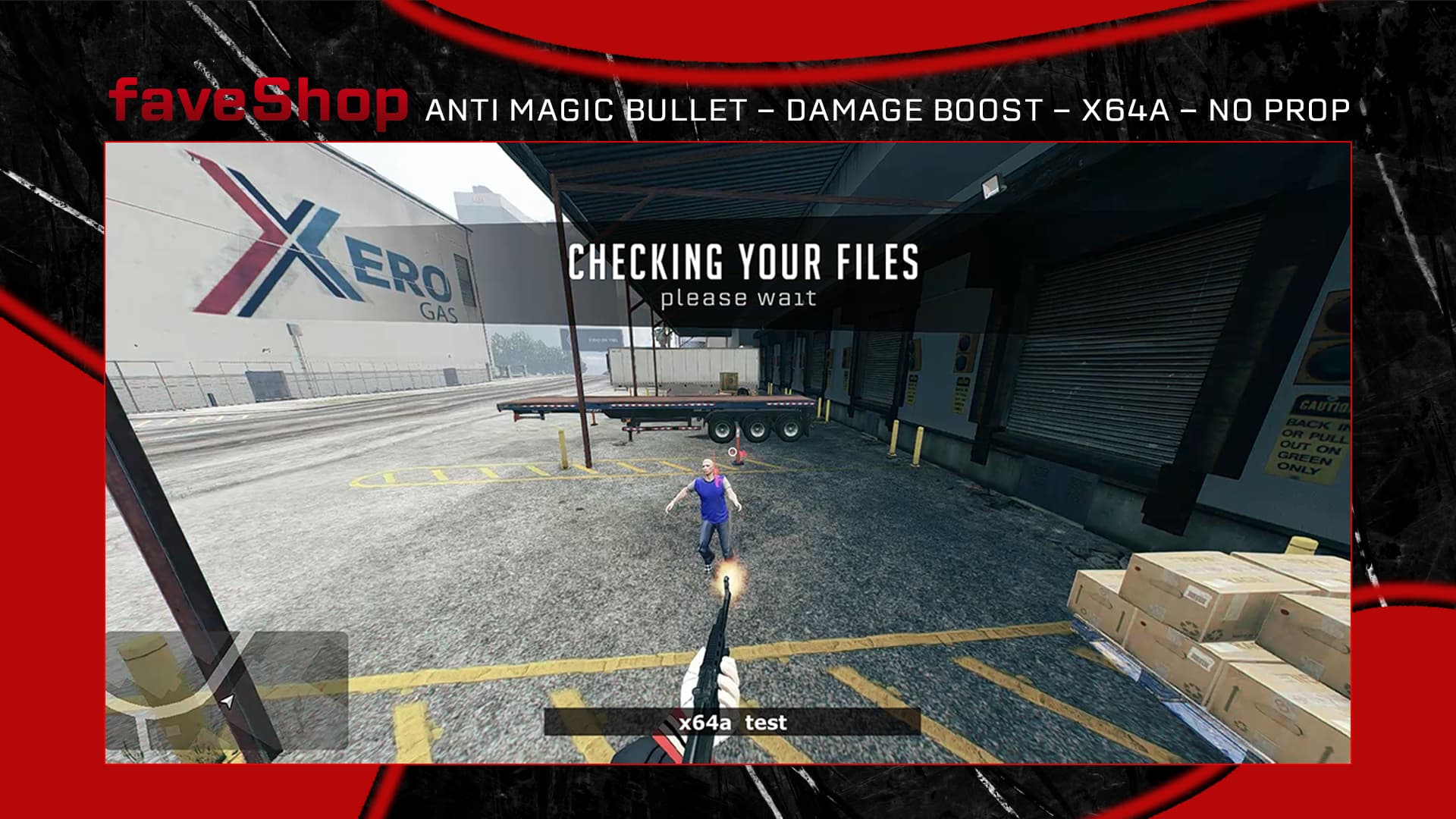
The Engineering Behind the Exploit: How Magic Bullet Cheats Function
To understand the Magic Bullet, one must first understand how a modern video game processes a “hit.” When a player fires a weapon in a digital environment, the game engine performs a series of calculations—often referred to as ray-casting. This process determines if the trajectory of the projectile intersects with the “hitbox” of another player. The Magic Bullet cheat is a software modification that intervenes in this calculation, ensuring a successful hit regardless of player input or environmental obstacles.
Memory Manipulation and Data Packet Interception
At its core, a Magic Bullet cheat functions by accessing the game’s volatile memory (RAM). Every object in a game, from a player’s coordinate to the health of an opponent, is assigned a specific memory address. Cheat software uses “pointers” to locate these addresses in real-time.
When a user triggers a shot, the cheat software intercepts the data packet before it is sent to the game server. Instead of sending the actual coordinates of where the player aimed, the software overwrites that data with the exact coordinates of an opponent’s hitbox. This is often achieved through “code injection,” where the cheat inserts its own instructions into the game’s executable memory space, effectively hijacking the function responsible for weapon fire.
Overriding Ray-Casting and Collision Detection
In a standard game environment, collision detection prevents bullets from passing through solid objects like walls or floors. The Magic Bullet exploit often includes a “no-collision” or “wall-penetration” component. By modifying the game’s physics engine parameters locally, the software instructs the game to ignore “solid” flags on environmental assets.
Technically, the cheat tells the game engine that the bullet’s path is clear of obstructions, or it simply teleports the bullet’s point of origin to a location directly in front of the target. This manipulation of spatial logic is what gave the cheat its name; like a “magic bullet,” the projectile follows a path that defies the laws of the game’s simulated physics.
Differentiating the Magic Bullet from Traditional Aimbots
While the term “cheating” often evokes images of simple scripts, the Magic Bullet is distinct from more common exploits like Aimbots or ESP (Extra Sensory Perception) hacks. Understanding these differences highlights why the Magic Bullet is particularly difficult for software-based anti-cheat systems to detect.
Predictive Logic vs. Hardcoded Result
A standard aimbot works by manipulating the player’s input. It calculates the necessary mouse movements to align the crosshair with a target. This creates a “mechanical” signature—jittery, inhumanly fast movements—that can be flagged by behavioral analysis software.
In contrast, a Magic Bullet cheat does not necessarily need to move the player’s camera. A player could be looking at the ground, and the cheat will still register a headshot on an enemy behind them. Because the cheat modifies the result of the action rather than the input leading to it, it bypasses the mouse-movement heuristics that many anti-cheat systems rely on.
The “Through-Wall” Paradox
Traditional “Wallhacks” allow a player to see through textures, but they do not inherently allow them to shoot through indestructible objects. The Magic Bullet bridges this gap. By altering the “hit-registration” logic, it removes the environmental constraints entirely. This requires a much deeper level of access to the game’s internal functions, often requiring the cheat to run at a higher privilege level within the operating system to prevent the game’s own integrity checks from triggering.
The Defense Architecture: How Modern Anti-Cheat Systems Combat Exploits

As exploits become more sophisticated, the technology used to stop them has migrated from simple file-scanning to advanced digital security measures. The battle against Magic Bullet cheats has led to some of the most invasive and complex security software in the consumer tech world.
Kernel-Level Surveillance
Modern anti-cheat solutions like Riot Games’ Vanguard, Activision’s Ricochet, and BattlEye operate at the “Kernel” level (Ring 0). In computer architecture, the Kernel is the core of the operating system with complete control over the hardware.
By operating at this level, anti-cheat software can monitor every process, driver, and memory allocation on the system. Since Magic Bullet cheats often use “drivers” to hide their presence in the RAM, kernel-level security is necessary to see through these cloaking techniques. This level of access allows the security software to verify that the game’s memory has not been tampered with and that no unauthorized “hooks” have been attached to the game’s executable.
Machine Learning and Heuristic Detection
Because some Magic Bullet cheats are “private” and constantly updated to avoid signature-based detection, developers have turned to AI and Machine Learning. Systems now analyze player data on the server side rather than just the client side.
If a player is consistently hitting targets with 100% accuracy while firing through walls or without line-of-sight, the server-side AI flags this as “statistically impossible.” This is known as heuristic analysis. Even if the cheat software is invisible to the user’s computer, its effects on the game world are logged, analyzed, and used to issue “shadow bans” or hardware ID (HWID) bans.
The Technical and Ethical Implications for Game Developers
The existence of the Magic Bullet cheat creates a massive technical debt for game developers. It forces a shift in how game engines are designed, moving more processing power from the “client” (the player’s PC) to the “server.”
Server-Side Validation: The Ultimate Barrier
The most effective way to neutralize Magic Bullet cheats is “Server-Side Validation.” In this model, the client does not decide if a hit occurred; it merely sends a request. The server, which maintains the “authoritative” state of the game world, checks if that hit was possible. If the server sees a wall between the shooter and the target, it rejects the hit.
However, this comes with a significant technical trade-off: latency (lag). Performing these checks for 100 players in real-time requires immense server-side CPU power and can lead to a “heavy” feeling in gameplay. Finding the balance between high-performance networking and robust security validation is one of the greatest engineering challenges in modern game development.
The Financial Cost of Software Vulnerabilities
From a business and tech perspective, a widespread Magic Bullet exploit can be catastrophic. It degrades the “product integrity” of a live-service game, leading to player churn and decreased revenue. Consequently, the “Anti-Cheat” department has become as critical as the “Engine Development” department.
Companies now invest millions into “Bounty Programs,” where they pay ethical hackers to find vulnerabilities like Magic Bullet exploits before they can be used by malicious actors. This has turned game security into a specialized branch of cybersecurity, attracting talent from traditional software security and defense sectors.

Conclusion: The Future of Game Integrity and Software Security
The “Magic Bullet” cheat is more than just a nuisance for gamers; it is a sophisticated piece of software that exploits the fundamental ways computers process data and networks communicate. It represents the “dark side” of software engineering, where deep knowledge of memory management and network protocols is used to bypass complex security systems.
As we move toward a future of cloud gaming and integrated AI, the nature of these exploits will continue to change. While server-side processing may eventually make client-side cheats like the Magic Bullet obsolete, the ingenuity of those seeking to find “the cheat code” will undoubtedly pivot to new frontiers. For now, the Magic Bullet serves as a reminder that in the world of technology, security is not a destination but a continuous, evolving process of defense, detection, and innovation.
aViewFromTheCave is a participant in the Amazon Services LLC Associates Program, an affiliate advertising program designed to provide a means for sites to earn advertising fees by advertising and linking to Amazon.com. Amazon, the Amazon logo, AmazonSupply, and the AmazonSupply logo are trademarks of Amazon.com, Inc. or its affiliates. As an Amazon Associate we earn affiliate commissions from qualifying purchases.