
The term “Luddism” is frequently weaponized in modern discourse to dismiss any skepticism toward technological acceleration as naive, reactionary, or inherently regressive. When a critic questions the ethical implications of a new generative AI model or expresses concern over the environmental cost of massive data centers, they are often branded a “modern-day Luddite.” However, this label reflects a profound historical misunderstanding. To understand Luddism is to understand the complex, often fraught relationship between labor, capital, and the disruptive power of technology. It is not a blind hatred of machines; it is a protest against the exploitation of human value.

The Historical Genesis: More Than Just Machine-Breaking
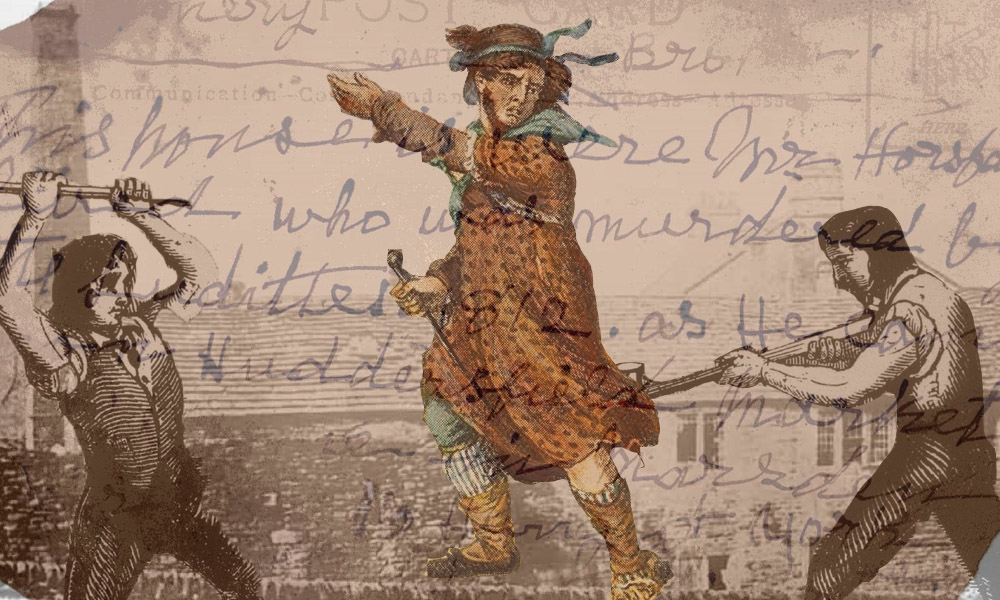
The original Luddites were not a disorganized rabble of technophobes terrified by the mechanical intricacy of looms. They were skilled textile artisans in early 19th-century England—specifically in Nottinghamshire, Yorkshire, and Lancashire—who operated within a system of traditional labor protections. When they began their coordinated campaign of frame-breaking between 1811 and 1816, their grievance was not with the existence of the machinery itself, but with the way the machinery was being deployed.
The Erosion of Craft and Quality
At the heart of the Luddite movement was the defense of “honest” production. The new wide-frame knitting machines allowed factory owners to produce inferior, cheapened goods at high volumes. The Luddites recognized that this shift was not merely an upgrade in production efficiency; it was a degradation of the market. By forcing low-quality products onto the consumer, factory owners were eroding the economic value of skilled labor and, by extension, the livelihoods of the men who had spent years mastering their craft.
The Socio-Economic Context
The Luddites were operating during the Napoleonic Wars, a time of massive inflation, food shortages, and the suppression of labor unions under the Combination Acts. For these workers, the “machine” became the primary vehicle through which capital owners circumvented labor laws and depressed wages. Frame-breaking was a tactical negotiation tool. It was a form of collective bargaining by riot. They were not fighting progress; they were fighting for a seat at the table of industrial evolution.
Modern Luddism: Technology Trends and the Digital Workspace
In the contemporary era, we see a resurgence of Luddite philosophy, not in the destruction of hardware, but in the critical interrogation of software and AI integration. Today’s “Neo-Luddism” is an inquiry into the “tech-first” mentality that often prioritizes efficiency metrics over human sustainability.
The Algorithm as the New Loom
If the 19th-century loom replaced the skilled weaver, the modern large language model (LLM) or automated software suite threatens to replace the skilled knowledge worker. The tension remains the same: is the adoption of this technology being done to augment the human experience, or to render the human experience redundant? The modern critique is that software is often deployed not to make work better, but to make work cheaper, regardless of the impact on institutional knowledge, creativity, or mental health.
The Hidden Costs of Digital Efficiency
We are currently in a cycle of “productivity obsession,” where the latest tech stack is often adopted as a default—even when it creates more friction than it resolves. From a technology management perspective, the Luddite spirit serves as a necessary check-and-balance. It asks: Does this new tool actually improve our output, or are we just adding another layer of complexity? By demanding an assessment of the “tech debt” and the hidden labor involved in maintaining these systems, the modern critic mirrors the original Luddites’ concern for the integrity of their work.
Rethinking Progress: A Framework for Ethical Adoption
Labeling a critic as a Luddite is a defensive strategy often used to avoid debating the ethical implications of a product. If we strip away the pejorative nature of the term, Luddism offers a framework for responsible innovation. To build a future where technology serves humanity, we must adopt a more cautious, deliberate approach to the tools we integrate into our workflows.
Technological Stewardship
Technological stewardship involves moving away from the “move fast and break things” mantra. Instead, organizations should prioritize longevity, interoperability, and human-centric design. If a new software tool requires a complete overhaul of team morale or makes a role obsolete without a plan for re-skilling, that is not “progress”—that is institutional failure. A truly progressive stance involves the thoughtful integration of technology that preserves the agency and expertise of the human operator.
Evaluating Tool-Utility vs. Tool-Dependence
One of the core tenants of Luddite philosophy is that technology should remain a tool that the human commands, rather than an environment that dictates human behavior. In the software industry, this is the difference between a tool that helps a designer iterate faster and a platform that forces a designer to work within the rigid, limiting parameters of an algorithm. We must constantly assess whether our dependency on specific tech ecosystems is fostering innovation or forcing conformity.
The Future of Work: A Human-Centric Perspective
As we navigate the next wave of technological disruption—characterized by AI, automation, and ubiquitous digital surveillance—the lessons of the Luddites are more relevant than ever. History has shown us that technology is never neutral; it is always an expression of the priorities of those who own and implement it.
Preserving Human Value in the Age of AI
The goal for leaders, developers, and entrepreneurs should not be the total automation of processes, but the elevation of human contribution. We should look to technologies that empower workers to perform higher-order tasks, rather than those that treat human labor as a “bottleneck” to be eliminated. When we view the human as a partner to technology rather than a component of it, we avoid the adversarial relationship that fueled the Luddite uprisings.
Establishing the “Social License” for Tech
Just as early industrialization eventually led to the development of labor laws, safety standards, and eventually the eight-hour workday, the current digital age is nearing a reckoning regarding the social license of technology. We are beginning to see a public demand for data privacy, algorithm transparency, and protections against algorithmic bias. This is the modern manifestation of the Luddite spirit—a demand that the power of technology be tempered by the needs of the society it inhabits.

Conclusion: Reclaiming the Narrative
The Luddites were not the villains of the industrial revolution; they were its first reality-check. By understanding Luddism as a philosophy of labor rights and human dignity, we can reframe our own relationship with technology. We should stop viewing skepticism as an impediment to the future and start viewing it as a prerequisite for a sustainable one.
When we question a new software update, probe the ethics of an AI implementation, or demand to know how a gadget impacts our personal privacy, we are not failing to be “tech-savvy.” We are practicing the essential, and profoundly human, act of exercising agency over the tools that shape our world. Technology should be a servant to human flourishing, not a master to be feared. By learning the true history of Luddism, we move closer to a more balanced, equitable, and intelligent integration of technology in our modern professional and private lives. The machine will always evolve, but the responsibility to ensure that this evolution benefits the many, rather than the few, remains firmly in human hands.
aViewFromTheCave is a participant in the Amazon Services LLC Associates Program, an affiliate advertising program designed to provide a means for sites to earn advertising fees by advertising and linking to Amazon.com. Amazon, the Amazon logo, AmazonSupply, and the AmazonSupply logo are trademarks of Amazon.com, Inc. or its affiliates. As an Amazon Associate we earn affiliate commissions from qualifying purchases.