
Lip sync, short for lip synchronization, is a technical and artistic process where the movement of a character’s or performer’s lips is perfectly matched to the timing and cadence of a pre-recorded audio track. While the concept originated in the early days of cinema and live musical performance, it has evolved into a cornerstone of modern digital media, particularly within the realms of artificial intelligence, animation software, and social media content creation. Understanding the mechanics, history, and current technological state of lip sync is essential for anyone involved in digital content production.
The Technical Foundations of Lip Sync
At its core, lip sync is about the illusion of vocal presence. Whether performed by a human actor or generated by a computer algorithm, the goal is to bridge the gap between auditory information and visual expectation. When a viewer hears speech, their brain expects to see corresponding mouth movements. If these are out of sync, the “uncanny valley” effect occurs, leading to a loss of immersion and engagement.
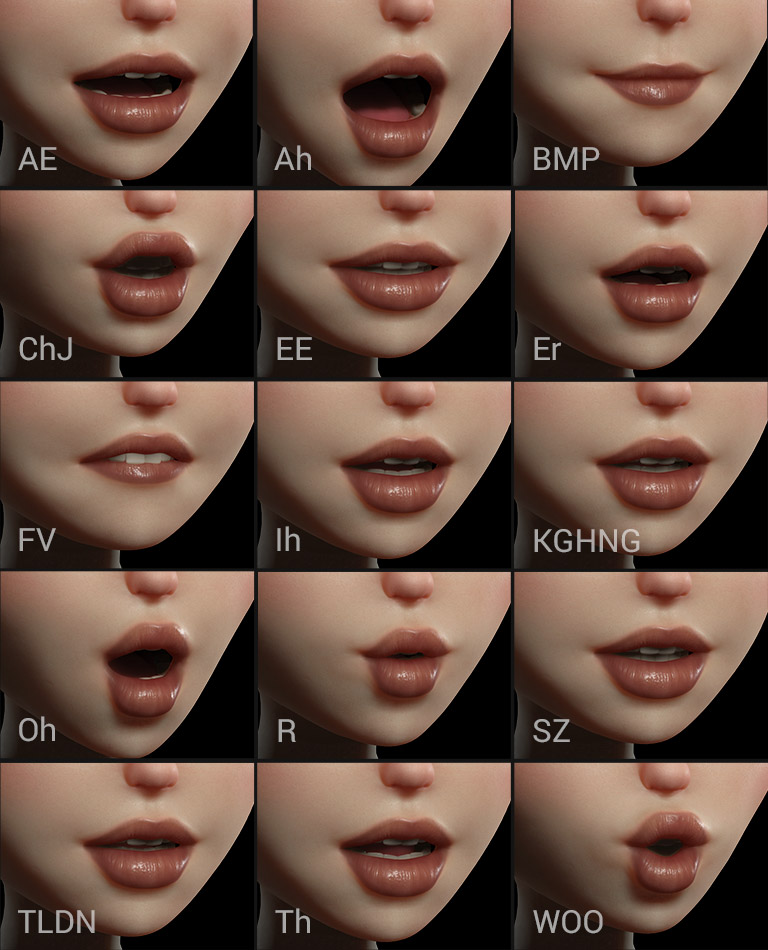
The Role of Phonemes
The foundation of effective lip sync—both manual and automated—is the phoneme. A phoneme is the smallest unit of sound in a language. In digital animation and AI generation, animators or algorithms map specific mouth shapes, known as “visemes,” to these phonemes. For example, the “f” sound requires teeth to touch the lower lip, while the “o” sound requires a rounded mouth shape. High-quality lip sync is defined by how accurately these shapes transition to represent the nuances of human speech.
Frame-by-Frame Synchronization
In traditional animation and video editing, lip sync requires matching the visual frames to the audio waveform. Editors or animators look at the amplitude and frequency of the audio file to determine when a word begins and ends. By aligning the “mouth-open” frames with the peaks in the audio waveform, creators can create a seamless connection between the sound and the visual movement of the character.
The Evolution of AI-Driven Lip Sync Tools
The rise of generative AI has fundamentally shifted how lip sync is produced. Previously a labor-intensive task requiring skilled animators to hand-draw or manually rig 3D models, modern technology now allows for instantaneous, high-fidelity lip synchronization through machine learning models.
How Neural Networks Process Speech
Modern AI tools utilize deep learning models, such as Generative Adversarial Networks (GANs) and Transformers, to analyze audio input and predict the necessary facial movements. These models are trained on thousands of hours of video footage, allowing them to learn the intricate relationship between audio frequencies and muscle movements in the lower face. When provided with a new audio clip, the AI synthesizes a facial expression that is not just synchronous, but emotionally resonant.
Real-Time Synthesis and Its Implications
The most significant advancement in this field is real-time lip sync. Tools like NVIDIA’s Audio2Face or various cloud-based video editing platforms can now render talking heads in real-time based on live microphone input. This capability has revolutionized sectors like live virtual streaming, interactive customer service avatars, and dynamic gaming characters. By eliminating the need for frame-by-frame rendering, these tools have lowered the barrier to entry for independent creators and small production houses.

Lip Sync in Digital Content and Social Media
Beyond the technical software perspective, lip sync has become a pervasive cultural phenomenon on social media. Platforms like TikTok have popularized lip-syncing as a form of performance art, shifting the focus from technical precision to stylistic expression and comedic timing.
Creative Performance vs. Technical Accuracy
In the context of social media, lip sync is less about perfect phoneme mapping and more about performance quality. Users choose audio clips—ranging from movie dialogue to trending songs—and record themselves performing the lines. The challenge here is “timing,” or the ability to hit the beats of the audio perfectly while maintaining a natural, engaging screen presence. This has become a legitimate creative medium where users utilize facial expressions, camera angles, and editing to reimagine viral audio.
The Impact on Influencer Marketing
For brands, understanding the cultural currency of lip sync is vital. Influencers who master the art of lip sync can rapidly disseminate branded messages or promotional audio. By participating in lip-sync trends, brands can leverage existing algorithmic momentum, making their content feel native to the platform rather than like an intrusive advertisement. The ability to “sync” with a trend is essentially the modern equivalent of understanding the zeitgeist of a platform’s user base.
Challenges and Future Trends
Despite the ease of modern automation, lip sync remains a complex field with several hurdles, particularly regarding realism and ethics.
The Uncanny Valley and Realism
Even with advanced AI, capturing the subtleties of human speech—such as the micro-expressions of the eyes, the tension in the jaw, and the natural tongue movement—remains a challenge. When an AI-generated mouth moves perfectly with the audio but the rest of the face remains static, the viewer’s brain immediately detects the artificiality. Future developments are focusing on “holistic facial animation,” which ensures that the entire face, including the forehead and eyes, reacts in sync with the emotional tone of the audio, not just the lips.
Ethics in Synthetic Media
The democratization of high-quality lip sync technology brings significant ethical concerns, particularly regarding deepfakes. Because AI can now map almost any audio to any static image or video, malicious actors can create convincing, fabricated footage of public figures or private individuals saying things they never actually said. As lip sync tools become more accessible, the industry is increasingly focused on developing “provenance” standards, such as digital watermarking and blockchain verification, to differentiate authentic media from synthetic, AI-generated clones.
The Future of Virtual Avatars
As we move toward the Metaverse and more immersive digital experiences, the role of lip sync will only grow. We are entering an era where digital avatars will be the primary interface for our interactions, whether in meetings, virtual concerts, or immersive gaming environments. The future of lip sync lies in “expressive synchronization,” where the audio drives not just the lips, but the entire persona of the digital entity. We are moving toward a time when an avatar will be indistinguishable from a human actor, providing a seamless digital twin that can speak any language, convey any emotion, and maintain perfect synchronization in any environment.

Conclusion
Lip sync has journeyed from a fundamental film-editing hurdle to a central pillar of the AI revolution. Whether utilized by a high-end visual effects studio to bring a fantasy creature to life, or by a casual social media creator to participate in a viral trend, the principle remains the same: the synchronization of sound and sight. As the technology continues to mature, we can expect the boundary between the physical and the digital to blur even further, with AI-driven lip sync serving as the silent, invisible engine powering the next generation of human-machine communication. The focus is shifting from simply getting the mouth to move to capturing the soul of the performance, ensuring that our digital echoes are as vibrant and authentic as the real thing.
aViewFromTheCave is a participant in the Amazon Services LLC Associates Program, an affiliate advertising program designed to provide a means for sites to earn advertising fees by advertising and linking to Amazon.com. Amazon, the Amazon logo, AmazonSupply, and the AmazonSupply logo are trademarks of Amazon.com, Inc. or its affiliates. As an Amazon Associate we earn affiliate commissions from qualifying purchases.