
“Lemon tekking” refers to a specific preparation methodology that has gained considerable traction within certain communities for its purported ability to modify the absorption and experiential profile of specific natural compounds. This technique is often discussed in the context of optimizing the bioavailability of certain bioactive constituents derived from botanical sources, aiming for a more efficient and potentially intensified user experience. At its core, lemon tekking is a bio-preparation protocol that leverages the acidic properties of citrus fruit, typically lemons, to interact with and transform these natural compounds prior to consumption.
The discussion around this methodology frequently centers on its perceived advantages over traditional consumption methods, primarily concerning the speed of onset and the overall duration and intensity of the experience. While the scientific literature directly validating these specific claims is still evolving, the underlying principles relate to fundamental concepts of chemical reaction kinetics and gastrointestinal absorption, placing it tangentially within the realm of personal bio-optimization techniques.

Deconstructing the Technique: A Methodological Overview
The lemon tekking process is relatively straightforward, involving a sequence of steps designed to facilitate the interaction between the acidic medium and the natural compounds. Understanding these steps is crucial for grasping the theoretical underpinnings and reported outcomes of this preparation method.
The Core Hypothesis: Acidity and Compound Bioavailability
The central hypothesis behind lemon tekking posits that the citric acid present in lemon juice acts as a catalyst or a pre-digestive agent, altering the chemical structure of certain natural compounds. Specifically, for compounds like psilocybin (often associated with this technique), the theory is that citric acid simulates the acidic environment of the stomach, converting psilocybin into psilocin. Psilocin is the metabolically active form, and by performing this conversion externally, the body theoretically processes it faster, leading to a quicker onset of effects. This pre-conversion is believed to bypass some of the metabolic steps typically required by the digestive system, thereby accelerating the compound’s journey into the bloodstream and across the blood-brain barrier.
Furthermore, the acidic environment may also aid in the extraction of these compounds from their fibrous botanical matrix. By breaking down the cellular structure of the source material, more of the desired compounds are thought to become available for absorption. This dual action—pre-conversion and enhanced extraction—forms the bedrock of the lemon tekking rationale.
Essential Components and Preparation Protocol
Executing the lemon tekking protocol involves a few key components and a defined sequence of actions:
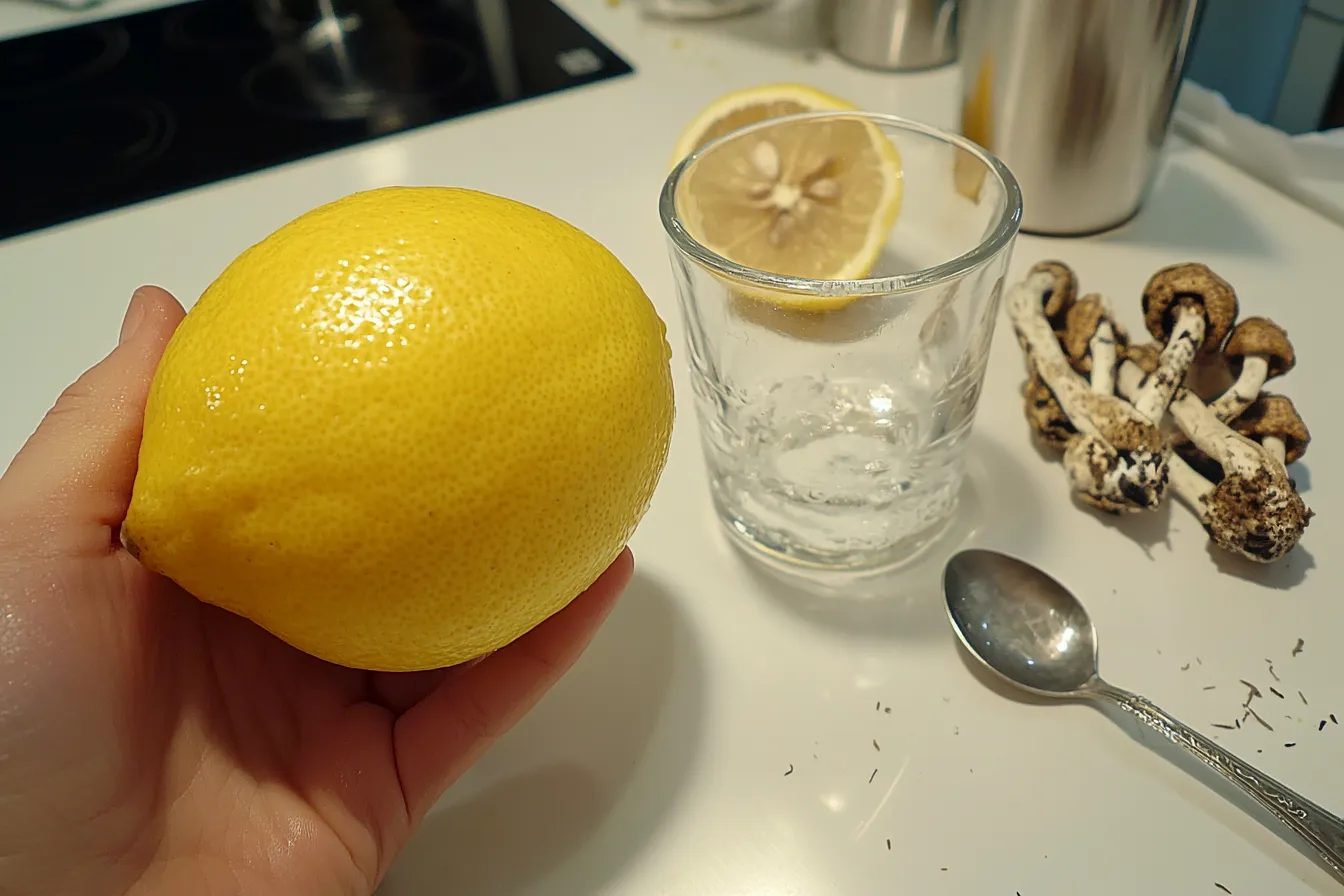
- Source Material Preparation: The initial step involves finely grinding the botanical source material. This maximizes the surface area, allowing for more efficient interaction with the lemon juice. A coffee grinder or a mortar and pestle are common tools for achieving a fine, powder-like consistency.
- Acidic Medium Selection: Freshly squeezed lemon juice is the preferred acidic medium due to its high concentration of citric acid and relatively low pH. Lime juice is sometimes used as an alternative, though lemon juice is more commonly cited in user reports. The quantity of juice typically depends on the amount of source material.
- Steeping Process: The finely ground material is then thoroughly mixed with the lemon juice. This mixture is allowed to steep for a specified period, usually ranging from 15 to 30 minutes. During this time, the acidic environment is expected to facilitate the aforementioned chemical and extractive processes. Stirring occasionally can ensure uniform contact.
- Consumption: After the steeping period, the mixture, often including the solid material, is consumed. Some users may opt to strain out the solid material, consuming only the liquid, though this can potentially reduce the total amount of compounds ingested.
This methodical approach to preparation highlights lemon tekking as a form of biochemical pre-processing, designed to optimize the delivery kinetics of natural compounds.
Investigating the Reported Mechanisms and Efficacy
The perceived efficacy of lemon tekking stems from several reported mechanisms, primarily centered on pH modification and enhanced absorption. While anecdotal evidence is widespread, the exact scientific validation for some of these claims is still an area of ongoing discussion and limited formal study.
pH Modification: Accelerating Conversion
One of the primary theoretical mechanisms is the role of citric acid in accelerating the conversion of certain prodrug compounds. For example, psilocybin (a phosphate ester of psilocin) is understood to be dephosphorylated into the active compound psilocin in the acidic environment of the stomach and by enzymes in the body. By introducing the source material to a strong acidic medium like lemon juice before ingestion, the hypothesis is that this conversion is initiated exogenously. This external pre-processing is thought to reduce the time needed for the body to convert the prodrug, leading to a faster onset of effects post-ingestion.
The pH level of lemon juice (typically around 2.0-2.5) closely mimics the highly acidic conditions of the human stomach, providing an optimal environment for this dephosphorylation reaction to occur efficiently outside the body. This chemical transformation is a key aspect of the “tekking” process, differentiating it from simple ingestion.

Enhanced Absorption: Theoretical Pathways
Beyond chemical conversion, the acidic pre-treatment is also hypothesized to enhance the overall absorption of the active compounds. There are several theoretical pathways for this:
- Cell Wall Degradation: The acidity may help break down the tough chitin cell walls of the botanical source material (e.g., mushrooms). By degrading these structural components, the bioactive compounds within are more readily released and become more accessible for absorption in the gastrointestinal tract. This effectively functions as a pre-digestive step.
- Increased Solubility: Some compounds may exhibit increased solubility in an acidic solution. By dissolving more effectively in the liquid medium, they can be absorbed more efficiently by the body, particularly across the mucosal lining of the stomach and small intestine.
- Reduced Gastric Discomfort: Anecdotal reports suggest that lemon tekking might reduce some of the gastric discomfort or nausea associated with consuming certain fibrous botanical materials directly. This could be due to the pre-digestion effect, making the material easier for the stomach to process, or it could be related to the compounds being more readily available in liquid form, reducing the need for extensive gastric processing. This improved tolerability could indirectly contribute to a perception of enhanced efficacy.
These mechanisms, individually and in concert, form the basis for the reported advantages of lemon tekking in terms of experiential kinetics and overall intensity.
Best Practices and Considerations for Process Optimization
To maximize the reported benefits of lemon tekking, several best practices and considerations are frequently discussed within user communities, focusing on precision, material selection, and understanding reported outcomes.
Precision in Preparation: Grinding and Steeping
Optimal results are often linked to meticulous preparation. The fineness of the grind is critical; a powder-like consistency ensures maximum surface area exposure for the chemical reactions. Coarsely ground material may not allow for complete interaction with the acidic medium, potentially yielding less pronounced effects.
Similarly, the steeping time is a key variable. While 15-30 minutes is a common recommendation, excessively short steeping periods may not allow enough time for the chemical conversion and extraction processes to complete. Conversely, overly long steeping times are generally not reported to provide further benefits and might even lead to degradation of certain compounds if left for extended periods at room temperature. Consistency in stirring during the steeping phase also ensures that all ground material has adequate contact with the lemon juice.
Material Selection: Optimizing the Citric Acid Medium
The quality and freshness of the acidic medium can significantly influence the outcome. Freshly squeezed lemon juice is preferred over bottled varieties, which may contain preservatives or have a variable pH. The concentration of citric acid can vary between different citrus fruits, making lemons a consistently chosen option for their reliable acidity. The ratio of lemon juice to the botanical material is also a practical consideration; enough liquid is needed to fully submerge and saturate the ground material without overly diluting the mixture.
Managing Reported Outcomes and Variables
Users often report variability in the effects of lemon tekking, which can be attributed to several factors. These include the potency of the source material itself, individual metabolic differences, and variations in preparation technique. It’s important to approach this methodology with an understanding that results can vary. Factors such as stomach contents, hydration levels, and individual physiological responses can all play a role in the perceived speed of onset and intensity of the experience. Documenting preparation parameters and reported outcomes can help individuals refine their personal protocols for consistency.
Comparing Methodologies: Lemon Tekking in the Broader Context of Bio-Optimization
Lemon tekking stands as one of several methods proposed for optimizing the delivery of natural compounds. Its popularity stems from its simplicity and the strong anecdotal reports of altered kinetics. Other methods might include consuming compounds with potentiating agents, incorporating them into specific food matrices, or using different extraction techniques.
Compared to direct ingestion of dried botanical material, lemon tekking’s primary reported advantage is its speed. Many users describe a significantly faster onset of effects (often within 15-45 minutes compared to 60-90 minutes or more for traditional consumption) and a potentially shorter overall duration with a peak that feels more intense. This acceleration is particularly appealing to those seeking a more immediate and perhaps more manageable experiential curve.
However, it’s essential to recognize that while lemon tekking is a specific and widely discussed protocol, the field of bio-optimization is broad. Researchers and enthusiasts continually explore various chemical and physical methods to influence the bioavailability, onset, and duration of naturally derived compounds. Lemon tekking, in this context, represents a common, user-developed technique that harnesses basic chemical principles to modify the user’s interaction with specific natural substances, positioning it as a notable example of DIY bio-enhancement.
aViewFromTheCave is a participant in the Amazon Services LLC Associates Program, an affiliate advertising program designed to provide a means for sites to earn advertising fees by advertising and linking to Amazon.com. Amazon, the Amazon logo, AmazonSupply, and the AmazonSupply logo are trademarks of Amazon.com, Inc. or its affiliates. As an Amazon Associate we earn affiliate commissions from qualifying purchases.