
In the world of finance, investment, and wealth creation, the concept of law is not merely a set of restrictive rules; it is the fundamental infrastructure upon which all economic value is built. Without a robust legal framework, the systems we rely on to generate income—from stock markets and real estate to digital commerce and side hustles—would collapse into chaos. At its core, law is a system of rules created and enforced through social or governmental institutions to regulate behavior. In the context of “Money,” law provides the predictability and security necessary for capital to flow, for contracts to be honored, and for property rights to be defended.
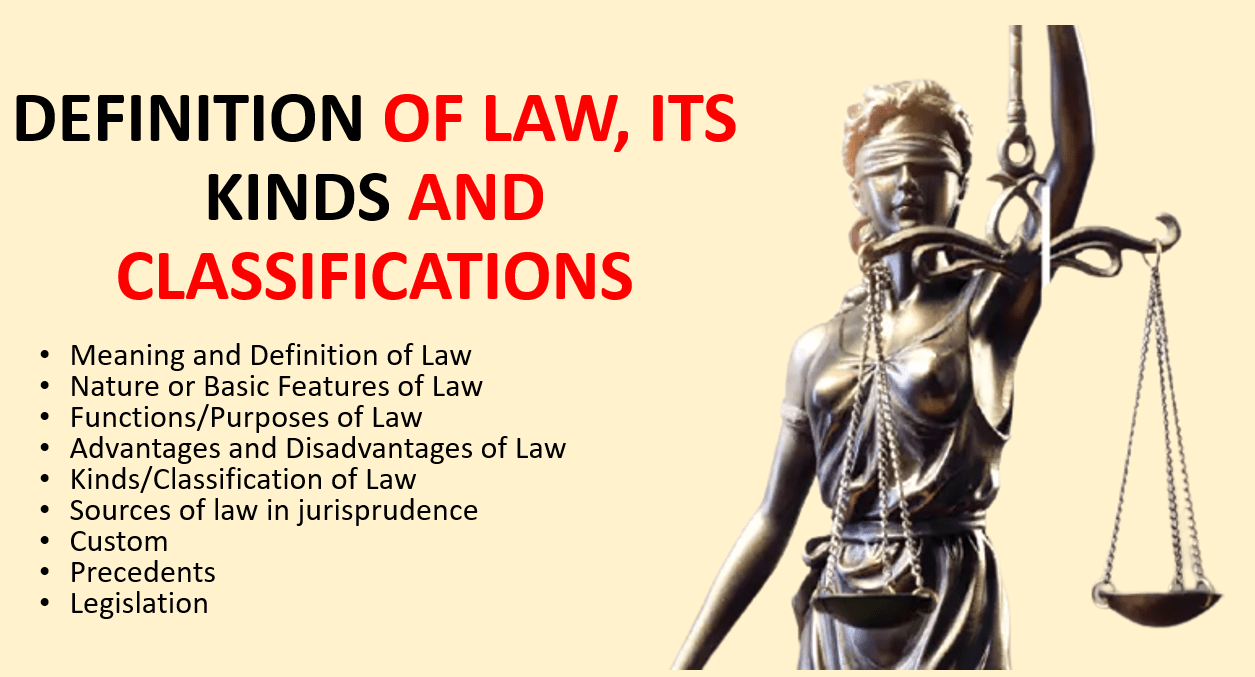
Understanding the various types of law is essential for any entrepreneur, investor, or professional looking to navigate the complexities of the modern financial landscape. Whether you are launching a startup, managing a portfolio, or optimizing your tax strategy, the legal environment dictates the boundaries of what is possible and profitable.
The Foundation of Law in the Economic Sector
To define law within a financial context, one must view it as the “rules of the game.” In economics, institutions are the humanly devised constraints that shape human interaction. Law is the most formal of these institutions. It defines who owns what, how ownership can be transferred, and what happens when someone fails to meet their obligations.
From a business finance perspective, the law serves three primary functions:
- Risk Mitigation: Legal structures like Limited Liability Companies (LLCs) protect personal assets from business failures.
- Resource Allocation: Intellectual property laws ensure that innovators can monetize their ideas without fear of immediate theft.
- Conflict Resolution: The judicial system provides a standardized method for settling disputes without resorting to violence or total financial loss.
By categorizing law into its various types, we can better understand how different legal mechanisms impact our financial decisions and the broader economy.
Public Law: The Regulatory Environment for Wealth
Public law governs the relationship between individuals (or businesses) and the state. For those focused on personal finance and business growth, public law represents the regulatory environment in which one must operate. It dictates how much you are taxed, how you can market your services, and the penalties for financial misconduct.
Constitutional Law
Constitutional law is the supreme law of the land. In financial terms, it establishes the government’s power to tax, spend, and regulate interstate commerce. It protects private property from being taken by the government without “just compensation.” For investors, a stable constitutional framework is the highest indicator of low sovereign risk. Countries with weak constitutional protections often suffer from capital flight, as investors fear their wealth may be arbitrarily seized.
Administrative Law
Administrative law is perhaps the most relevant type of public law for the modern professional. This involves the rules and regulations created by government agencies such as the Securities and Exchange Commission (SEC), the Internal Revenue Service (IRS), and the Federal Trade Commission (FTC).
- The SEC: Regulates the issuance and trading of stocks, ensuring transparency for investors.
- The IRS: Dictates the tax code, which is the single most significant factor in long-term wealth accumulation and business accounting.
- The FTC: Governs fair competition and protects consumers from deceptive marketing, which is crucial for anyone involved in digital marketing or brand building.
Criminal Law
While often associated with violent crime, criminal law is heavily intertwined with the financial sector through “white-collar” statutes. Laws against insider trading, money laundering, and fraud are essential for maintaining market integrity. When these laws are enforced effectively, they boost investor confidence, leading to higher market participation and liquidity.
Private Law: Protecting Assets and Agreements
Private law, often referred to as civil law, deals with the relationships between private entities. For the entrepreneur or side-hustler, private law is the toolkit used to build and protect a business.
Contract Law: The Engine of Commerce
Every transaction, from a simple freelance gig to a multi-billion dollar merger, is governed by contract law. A contract is a legally binding agreement that creates mutual obligations. In the world of online income and business finance, mastery of contract law is non-negotiable.
- Service Agreements: Protect freelancers and consultants by defining scope of work and payment terms.
- Non-Disclosure Agreements (NDAs): Protect proprietary business strategies and trade secrets.
- Operating Agreements: Define the ownership and management structure of a business, preventing future disputes among partners.

Tort Law
Tort law deals with civil wrongs that cause harm or loss. In a financial context, this often involves professional negligence or “malpractice.” For example, if a financial advisor provides intentionally misleading information that leads to a client’s bankruptcy, tort law allows the victim to seek damages. Understanding liability is a key component of business insurance and risk management strategy.
Property Law
Property law defines the rights and obligations related to the ownership of both tangible and intangible assets.
- Real Property: Covers land and buildings. Real estate law is a specialized field that governs everything from zoning and titles to mortgages and foreclosures.
- Personal Property: Covers movable assets like gold, equipment, and digital assets.
- Intellectual Property (IP): This is the most critical area of property law for the modern digital economy. IP law includes trademarks (branding), copyrights (content creation), and patents (innovations). For many modern businesses, their IP is more valuable than their physical assets.
Commercial and Corporate Law: Structuring for Success
When “law” meets “money,” the result is often the specialized field of commercial and corporate law. These branches are dedicated specifically to the life cycle of a business and the flow of capital.
Corporate Law and Business Entities
Choosing the right legal structure is one of the most important financial decisions a business owner can make. Corporate law dictates the formation, funding, and governance of entities.
- Sole Proprietorships: Simple to set up but offer no protection against personal liability.
- Partnerships: Allow for shared resources but require rigorous legal agreements to manage risk.
- Corporations (C-Corps and S-Corps): Provide a “corporate veil” that separates the entity from the owners, which is essential for scaling and attracting venture capital.
- LLCs: Offer a hybrid of partnership flexibility and corporate liability protection.
Securities Law
For those looking at “Investing,” securities law is the primary governing body. It regulates how companies can raise money from the public. Understanding the difference between a “private placement” and an “Initial Public Offering (IPO)” is vital for sophisticated investors. Securities laws are designed to prevent “asymmetric information,” where the sellers of a stock know significantly more about its flaws than the buyers.
International Trade and Finance Law
In a globalized economy, money knows no borders, but laws do. International law governs cross-border transactions, currency exchange, and trade tariffs. For businesses involved in dropshipping, international consulting, or global investing, understanding treaties and international tax laws (such as the Foreign Account Tax Compliance Act or FATCA) is essential to avoid legal pitfalls and double taxation.
The Evolving Landscape: Law, Fintech, and the Digital Future
The definition of law is currently being challenged and expanded by the rise of financial technology (Fintech) and decentralized finance (DeFi). As we move further into a digital-first economy, the types of law we interact with are evolving.
The Rise of “Smart Contracts”
Blockchain technology has introduced the concept of “Code is Law.” Smart contracts are self-executing contracts with the terms of the agreement directly written into lines of code. While these offer incredible efficiency for online income and automated finance, they also create a legal gray area. Traditional contract law is currently adapting to determine how these digital agreements hold up in traditional courts.
Regulatory Sandboxes and Fintech Law
Governments around the world are creating “regulatory sandboxes”—frameworks that allow fintech startups to test innovative financial products in a controlled environment without immediately facing the full weight of traditional banking regulations. This intersection of law and innovation is where the next generation of financial tools is being born.
Cyber Law and Financial Data
As data becomes a primary asset, the laws governing digital security and privacy (like GDPR in Europe or CCPA in California) have become central to business finance. A data breach is no longer just a technical failure; it is a massive legal and financial liability that can bankrupt a brand overnight.

Conclusion: Law as a Strategic Financial Asset
Understanding what law is and the various types of law available is not just a task for attorneys; it is a requirement for anyone serious about building and maintaining wealth. Law provides the certainty required for investment, the structure required for growth, and the protection required for longevity.
By viewing the legal system through the lens of business and finance, it becomes clear that law is a tool—much like a spreadsheet or an investment algorithm. Whether it is using tax law to optimize returns, using contract law to secure income, or using corporate law to protect assets, the mastery of these legal frameworks is a hallmark of the successful modern investor and entrepreneur. In the final analysis, those who understand the rules of the game are the ones most likely to win it.
aViewFromTheCave is a participant in the Amazon Services LLC Associates Program, an affiliate advertising program designed to provide a means for sites to earn advertising fees by advertising and linking to Amazon.com. Amazon, the Amazon logo, AmazonSupply, and the AmazonSupply logo are trademarks of Amazon.com, Inc. or its affiliates. As an Amazon Associate we earn affiliate commissions from qualifying purchases.