
In the vast landscape of sandbox gaming, Minecraft stands as a titan of modularity. Since its inception, the game has been defined not just by its official updates from Mojang, but by the staggering volume of user-generated content (UGC) that expands its capabilities. Among the thousands of software modifications available, the “Jenny Mod” has emerged as a significant, albeit controversial, example of how deep technical integration can transform a basic game engine into a platform for complex NPC interactions and specialized gameplay mechanics. To understand what the Jenny Mod is, one must look past the surface-level gameplay and examine the technical framework, the software requirements, and the digital security implications that define this specific piece of third-party code.

The Technical Infrastructure of Minecraft Modding
To understand the Jenny Mod, it is essential to first understand the architecture of Minecraft modding. Minecraft: Java Edition is built on the Java programming language, which, by its nature, allows for a high degree of “deobfuscation.” This means that developers can deconstruct the game’s original code, understand its logic, and inject their own scripts to alter or add to the game’s behavior.
The Jenny Mod functions as a “client-side and server-side” modification. It relies on a modding API (Application Programming Interface), most commonly Minecraft Forge. Forge acts as a bridge between the base game’s code and the third-party mod files (.jar files). Without these APIs, the Jenny Mod would be unable to communicate with the game’s internal rendering engine, physics system, or AI logic.
The Role of Java and Forge
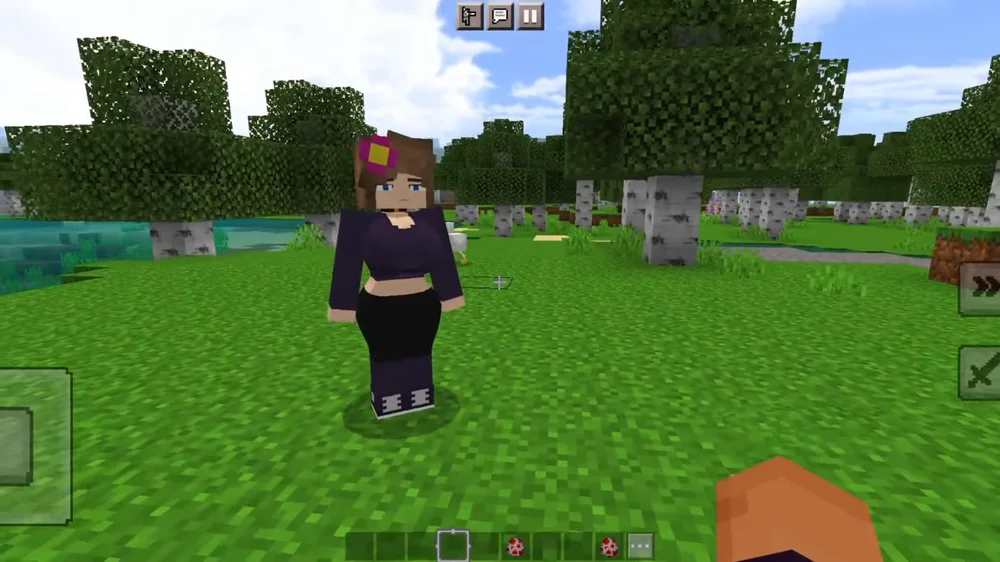
When a user installs the Jenny Mod, they are essentially adding a package of Java classes and assets (textures, sounds, and models) to the game directory. During the game’s initialization phase, Forge loads these classes into the Java Virtual Machine (JVM). The Jenny Mod specifically targets the game’s entity system. While standard Minecraft entities (like Creepers or Villagers) follow basic pathfinding and interaction scripts, the Jenny Mod introduces a more complex state machine for its central NPC (Non-Player Character).
Asset Integration and Memory Management
From a technical standpoint, the mod is relatively heavy on assets. It introduces high-resolution textures and specialized animations that are not present in the vanilla game. This requires the game engine to allocate more heap memory (RAM). For users running the mod on lower-end hardware, this often necessitates the use of optimization mods like Sodium or Optifine to ensure that the frame rate remains stable despite the additional rendering load required by the mod’s custom models.
Core Features and Software Mechanics of the Jenny Mod
The Jenny Mod is categorized as an “interaction mod.” Unlike “content mods” that add new biomes or “technical mods” that add machinery and automation, this mod focuses on NPC behavior and player-driven events. It introduces a specific character, Jenny, who possesses a sophisticated set of AI routines designed to respond to player proximity, item exchanges, and specific commands.
Advanced NPC AI Logic
The AI within the Jenny Mod is built on a hierarchical task network. Standard Minecraft NPCs operate on a “Look-At” or “Walk-To” logic. The Jenny Mod expands this by incorporating conditional triggers. For example, the NPC’s behavior changes based on the items held by the player or the “reputation” level tracked within the mod’s internal data files. This mimics the logic found in more advanced RPG (Role-Playing Game) software, where NPC interactions are not merely randomized but are the result of specific input-output cycles.
Custom UI and Interaction Menus
Another significant technical feature of the mod is the implementation of custom Graphical User Interfaces (GUIs). When interacting with the character, the mod bypasses the standard Minecraft inventory screen and opens a specialized menu. This is achieved by creating custom GUI classes within the Java environment that can intercept mouse inputs and trigger specific game events. These menus allow for a “currency” system within the mod, where players trade in-game resources for specific animations or dialogue strings.
Teleportation and Summoning Mechanics
The mod also includes scripts for entity management, such as the ability to “summon” the character or have the character follow the player across different dimensions (The Nether, The End). This requires the mod to handle “chunk loading” logic, ensuring that the NPC entity remains active in the game’s memory even when the player moves between different geographical sectors of the digital world.
Installation Protocols and Technical Compatibility
Because the Jenny Mod is not an official Minecraft product, its installation requires a specific technical workflow. It is not available on the Minecraft Marketplace (which is reserved for the Bedrock Edition) but is instead distributed as a standalone file for the Java Edition.
Version Dependency
A critical aspect of the Jenny Mod—and modding in general—is version compatibility. Minecraft is frequently updated, and each update often changes the underlying obfuscation maps of the code. The Jenny Mod is typically developed for older, more stable versions of the game, such as 1.12.2. This specific version is often cited as the “golden age” of modding because of the stability of the Forge API during that era. Running the mod on a newer version of Minecraft without the appropriate compatibility layers will result in a “JVM Crash” or “Data Corrupt” error.
The Installation Pipeline
The technical process involves several steps:
- Environment Setup: Installing the Java Development Kit (JDK) or the appropriate Java Runtime Environment (JRE).
- API Integration: Installing Minecraft Forge to create a “mods” folder within the
.minecraftdirectory. - File Deployment: Placing the
.jarfile of the Jenny Mod into the directory. - Configuration: Modifying the
configfiles (usually in .toml or .cfg format) to adjust the mod’s behavior, spawn rates, and interaction triggers.
This process highlights the “open-source” spirit of the PC gaming community, where users are expected to have a baseline understanding of file directories and software environments.
Cybersecurity Considerations in the Modding Community
As with any third-party software that is not vetted by a central authority like Microsoft or Mojang, the Jenny Mod carries inherent digital risks. The mod is frequently hosted on third-party file-sharing sites rather than official repositories like CurseForge or Modrinth. This creates a significant cybersecurity surface area for potential threats.
Risks of Malware and Adware
Because of the high demand for the mod, malicious actors often package “fake” versions of the Jenny Mod with trojans, keyloggers, or adware. Users searching for the mod are often directed to high-risk websites that utilize “malvertising” to compromise the user’s browser or operating system. From a technical security perspective, downloading an executable Java file (.jar) is risky because Java code can, if designed maliciously, access file systems beyond the game folder.
Safe Acquisition Best Practices
To mitigate these risks, the tech-savvy gaming community emphasizes several security protocols:
- Sandbox Testing: Running the mod within a virtual machine or a secondary “disposable” OS environment to check for suspicious background processes.
- Checksum Verification: Comparing the file’s hash (MD5 or SHA-256) against known safe versions to ensure the code has not been tampered with.
- Dependency Isolation: Using dedicated launchers like MultiMC or Prism Launcher, which keep mod instances isolated from the main system files, reducing the risk of a total system compromise.

The Future of Modular Gaming Software
The Jenny Mod, while specific in its content, represents a broader trend in the evolution of gaming technology: the move toward “Platformization.” Minecraft is no longer just a game; it is a development environment. The existence of mods like Jenny proves that the community has the technical capability to rewrite the rules of a virtual world to suit specific niche interests.
As AI continues to evolve, we can expect “interaction mods” to become even more sophisticated. Future iterations of such mods might integrate Large Language Models (LLMs) to provide real-time, unscripted dialogue, or utilize procedural animation systems to create more lifelike movements. The Jenny Mod is a precursor to a future where NPCs are not just static entities with fixed scripts, but dynamic software agents capable of complex digital social engineering.
In conclusion, the Jenny Mod is more than just a controversial addition to a popular game. It is a testament to the power of Java-based modding, the intricacies of third-party software integration, and the ongoing dialogue between digital creativity and digital security. For the tech-literate user, it serves as a case study in how modular software can extend the lifecycle of an application far beyond its original scope, provided one navigates the technical and security challenges inherent in the third-party ecosystem.
aViewFromTheCave is a participant in the Amazon Services LLC Associates Program, an affiliate advertising program designed to provide a means for sites to earn advertising fees by advertising and linking to Amazon.com. Amazon, the Amazon logo, AmazonSupply, and the AmazonSupply logo are trademarks of Amazon.com, Inc. or its affiliates. As an Amazon Associate we earn affiliate commissions from qualifying purchases.