
In the landscape of modern personal finance and speculative entertainment, few phenomena capture the public imagination quite like the jackpot lottery. At its most basic level, a jackpot lottery is a form of gambling that involves the drawing of numbers at random for a prize. While many forms of gaming offer fixed payouts, the “jackpot” distinction refers to a prize pool that typically grows over time, often reaching hundreds of millions or even billions of dollars.
For the average individual, the lottery represents a low-cost entry into a high-variance financial event. However, from a professional financial perspective, understanding the jackpot lottery requires looking beyond the flashy headlines and into the mechanics of prize pooling, the mathematical reality of probability, and the complex tax implications that follow a significant windfall. Whether viewed as a harmless “hope tax” or a strategic play during periods of record-breaking growth, the jackpot lottery remains a cornerstone of the global gaming economy.
The Anatomy of a Jackpot: How the Prize Pool Grows
The term “jackpot” has its roots in poker, but in the context of lotteries, it signifies the top-tier prize. Unlike smaller prizes which are often fixed amounts—such as winning $10 for matching three numbers—the jackpot is a dynamic entity governed by ticket sales and game rules.
Fixed vs. Progressive Jackpots
In some smaller or regional lotteries, the jackpot may be a fixed amount, such as $1 million. However, the games that generate global interest, such as Powerball or Mega Millions, utilize a progressive jackpot system. In these models, if no player matches the required set of numbers during a drawing, the prize money “rolls over” to the next drawing. This mechanism allows the prize to escalate indefinitely until a winner is found.
The Role of Ticket Sales and Rollovers
The growth of a jackpot is fueled by two primary factors: the percentage of ticket sales allocated to the prize pool and the “roll” from previous winless drawings. As the jackpot grows larger, it triggers a feedback loop. Media coverage intensifies, leading to a surge in ticket sales from “casual players” who only participate when the stakes are high. This influx of capital further accelerates the jackpot’s growth, occasionally pushing the prize into the billions.
Pari-Mutuel Systems and Shared Winnings
Most major jackpot lotteries operate on a pari-mutuel basis. This means that the actual prize amount is determined by the total number of tickets sold and the number of winners. If three individuals hold tickets with the winning numbers, the jackpot is split equally among them. For a participant, this introduces an additional layer of risk: the “dilution” of the prize. Even if you beat the astronomical odds to win, your actual payout depends on how many other people chose the same numbers.
The Financial Reality of Lottery Odds and Expected Value
To approach the jackpot lottery from a financial or investment mindset, one must analyze it through the lens of probability and Expected Value (EV). EV is a calculation used by investors and gamblers to determine the average outcome of a given scenario if it were repeated many times.
Calculating the Probability of a Win
The odds of winning a major jackpot are intentionally designed to be slim. For example, in a standard 6/49 lottery, the odds are approximately 1 in 14 million. For larger multi-state lotteries, the odds can plummet to 1 in 292 million or worse. To put this in perspective, an individual is statistically more likely to be struck by lightning or become a professional athlete than to hold a winning jackpot ticket.
Negative Expected Value (EV) in Gambling
In almost all cases, the lottery is a “negative EV” proposition. This means that for every dollar spent on a ticket, the statistical return is less than a dollar—often around 50 to 60 cents, with the remainder going to administrative costs and state programs. From a strict wealth-building perspective, the lottery is an inefficient use of capital compared to compounding assets like index funds or real estate.
The Phenomenon of Positive Expected Value
There are rare instances where a jackpot becomes so large that the mathematical EV turns positive. If a jackpot reaches $1 billion and the odds of winning are 1 in 300 million, the raw math suggests that a $2 ticket is worth more than its purchase price. However, this is a “naive EV” calculation. When you factor in the high probability of splitting the prize with other winners and the massive impact of taxation, the “true EV” almost always remains negative.
Tax Implications and Wealth Management for Winners
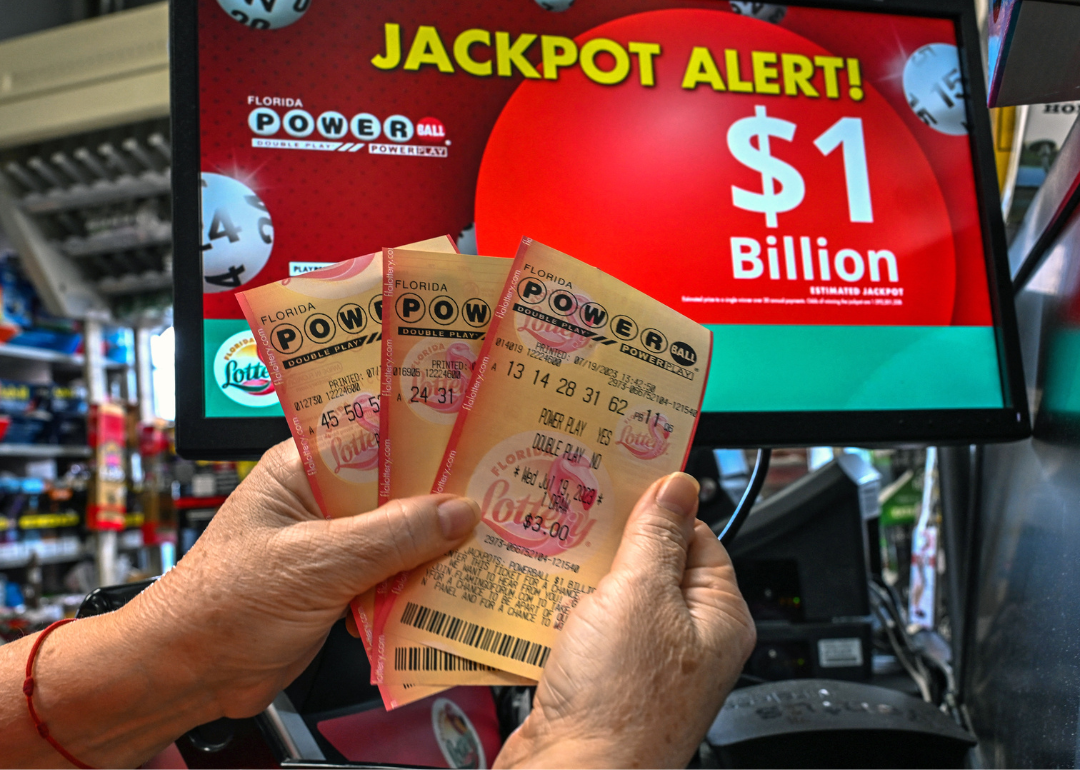
For the fortunate few who secure a jackpot, the transition from a standard income bracket to “ultra-high net worth” status happens overnight. This transition is fraught with financial complexities that require immediate professional intervention.
Immediate Tax Withholdings
In the United States, lottery winnings are treated as ordinary income by the IRS. When a jackpot is claimed, the lottery commission typically withholds a mandatory 24% for federal taxes. However, because the win likely puts the individual in the highest tax bracket (currently 37%), the winner will owe a significant additional amount when filing their annual return. Furthermore, state taxes vary wildly; winners in states like California or Florida pay no state tax on winnings, while those in New York or New Jersey may lose an additional 8% to 10%.
Lump Sum vs. Annuity: The Time Value of Money
Winners are generally offered two payout options: a one-time lump sum or an annuity paid out over 29 to 30 years.
- The Lump Sum: This is the “cash value” of the jackpot. It is significantly lower than the advertised jackpot amount because it represents the actual cash currently in the prize pool. Most winners choose this option, intending to invest the capital immediately to outpace inflation and the annuity’s implied interest rate.
- The Annuity: This provides the full advertised jackpot amount spread over three decades. This is often recommended for individuals who lack financial discipline, as it provides a guaranteed income stream and protects against the risk of “blowing the windfall” in the first few years.
Post-Win Financial Planning
The first 90 days after winning a jackpot are critical. Financial experts recommend assembling a “fiduciary team” consisting of a tax attorney, a Certified Public Accountant (CPA), and a fee-only financial advisor. The primary goals during this phase are establishing anonymity (if state law allows), setting up trusts to protect assets, and developing a long-term strategy for capital preservation.
The Psychology of Windfall Wealth and the “Lottery Effect”
The lottery isn’t just a financial instrument; it is a psychological one. The “Lottery Effect” refers to the behavioral shifts that occur when individuals encounter sudden, massive wealth without the gradual experience of building it.
Lifestyle Creep and the Risk of Ruin
History is replete with stories of lottery winners who ended up in bankruptcy just years after winning. This is often due to “lifestyle creep”—the rapid escalation of spending on non-productive assets like luxury cars, mansions, and gifts for an expanding circle of acquaintances. Without a rigorous budget and an understanding of “burn rates,” even a $50 million jackpot can be depleted.
Using Small Wins as Discretionary Income
On a smaller scale, many people use the lottery as a form of “mental accounting.” They treat small wins ($50 or $100) as “found money” rather than part of their core budget. From a wealth-building perspective, even these small amounts can be more productive if diverted into a high-yield savings account or a micro-investing app, where the power of compounding can take effect.
The Difference Between Investing and Speculating
A key part of financial literacy is distinguishing between investing (where there is an expected positive return based on economic growth) and speculating or gambling (where the outcome is based purely on chance). While participating in a jackpot lottery can be an entertaining diversion, it should never be confused with a retirement plan or a legitimate wealth-building strategy.
Responsible Participation within a Personal Finance Framework
Is there a place for the jackpot lottery in a healthy financial life? For most, the answer is “yes,” provided it is categorized correctly within a budget.
Budgeting for Entertainment
Financial advisors often suggest a “fun money” or “discretionary” category in a monthly budget. If an individual enjoys the excitement of a high-stakes drawing, purchasing a ticket can be viewed as an entertainment expense, similar to a movie ticket or a dinner out. The danger arises only when lottery spending begins to cannibalize essential categories like emergency savings, insurance premiums, or retirement contributions.
Avoiding the “Hope Strategy”
The most significant risk of the jackpot lottery is the “hope strategy”—the psychological reliance on a low-probability event to solve systemic financial problems. True financial security is built on the foundation of consistent saving, debt management, and diversified investing. The lottery should be viewed as a game of chance with a near-zero probability of success, rather than a viable exit strategy from financial hardship.

Strategic Synergies: High-Yield Savings and Alternatives
For those who enjoy the thrill of the lottery but want a better financial outcome, “prize-linked savings accounts” (PLSAs) offer a compelling middle ground. These are federally insured savings accounts where, instead of traditional interest, depositors are entered into drawings for cash prizes. In this model, the “cost” of the ticket is merely the foregone interest, while the principal remains safe. This aligns the psychological desire for a jackpot with the financial necessity of saving, creating a win-win scenario for the participant.
In conclusion, a jackpot lottery is a complex intersection of mathematics, psychology, and public policy. While it offers the alluring promise of instant wealth, the financial reality is one of extreme odds and significant tax burdens. By understanding the mechanics behind the prize and maintaining a disciplined approach to discretionary spending, individuals can navigate the world of lotteries without compromising their long-term financial health.
aViewFromTheCave is a participant in the Amazon Services LLC Associates Program, an affiliate advertising program designed to provide a means for sites to earn advertising fees by advertising and linking to Amazon.com. Amazon, the Amazon logo, AmazonSupply, and the AmazonSupply logo are trademarks of Amazon.com, Inc. or its affiliates. As an Amazon Associate we earn affiliate commissions from qualifying purchases.