
In the world of modern investing, few symbols carry as much weight and recognition as IVV. Often referred to by its ticker symbol, IVV is the iShares Core S&P 500 ETF, an exchange-traded fund managed by BlackRock, the world’s largest asset manager. For seasoned investors and newcomers alike, IVV represents one of the most efficient, cost-effective, and reliable ways to gain exposure to the powerhouse of the global economy: the United States stock market.
While many people search for “IVV stock,” it is technically an ETF—a basket of stocks that trades on an exchange just like a single share of a company. By purchasing one share of IVV, an investor is essentially buying a small piece of 500 of the largest and most successful publicly traded companies in the U.S. This guide delves into the mechanics of IVV, its strategic advantages, and how it fits into a diversified financial plan.
Understanding the Fundamentals of IVV
To understand IVV, one must first understand the S&P 500 Index. The Standard & Poor’s 500 is a stock market index that tracks the performance of 500 of the largest companies listed on stock exchanges in the United States. It is widely regarded as the best single gauge of large-cap U.S. equities. IVV is designed to track this index with near-perfect precision.
The Role of iShares and BlackRock
IVV is issued by iShares, a family of exchange-traded funds managed by BlackRock. BlackRock’s scale allows them to operate with incredible efficiency, which translates directly into lower costs for the end investor. Because IVV is part of the “Core” series of iShares funds, it is specifically designed for long-term buy-and-hold investors who prioritize low fees and broad market exposure.
Passive Management and Index Tracking
IVV is a passively managed fund. Unlike an actively managed mutual fund, where a portfolio manager attempts to beat the market by picking specific winners, IVV simply seeks to replicate the returns of the S&P 500. This is achieved through a full replication strategy, meaning the fund holds all 500 stocks in the index at the same weights as the index itself. This approach eliminates “manager risk”—the possibility that a human decision-maker will underperform the market—and keeps operating expenses at a minimum.
Market Capitalization Weighting
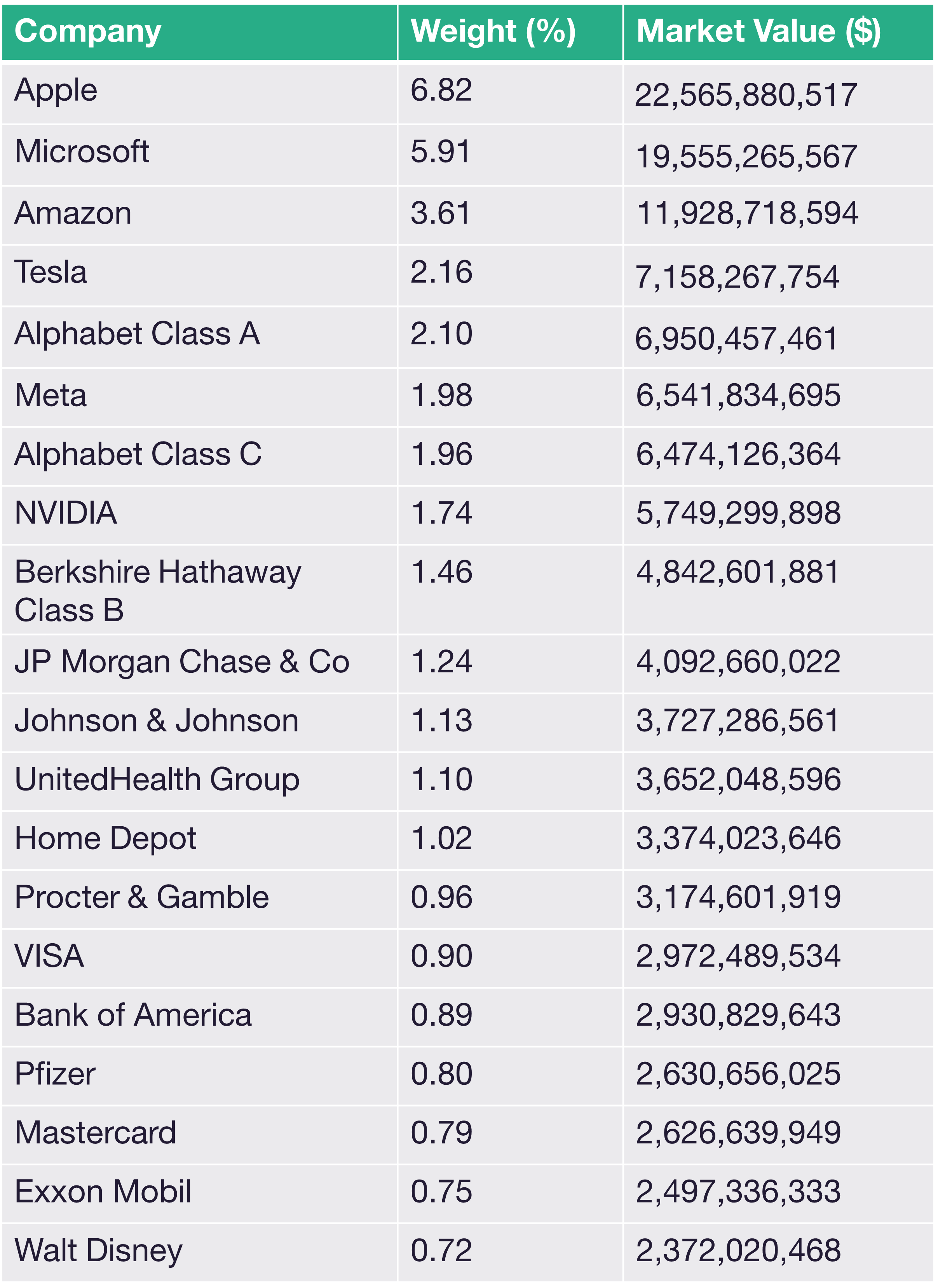
The S&P 500, and by extension IVV, is market-capitalization-weighted. This means that larger companies, such as Apple, Microsoft, and Amazon, make up a larger percentage of the fund than smaller companies like those at the bottom of the index. This structure ensures that the performance of IVV reflects the true economic impact of the biggest players in the U.S. corporate landscape.
The Strategic Advantages of Investing in IVV
Choosing IVV over individual stock picking or high-fee mutual funds offers several distinct advantages that have made it a cornerstone of millions of retirement accounts and institutional portfolios.
Unbeatable Cost Efficiency
One of the most compelling reasons to choose IVV is its expense ratio. As of recent filings, IVV boasts an expense ratio of just 0.03%. To put that in perspective, for every $10,000 invested, the annual fee is a mere $3. In an era where high fees can erode significant portions of long-term wealth, the ultra-low cost of IVV allows nearly 100% of the market’s returns to stay in the investor’s pocket. Over a 30-year horizon, the difference between a 0.03% fee and a 1.00% fee can amount to hundreds of thousands of dollars in lost gains.
Instant Diversification
Diversification is often called the “only free lunch in finance.” By holding IVV, an investor mitigates the risk of any single company going bankrupt. While an individual stock like Enron or Lehman Brothers can go to zero, the probability of 500 of the world’s largest companies failing simultaneously is virtually non-existent. IVV spans multiple sectors, including Information Technology, Healthcare, Financials, Consumer Discretionary, and Communication Services, ensuring that the portfolio remains resilient even if one sector faces a downturn.
Liquidity and Transparency
Because IVV is one of the largest ETFs in existence, with hundreds of billions of dollars in assets under management (AUM), it is incredibly liquid. This means investors can buy or sell shares at any time during market hours with very narrow bid-ask spreads. Furthermore, as an ETF, IVV offers daily transparency. Investors can see exactly which stocks the fund holds and in what proportions every single day, a level of clarity that many traditional mutual funds do not provide.
Tax Efficiency
The structure of an ETF like IVV is inherently more tax-efficient than a mutual fund. Due to the “in-kind” creation and redemption process of ETF shares, IVV rarely triggers capital gains distributions for its shareholders. This allows investors to control when they realize gains, typically only when they choose to sell their own shares, making it an ideal choice for taxable brokerage accounts.
IVV vs. The Competition: VOO and SPY
Investors researching the S&P 500 will inevitably encounter two other major players: the Vanguard S&P 500 ETF (VOO) and the SPDR S&P 500 ETF Trust (SPY). While all three track the same index, there are subtle differences that may influence a choice.
Comparing IVV and VOO
IVV and VOO are nearly identical in many respects. Both have an expense ratio of 0.03% and both are structured as Regulated Investment Companies (RICs). This structure allows them to reinvest dividends from the underlying stocks before paying them out to shareholders, which can marginally improve tracking performance. The choice between IVV and VOO often comes down to brand preference or which fund is offered commission-free on a specific brokerage platform.
The Comparison with SPY
SPY is the oldest and most famous ETF in the world. However, for the long-term retail investor, SPY has two main drawbacks compared to IVV. First, its expense ratio is higher, typically around 0.09%. While still low, it is three times the cost of IVV. Second, SPY is structured as a Unit Investment Trust (UIT), which prevents it from reinvesting dividends between distribution dates. SPY is primarily used by institutional traders and hedge funds because of its massive options market and intraday liquidity, but for a retirement saver, IVV is generally the more economical choice.
Key Components and Sector Allocation
To understand what drives the price of IVV, one must look under the hood at the companies and industries that dominate the fund.
The Dominance of Technology
In the current economic cycle, Technology and Communication Services represent the largest portion of IVV. Companies like Microsoft, Apple, NVIDIA, Alphabet (Google), and Meta (Facebook) are the primary drivers of growth. Because these companies have high market caps, their performance significantly influences IVV’s daily price movements. This concentration reflects the digital transformation of the global economy.
Sector Breadth
Beyond tech, IVV provides significant exposure to other vital industries:
-
Healthcare: Includes giants like UnitedHealth Group and Johnson & Johnson, providing a defensive hedge as healthcare spending is often non-discretionary.
-
Financials: Includes major banks like JPMorgan Chase and Berkshire Hathaway, which benefit from interest rate environments and economic expansion.
-
Consumer Discretionary: Features Amazon and Tesla, companies that thrive when consumer confidence and spending are high.
-
Industrials and Energy: Provides exposure to the physical infrastructure and power needs of the country through companies like ExxonMobil and Union Pacific.
Dividend Yield
While IVV is often viewed as a growth vehicle, it also provides a steady stream of income. The S&P 500 contains many “Dividend Aristocrats”—companies that have increased their dividends for decades. IVV pays out these dividends quarterly. For many investors, these dividends are automatically reinvested (DRIP), which compounds the number of shares owned over time and accelerates wealth building.
Is IVV the Right Choice for Your Investment Strategy?
The decision to invest in IVV depends on an individual’s financial goals, risk tolerance, and time horizon.
For the Long-Term Investor
IVV is perhaps the most recommended “core” holding for long-term portfolios. Historical data shows that the S&P 500 has returned an average of approximately 10% annually over long periods. While the market experiences volatility in the short term, the long-term trajectory of the 500 largest U.S. companies has historically been upward. For those saving for retirement 10, 20, or 30 years away, IVV offers a simple “set it and forget it” solution.
Risk Factors to Consider
No investment is without risk. Because IVV is 100% equities, it is subject to market volatility. In a bear market or a recession, IVV can see significant price drops. Furthermore, because it is limited to large-cap U.S. companies, it does not provide exposure to small-cap stocks or international markets. To build a truly “total” portfolio, many investors pair IVV with an international ETF (like IDEV) or a small-cap ETF (like IJR).

How to Incorporate IVV
Many financial advisors recommend using IVV as the “anchor” of a portfolio, making up 40% to 70% of total equity holdings. From there, an investor might add “satellite” positions in specific sectors, emerging markets, or individual stocks they believe will outperform. However, for many, a portfolio consisting of nothing but IVV and a bond fund is more than sufficient to reach their financial milestones.
In conclusion, IVV is more than just a stock ticker; it is a gateway to the collective success of corporate America. Its combination of low costs, high liquidity, and broad-market representation makes it one of the most powerful tools available to the modern investor. Whether you are building your first brokerage account or managing a multi-million dollar portfolio, the iShares Core S&P 500 ETF stands as a gold standard in the world of personal finance.
aViewFromTheCave is a participant in the Amazon Services LLC Associates Program, an affiliate advertising program designed to provide a means for sites to earn advertising fees by advertising and linking to Amazon.com. Amazon, the Amazon logo, AmazonSupply, and the AmazonSupply logo are trademarks of Amazon.com, Inc. or its affiliates. As an Amazon Associate we earn affiliate commissions from qualifying purchases.