
In the study of linguistics, when a single word or phrase carries multiple, related meanings, it is known as polysemy. While this phenomenon provides human language with its characteristic depth and poetic nuance, it represents one of the most significant hurdles in the field of modern technology. From the development of Large Language Models (LLMs) to the intricacies of Search Engine Optimization (SEO), understanding how to navigate words with multiple meanings is the cornerstone of the “Semantic Web.”
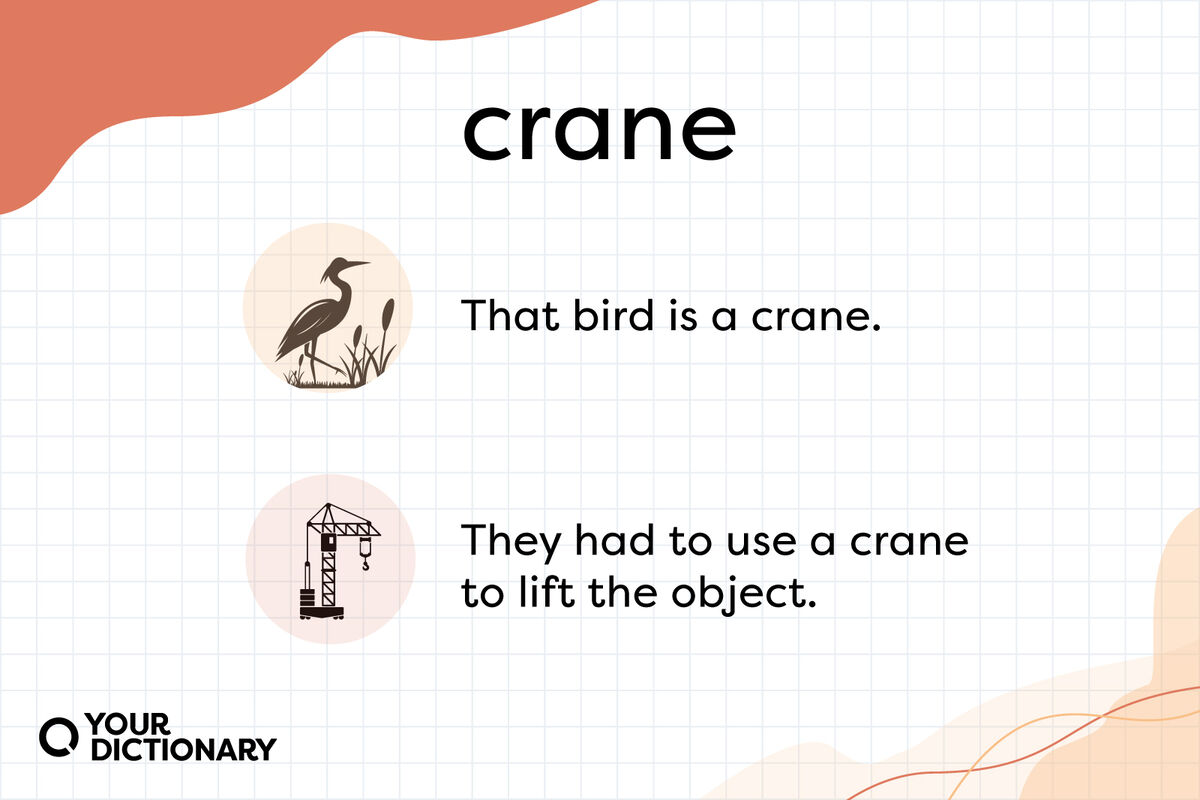
As we move deeper into an era defined by Artificial Intelligence and machine learning, the ability of a system to distinguish between various definitions of a single term determines its utility. Whether a user is searching for “crane” (the bird or the construction equipment) or an algorithm is trying to process the word “block” (a physical object, a digital restriction, or a segment of code), technology must rely on context to bridge the gap between ambiguity and clarity.
Polysemy and the Evolution of Natural Language Processing (NLP)
Natural Language Processing, the branch of AI that allows computers to understand and respond to human text, has historically struggled with polysemy. In the early days of computing, machines viewed language as a series of static strings. A word like “bank” was simply a sequence of characters; without sophisticated programming, a computer could not discern if the text referred to a financial institution or the side of a river.
The Rise of Word Embeddings
To solve the problem of polysemy, tech researchers developed “word embeddings.” Tools like Word2Vec and GloVe were revolutionary because they mapped words into a multi-dimensional vector space. In this digital map, words that appear in similar contexts are placed closer together. However, these early models were often “static,” meaning a word had one fixed vector regardless of its usage. This meant the machine still struggled when a word had drastically different meanings based on its surroundings.
The Transformer Revolution and Contextualization
The true breakthrough in managing polysemy came with the advent of the Transformer architecture and models like BERT (Bidirectional Encoder Representations from Transformers) and GPT (Generative Pre-trained Transformer). These models utilize “attention mechanisms,” which allow the software to look at every other word in a sentence to determine the specific meaning of a target word.
When an AI encounters a polysemous word now, it doesn’t just look up a definition. It calculates a “contextualized embedding.” If the sentence is “The developer needed to debug the code,” the AI recognizes that “bug” refers to a software error, not an insect, by weighing the importance of the surrounding words like “developer” and “code.” This granular understanding is what allows modern AI assistants to provide human-like responses.
Semantic SEO: How Search Engines Decode Multi-Meaning Keywords
For tech professionals in the digital marketing and search engine space, polysemy is a core challenge for visibility and user experience. Search engines like Google have evolved from simple keyword-matching engines into sophisticated semantic entities that aim to understand “user intent.”
Understanding Intent and Disambiguation
When a user types a polysemous word into a search bar, the search engine must perform “disambiguation.” If you search for “Apple,” Google must decide whether to show you the latest iPhone or a recipe for pie. To do this, the algorithm analyzes historical data, user location, and search history. If the user has recently visited tech news sites, the algorithm will prioritize the multinational technology company.
This shift has changed the way developers and content creators approach SEO. It is no longer enough to repeat a keyword; one must build a “semantic cloud” around the topic. To rank for a polysemous term, the technical structure of a website must include related entities and LSI (Latent Semantic Indexing) keywords that signal to the crawler exactly which “meaning” the page serves.

The Role of Schema Markup
From a technical perspective, developers use “Schema Markup” or “Structured Data” to help search engines navigate polysemy. By using standardized code (JSON-LD), a developer can explicitly tell a search engine that a “Python” page refers to the programming language and not the reptile. This layer of metadata provides the clarity that raw text sometimes lacks, ensuring that the tech-stack information reaches the intended audience.
Polysemy in Software Development and UI/UX Design
In the realm of software engineering and user interface design, words with multiple meanings can lead to critical errors in logic or user frustration. Precision in language is not just a matter of linguistics; it is a matter of functional integrity.
Naming Conventions and Code Readability
In programming, “naming things” is famously cited as one of the hardest tasks. Polysemy in variable names can lead to technical debt and bugs. For instance, using the word state in a codebase can be ambiguous. Does it refer to a geographical location (a US state), the current condition of a UI component (React state), or a status code in a database?
Senior developers advocate for “Domain-Driven Design,” where the language used in the code reflects the specific context of the business logic. By avoiding polysemous terms and opting for descriptive, unambiguous identifiers (e.g., userAuthenticationStatus instead of state), teams ensure that the software is maintainable and that the logic is transparent to both humans and automated testing tools.
Clarity in User Interface (UI) Design
From a UX perspective, polysemy can create “cognitive load.” If a button is labeled “Clear,” a user might be unsure if it will “clear the screen,” “clear the cache,” or “clear a specific form field.” Technical writers and UX designers work together to eliminate this ambiguity. In modern app design, icons are often paired with text to provide visual context that resolves any linguistic multiple-meanings. A trash can icon next to the word “Delete” is far more effective than the word “Remove,” which could imply either moving a file or permanently destroying it.
The Future of Ambiguity: Neural Networks and Real-Time Interpretation
As we look toward the future of technology, the way machines handle polysemy will continue to advance through the use of multimodal AI. Humans don’t just use text to understand meaning; we use tone, visual cues, and situational awareness.
Multimodal Learning
The next generation of AI tools is being trained on “multimodal” data—combining text, images, and audio. By seeing a video of a “match” being struck while reading the word “match,” a neural network develops a more robust understanding of the term than it ever could through text alone. This cross-referencing of data types is essential for the development of autonomous systems, such as self-driving cars, which must instantly interpret signs and situations where a single visual or verbal cue might have multiple interpretations.
Edge Computing and Real-Time Disambiguation
With the rise of “Edge AI”—processing data on local devices rather than in the cloud—the speed at which we resolve polysemy is increasing. Smart home devices and wearable tech must process voice commands in real-time. If a user tells their smart glasses to “record the play,” the device must use GPS data to know if the user is at a theatre or a sporting event to determine whether to start a video recording or log a sports statistic.
The technical challenge of “words with multiple meanings” is ultimately a challenge of data synthesis. The more context a system can ingest—whether through user history, environmental sensors, or semantic relationships—the more it can mimic the human brain’s effortless ability to navigate the complexities of language.

Conclusion: Bridging the Human-Machine Gap
Polysemy is a reminder that language is a fluid, evolving system, not a static database. In the tech world, the pursuit of understanding multiple meanings is what drives innovation in AI, search algorithms, and software architecture. By mastering context, developers and engineers are doing more than just teaching machines to read; they are teaching them to understand the nuance of human thought. As these systems become more sophisticated, the friction caused by linguistic ambiguity will continue to decrease, leading to more intuitive technology that communicates as naturally as we do.
aViewFromTheCave is a participant in the Amazon Services LLC Associates Program, an affiliate advertising program designed to provide a means for sites to earn advertising fees by advertising and linking to Amazon.com. Amazon, the Amazon logo, AmazonSupply, and the AmazonSupply logo are trademarks of Amazon.com, Inc. or its affiliates. As an Amazon Associate we earn affiliate commissions from qualifying purchases.