
In the complex landscape of federal tax administration, navigating the Internal Revenue Service (IRS) often requires professional assistance. For Certified Public Accountants (CPAs), Enrolled Agents (EAs), attorneys, and other authorized tax practitioners, a distinct identifier known as the Centralized Authorization File (CAF) number is not just a convenience, but a critical operational tool. Understanding the CAF number is essential for any financial professional representing clients before the IRS, ensuring seamless communication, proper authorization, and efficient resolution of tax matters. This unique nine-digit identification number acts as the IRS’s primary method for tracking and linking an authorized representative to a taxpayer’s account, significantly streamlining the process of obtaining and managing client tax information.

Decoding the CAF Number: A Prerequisite for Tax Professionals
The CAF number, or Centralized Authorization File number, is a unique nine-digit identification number assigned by the IRS to tax professionals who are authorized to represent taxpayers. This number serves as a foundational element for maintaining an organized and secure system for managing tax authorizations. Without a CAF number, a tax professional’s ability to effectively represent clients before the IRS is severely hampered, as they would lack the official recognition required to access sensitive tax information or engage in substantive discussions on a client’s behalf.
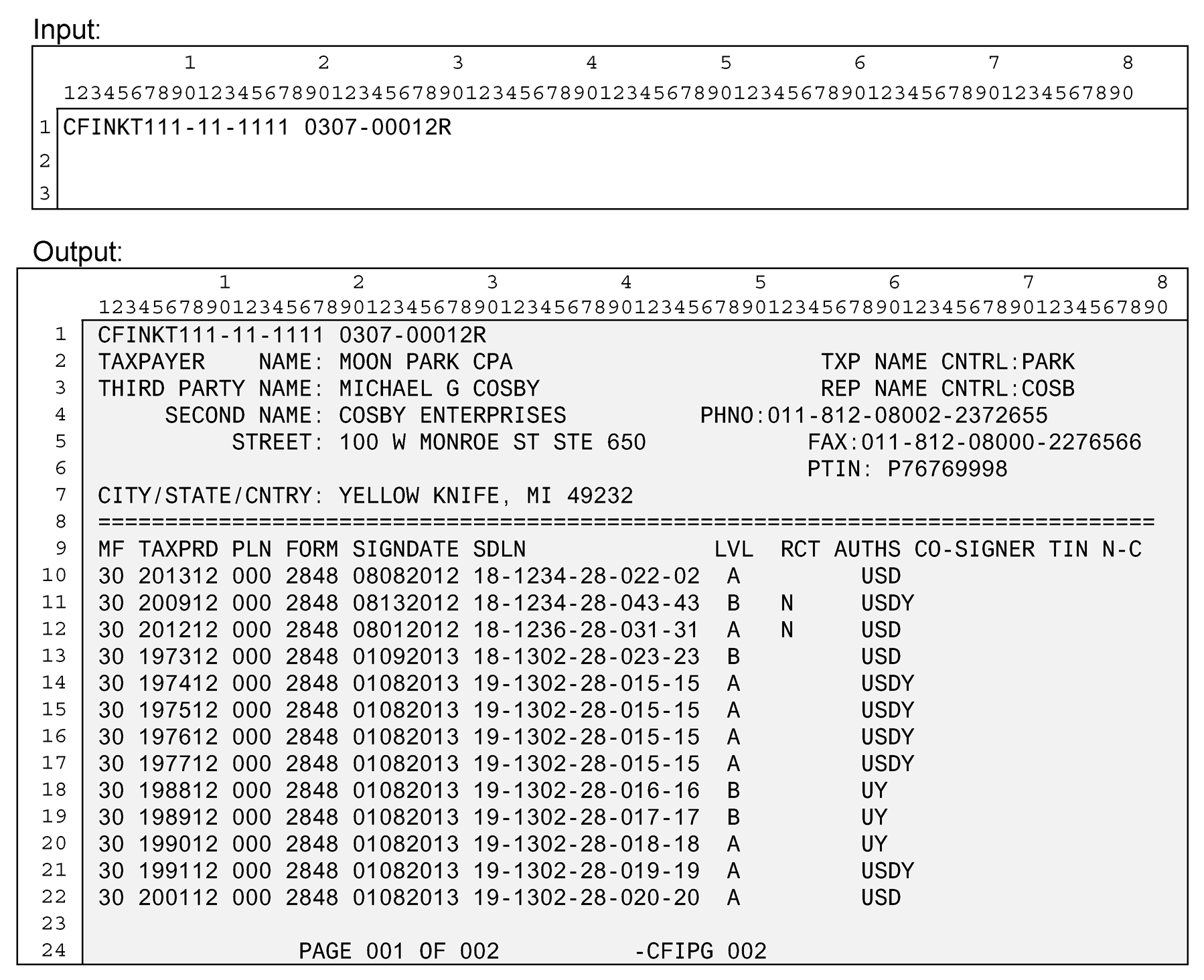
The primary purpose of the CAF number is to centralize and consolidate all authorizations for a specific representative. When a professional submits an authorization form, such as Form 2848, Power of Attorney and Declaration of Representative, or Form 8821, Tax Information Authorization, the IRS assigns this unique CAF number to that professional. Subsequently, all future authorization forms submitted by the same professional will be linked under this single CAF number. This centralization provides immense operational benefits, allowing the IRS to quickly identify the authorized representative for a given taxpayer, understand the scope of their authority, and maintain a consistent record of their client representations. For the tax professional, it means a more streamlined process when interacting with various IRS departments, avoiding the need to re-establish their professional identity with each new client or interaction. It is an indispensable tool that facilitates the professional’s crucial role in financial advocacy and compliance, ensuring they can fulfill their duties effectively and ethically within the strictures of IRS regulations.
Obtaining Your CAF Number: The Application Process
Acquiring a CAF number is a pivotal step for any tax professional aspiring to represent clients before the IRS. The process is initiated by submitting an authorization form for a client, which serves as the professional’s first formal interaction with the IRS requesting representative status. While there isn’t a direct “application form” specifically for a CAF number, the number is generated and assigned upon the IRS’s receipt and processing of the initial valid authorization request.
Eligibility and Initial Submission
To be eligible for a CAF number, an individual must be an authorized representative. This typically includes:
- Attorneys who are members in good standing of the bar of the highest court of any state, possession, territory, commonwealth, or the District of Columbia.
- Certified Public Accountants (CPAs) who are qualified to practice in any state, possession, territory, commonwealth, or the District of Columbia.
- Enrolled Agents (EAs) who are currently enrolled to practice before the IRS.
- Enrolled Actuaries.
- Anyone who has been granted a limited practice certificate by the IRS, such as unenrolled return preparers for specific tax forms.
The most common way to obtain a CAF number is by faxing or mailing a properly completed Form 2848, Power of Attorney and Declaration of Representative, or Form 8821, Tax Information Authorization, for a client. When submitting this initial form, the professional should ensure all sections are accurately completed, particularly their own identification details. The IRS uses this information to establish their record and assign the unique nine-digit CAF number. It is crucial for the professional to not include an existing CAF number on their first submission, as the system will generate a new one.
Confirmation and Timelines
After the IRS receives and processes the initial authorization form, they will assign a CAF number. This number is not typically sent out directly as a separate notification. Instead, the professional will become aware of their CAF number when they receive a copy of the processed authorization form back from the IRS, or during subsequent interactions where they are asked for it. The processing time for authorization forms can vary, but generally ranges from 45 to 60 days. Professionals are advised to keep detailed records of their submission dates. If an urgent need arises, some IRS service centers may process authorizations more quickly if clearly marked and accompanied by a compelling reason, but this is not guaranteed. Once assigned, the CAF number remains with the professional for their lifetime of practice before the IRS, simplifying all future client representations.
The Functional Role of the CAF Number in Tax Representation
The CAF number is more than just an identification tag; it is an operational backbone that underpins a tax professional’s ability to act on behalf of their clients. Its functional role is multifaceted, ensuring efficiency, accuracy, and compliance throughout the representative-IRS interaction cycle. By centralizing authorizations, the CAF number dramatically streamlines processes that would otherwise be cumbersome and prone to error.
Firstly, it grants the authorized professional access to taxpayer information. When an authorization form (like Form 2848 or Form 8821) is filed under a specific CAF number, the IRS links that authorization to the professional’s central record. This linkage enables the professional to view confidential client tax records, discuss specific tax issues, and receive copies of IRS notices directly. This level of access is critical for performing due diligence, responding to IRS inquiries, and effectively advising clients on their tax obligations and rights.
Secondly, the CAF number empowers professionals to represent clients before various IRS divisions. Whether it’s an audit by the examination division, a collection issue with the collections branch, or an appeal with the Office of Appeals, the CAF number provides immediate recognition of the professional’s authority. This avoids the repetitive submission of credentials and proof of authorization, accelerating the resolution of tax disputes and ensuring continuity in representation.
Thirdly, its role in linking multiple authorizations to a single professional is paramount for efficiency. A professional may represent dozens or even hundreds of clients. Each client will have their own authorization form. Instead of the IRS managing a separate file for each client-professional authorization, all these distinct authorizations are indexed under the professional’s single CAF number. This centralized record-keeping benefits both the IRS and the representative, minimizing administrative burden and reducing the likelihood of miscommunication or lost authorizations.
CAF vs. PTIN: Distinguishing Professional Identifiers
It is crucial to differentiate the CAF number from other IRS-issued identification numbers, specifically the Preparer Tax Identification Number (PTIN) and the Employer Identification Number (EIN). While all are vital in the tax ecosystem, their functions are distinct. The CAF number is solely for professionals representing clients before the IRS. The PTIN, on the other hand, is a nine-digit number required for anyone who prepares for compensation all or substantially all of any federal tax return or claim for refund. While many professionals possess both a CAF number and a PTIN, their purposes are different: the PTIN identifies the preparer of a return, while the CAF number identifies the representative authorized to act on behalf of a taxpayer after the return has been filed or when other tax matters arise.
CAF vs. EIN: Business vs. Representation
Similarly, an Employer Identification Number (EIN) is a nine-digit number assigned by the IRS to identify businesses for tax purposes. It is used by employers, sole proprietors, corporations, partnerships, and other entities for reporting taxes. While a tax professional’s firm may have an EIN for its own business operations, the professional’s individual CAF number is entirely separate and pertains only to their personal authority to represent clients. One identifies a business entity, the other identifies an individual’s professional representation authority. Confusing these numbers can lead to significant delays and complications when interacting with the IRS.
Maintaining and Managing Your CAF Number
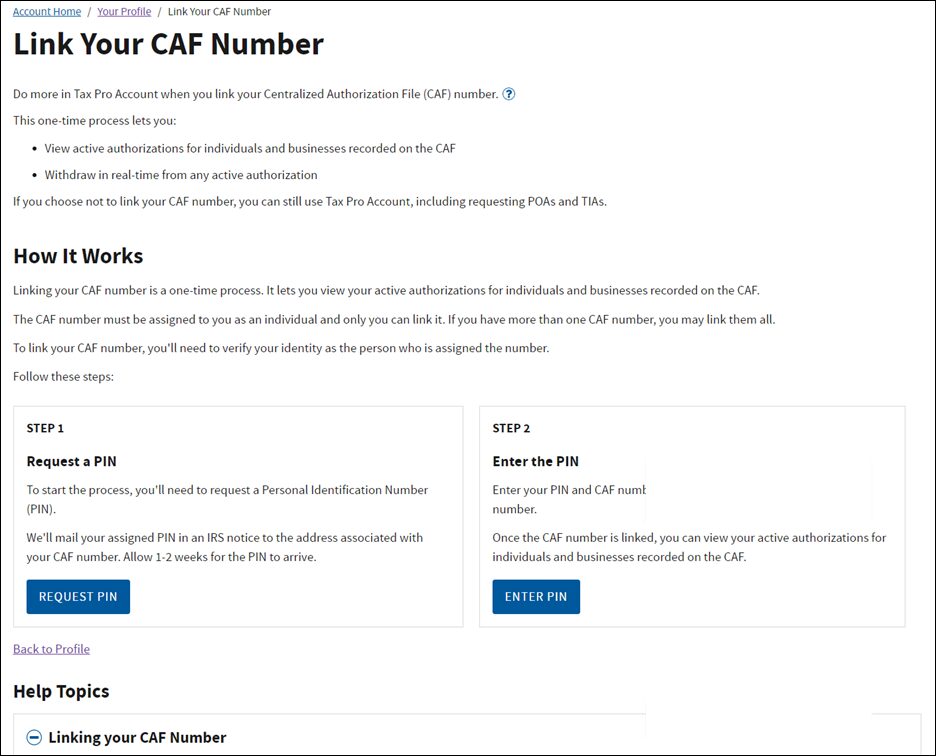
Once a CAF number is assigned, it generally remains with the tax professional for life, as long as they maintain their eligibility to practice before the IRS. Unlike some professional licenses or certifications, the CAF number itself does not expire. However, the authorizations linked to it – the specific powers of attorney or information authorizations for individual clients – do have validity periods or can be revoked. Effective management of the CAF number and its associated authorizations is critical for smooth operations and adherence to ethical guidelines.
Record Keeping: The Foundation of Good Practice
Diligent record-keeping is paramount for tax professionals managing their CAF number. This includes maintaining copies of all Form 2848s and Form 8821s submitted, noting the date of submission, the scope of authority granted, and any expiration dates. While the IRS keeps its own centralized file, having personal records allows professionals to quickly verify the extent of their authority for each client and avoid any missteps. Robust record-keeping also supports compliance with Circular 230, which governs the practice of attorneys, CPAs, enrolled agents, and enrolled actuaries before the IRS.
Revocation Procedures: Ending Client Representation
A CAF number is permanent, but the authorizations it tracks are not. There are instances where a Power of Attorney (PoA) or Tax Information Authorization (TIA) needs to be revoked. This can happen if the engagement with a client ends, if the client wishes to change representatives, or if the client passes away. To properly revoke an authorization, the taxpayer or the representative must send a written revocation to the IRS. For Form 2848, the new representative can also submit a new PoA, which typically revokes prior PoAs for the same tax matters and periods, unless specified otherwise. It is crucial to follow proper revocation procedures to ensure that the professional no longer has access to client information once the representation period concludes, upholding privacy and ethical standards. Failure to do so can lead to unauthorized access or communication, posing significant risks for both the professional and the former client.
Staying Current: IRS Guidelines and Updates
The IRS occasionally updates its procedures and requirements related to authorization forms and representative interactions. While the CAF number concept remains stable, the nuances of submission, processing, and communication can evolve. Tax professionals must stay informed about these changes through IRS publications, professional organizations, and continuing education. Staying current ensures that forms are submitted correctly, authorizations are processed efficiently, and representation remains compliant with the latest IRS directives, ultimately protecting both the professional’s practice and their clients’ financial interests.
The Impact of CAF on Business Finance and Client Relationships
The IRS CAF number, while seemingly a bureaucratic identifier, carries profound implications for the business finance of tax practices and the crucial relationships they foster with clients. Its existence underpins the very structure through which tax professionals provide authorized, compliant, and efficient services, thereby influencing their market position, operational costs, and the trust they build.
For a tax professional’s business finance, the CAF number is a cornerstone of operational efficiency. By streamlining the authorization process and centralizing client representation records, it significantly reduces the administrative burden associated with managing multiple client engagements. Without a CAF system, professionals would spend considerably more time proving their authority for each interaction, leading to higher labor costs and less time available for direct client service or business development. This efficiency translates into cost savings and allows for better resource allocation, ultimately contributing to a healthier bottom line for the practice. Moreover, the ability to quickly access client information and represent them effectively before the IRS enables professionals to handle a higher volume of cases, diversifying revenue streams and stabilizing business finance.
Beyond operational efficiency, the CAF number plays a pivotal role in enhancing professional credibility and client trust. When a professional holds a valid CAF number and uses it correctly, it signals to clients that they are dealing with an authorized and recognized expert. This professional recognition instills confidence in clients, assuring them that their sensitive financial information and tax matters are being handled by an individual formally sanctioned by the IRS. This trust is invaluable in the financial services sector, where discretion, compliance, and expertise are paramount. A professional’s adept use and management of their CAF number demonstrate their commitment to ethical practice and their proficiency in navigating the complex regulatory environment, strengthening client loyalty and attracting new business through referrals.
Furthermore, the CAF system facilitates greater compliance and mitigates financial risks for taxpayers. By clearly delineating who has authority to act, for what periods, and for which tax matters, it minimizes the potential for unauthorized individuals to interfere with tax accounts. This security protects taxpayers from fraud and ensures that all communication and decisions align with their explicit consent. For businesses, effective representation through a CAF-holding professional can mean the difference between timely resolution of an audit and prolonged, costly disputes, thereby safeguarding their financial stability.
The increasing integration of technology in tax practices also intersects with the CAF number. Many modern tax practice management software solutions incorporate features for tracking client authorizations, linking them to the professional’s CAF number, and managing communication with the IRS. This technological embrace further amplifies the efficiency benefits of the CAF system, allowing for digital record-keeping, automated reminders for authorization expirations, and secure portals for document exchange. In essence, the IRS CAF number is not just an administrative detail; it is a fundamental element that empowers tax professionals to manage their business finances effectively, build robust client relationships based on trust and competence, and ensure the financial well-being of those they serve.
aViewFromTheCave is a participant in the Amazon Services LLC Associates Program, an affiliate advertising program designed to provide a means for sites to earn advertising fees by advertising and linking to Amazon.com. Amazon, the Amazon logo, AmazonSupply, and the AmazonSupply logo are trademarks of Amazon.com, Inc. or its affiliates. As an Amazon Associate we earn affiliate commissions from qualifying purchases.