
The VA home loan program stands as one of the most powerful financial benefits available to United States Veterans, active-duty service members, and eligible surviving spouses. While the program is famous for its “zero down payment” requirement, the interest rate associated with these loans is arguably their most significant long-term financial advantage. Understanding what determines a VA home loan interest rate, how it compares to conventional financing, and how to secure the most favorable terms is essential for any military homebuyer navigating today’s complex economic landscape.
The Fundamentals of VA Home Loan Interest Rates
To understand VA interest rates, one must first clear up a common misconception: the Department of Veterans Affairs (VA) does not set the interest rates for these loans. Instead, VA loans are provided by private lenders—such as banks, credit unions, and mortgage companies. The VA’s role is to provide a federal guarantee on a portion of the loan, which reduces the risk for the lender. This guarantee is the primary reason why VA loan interest rates are consistently lower than those of conventional mortgages.
How VA Rates Differ from Conventional Loans
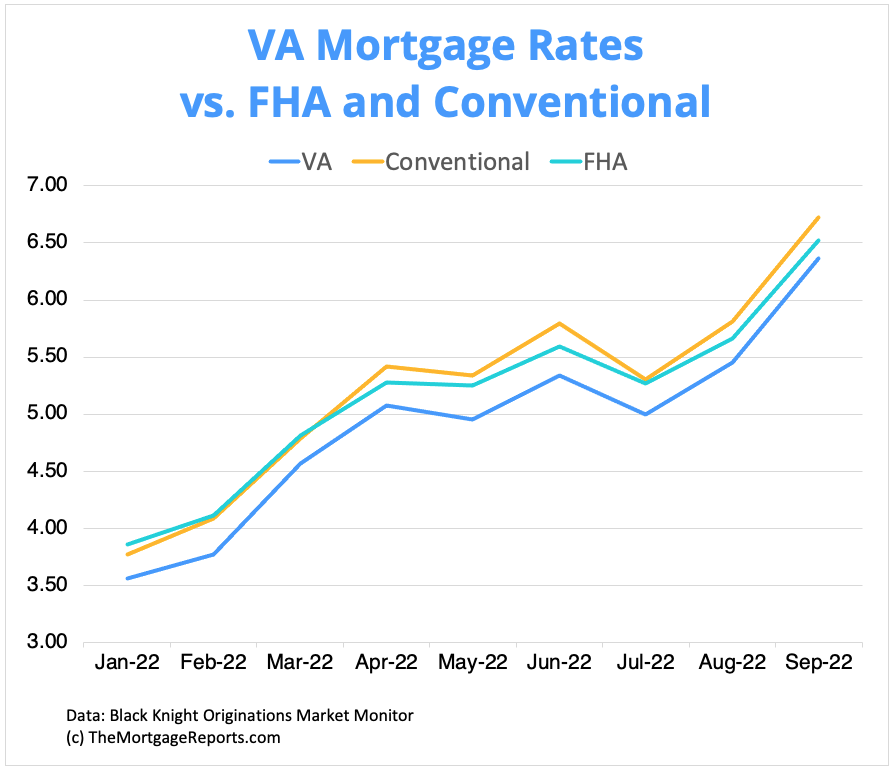
Historically, VA loan interest rates hover between 0.25% and 0.50% lower than conventional 30-year fixed-rate mortgages. Because the federal government promises to repay a significant portion of the loan if the borrower defaults, lenders can afford to offer more aggressive pricing. This “VA spread” provides a substantial financial cushion, allowing veterans to afford more home for the same monthly payment or to save tens of thousands of dollars in interest over the life of the loan.
Furthermore, VA loans do not require Private Mortgage Insurance (PMI), even with zero down payment. In a conventional loan scenario, a buyer with less than 20% down would face both a higher interest rate and an additional monthly insurance premium. The absence of PMI, combined with a lower base interest rate, makes the VA loan the most cost-effective path to homeownership for those who qualify.
The Role of the Secondary Mortgage Market
While the VA guarantee provides the safety net, the actual interest rate is heavily influenced by the secondary mortgage market, specifically the performance of Mortgage-Backed Securities (MBS). Lenders often bundle VA loans into Ginnie Mae securities. The demand for these securities among global investors dictates the daily fluctuations in interest rates. When investors seek the safety of government-backed debt, prices for these securities rise, and interest rates typically fall.
Key Factors That Influence Your Specific VA Interest Rate
While market trends set the “floor” for interest rates, your individual financial profile determines where your specific offer will land. Lenders use a process called risk-based pricing to determine the rate they offer to an individual applicant. Even within the VA program, which is designed to be inclusive, financial health plays a pivotal role in the final numbers.
Credit Score Requirements and Lender Overlays
Although the VA itself does not mandate a minimum credit score, most lenders implement what are known as “overlays.” These are internal standards that may require a borrower to have a minimum FICO score—often ranging from 580 to 640—to qualify for the most competitive rates. A borrower with a 740 credit score will almost always be offered a lower interest rate than a borrower with a 620 score. This is because the higher score suggests a lower probability of default, allowing the lender to reduce the risk premium attached to the interest rate.
Debt-to-Income (DTI) Ratio and Residual Income
In the world of VA lending, the Debt-to-Income (DTI) ratio is viewed through a unique lens. While many conventional programs have strict DTI caps, the VA is more flexible, provided the borrower meets “residual income” requirements. Residual income is the amount of money left over each month after all major expenses and the new mortgage payment are met. If a veteran has significant residual income, a lender may be willing to offer a competitive interest rate even if the DTI ratio exceeds the standard 41% threshold.
Loan Term and Type: Fixed vs. ARM
The structure of the loan significantly impacts the interest rate. The 30-year fixed-rate mortgage is the most popular choice for veterans, offering stability and predictable payments. However, 15-year fixed-rate VA loans typically offer much lower interest rates—often 0.50% to 1.00% lower than their 30-year counterparts.
Alternatively, Adjustable-Rate Mortgages (ARMs) may offer a lower “teaser” rate for an initial period (such as 3 or 5 years). While ARMs can be risky in a rising-rate environment, they may be a strategic choice for service members who know they will be relocated due to a Permanent Change of Station (PCS) within a few years.
The Economic Drivers of VA Rate Fluctuations
No mortgage rate exists in a vacuum. VA rates are sensitive to broader macroeconomic indicators and the monetary policy set by the Federal Reserve. Understanding these drivers can help veterans time their home purchase or refinance more effectively.
Inflation and the Federal Reserve
Inflation is the primary enemy of fixed-income investments like mortgages. When inflation rises, the purchasing power of the interest paid to lenders erodes. To compensate, lenders raise interest rates. While the Federal Reserve does not directly set mortgage rates, its decisions regarding the federal funds rate influence the entire yield curve. When the Fed moves to combat inflation by raising rates, VA loan rates typically follow suit. Conversely, in a cooling economy, rates often decline as investors move capital into the bond market.
The 10-Year Treasury Yield
There is a strong historical correlation between the yield on the 10-year Treasury note and 30-year mortgage rates. Lenders often use the 10-year Treasury as a benchmark. When the yield on the 10-year Treasury rises, VA loan interest rates almost always move upward in tandem. Monitoring the 10-year Treasury can give prospective homebuyers a “real-time” look at where mortgage rates are headed before they officially change at the local bank.
Strategies to Secure the Lowest Possible VA Interest Rate
Because VA loans are offered by private entities, there is a wide variance in the rates and fees you might encounter. Veterans should never assume that the first rate they are quoted is the best one available.
Comparison Shopping Among VA-Specialized Lenders
Not all lenders treat VA loans the same. Some “big box” banks may offer VA loans as a secondary product and may not have the most competitive pricing. Conversely, lenders that specialize in military financing often have streamlined processes and more aggressive rate structures for veterans. Financial experts recommend obtaining at least three separate Loan Estimates. Comparing these estimates side-by-side allows you to see the “Annual Percentage Rate” (APR), which accounts for both the interest rate and the fees, providing a truer sense of the loan’s cost.
Paying Discount Points
A “point” is equal to 1% of the loan amount. Borrowers have the option to pay “discount points” at closing to “buy down” their interest rate. This is essentially prepaying interest to secure a lower monthly payment for the life of the loan. For veterans planning to stay in their home for a long time (the “break-even point”), paying points can result in massive savings. For those expecting to move in three to five years, the upfront cost of points may not be recovered through the monthly savings.
Strengthening Your Financial Profile
Before applying, taking six months to a year to optimize your financial profile can result in a significantly lower rate. This includes paying down revolving credit card debt to lower your credit utilization ratio, ensuring all bills are paid on time, and avoiding new large debts like auto loans. Even a 20-point increase in a credit score can shift a borrower into a better “pricing bucket,” potentially saving thousands of dollars.
Refinancing Options: Managing Your Rate Over Time
One of the most profound benefits of the VA program is the ability to easily lower your interest rate after you have already purchased the home. The VA offers specific programs designed to help veterans take advantage of falling interest rate environments with minimal red tape.
The Interest Rate Reduction Refinance Loan (IRRRL)
Commonly known as the “VA Streamline,” the IRRRL is designed specifically to lower a veteran’s interest rate. The process is remarkably simple: it often requires no credit check, no appraisal, and no out-of-pocket costs, as the closing costs can be rolled into the new loan balance. The primary requirement is that the refinance must result in a “Net Tangible Benefit” for the veteran—usually defined as a specific decrease in the interest rate or a move from an adjustable-rate to a fixed-rate loan.

VA Cash-Out Refinance
While the IRRRL is for rate reduction only, the VA Cash-Out Refinance allows veterans to refinance their existing loan (even if it is not a VA loan) into a new VA loan while taking out equity for debt consolidation, home improvements, or other financial needs. While the interest rates on cash-out refinances are often slightly higher than those for an IRRRL, they still remain highly competitive compared to conventional cash-out options or home equity lines of credit (HELOCs).
In conclusion, while the “what” of a VA home loan interest rate is determined by a mix of federal backing and market forces, the “how much” is largely within the control of the veteran. By understanding the mechanics of these rates and proactively managing their financial health, service members can fully leverage this deserved benefit to build lasting wealth through homeownership.
aViewFromTheCave is a participant in the Amazon Services LLC Associates Program, an affiliate advertising program designed to provide a means for sites to earn advertising fees by advertising and linking to Amazon.com. Amazon, the Amazon logo, AmazonSupply, and the AmazonSupply logo are trademarks of Amazon.com, Inc. or its affiliates. As an Amazon Associate we earn affiliate commissions from qualifying purchases.