
Understanding the interest rate for a home loan is perhaps the most critical step in the journey toward homeownership. At its simplest level, an interest rate is the cost you pay to a lender for borrowing the funds necessary to purchase a property. It is expressed as a percentage of the total loan amount and is paid periodically, typically on a monthly basis, over the life of the loan. However, beneath this simple definition lies a complex web of economic indicators, personal financial metrics, and market dynamics that determine whether your mortgage will be an affordable tool for wealth building or a significant financial burden.

For the average consumer, the interest rate is the primary factor that determines the monthly mortgage payment and the total amount of money paid back over the 15 to 30-year life of the loan. Even a fractional difference in the rate—such as 0.5%—can result in tens of thousands of dollars in difference over the long term. Therefore, gaining a deep understanding of how these rates work, what influences them, and how you can position yourself to receive the best possible terms is essential for anyone entering the real estate market.
The Different Structures of Home Loan Interest Rates
Not all interest rates are structured the same way. When a borrower applies for a home loan, they are usually presented with a choice between different rate types, each with its own set of risks and rewards. Choosing the right structure depends largely on the borrower’s financial stability, risk tolerance, and how long they intend to stay in the home.
Fixed-Rate Mortgages: Stability and Predictability
The fixed-rate mortgage is the gold standard for many homebuyers, particularly those looking for long-term stability. With a fixed-rate loan, the interest rate remains the same for the entire duration of the loan term. Whether market rates skyrocket or plummet, your interest payment stays locked in.
The primary advantage here is predictability. Homeowners can budget with absolute certainty, knowing exactly what their principal and interest payment will be for the next several decades. This structure is particularly beneficial in a low-interest-rate environment, as it allows the borrower to “lock in” a favorable rate for the long haul. The downside is that if market rates drop significantly, the only way to benefit from the lower rates is to go through the costly and time-consuming process of refinancing.
Variable or Floating Interest Rates
Variable rates, often referred to as Adjustable-Rate Mortgages (ARMs), are linked to a specific financial index or benchmark. These rates fluctuate over time based on the movement of the broader economy. Typically, an ARM will offer a lower “teaser” rate for an initial period—such as five, seven, or ten years—after which the rate adjusts annually or semi-annually.
Borrowers often choose variable rates when they expect interest rates to fall in the future or when they plan to sell the property or refinance before the initial fixed period ends. While the initial lower payments are attractive, ARMs carry the risk of “payment shock.” If market rates rise sharply, the borrower’s monthly payment can increase substantially, potentially straining their personal finances.
Hybrid and Capped Interest Models
In some markets, lenders offer hybrid products that attempt to bridge the gap between fixed and variable rates. A capped rate, for example, is a variable rate that has a maximum limit, ensuring that the borrower’s payments never exceed a certain threshold regardless of how high market rates climb. There are also “offset” accounts, where the balance in a linked savings account is subtracted from the loan principal before interest is calculated, effectively reducing the interest paid without changing the nominal rate.
Macroeconomic and Personal Drivers of Interest Rates
The interest rate you are quoted is not a random number; it is the result of a complex interplay between global economic conditions and your individual financial profile. Understanding these drivers can help you time your purchase and improve your standing in the eyes of a lender.
The Role of Central Banks and Monetary Policy
The most significant external driver of home loan interest rates is the monetary policy set by a country’s central bank, such as the Federal Reserve in the United States. Central banks adjust short-term interest rates to manage inflation and stimulate or cool down the economy. When the central bank raises its benchmark rate, it becomes more expensive for banks to borrow money. These banks, in turn, pass those costs on to consumers in the form of higher mortgage rates. Conversely, when the economy is sluggish, central banks may lower rates to encourage borrowing and spending.
Inflation and the Bond Market
Inflation is the silent enemy of lenders. If inflation is high, the purchasing power of the money a lender receives back in the future is diminished. To compensate for this risk, lenders demand higher interest rates. Long-term mortgage rates are also closely tied to the yields on government bonds, particularly the 10-year Treasury note. As investors buy and sell bonds based on their expectations of future inflation and economic growth, mortgage rates tend to move in tandem with these yields.
Individual Risk Profiles: Credit Scores and Income
While macroeconomic factors set the “floor” for interest rates, your personal financial health determines how far above that floor your specific rate will be. Lenders use your credit score as a proxy for your reliability as a borrower. A high credit score (typically above 760) signals to the lender that you are a low-risk borrower, which earns you a lower interest rate.
Furthermore, your debt-to-income (DTI) ratio—the percentage of your gross monthly income that goes toward paying debts—is a critical metric. Lenders prefer a DTI below 36% to 43%. If your DTI is high, the lender may view you as a higher risk and charge a higher interest rate to mitigate the potential of default.
The Financial Mechanics: APR vs. Nominal Rates
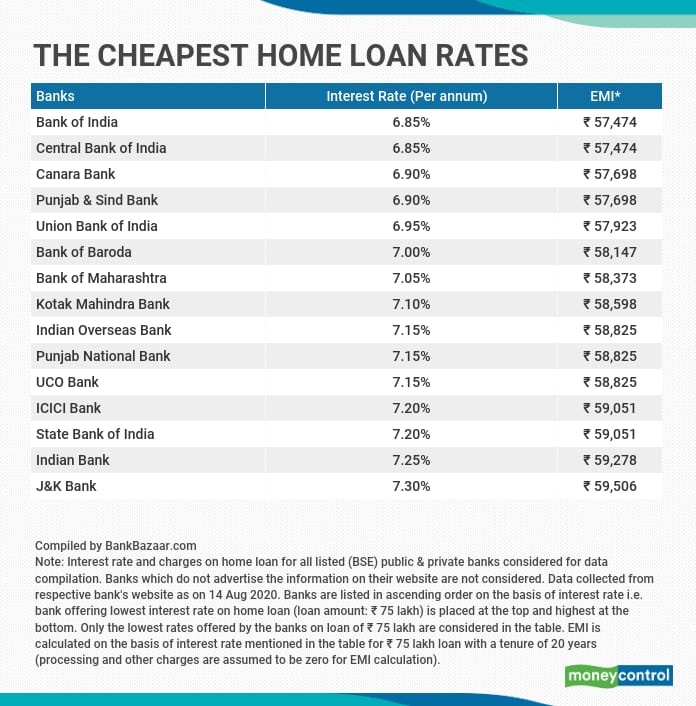
When shopping for a home loan, you will often see two different numbers: the “interest rate” (nominal rate) and the “Annual Percentage Rate” (APR). Understanding the difference between these two is vital for an accurate cost-benefit analysis.
Decoding the Annual Percentage Rate (APR)
The nominal interest rate is the percentage charged on the loan balance. However, taking out a mortgage involves more than just the interest; there are also closing costs, origination fees, mortgage insurance, and other administrative expenses. The APR bundles the interest rate with these additional costs to provide a more comprehensive picture of the loan’s total cost over a year.
If Loan A has a 6% interest rate with $5,000 in fees and Loan B has a 6.2% interest rate with $0 in fees, Loan B might actually be the cheaper option depending on how long you keep the loan. Comparing the APR allows you to make an apples-to-apples comparison between different lenders who may have different fee structures.
How Amortization Schedules Work
Interest on a home loan is usually calculated using an amortization schedule. In the early years of a 30-year mortgage, the majority of your monthly payment goes toward paying off the interest, with only a small fraction going toward the principal balance. As the years progress, this ratio shifts, and eventually, most of your payment goes toward the principal.
This front-loaded interest structure means that if you sell your home or refinance only a few years into the loan, you have built very little equity. Understanding this mechanic highlights the importance of securing a low interest rate from the start, as it significantly impacts the speed at which you can build equity in your home.
Strategies to Secure a Lower Interest Rate
Securing a lower interest rate is one of the most effective ways to save money over your lifetime. While you cannot control the Federal Reserve, you can control several factors that influence the rate lenders offer you.
Strengthening Your Financial Health
The most impactful action you can take is to improve your credit score. This involves paying all bills on time, reducing outstanding credit card balances, and avoiding new credit inquiries in the months leading up to a mortgage application. Even a 20-point increase in your credit score can move you into a different “tier” for lenders, potentially saving you thousands of dollars.
The Importance of a Substantial Down Payment
The Loan-to-Value (LTV) ratio is a comparison of the loan amount to the appraised value of the property. If you put down 20% of the home’s purchase price, your LTV is 80%. Lenders view lower LTV ratios as less risky. If you can provide a larger down payment, you reduce the lender’s exposure, which often results in a lower interest rate offer. Additionally, a 20% down payment usually allows you to avoid Private Mortgage Insurance (PMI), further reducing your monthly expenditure.
Comparing Lenders and Negotiation Tactics
Many homebuyers make the mistake of only talking to their primary bank. However, mortgage rates and fee structures can vary significantly between retail banks, credit unions, and online mortgage lenders. Obtaining at least three different “Loan Estimates” allows you to leverage these offers against one another. Don’t be afraid to ask a lender if they can match a lower rate or a lower fee structure offered by a competitor.
The Long-Term Financial Impact of Interest on Wealth
In the realm of personal finance, the home loan interest rate is a powerful lever for wealth creation or depletion. Because of the way compound interest works, the total amount of interest paid over 30 years can often equal or even exceed the original price of the home.
Compound Interest and the Total Cost of Debt
On a $400,000 loan, the difference between a 4% interest rate and a 7% interest rate is staggering. Over 30 years, a 4% rate results in roughly $287,000 in total interest paid. At a 7% rate, that total jumps to over $558,000. That is an additional $271,000 that could have been invested in the stock market, saved for retirement, or used to fund a child’s education. This illustrates why the interest rate is not just a monthly payment concern, but a major factor in your long-term net worth.

Refinancing as a Wealth Management Tool
Interest rates are not static, and neither is your mortgage. Strategic refinancing—replacing your current loan with a new one at a lower interest rate—can be a powerful tool. When market rates drop significantly, or when your credit score improves, refinancing can lower your monthly payments or allow you to shorten the loan term (e.g., moving from a 30-year to a 15-year mortgage).
However, refinancing comes with closing costs, typically ranging from 2% to 5% of the loan amount. Therefore, it is essential to calculate the “break-even point”—the time it takes for the monthly savings to cover the cost of the refinance. If you plan to stay in the home beyond the break-even point, refinancing is usually a sound financial move.
Ultimately, the interest rate for a home loan is the price of time and risk. It is the price you pay to have a home today rather than thirty years from now. By mastering the variables that influence these rates and taking proactive steps to manage your financial profile, you can ensure that your home loan serves as a foundation for your financial future rather than a weight upon it.
aViewFromTheCave is a participant in the Amazon Services LLC Associates Program, an affiliate advertising program designed to provide a means for sites to earn advertising fees by advertising and linking to Amazon.com. Amazon, the Amazon logo, AmazonSupply, and the AmazonSupply logo are trademarks of Amazon.com, Inc. or its affiliates. As an Amazon Associate we earn affiliate commissions from qualifying purchases.