
Buying a vehicle is often the second-largest purchase a person makes in their lifetime, surpassed only by the purchase of a home. While most consumers focus on the sticker price of the car or the monthly payment amount, the true cost of ownership is significantly influenced by the interest paid over the life of the loan. Understanding how interest is calculated, what factors influence the rate you are offered, and how to minimize those costs can save you thousands of dollars.
To answer “how much interest will I pay,” one must look beyond a single percentage point and examine the interplay between principal, term length, and creditworthiness.
The Anatomy of Car Loan Interest: How It Works
Interest is essentially the “rent” you pay to a lender for the privilege of using their money to purchase a vehicle. In the world of personal finance, most auto loans are structured as “simple interest” loans. Unlike some forms of corporate debt or older consumer loans that used the “Rule of 78s,” simple interest is calculated based on the principal balance remaining on the day the payment is due.
APR vs. Interest Rate
It is critical to distinguish between the nominal interest rate and the Annual Percentage Rate (APR). The interest rate is the percentage of the principal charged by the lender. The APR, however, is a more comprehensive figure that includes the interest rate plus any prepaid interest, origination fees, or other documentation fees required to process the loan. When comparing offers from different banks or dealerships, always use the APR as your benchmark, as it represents the true annual cost of borrowing.
The Simple Interest Method
With a simple interest car loan, your daily interest charge is calculated by multiplying the daily interest rate by the current principal balance. For example, if you have a $30,000 loan with a 6% interest rate, your annual interest is $1,800. Divide that by 365 days, and you are paying roughly $4.93 in interest per day at the start of the loan.
As you make payments, the principal balance decreases. Because the interest is calculated on a lower balance each month, a larger portion of your monthly payment goes toward the principal and a smaller portion goes toward interest. This process is known as amortization.
Amortization and Front-Loading
While the monthly payment remains the same throughout the life of the loan, the ratio of interest to principal shifts. In the early stages of a 60-month loan, you are paying the maximum amount of interest because the principal is at its peak. This is why it can feel like your balance isn’t moving much during the first year of ownership. Understanding this front-loading of interest is vital for anyone considering selling their car or trading it in early, as they may find themselves “upside down”—owing more than the car is worth.
Primary Determinants of Your Interest Rate
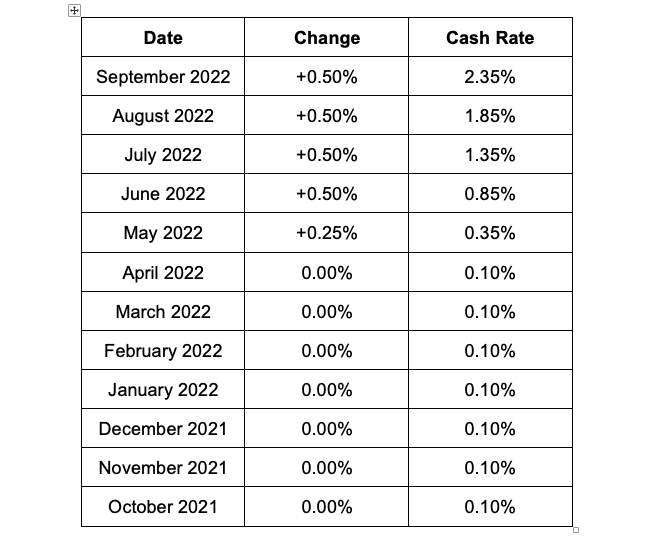
The interest rate you receive is not arbitrary; it is a reflection of the risk the lender takes by lending you money. Several variables dictate this risk profile.
The Power of the Credit Score
Your credit score is the single most influential factor in determining your interest rate. Lenders typically categorize borrowers into tiers:
-
Super-prime (780–850): These borrowers receive the lowest possible rates, often very close to the federal prime rate.
-
Prime (660–779): These borrowers receive competitive rates but may not qualify for “0% APR” promotional offers.
-
Non-prime and Subprime (below 660): These borrowers are viewed as higher risk. Interest rates for subprime loans can jump into the double digits, sometimes reaching 15% to 20% or higher.
Even a 2% difference in your credit-based interest rate can translate into $2,000 to $3,000 in additional interest over a five-year period on a standard SUV or sedan.
Loan Duration and Interest Accrual
In recent years, 72-month and 84-month car loans have become increasingly common as car prices rise. While these long-term loans lower the monthly payment, they drastically increase the total interest paid.
Lenders generally charge higher interest rates for longer terms because the risk of default increases over time. Furthermore, because the principal is being paid down more slowly, interest has more time to accrue. A borrower with a 48-month loan at 5% will pay significantly less in total interest than a borrower with a 72-month loan at the same rate, even if the loan amount is identical.
New vs. Used Vehicles
Generally, new cars come with lower interest rates than used cars. This is because new cars have a more predictable resale value, making them better collateral for the lender. Additionally, manufacturers often provide “captive financing” through their own credit arms (like Ford Credit or Toyota Financial Services) to incentivise new car sales, sometimes offering 0% to 1.9% APR for well-qualified buyers. Used car rates are typically 1% to 5% higher than new car rates for the same borrower.
Calculating the Total Cost: A Real-World Example
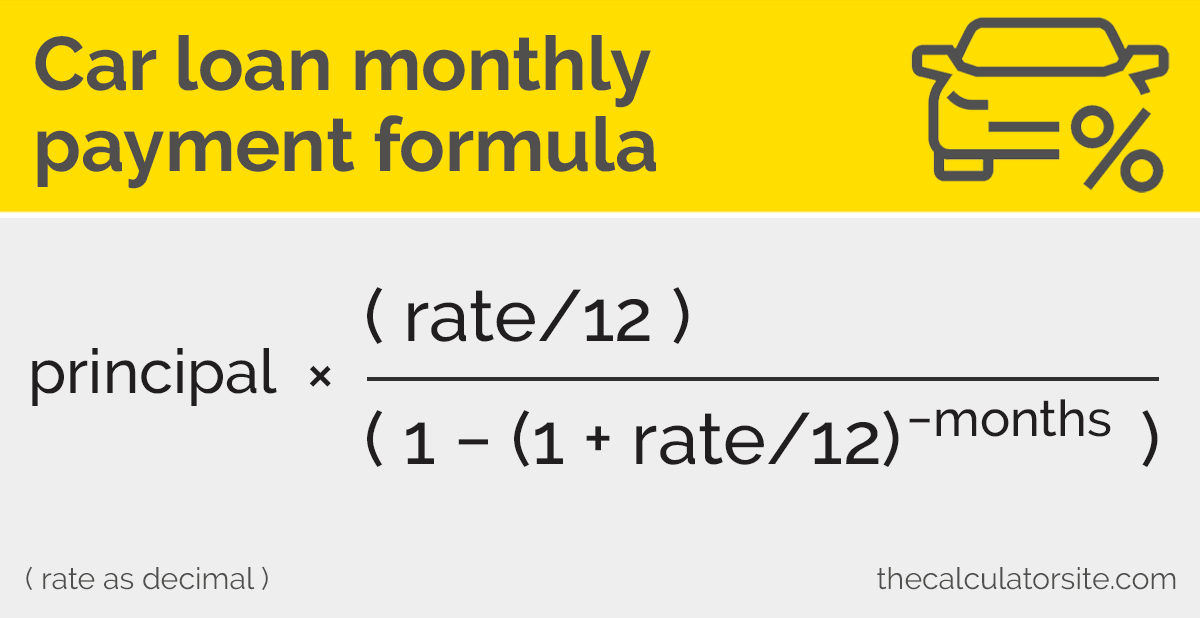
To truly visualize how much interest you will pay, it is helpful to look at a concrete mathematical comparison. Consider a car purchase of $35,000 with a $5,000 down payment, leaving a loan balance of $30,000.
The Short-Term vs. Long-Term Comparison
Scenario A: A 48-month loan at 5% APR.
-
Monthly Payment: $690.88
-
Total Interest Paid: $3,162.34
-
Total Cost: $33,162.34
Scenario B: A 72-month loan at 7% APR (rates are often higher for longer terms).
-
Monthly Payment: $511.45
-
Total Interest Paid: $6,824.28
-
Total Cost: $36,824.28
In Scenario B, the borrower pays nearly $3,700 more in interest just to have a lower monthly payment. This “convenience” of a lower monthly obligation effectively increases the price of the vehicle by more than 10%.
The Impact of the Down Payment
The down payment serves two purposes: it reduces the principal amount (the base upon which interest is calculated) and it improves your loan-to-value (LTV) ratio. A lower LTV ratio signifies lower risk to the lender, which can sometimes trigger a lower interest rate tier. If you can put 20% down instead of 0%, you are not only paying interest on a smaller sum, but you are also protecting yourself from the risk of negative equity, where interest and depreciation outpace your payments.
Advanced Strategies to Lower Your Total Interest Paid
Paying interest is inevitable for most car buyers, but it is not a fixed cost. There are several financial maneuvers you can use to minimize the damage to your net worth.
The Benefits of Refinancing
Many borrowers assume they are stuck with the rate they signed at the dealership. However, if your credit score improves significantly after a year of timely payments, or if market interest rates drop, you can refinance your auto loan. Refinancing involves taking out a new loan with a lower interest rate to pay off the old one. If you can drop your rate from 9% to 5%, the savings over the remaining three or four years of the loan can be substantial.
Accelerating the Payoff Timeline
Because most auto loans use simple interest, paying more than the minimum monthly payment directly reduces the principal balance. Every extra dollar you pay today is a dollar that cannot be charged interest tomorrow.
A popular strategy is to “round up” your payment. If your payment is $442, paying $500 monthly can shave months off your loan and save hundreds in interest. Alternatively, making bi-weekly payments (paying half the monthly amount every two weeks) results in one extra full payment per year, which significantly accelerates the amortization schedule.
Pre-Approval and the “Price of Convenience”
One of the biggest mistakes borrowers make is relying solely on dealership financing. Dealerships often act as intermediaries, sending your application to multiple banks and then adding a “markup” to the interest rate the bank offers. This is known as “dealer reserve.” To avoid this, get pre-approved by a credit union or an online bank before stepping foot on the lot. This gives you a baseline rate that the dealer must beat to earn your business.
Navigating the Dealership Finance Office
The finance and insurance (F&I) office is where the dealership makes a significant portion of its profit, often through the manipulation of interest and the sale of add-ons.
Avoiding “Monthly Payment” Distractions
Salespeople often ask, “What monthly payment are you looking for?” This is a tactic to shift your focus away from the total interest and the length of the loan. If you tell a dealer you want a $400 payment, they can achieve that by extending a 60-month loan to 84 months, while simultaneously increasing the interest rate. Always negotiate the total purchase price first, and then negotiate the interest rate and term independently.
Dealing with Add-on Products
Products like Extended Warranties, GAP insurance, and Tire & Wheel protection are often folded into the car loan. This is a double-edged sword. Not only are you paying for the product itself, but you are also paying interest on that product for the next five to seven years. For example, a $2,500 extended warranty financed at 7% over 72 months actually costs you over $3,000. Whenever possible, pay for add-ons in cash or shop for them independently to avoid financing them at high interest rates.

The Reality of “0% APR” Financing
Promotional 0% interest rates are an excellent way to save money, but they are often an “either/or” proposition. Manufacturers may offer a choice between 0% financing or a $3,000 cash rebate. In many cases, it is actually mathematically superior to take the cash rebate and use a slightly higher interest rate from a credit union, as the reduction in principal outweighs the interest savings. Always run the numbers for both scenarios before signing.
By treating a car loan as a strategic financial decision rather than a simple monthly expense, you can ensure that the interest you pay is kept to an absolute minimum, allowing you to build wealth elsewhere rather than transferring it to a lender.
aViewFromTheCave is a participant in the Amazon Services LLC Associates Program, an affiliate advertising program designed to provide a means for sites to earn advertising fees by advertising and linking to Amazon.com. Amazon, the Amazon logo, AmazonSupply, and the AmazonSupply logo are trademarks of Amazon.com, Inc. or its affiliates. As an Amazon Associate we earn affiliate commissions from qualifying purchases.