
Inductive charging, often interchangeably referred to as wireless charging, represents a transformative technology that allows electrical energy to be transferred between two objects without direct physical contact or traditional wired connections. This seemingly magical capability, deeply rooted in fundamental principles of electromagnetism, has steadily moved from niche applications to become a ubiquitous feature in modern consumer electronics and is poised to revolutionize power delivery across numerous sectors, from electric vehicles to medical implants. At its core, inductive charging leverages magnetic fields to create an efficient and convenient method for replenishing power in a wide array of devices, fundamentally altering how we interact with our technology.
The Core Principle: How Wireless Power Works
The concept of inductive charging is built upon the well-established physics phenomenon of electromagnetic induction, a principle first articulated by Michael Faraday in the 19th century. Understanding this underlying mechanism is crucial to grasping the elegance and efficiency of wireless power transfer.
Electromagnetic Induction Explained
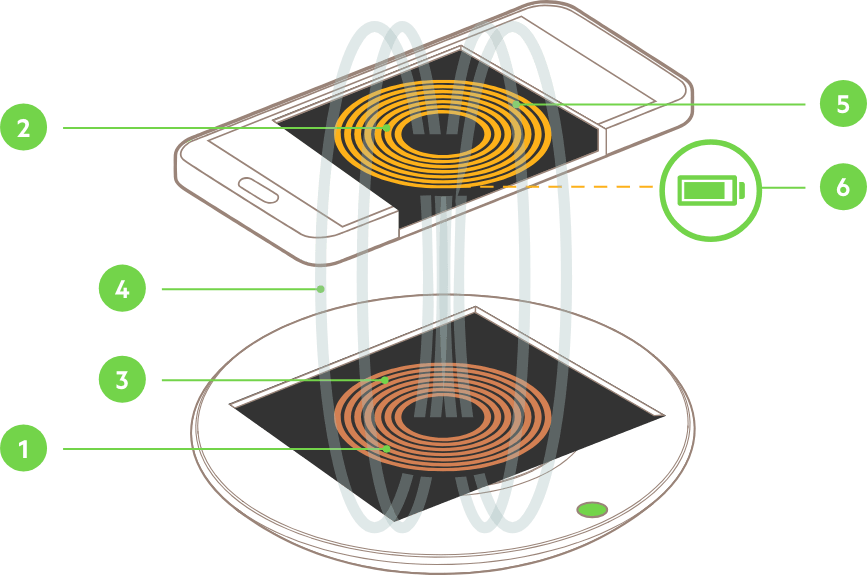
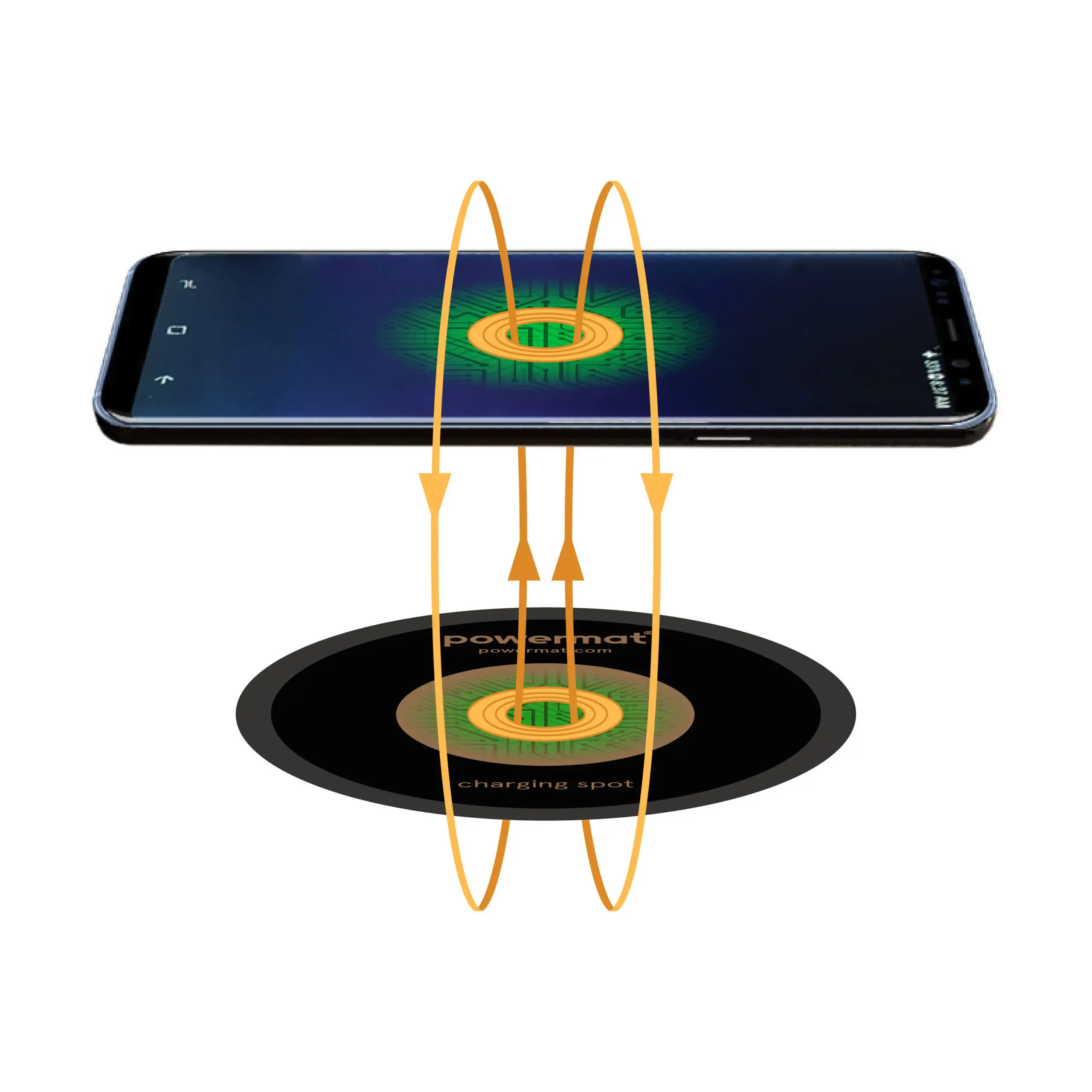
At the heart of inductive charging is the interplay between electricity and magnetism. When an alternating electric current (AC) flows through a coil of wire, it generates a fluctuating magnetic field around that coil. Conversely, if a changing magnetic field passes through or near another coil of wire, it induces an electric current in that second coil. This mutual induction is the linchpin of the technology.
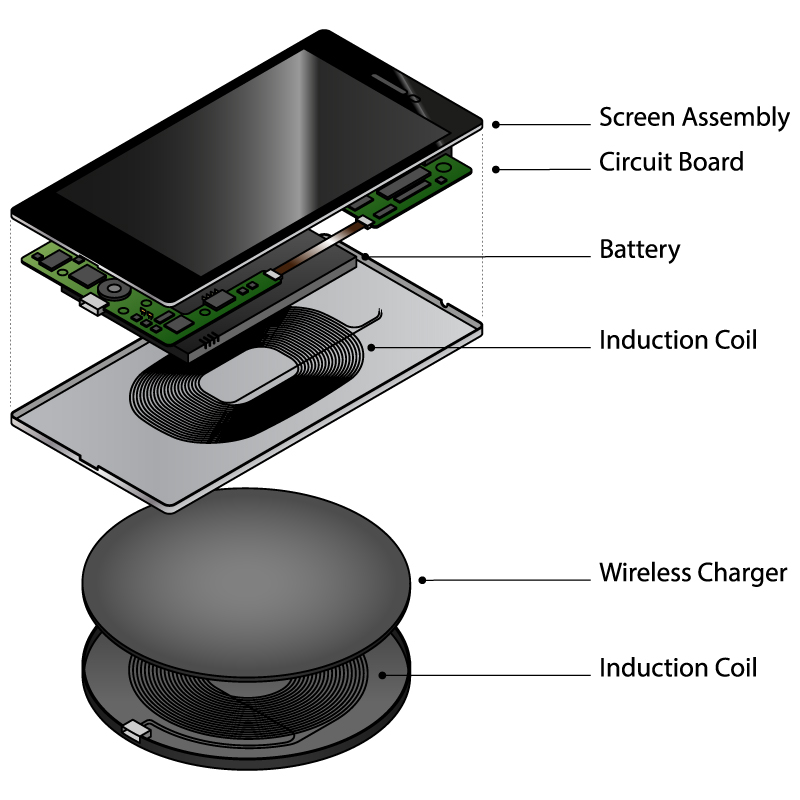
In a typical inductive charging setup, there are two primary components: a transmitting coil (often embedded in a charging pad or base) and a receiving coil (integrated into the device being charged, such as a smartphone). The charging pad converts wall power into a high-frequency alternating current, which is then fed into the transmitting coil. This current creates a dynamic magnetic field that extends a short distance from the pad. When a compatible device, containing its own receiving coil, is placed within this magnetic field, the field induces an AC current in the receiving coil. This induced current is then rectified (converted from AC to DC) and used to charge the device’s battery. The efficiency of this transfer is highly dependent on factors such as the distance between the coils and their alignment.
Resonant Inductive Coupling
While basic inductive charging relies on a relatively close proximity between coils, more advanced systems utilize resonant inductive coupling. This technique enhances the efficiency and allows for slightly greater distances between the transmitter and receiver. Resonant inductive coupling works by tuning both the transmitting and receiving coils to resonate at the same frequency, much like two tuning forks vibrating in harmony. When both coils are resonating at their natural frequency, the energy transfer becomes significantly more efficient, allowing power to “tunnel” across larger gaps with minimal loss. This resonance minimizes energy dissipation and broadens the “sweet spot” for charging, making it less sensitive to precise alignment. This particular method opens doors for more flexible charging solutions, potentially enabling charging from a few centimeters away rather than requiring direct contact.
Key Components: Transmitter and Receiver
Every inductive charging system comprises essential hardware components that facilitate the wireless power transfer. The transmitter typically includes a power supply, an oscillation circuit to generate the high-frequency AC, and the transmitting coil. The receiver in the device being charged consists of the receiving coil, a rectification circuit to convert the induced AC into usable DC, and power management circuitry to safely charge the battery. Advanced systems also incorporate communication protocols between the transmitter and receiver to optimize power delivery, detect foreign objects, and ensure safe operation. These protocols allow the charger to identify the device, negotiate power levels, and monitor charging status, preventing overcharging and overheating.
A Journey Through History and Evolution
The concept of wireless power is not a modern invention; its roots stretch back to foundational scientific discoveries, evolving through several stages to become the consumer technology we recognize today.
Early Discoveries and Pioneers
The principles underpinning inductive charging were first explored in the 19th century. Michael Faraday’s experiments in the 1830s demonstrated electromagnetic induction, laying the theoretical groundwork. However, it was Nikola Tesla, at the turn of the 20th century, who truly envisioned and experimented with the practical applications of wireless power transmission. Tesla famously demonstrated wireless lighting and power transfer, dreaming of a world powered without wires. While his ambitious plans for long-range, high-power global wireless energy transmission were never fully realized in his lifetime, his work undeniably proved the feasibility of transmitting electrical energy through the air, albeit at a much greater scale than modern inductive charging.
From Niche Applications to Mainstream Devices
For decades following Tesla’s work, inductive power remained largely confined to niche industrial and specialized applications where physical connections were impractical or hazardous. Electric toothbrushes, introduced in the 1990s, were among the first mainstream consumer devices to utilize inductive charging, primarily for safety reasons in wet environments. Medical implants, such as pacemakers, also adopted inductive charging for battery replenishment, reducing the need for invasive surgeries. The real breakthrough into widespread consumer adoption began in the early 2010s with the advent of smartphones and wearables, where the convenience of simply placing a device on a pad began to outweigh the minor efficiency trade-offs compared to wired charging.
Standardization Efforts (e.g., Qi Standard)
The widespread adoption of inductive charging in consumer electronics was significantly accelerated by standardization efforts. Initially, several competing standards emerged, leading to fragmentation and confusion for consumers. The most prominent and ultimately dominant standard is Qi (pronounced “chee”), developed by the Wireless Power Consortium (WPC). Launched in 2008, the Qi standard provided a common platform that allowed devices from different manufacturers to be charged by any Qi-certified charging pad. This interoperability was a game-changer, removing barriers to adoption and fostering a robust ecosystem of compatible devices and accessories. Today, Qi is integrated into hundreds of millions of smartphones, smartwatches, earbuds, and other gadgets globally, making it the de facto standard for short-range inductive charging.
Practical Applications and Current Landscape
Inductive charging has permeated various facets of modern life, offering convenience and enhancing functionality across diverse industries. Its applications continue to expand as the technology matures and becomes more efficient.
Consumer Electronics (Smartphones, Smartwatches, Earbuds)
The most visible impact of inductive charging is undoubtedly within the consumer electronics sector. Smartphones from major manufacturers, including Apple, Samsung, Google, and others, have integrated Qi wireless charging capabilities as a standard feature. This allows users to simply place their device on a charging pad at home, in the office, or even in public spaces like cafes and airports. Smartwatches, such as the Apple Watch and various Android Wear devices, almost exclusively rely on inductive charging due to their compact size and the impracticality of integrating traditional charging ports. Similarly, many true wireless earbuds cases, like Apple AirPods, utilize inductive charging, offering a seamless and cable-free experience for users. The convenience factor is a major driver, eliminating the need to fumble with cables and ports, especially in low-light conditions or when portability is key.
Electric Vehicles (EV Charging)
Beyond small gadgets, inductive charging holds immense promise for the burgeoning electric vehicle market. While still in nascent stages of widespread deployment, several automotive manufacturers and technology companies are actively developing and testing wireless EV charging solutions. These systems would allow electric vehicles to charge by simply parking over a charging pad embedded in the ground, eliminating the need for cables. This offers significant advantages in terms of convenience, aesthetics, and safety, especially in public parking lots or autonomous vehicle fleets where human intervention might be minimal. Research is ongoing to improve efficiency, power transfer rates, and the robustness of these systems for varying weather conditions and vehicle types. Dynamic wireless charging, where EVs charge while driving over specially equipped road segments, is an even more ambitious future application being explored.
Industrial and Medical Uses
Inductive charging’s ability to transfer power without physical contact makes it invaluable in environments where traditional wired connections are problematic. In industrial settings, it powers robotic systems, autonomous guided vehicles (AGVs), and sensors in harsh or hazardous environments where exposed electrical contacts could be dangerous or susceptible to wear and tear. Hermetically sealed devices, common in medical and pharmaceutical applications, also benefit greatly. Medical implants, such as cardiac pacemakers, neurostimulators, and continuous glucose monitors, can be recharged wirelessly, reducing the risk of infection associated with transcutaneous wiring and prolonging battery life without repeated surgeries. This technology enables innovation in fields where hygiene, safety, and reliability are paramount.
Emerging Trends and Future Possibilities
The trajectory of inductive charging points towards a future of pervasive wireless power. Advancements in resonant inductive coupling and higher frequency power transfer are paving the way for larger charging zones and greater flexibility. Furniture with integrated charging surfaces is becoming more common, and even entire rooms could eventually be designed to wirelessly power multiple devices simultaneously. The integration with smart home ecosystems means devices could be intelligently charged when needed, optimizing energy consumption.
Advantages and Limitations of Inductive Charging
Like any technology, inductive charging comes with a distinct set of benefits and drawbacks that shape its current adoption and future potential.
The Convenience Factor
The most significant advantage of inductive charging is convenience. The elimination of physical cables and connectors simplifies the user experience, reduces clutter, and minimizes wear and tear on device ports. This is particularly beneficial for devices used in challenging environments, where dust, water, or repeated plugging/unplugging can damage ports. For devices like smartwatches, where form factor dictates minimal port integration, wireless charging is often the only practical solution. The “drop and charge” simplicity significantly enhances the user experience.
Efficiency and Heat Generation
While modern inductive charging systems are quite efficient, they are generally less efficient than direct wired connections. Some energy is inevitably lost as heat during the conversion between electrical and magnetic energy, and then back again. This means that a portion of the energy drawn from the wall outlet is dissipated as heat rather than being transferred to the device’s battery. This heat generation can sometimes lead to slightly longer charging times or, in extreme cases, contribute to battery degradation over time, although industry standards and device software typically mitigate these risks effectively. Maintaining a balance between speed, efficiency, and thermal management is a constant challenge for engineers.
Range and Alignment Considerations
Traditional inductive charging typically requires close proximity and relatively precise alignment between the transmitting and receiving coils. While resonant inductive coupling has extended this range slightly, it is still generally limited to a few centimeters. This limitation can sometimes be inconvenient, as a device might need to be carefully positioned on a charging pad to initiate and maintain a charge. Misalignment can lead to reduced efficiency or a failure to charge altogether. This constraint drives innovation towards larger charging zones and more forgiving alignment requirements, including multi-coil arrays and magnetic guidance systems.
Security and Interference
Security concerns with inductive charging are generally minimal for consumer devices, as the power transfer is short-range and localized. However, in more open environments or with higher power applications like EV charging, ensuring that only authorized devices receive power and that the system is not vulnerable to interference or malicious manipulation is an ongoing area of research. Additionally, the electromagnetic fields generated by inductive chargers can, in rare cases, interfere with other sensitive electronic devices or medical implants if not properly shielded. Regulatory bodies set standards to minimize these risks, ensuring that products meet electromagnetic compatibility (EMC) requirements.
The Future of Wireless Power
The trajectory of inductive charging and wireless power points towards an increasingly cable-free future, extending beyond simple device charging to potentially reshape infrastructure and device design.
Longer-Range Wireless Charging
While inductive charging currently operates over short distances, research into longer-range wireless power solutions is advancing rapidly. Technologies like focused RF (radio frequency) power, acoustic charging, and laser power transfer are being explored to deliver power across rooms or even further. These methods could enable truly ambient wireless power, where devices are continuously charged as they operate, without needing to be placed on a pad or plugged in. Imagine a smart home where sensors, smart speakers, and other IoT devices never need their batteries changed or charged manually.
Ubiquitous Power Surfaces
The integration of inductive charging coils into everyday surfaces is a clear trend. Desks, countertops, tables, and even vehicle dashboards are increasingly being designed with embedded charging capabilities. This concept could expand to public spaces, offering seamless power access in coffee shops, airports, and public transport. The ultimate vision is a world where power is as readily available as Wi-Fi, turning any surface into a charging station. This would require robust multi-device charging capabilities and dynamic power allocation.
Powering the Internet of Things (IoT)
The proliferation of Internet of Things (IoT) devices—from smart sensors to connected appliances—presents a massive challenge for power management. Many IoT devices are deployed in hard-to-reach locations and are designed for long-term, low-power operation. Wireless charging, particularly longer-range solutions, could eliminate the need for batteries or frequent battery replacements in these devices, vastly simplifying their deployment and maintenance. This would enable truly “install and forget” IoT solutions, accelerating the growth of smart environments and industrial automation.
Environmental Impact and Sustainability
From an environmental perspective, widespread inductive charging has the potential for both positive and negative impacts. On the positive side, reducing the proliferation of tangled cables and proprietary chargers could decrease electronic waste. Standardized wireless charging could also extend the lifespan of device ports, which are common points of failure. However, the slightly lower efficiency compared to wired charging means a small increase in energy consumption overall. Future innovations will need to prioritize maximizing energy efficiency and utilizing sustainable materials to ensure that the convenience of wireless power aligns with global efforts toward environmental sustainability.
aViewFromTheCave is a participant in the Amazon Services LLC Associates Program, an affiliate advertising program designed to provide a means for sites to earn advertising fees by advertising and linking to Amazon.com. Amazon, the Amazon logo, AmazonSupply, and the AmazonSupply logo are trademarks of Amazon.com, Inc. or its affiliates. As an Amazon Associate we earn affiliate commissions from qualifying purchases.