
In the dynamic world of commerce, legal structures play a pivotal role in defining a business’s operational framework, financial obligations, and growth potential. Among these, the abbreviation “Inc.” stands out as one of the most recognized and often misunderstood designations. Far from being a mere suffix, “Inc.” signifies “Incorporated,” denoting a specific type of legal entity that carries profound implications for business owners, investors, and the economy at large. Understanding what “Inc.” means in business is fundamental for strategic planning, risk management, and financial success.
The Legal Foundation: Understanding ‘Inc.’
At its core, “Inc.” represents the legal process by which a new or existing business transforms into a corporation. This transformation creates a distinct legal entity separate from its owners, a concept known as corporate personhood. This separation is the bedrock of the corporate structure, influencing everything from liability to taxation.

The Meaning of ‘Incorporated’
When a business incorporates, it essentially becomes a “person” in the eyes of the law. This legal personhood grants the corporation many of the same rights and responsibilities as an individual, such as the ability to enter into contracts, incur debt, own assets, sue, and be sued. Unlike a sole proprietorship or partnership, where the business and its owners are legally indistinguishable, an incorporated entity exists as a separate legal and financial body. This distinction is crucial for protecting the personal assets of the business’s shareholders.
Primary Purpose: Limited Liability
The single most compelling reason for many entrepreneurs to incorporate is the principle of limited liability. In an incorporated business, the personal assets of the owners (shareholders) are generally shielded from the company’s debts, liabilities, and legal actions. If the corporation faces financial difficulties, such as bankruptcy, or is successfully sued, creditors and plaintiffs can typically only pursue the assets of the corporation itself, not the personal savings, homes, or other possessions of its owners. This protection contrasts sharply with sole proprietorships and general partnerships, where owners are personally liable for all business obligations.
Separation of Owners and Business
The corporate structure enforces a clear separation between the owners (shareholders), management (officers and directors), and the business entity itself. Shareholders own a portion of the company through their stock, but they typically do not directly manage its day-to-day operations unless they also serve as officers or directors. This hierarchical structure provides a robust framework for governance, enabling clear lines of responsibility and accountability, which can be particularly beneficial as a business scales and attracts external investment.
Types of Corporations and Their Implications
While “Inc.” broadly refers to an incorporated entity, there are several distinct types of corporations, each with unique characteristics impacting taxation, governance, and suitability for different business models. The choice between these types is a critical financial and strategic decision.
C-Corporation (C-Corp)
The C-Corp is the most common and traditional form of corporation. It is characterized by its ability to raise capital from an unlimited number of shareholders and is subject to “double taxation.” This means the corporation pays taxes on its profits at the corporate level, and then shareholders pay personal income taxes on any dividends or distributions they receive. Despite this, C-Corps offer significant advantages, including maximum flexibility for equity structuring, the ability to offer a wide range of employee benefits, and the prestige often associated with larger, publicly traded companies. They are the preferred structure for businesses planning to seek venture capital funding or eventually go public, as they allow for different classes of stock and a broader investor base.
S-Corporation (S-Corp)
An S-Corp is a special type of corporation that elects to pass corporate income, losses, deductions, and credits through to its shareholders’ personal income, avoiding the double taxation inherent in a C-Corp. This “pass-through” taxation means the business itself does not pay federal income tax; instead, profits and losses are reported on the owners’ personal tax returns. To qualify as an S-Corp, a business must meet specific criteria, including having no more than 100 shareholders, all of whom must be U.S. citizens or residents, and only one class of stock. S-Corps are popular among smaller businesses and startups that wish to leverage the liability protection of a corporation while avoiding the double taxation of a C-Corp. They can also provide opportunities for owners to reduce self-employment taxes.
Other Corporate Forms
While C-Corps and S-Corps are the most prevalent, other specialized corporate forms exist. For example, a B-Corporation (Benefit Corporation) is a for-profit entity that aims to create a public benefit alongside profit and must meet rigorous standards of social and environmental performance, accountability, and transparency. Nonprofit Corporations are formed for charitable, educational, religious, or scientific purposes, and their earnings do not benefit any private shareholder or individual. These specialized forms cater to specific objectives beyond purely commercial endeavors, often carrying unique tax exemptions and regulatory requirements.
Financial Advantages and Disadvantages of Incorporation
Choosing to incorporate has profound financial implications that extend beyond liability protection. It influences a company’s ability to raise capital, manage taxes, and establish long-term credibility.
Access to Capital and Investment
Incorporating can significantly enhance a business’s ability to attract investment. Corporations can issue shares of stock, making it easier to raise capital from angel investors, venture capitalists, and the public markets. Investors are often more comfortable investing in corporations due to their established legal structure, formal governance, and clearer mechanisms for ownership transfer and liquidity. The ability to offer equity stakes is a cornerstone of scaling rapidly, particularly for innovative startups requiring substantial funding.
Tax Implications and Strategies
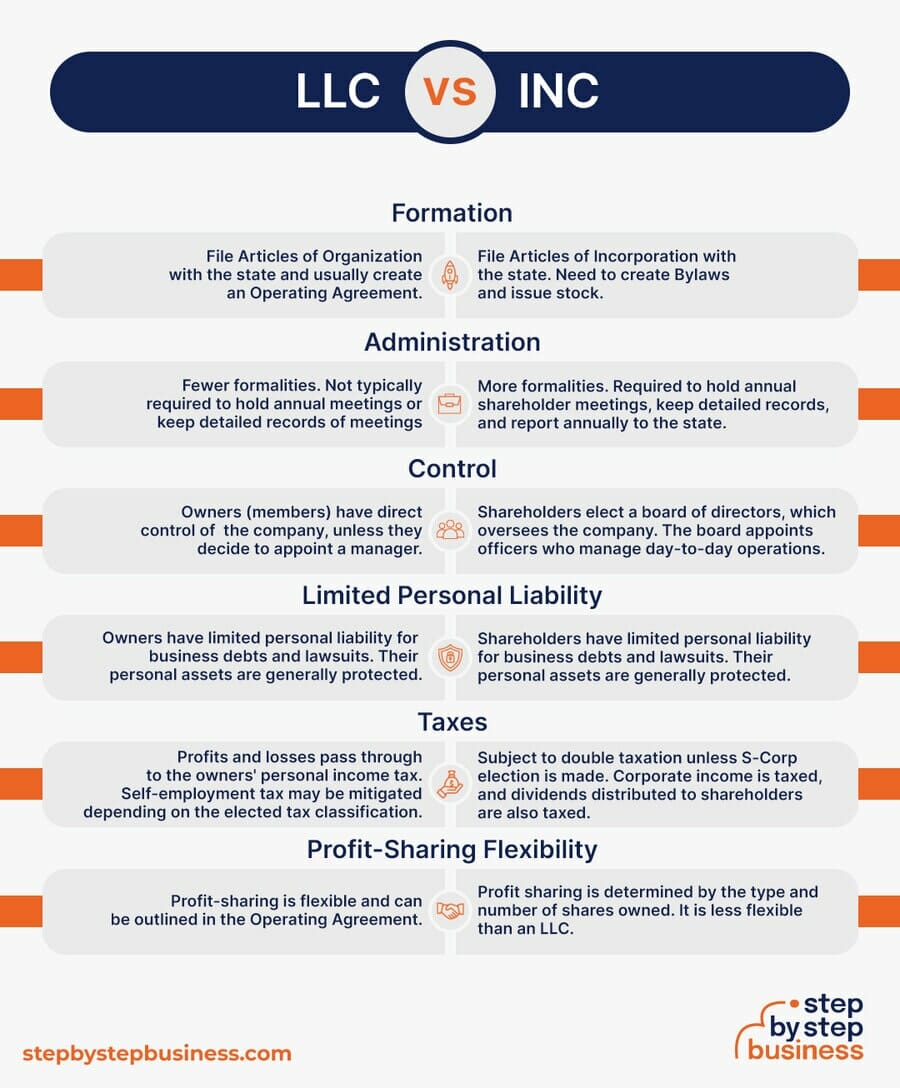
The tax implications of incorporation are complex and vary significantly between C-Corps and S-Corps. C-Corps face corporate income tax, leading to potential double taxation, but they also have more flexibility in deducting expenses, deferring income, and structuring executive compensation plans. S-Corps, by passing profits and losses directly to shareholders, avoid corporate-level taxation, potentially leading to lower overall tax burdens for owners, especially for smaller, profitable businesses. Furthermore, S-Corp owners can sometimes pay themselves a reasonable salary and take the remaining profits as distributions, which are not subject to self-employment taxes, providing a potential tax-saving strategy. Understanding these nuances is crucial for optimizing a business’s financial strategy.
Credibility and Longevity
The “Inc.” designation often lends an air of professionalism and credibility to a business. It signals to customers, suppliers, and partners that the company is a serious, formally structured entity, which can foster trust and open doors to larger contracts and collaborations. Furthermore, corporations are designed for perpetual existence, meaning the business can continue indefinitely regardless of changes in ownership, unlike partnerships or sole proprietorships which may dissolve upon the death or departure of an owner. This longevity is appealing to investors and ensures continuity.
Regulatory Compliance and Costs
While offering numerous benefits, incorporation comes with increased administrative burdens and costs. Corporations are subject to more stringent regulatory compliance requirements than other business structures. This includes maintaining detailed corporate records, holding annual shareholder and board meetings, filing annual reports with the state, and adhering to specific accounting practices. These compliance tasks often necessitate professional legal and accounting services, adding to operational expenses. The initial formation fees, ongoing state fees, and the complexity of corporate tax filings can also be considerable, requiring careful financial planning.
When to Consider Incorporating Your Business
Deciding when and whether to incorporate is a strategic financial decision that depends on various factors, including the business’s growth trajectory, risk profile, and long-term objectives.
Growth Potential and Investment Needs
If a business has significant growth potential and anticipates needing to raise substantial capital from external investors (e.g., venture capitalists, private equity firms) or eventually go public, incorporating as a C-Corp is often the most suitable path. The C-Corp structure is designed to accommodate multiple classes of stock, broad ownership, and the complex financial transactions associated with scaling a large enterprise.
Risk Mitigation and Asset Protection
For businesses operating in industries with high litigation risk or those that could incur substantial debt, the limited liability protection offered by incorporation is invaluable. This is particularly true for businesses whose owners have significant personal assets they wish to shield from business liabilities. If personal risk exposure is a major concern, incorporation provides a robust legal firewall.
Tax Planning Opportunities
As discussed, S-Corps offer specific tax advantages, particularly for profitable small businesses, by allowing owners to avoid self-employment taxes on distributions and circumvent double taxation. For businesses with significant revenue, the nuanced tax deductions and benefits available to C-Corps might also present strategic opportunities for tax minimization, especially concerning executive compensation and employee benefits. Consulting with a tax professional is essential to determine the most financially advantageous structure.
The Incorporation Process: A High-Level Overview
While specific steps vary by state, the process of incorporating generally involves several key stages, each requiring careful attention to legal and financial details.
State Selection and Name Reservation
The first step is typically choosing the state in which to incorporate. While many businesses incorporate in their home state, some choose states like Delaware due to their well-developed corporate laws and courts, even if their operations are elsewhere. After selecting a state, a business must reserve a unique corporate name that is not already in use by another entity.
Articles of Incorporation
The core document for forming a corporation is the Articles of Incorporation (or Certificate of Incorporation). This document is filed with the chosen state’s Secretary of State and typically includes the corporation’s name, purpose, number of authorized shares, and the names and addresses of the initial directors and registered agent. This filing officially brings the corporation into existence.
Bylaws and Corporate Governance
Once the Articles are filed, the corporation must establish its internal operating rules through corporate bylaws. Bylaws detail how the company will be managed, including procedures for shareholder and board meetings, voting rights, officer duties, and other governance matters. These bylaws are not typically filed with the state but are crucial for the corporation’s internal functioning and legal compliance. An initial board meeting is also usually held to appoint officers and adopt the bylaws.

Ongoing Compliance
Incorporation is not a one-time event; it requires ongoing compliance. This includes holding regular board and shareholder meetings, maintaining detailed corporate records (minutes, stock ledger), filing annual reports with the state, and adhering to federal, state, and local tax regulations. Failure to maintain corporate formalities can lead to the corporation losing its limited liability protection, a concept known as “piercing the corporate veil.”
In conclusion, “Inc.” signifies a fundamental legal and financial structure that offers substantial benefits in terms of liability protection, access to capital, and professional credibility. However, it also demands increased regulatory compliance and can have complex tax implications. Understanding these facets is paramount for any entrepreneur or financial professional navigating the corporate landscape and making informed decisions that shape a business’s trajectory and financial health.
aViewFromTheCave is a participant in the Amazon Services LLC Associates Program, an affiliate advertising program designed to provide a means for sites to earn advertising fees by advertising and linking to Amazon.com. Amazon, the Amazon logo, AmazonSupply, and the AmazonSupply logo are trademarks of Amazon.com, Inc. or its affiliates. As an Amazon Associate we earn affiliate commissions from qualifying purchases.