
In the landscape of global retail, few names carry as much weight in the sporting world as Decathlon. Founded in 1976 in Lille, France, by Michel Leclercq, Decathlon has evolved from a local sports shop into a multi-billion-euro brand that dominates the international market. However, for brand strategists and marketing professionals, the question “What is in the Decathlon?” goes far beyond the inventory of balls, rackets, and tents. It refers to the complex, vertically integrated brand ecosystem that allows the company to maintain a unique position: the “IKEA of sports.”
To understand Decathlon is to understand a masterclass in corporate identity, niche specialization, and customer-centric value propositions. This article explores the internal branding architecture, the strategic “House of Brands” philosophy, and the recent massive rebranding effort that signals Decathlon’s transition from a retail distributor to a specialized sports brand.
1. The Core Identity: Mission-Driven Brand Strategy
At the heart of Decathlon’s success is a singular, unwavering mission: to make the pleasures and benefits of sport accessible to the many. This is not just a tagline; it is the foundation of their corporate identity. In a market often dominated by high-end, aspirational branding from giants like Nike and Adidas, Decathlon carved out a space defined by democratization.
The Power of Vertical Integration
One of the most critical elements “in” the Decathlon brand is its vertical integration. Unlike many retailers that act solely as intermediaries, Decathlon manages every stage of the product lifecycle. This includes research and development, design, manufacturing, logistics, and retail. From a branding perspective, this gives Decathlon total control over the narrative of its products. They are not just selling a third-party item; they are selling a Decathlon-engineered solution. This control ensures that the brand promise of “high quality at a fair price” is never diluted by external supply chain pressures.
Designing for the “User,” Not the “Athlete”
Traditionally, sports brands focused on elite performance—the professional athlete breaking records. Decathlon’s brand strategy flipped this script. They focused on the “user”—the person taking their first hike, the family camping for the weekend, or the amateur cyclist. By branding their products as accessible and user-friendly, they removed the intimidation factor often associated with technical sports gear. This inclusivity is the primary pillar of their corporate identity.
Research as a Brand Asset
Within the Decathlon ecosystem lies “SportsLab,” their dedicated R&D center. By branding their commitment to innovation through visible patents and proprietary technologies, they counteract the perception that “affordable” means “low quality.” The brand communicates that its value comes from efficient engineering and scale, rather than cutting corners on performance.
2. The House of Brands: Strategic Niche Specialization
If you walk into a Decathlon store, you will notice that the “Decathlon” logo is often secondary to names like Quechua, Kalenji, or Tribord. This is the “House of Brands” strategy, a sophisticated marketing architecture that allows Decathlon to compete with specialized niche players.
Expert Authority through Segmentation
Decathlon realized early on that a single brand name cannot be an expert in everything from scuba diving to horse riding. To solve this, they created “Passion Brands.”
-
Quechua represents the mountain and hiking world.
-
Kiprun focuses on high-performance running.
-
Domyos handles fitness and yoga.
-
Tribord manages water sports.
Each of these brands has its own design team, its own marketing voice, and its own R&D focus. For the consumer, this creates a sense of expert authority. When a customer buys a Quechua jacket, they feel they are buying from a mountain specialist, even though the parent company is a retail giant.
Simplification and the 2024 Rebrand
In early 2024, Decathlon underwent a significant strategic shift. Having ballooned to over 80 individual brands, the company realized the portfolio had become fragmented and confusing. The “New Decathlon” strategy involved streamlining these into nine category brands and four “expert” brands (Van Rysel, Kiprun, Simond, and Sologne).
This consolidation was a strategic move to strengthen brand recall. By narrowing the focus, they could invest more heavily in the visual identity and marketing of fewer, more powerful sub-brands. This transition signifies a move from being a “store that sells sports stuff” to a “multi-specialist sports brand” that can stand shoulder-to-shoulder with premium athletic labels.
The “Orbit” Symbol
The introduction of the “Orbit” logo—a sleek, stylized “D” that suggests movement and a mountain peak—marks the first time in decades that the brand has updated its visual identity so radically. This new symbol serves as a bridge between the various sub-brands, providing a cohesive visual thread that ties the entire “House of Brands” back to the parent identity.
3. The “Phygital” Brand Experience: Marketing and Retail Design
Decathlon’s brand is not just experienced through the products, but through the unique way it occupies physical and digital spaces. Their retail strategy is an extension of their brand promise: it is experiential, hands-on, and unpretentious.
Experience-Led Retail Design
The layout of a Decathlon store is designed for interaction. Customers are encouraged to test bikes in the aisles, play table tennis, or try out tents. This “try before you buy” philosophy builds trust and reinforces the brand’s friendly, accessible persona. The physical store acts as a community hub rather than just a point of sale. From a marketing standpoint, this reduces the “barrier to entry” for new sports, as customers can physically engage with the equipment in a low-pressure environment.
The Digital Transformation and Personal Branding
In the digital realm, Decathlon has shifted toward a highly personalized experience. Through their membership programs and mobile apps, they gather data to offer tailored advice to users. They aren’t just selling a pair of running shoes; they are offering a training plan and a community. This shift from transactional marketing to relational marketing is a hallmark of modern personal branding for corporations. They want to be the “coach” in the user’s pocket.
Brand Consistency Across Borders
Operating in over 60 countries requires a brand that is both globally consistent and locally relevant. Decathlon achieves this by maintaining a core visual language—the signature blue and white—while allowing local stores to curate their “House of Brands” based on regional popularity. For example, a Decathlon in Mumbai might emphasize cricket (FLX), while one in the French Alps focuses on skiing (Wedze). This adaptability is a key component of their global corporate identity.
4. Sustainability as a Corporate Identity Pillar
In the modern era, a brand is defined as much by its ethics as by its products. For Decathlon, “what is in the brand” increasingly includes a commitment to the circular economy and environmental stewardship.
The Shift to “Eco-Design”
Decathlon has integrated “Eco-design” into its brand DNA. This involves using recycled materials, designing for repairability, and reducing carbon footprints during manufacturing. By labeling products with their environmental impact, Decathlon uses transparency as a branding tool. This appeals to the conscious consumer and differentiates them from “fast-fashion” sports retailers.
Circular Business Models: Second Life and Rental
The brand has recently introduced “Second Life”—a program where used gear is refurbished and resold—and rental services for high-cost items like kayaks or e-bikes. These initiatives are brilliant branding moves. They reinforce the “accessibility” mission (making sports even cheaper) while simultaneously building an identity as a sustainable, future-proof company. It shifts the brand narrative from “consumption” to “participation.”
The “North Star” of Brand Purpose
Decathlon’s commitment to sustainability is tied to their “North Star” purpose: “Move People Through the Wonders of Sport.” This purpose suggests that for sport to exist, the “playground” (the planet) must be protected. By aligning their brand strategy with environmental health, they ensure long-term relevance in a world where consumers are increasingly skeptical of corporate greenwashing.

Conclusion: More Than a Blue Box
When we ask “What is in the Decathlon?”, the answer is a sophisticated blend of vertical integration, niche brand management, and a radical commitment to accessibility. Through its “House of Brands” strategy, Decathlon has managed to stay both a generalist and a specialist—a feat few companies have ever achieved.
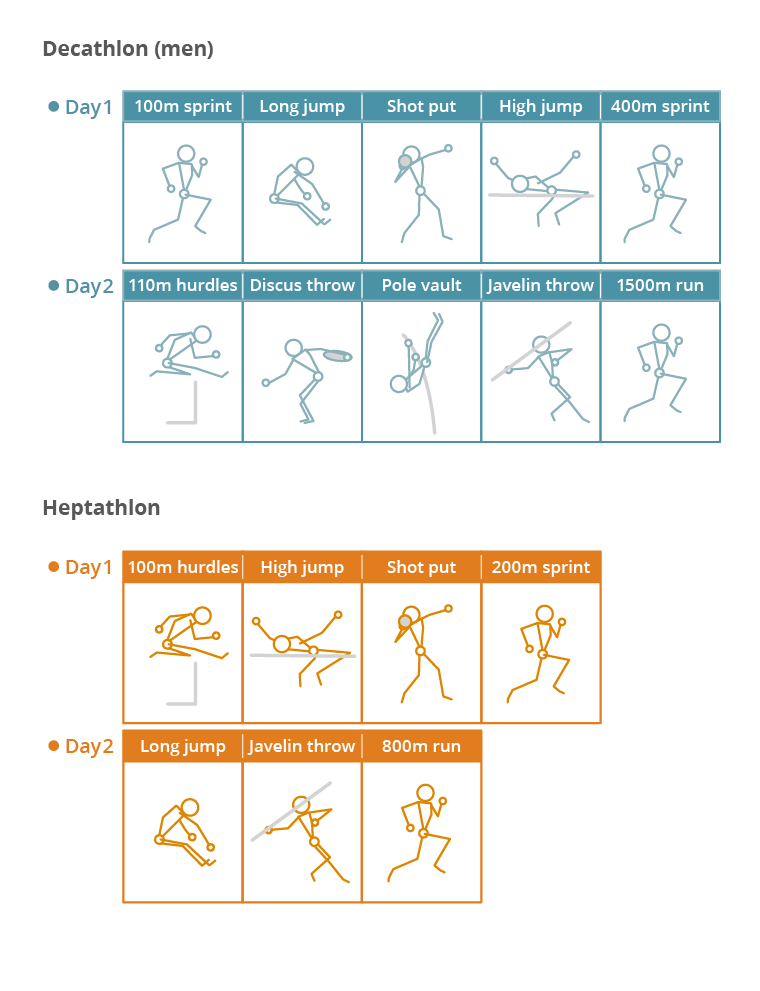
The 2024 rebranding and the shift toward sustainability show a brand that is not content with being a discount retailer. Decathlon is positioning itself as a premium, innovative, and responsible global leader. By focusing on the user’s journey rather than just the athlete’s finish line, Decathlon has built a brand identity that is as durable and versatile as the products it sells. In the “decathlon” of global business, they have mastered every event—from R&D and design to retail and environmental ethics—creating a blueprint for how a brand can win by bringing everyone else onto the field.
aViewFromTheCave is a participant in the Amazon Services LLC Associates Program, an affiliate advertising program designed to provide a means for sites to earn advertising fees by advertising and linking to Amazon.com. Amazon, the Amazon logo, AmazonSupply, and the AmazonSupply logo are trademarks of Amazon.com, Inc. or its affiliates. As an Amazon Associate we earn affiliate commissions from qualifying purchases.