
In the intricate landscape of language processing, natural language programming (NLP), and the development of intelligent software, precision is paramount. While software engineers and data scientists often focus on algorithms and neural network architectures, the foundation of machine learning—and indeed, of all digital communication—remains rooted in the structural components of language. Among these, the “objective noun” serves as a critical bridge between data inputs and semantic understanding.
Whether you are training a large language model (LLM), developing sentiment analysis software, or optimizing a search engine algorithm, understanding the objective noun is essential for achieving higher accuracy in natural language understanding. By identifying which nouns function as the recipients of actions within a digital dataset, developers can build systems that do not merely count keywords, but actually “comprehend” the relational structures of human intent.
The Linguistic Foundation of the Objective Noun
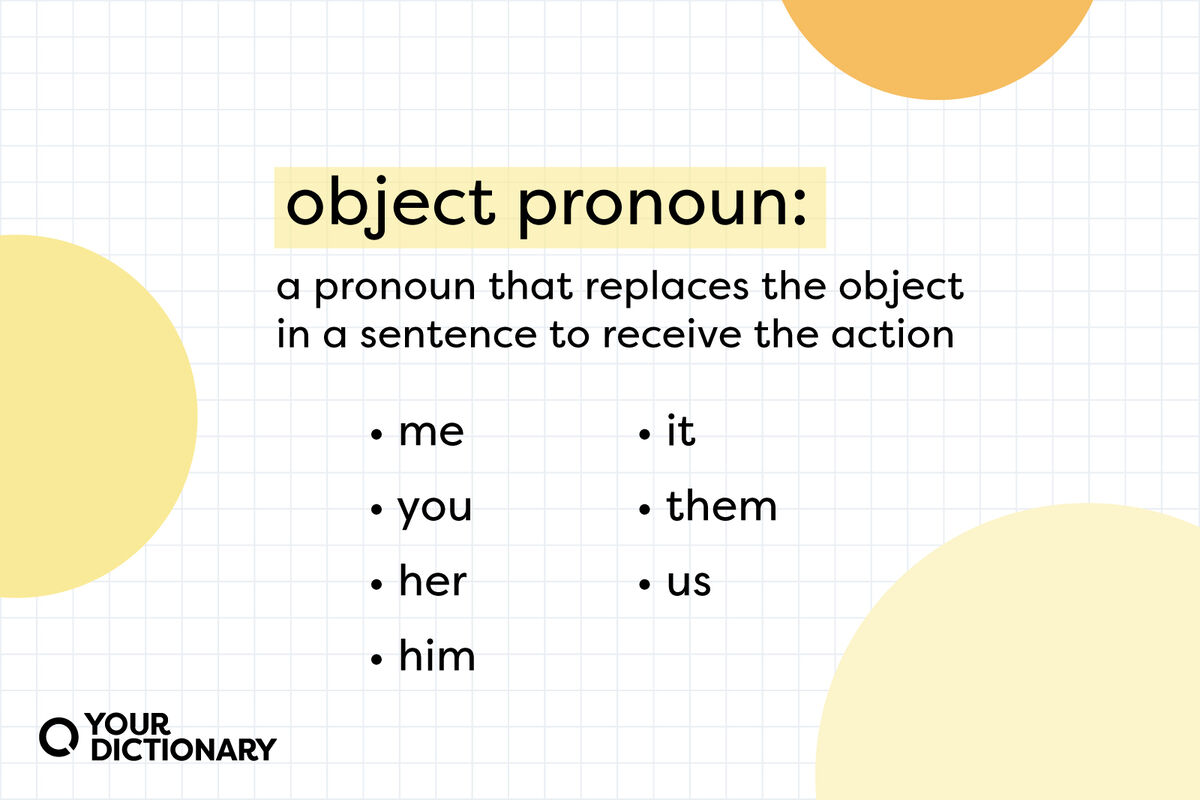
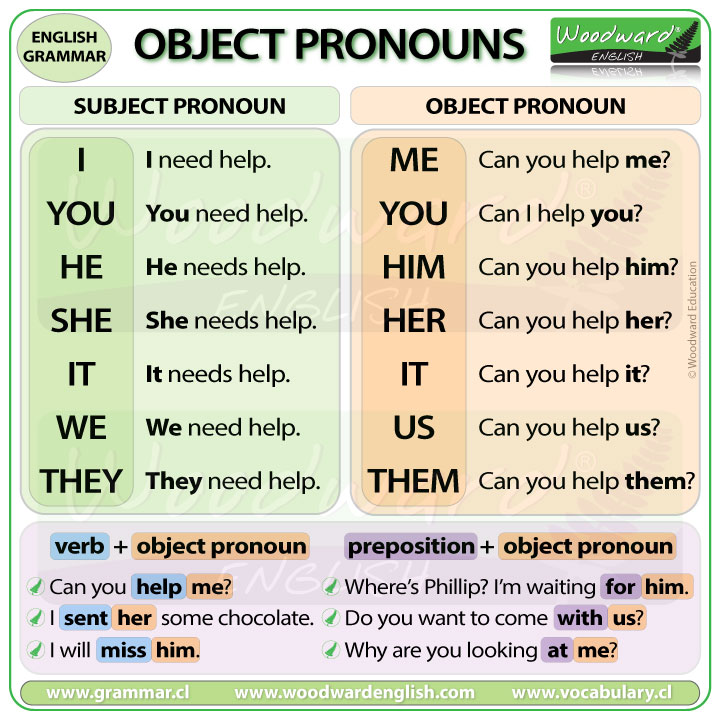
To understand the objective noun in a digital context, we must first define its role within syntactic structure. In traditional grammar, an objective noun is a noun or noun phrase that functions as the object of a verb or a preposition. It is the entity being acted upon, rather than the entity performing the action.
The Subject-Verb-Object (SVO) Framework
In software development, specifically within parsers and syntax tree generators, the SVO framework acts as the primary data model for processing sentences.
- Subject: The entity initiating the action (the agent).
- Verb: The action performed (the function).
- Object: The entity receiving the action (the objective noun).
Consider the statement, “The software parses the code.” In this data string, “software” is the subject, “parses” is the verb, and “code” is the objective noun. For an NLP system to correctly categorize this sentence, it must distinguish between the agent and the target. Without this distinction, a system might incorrectly assume the “code” is the entity doing the “parsing,” leading to a catastrophic failure in logical processing.
Why “Objective” Matters in Data Parsing
In coding environments, every variable or object must have a clear relationship to the function applied to it. In linguistic processing, the objective noun represents the “target variable.” When a user inputs a query into a search engine or a conversational AI, the machine is programmed to locate the objective noun to determine the scope of the request. If the system fails to identify the objective noun, the resulting response will lack relevance, as the model will struggle to determine exactly what the user wants to impact, change, or retrieve.
Applications of Objective Nouns in AI and Software Development
The identification of objective nouns is not merely a linguistic exercise; it is a fundamental requirement for building robust AI tools. From automated tagging systems to sophisticated chatbots, the way software parses objects determines the utility of the output.
Semantic Search and Information Retrieval
Search engines operate on the principle of intent matching. When a user enters a query like “update security settings,” the algorithm identifies “update” as the verb and “security settings” as the objective noun. The search engine then retrieves documentation specifically related to that objective. If the algorithm cannot differentiate between the action (update) and the objective (security settings), it may return results for “security firms” or “settings update,” missing the user’s intent entirely.
Advanced AI tools now use dependency parsing to map these relationships. By identifying the objective noun, software can filter vast databases to provide high-precision results, thereby improving the efficiency of information retrieval systems.
Sentiment Analysis and Brand Monitoring Tools
Brand strategy firms rely on sentiment analysis software to gauge public perception. These tools analyze social media mentions, reviews, and news articles to categorize sentiment as positive, negative, or neutral. Here, the objective noun is the most important component.
If a user posts, “I love the interface, but the latency is terrible,” the sentiment analysis tool must link “love” to “interface” and “terrible” to “latency.” If the software fails to identify the correct objective noun, it might aggregate the two distinct sentiments into a single, inaccurate score. By accurately pinning the sentiment to the specific objective noun (the product feature), companies can extract granular insights, such as identifying exactly which software component is causing customer frustration versus which is driving satisfaction.

Parsing Challenges: Handling Complex Syntax
While the concept of the objective noun is straightforward in simple sentences, the digital environment is often filled with complex, nested, or ambiguous phrasing. For software engineers, these complexities represent the frontier of language processing development.
Compound Objects and Multiple Targets
Modern language usage frequently involves multiple objective nouns for a single verb. For instance: “The system generates reports, logs, and analytics.”
An intelligent system must be able to parse this list and categorize all three as objective nouns linked to the verb “generates.” Programming a system to handle lists requires the use of advanced tokenization and part-of-speech tagging. If a parser is too rigid, it may only capture the first object (“reports”) and discard the rest of the data, leading to incomplete processing and potential errors in subsequent automation tasks.
Prepositional Objects: Expanding the Scope
Not all objective nouns follow a verb directly. Many follow prepositions, as seen in “The data was stored in the cloud.” In this case, “cloud” is the object of the preposition “in.”
In data management software, identifying these objects is critical for indexing. If a system only scans for direct objects, it will fail to categorize the storage location, metadata, or contextual information associated with the primary action. Developers must implement recursive parsers that can look beyond the immediate verb-object relationship to identify the full semantic chain of a sentence.
Integrating Linguistic Precision into Future Software
As we move toward a future defined by autonomous agents and highly sophisticated Large Language Models, the role of structural linguistics remains non-negotiable. The ability of a machine to function as an “intelligent” participant in a conversation depends on its ability to handle the nuances of the objective noun.
Improving Context Window Performance
Recent breakthroughs in AI, such as Transformers and attention mechanisms, have significantly improved the ability of models to keep track of distant objects. In a document of 10,000 words, an AI must remember that an objective noun mentioned on page one is still the target of a verb on page ten. This is known as “long-range dependency.” Improving the accuracy with which software identifies these relationships leads to faster training times and lower error rates in inference.
Designing Better User Interfaces (UI/UX)
The principle of the objective noun also applies to the design of software interfaces. Good UX design often mirrors natural language patterns. For example, a command-line interface or a voice-activated assistant that asks the user to “Select [Objective Noun]” follows a logical flow that is easy for the software to parse and for the user to understand.
By designing software functions to mirror the structure of a clear SVO sentence, developers create more intuitive workflows. When the system’s architecture matches the user’s linguistic patterns, the software becomes more predictable, leading to higher engagement and lower churn.
Conclusion
The objective noun is far more than a grammatical concept taught in secondary school classrooms; it is a fundamental unit of digital intelligence. Whether you are building an application, training a machine learning model, or developing a search engine, your ability to parse, interpret, and act upon the objective noun will define the sophistication of your technology.
By prioritizing the clarity of relational structures in software code, developers can bridge the gap between human language and digital logic. As the field of AI continues to evolve, the focus on granular linguistic components—like the objective noun—will remain the differentiator between standard applications and truly intuitive, high-performance software systems. Investing in the structural integrity of language processing is, ultimately, an investment in the reliability and future success of any digital product.
aViewFromTheCave is a participant in the Amazon Services LLC Associates Program, an affiliate advertising program designed to provide a means for sites to earn advertising fees by advertising and linking to Amazon.com. Amazon, the Amazon logo, AmazonSupply, and the AmazonSupply logo are trademarks of Amazon.com, Inc. or its affiliates. As an Amazon Associate we earn affiliate commissions from qualifying purchases.