
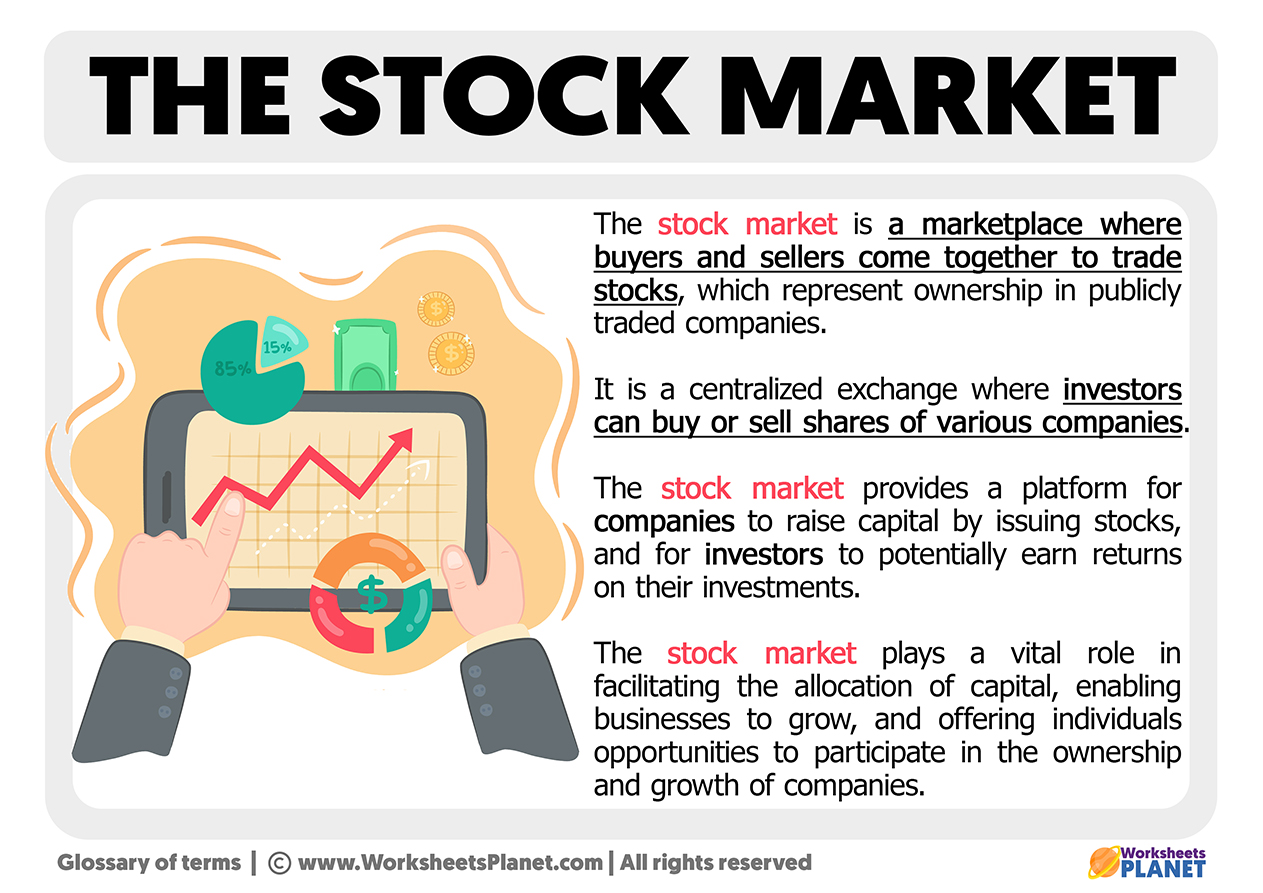
The stock market is often viewed as a complex, intimidating labyrinth of numbers and flashing screens, yet it remains the most effective vehicle for wealth creation in modern history. At its core, the stock market is a centralized marketplace where individual and institutional investors come together to buy and sell shares of publicly traded companies. But to truly understand “what is in” the stock market, one must look beyond the ticker symbols and recognize it as a vast ecosystem of capital, ownership, and economic sentiment.
When you participate in the stock market, you are participating in the growth of the global economy. By providing capital to businesses, investors allow companies to innovate, expand, and hire, while the investors themselves gain the opportunity to share in the profits. This symbiotic relationship is the engine of the financial world.
The Anatomy of the Stock Market: What is Actually Being Traded?
To navigate the market effectively, one must first understand the various instruments that reside within it. While most people equate the market solely with “stocks,” it is actually home to a diverse array of financial products, each serving a different purpose for an investor’s portfolio.
Common Stocks vs. Preferred Stocks
When a company “goes public” through an Initial Public Offering (IPO), it issues shares. These shares represent a piece of ownership in the company. Common stocks are the most prevalent type; they typically grant the holder voting rights at shareholder meetings and the potential for capital appreciation. However, they are last in line if a company faces liquidation.
Preferred stocks, on the other hand, function more like a hybrid between a stock and a bond. They usually do not offer voting rights but provide a fixed dividend payment that takes priority over common stock dividends. For an investor focused on steady income rather than aggressive growth, preferred stocks are a critical component of the market landscape.
Exchange-Traded Funds (ETFs) and Mutual Funds
Not every investor wants to pick individual companies like Apple or Microsoft. This is where “baskets” of stocks come into play. Mutual Funds are managed by professional fund managers who pool money from many investors to buy a diversified portfolio of stocks or bonds.
ETFs (Exchange-Traded Funds) have exploded in popularity over the last decade. They function similarly to mutual funds but trade on an exchange just like an individual stock. ETFs allow investors to buy into entire sectors (like technology or energy) or entire indices (like the S&P 500) with a single transaction, providing instant diversification and lower fees.
Bonds and Fixed Income Securities
While stocks represent equity, bonds represent debt. When you buy a bond, you are essentially lending money to a corporation or a government for a set period in exchange for regular interest payments. Bonds are generally considered lower-risk than stocks and serve as a “cushion” in a balanced portfolio, providing stability when the equity markets become volatile.
How the Market Ecosystem Functions
The stock market is not a single entity but a network of exchanges and regulatory bodies that ensure transactions are fair, transparent, and efficient. Understanding how these pieces fit together is essential for any modern investor.
The Role of Stock Exchanges
Exchanges like the New York Stock Exchange (NYSE) and the NASDAQ are the actual platforms where the buying and selling happen. The NYSE is a physical and electronic auction market, famous for its storied history on Wall Street. The NASDAQ, conversely, is a global electronic marketplace that has traditionally been the home of high-growth technology companies. These exchanges provide the “liquidity” necessary for the market to function—meaning they ensure there is always a way to quickly convert your shares back into cash.
Market Indices: Measuring Performance
When news anchors report that “the market is up today,” they are usually referring to market indices. An index is a statistical measure of the change in a specific portion of the stock market.
- The S&P 500: Tracks 500 of the largest publicly traded companies in the U.S. and is considered the best gauge of large-cap equities.
- The Dow Jones Industrial Average (DJIA): A price-weighted index of 30 prominent companies.
- The Nasdaq Composite: Heavily weighted toward the technology sector.
Indices help investors benchmark their own performance and understand broader economic trends.
The Mechanics of Supply and Demand
The price of a stock is determined by the law of supply and demand. If more people want to buy a stock (demand) than sell it (supply), the price moves up. If more people want to sell than buy, the price moves down. What drives this demand? Usually, it is a combination of corporate earnings, economic news, and investor sentiment. If a company reports record-breaking profits, demand for its stock typically rises, driving the price higher.

The Architecture of an Investment Portfolio
Successful investing in the stock market is rarely about “timing the market” and almost always about “time in the market.” Building a resilient portfolio requires a strategic approach to how you allocate your capital across different assets.
Asset Allocation and Diversification
Asset allocation is the process of deciding how much of your money goes into stocks, bonds, and cash. This is the most important decision an investor can make. Diversification is the practice of spreading those investments within each category. By owning stocks in different industries (healthcare, finance, tech, consumer goods) and different geographic regions, you reduce the risk that a single bad event will wipe out your entire savings.
Growth vs. Value Investing Styles
Investors typically fall into two philosophical camps. Growth investors look for companies that are expected to grow at a rate significantly above the average for the market. these companies often reinvest their earnings into research and development rather than paying dividends.
Value investors, pioneered by figures like Benjamin Graham and Warren Buffett, look for “bargains.” They seek out companies that appear to be trading for less than their intrinsic value. These are often established companies with steady earnings and strong dividends that the broader market has temporarily overlooked.
Dividends: Generating Passive Income
One of the most powerful “Money” aspects of the stock market is the dividend. A dividend is a distribution of a portion of a company’s earnings to its shareholders. For long-term investors, dividends provide a source of passive income that can be reinvested to buy more shares, creating a powerful “snowball effect” of wealth accumulation over several decades.
Navigating Volatility and Risk Management
Risk is an inherent part of the stock market. Without risk, there would be no reward. However, understanding the types of market cycles can help an investor remain calm during periods of uncertainty.
Bull vs. Bear Markets
A Bull Market is a period where stock prices are rising or expected to rise. It is characterized by optimism, investor confidence, and expectations that strong results will continue. Conversely, a Bear Market occurs when prices drop by 20% or more from recent highs. Bear markets can be frightening, but they are a natural part of the economic cycle and often present the best buying opportunities for disciplined investors.
The Impact of Economic Indicators
The stock market does not exist in a vacuum. It is heavily influenced by macroeconomic data.
- Interest Rates: When the Federal Reserve raises interest rates, borrowing becomes more expensive for companies, which can lead to lower profits and cooling stock prices.
- Inflation: High inflation erodes the purchasing power of future earnings, often leading to market volatility.
- Employment Data: Strong employment numbers suggest a healthy consumer base, which is generally positive for the stock market.
Long-term Horizons and the Power of Compounding
The greatest “secret” to stock market success is compounding interest. This is the process where the value of an investment increases because the earnings on an investment, both capital gains and interest, earn interest as time passes. Over 10, 20, or 30 years, even modest annual returns can turn a small initial investment into a significant fortune. This is why financial experts emphasize starting as early as possible.
Getting Started: Tools and Platforms for the Modern Investor
In the digital age, the barriers to entry for the stock market have virtually disappeared. What once required a personal broker and high commissions can now be done from a smartphone.
Choosing a Brokerage Account
To buy “what is in” the stock market, you need a brokerage account. Modern options range from traditional powerhouses like Fidelity and Charles Schwab to mobile-first platforms like Robinhood. When choosing, consider factors such as commission fees (which are now zero at many firms), the quality of their research tools, and the availability of tax-advantaged accounts like IRAs or 401(k)s.
Fundamental vs. Technical Analysis
How do you decide what to buy?
- Fundamental Analysis involves looking at a company’s financial statements, its management team, its competitive advantages, and its overall market health. You are trying to determine the company’s “true value.”
- Technical Analysis involves looking at charts and price patterns. Technical analysts believe that historical price movements can predict future ones. For the average long-term investor, fundamental analysis is generally the more reliable path to sustainable wealth.

Setting Realistic Financial Goals
The stock market is a tool for achieving financial freedom, not a “get rich quick” scheme. Before investing your first dollar, it is crucial to define your goals. Are you saving for retirement? A down payment on a house? An education fund? Your timeline and your risk tolerance will dictate your strategy. By approaching the market with a professional mindset and a focus on long-term value, you can transform the stock market from a source of confusion into a powerful engine for your personal financial growth.
aViewFromTheCave is a participant in the Amazon Services LLC Associates Program, an affiliate advertising program designed to provide a means for sites to earn advertising fees by advertising and linking to Amazon.com. Amazon, the Amazon logo, AmazonSupply, and the AmazonSupply logo are trademarks of Amazon.com, Inc. or its affiliates. As an Amazon Associate we earn affiliate commissions from qualifying purchases.