
The rapid evolution of digital communication has introduced a rich tapestry of abbreviations, acronyms, and slang, transforming how we interact in text messages, social media, and online forums. Among the myriad of these shorthand expressions, “IKR” stands out as a particularly common and versatile one. Understanding “IKR” and its nuances is not merely about deciphering individual text messages; it’s about grasping a fundamental aspect of modern digital discourse. This article delves into the meaning, origins, and strategic use of “IKR” within the context of technological communication, offering insights into how mastering such linguistic tools can enhance clarity, foster rapport, and contribute to more effective digital interactions.

The Genesis and Meaning of “IKR”
At its core, “IKR” is an acronym that simplifies a common sentiment, making communication more efficient. Its prevalence speaks to the inherent human desire for quick, expressive communication, a desire amplified in the fast-paced digital realm.
Unpacking the Acronym: “I Know, Right?”
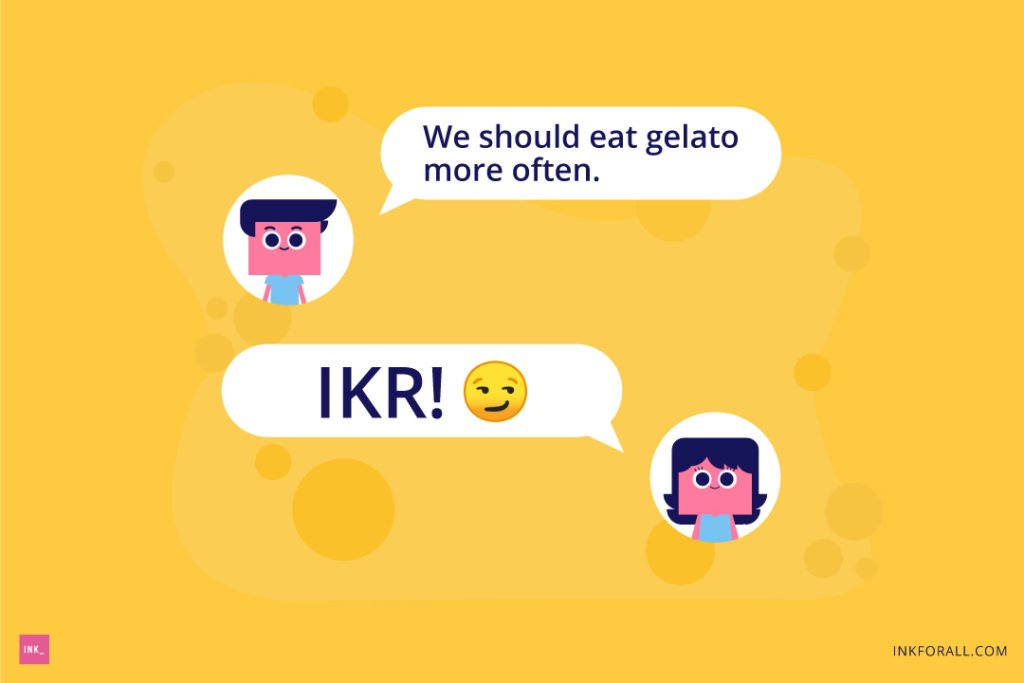
The meaning of “IKR” is straightforward: “I Know, Right?” This simple phrase encapsulates a sentiment of agreement, shared understanding, or acknowledgment of a perceived truth or experience. It’s a digital nod that says, “Yes, I completely agree with what you just said,” or “That’s exactly how I feel/see it too.” The “right?” component adds a rhetorical flourish, implicitly seeking or confirming validation from the recipient.
The power of “IKR” lies in its conciseness. In a world where every character can feel like a precious commodity, especially in older texting environments or when composing social media posts, reducing a multi-word affirmation to a three-letter acronym is a significant efficiency gain. It allows for rapid-fire conversations and quick acknowledgments without sacrificing the essence of the message.
The Psychological Underpinnings of Agreement
Beyond its literal meaning, “IKR” taps into fundamental psychological needs for connection and validation. When someone uses “IKR,” they are not just agreeing; they are signaling belonging and shared perspective. This affirmation can:
- Reinforce Bonds: In personal communication, “IKR” strengthens connections by showing empathy and shared experience. It can make the recipient feel heard and understood.
- Facilitate Collaboration: In professional or project-based digital communication, “IKR” can quickly confirm consensus on an idea or acknowledge a shared challenge, paving the way for smoother progress.
- Build Rapport: Especially in informal settings, the casual nature of “IKR” can foster a more relaxed and friendly atmosphere, building rapport between individuals.
The psychological impact of simple agreement, amplified through digital shorthand like “IKR,” should not be underestimated. It contributes to a positive feedback loop in communication, encouraging further interaction and deepening the relationship between communicators.
Contextualizing “IKR” in Digital Communication
The application of “IKR” is highly dependent on the context of the conversation. Its effectiveness hinges on understanding the nuances of tone, relationship, and the platform being used. While its core meaning remains consistent, its implication can shift subtly, making it a powerful, albeit context-sensitive, tool.
Informal Versus Formal Digital Spaces
Informal Settings: In text messages between friends, family, or close acquaintances, “IKR” is ubiquitous. It’s used to react to anything from a shared frustration about traffic to an enthusiastic agreement about a new movie. Its informality is part of its appeal, signaling a relaxed and comfortable communication style.
- Example:
- Friend 1: “This new update on the app is so buggy, I can barely use it.”
- Friend 2: “IKR! It’s driving me crazy.”
Semi-Formal and Professional Settings: While “IKR” is generally considered informal, its use can sometimes creep into semi-formal or even professional digital communication, particularly in rapidly evolving tech environments where a more casual culture might prevail. However, this requires careful consideration. In situations where professional decorum is paramount, or with individuals one doesn’t know well, using “IKR” might be perceived as unprofessional or overly casual.
- Considerations for Professional Use:
- Company Culture: Is the workplace culture generally informal? Do colleagues use similar abbreviations?
- Relationship with the Recipient: Do you have an established rapport with the person you’re communicating with?
- The Platform: Is it an internal chat like Slack or Teams, or a formal email?
- The Nature of the Message: Is the topic lighthearted or serious?
In professional settings, it’s often safer to opt for slightly more formal expressions of agreement, such as “I agree,” “That’s a good point,” or “I understand,” unless the context clearly permits casual shorthand.
“IKR” as a Social Cue and Relationship Builder
“IKR” serves as more than just an expression of agreement; it’s a social cue that fosters a sense of shared experience and solidarity. In the digital world, where non-verbal cues are absent, such explicit affirmations become even more critical for building and maintaining relationships.
- Building Empathy: By saying “IKR,” you are essentially communicating, “I’ve been there,” or “I understand your perspective.” This act of empathy can significantly strengthen interpersonal bonds.
- Reducing Misunderstandings: In a text-based conversation, it’s easy for tone to be misinterpreted. “IKR” can clarify that your intention is one of agreement and support, rather than critique or dismissal.
- Encouraging Openness: When individuals feel understood and validated, they are more likely to be open and honest in their communication. “IKR” contributes to this feeling of psychological safety in digital interactions.
The ability to deploy “IKR” effectively, knowing when and how to use it, is a subtle but important aspect of digital communication fluency. It reflects an awareness of social dynamics within online spaces and a capacity to use language strategically to achieve desired communicative outcomes.
Mastering “IKR”: Strategies for Effective Digital Communication
While “IKR” is a simple acronym, its effective use involves more than just knowing its definition. It requires an understanding of its impact and how to deploy it strategically to enhance clarity, build rapport, and contribute to more productive digital conversations.
Strategic Deployment for Clarity and Efficiency
The primary benefit of “IKR” is its efficiency. In scenarios where a quick affirmation is needed, it can prevent lengthy back-and-forth exchanges.
- Rapid Response: When responding to a statement that resonates immediately, “IKR” allows for a swift acknowledgment, keeping the conversation flowing.
- Concise Agreement: Instead of typing out “Yes, I completely agree with your assessment of the situation,” a simple “IKR” conveys the same sentiment in a fraction of the time.
- Streamlining Discussions: In group chats or collaborative platforms, “IKR” can quickly signal consensus, allowing the group to move forward without prolonged debate on a universally accepted point.
However, over-reliance on “IKR” can sometimes lead to a perceived lack of engagement or genuine thought. A balanced approach, incorporating “IKR” with other forms of expression, often yields the best results.
Beyond Simple Agreement: The Subtleties of “IKR”
While “I Know, Right?” is the standard interpretation, the context can imbue “IKR” with subtle shades of meaning.
- Shared Frustration: “IKR” can be used to commiserate about a shared negative experience. The emphasis here is on mutual understanding of a difficult situation.
- Example: “This software update is so slow!” “IKR, I’ve been waiting forever for it to load.”
- Humorous Exasperation: It can express a lighthearted, slightly exasperated agreement about something obvious or mildly annoying.
- Example: “Did you see that cat wearing tiny boots?” “IKR! It was hilarious.”
- Empathetic Validation: In more serious contexts, “IKR” can be a powerful tool for conveying empathy and validating someone’s feelings or struggles. It signals that you are on their side.
- Example: “I’m really struggling to meet this deadline.” “IKR, the workload has been insane lately.”
Recognizing these subtle variations allows for a more nuanced and effective use of “IKR,” demonstrating a deeper understanding of digital communication dynamics.
Potential Pitfalls and When to Avoid “IKR”
Despite its utility, “IKR” is not a universally appropriate response. Misusing it can lead to misinterpretations and a breakdown in effective communication.
- When Genuine Depth is Required: If a situation calls for a detailed or thoughtful response, relying solely on “IKR” can seem dismissive or lazy. It’s crucial to provide substance when needed.
- In Highly Formal Communication: As previously mentioned, in formal emails, official documents, or when addressing superiors or clients one doesn’t know well, “IKR” is generally inappropriate. Stick to clear, formal language.
- When You Don’t Actually Know/Agree: Using “IKR” when you don’t genuinely understand or agree with the speaker’s point is disingenuous and can lead to confusion or distrust. Authenticity is key.
- If the Recipient Might Not Understand: While widely known, there’s always a small chance the recipient might not be familiar with the acronym. In such cases, clarity should take precedence over brevity.
Mastering “IKR” involves not just knowing when to use it, but also when to refrain. This discernment is a hallmark of sophisticated digital literacy.
The Evolution and Future of Digital Acronyms like “IKR”
The landscape of digital communication is in constant flux, with new abbreviations emerging and old ones evolving in meaning and usage. “IKR” is a testament to this dynamic nature, representing a successful and enduring piece of digital lingo.
The Enduring Appeal of Brevity and Expressiveness
The fundamental drivers behind the creation and adoption of acronyms like “IKR” remain constant: the desire for speed, efficiency, and expressive communication. In an era saturated with information and constant connectivity, the ability to convey meaning concisely is a valuable skill. “IKR” perfectly embodies this balance, offering a quick way to express solidarity and understanding.
As technology advances, the platforms we use for communication will undoubtedly change, but the human need to connect and express ourselves efficiently will persist. This suggests that acronyms and abbreviations, in various forms, will continue to be a vital part of our digital lexicon.
The Role of “IKR” in a Broader Digital Lexicon
“IKR” is not an isolated phenomenon but rather one element within a vast and evolving digital lexicon. Understanding “IKR” provides a gateway into understanding many other similar abbreviations and their functions. For instance:
- Acronyms for Agreement/Affirmation: LOL (Laughing Out Loud), OMG (Oh My Gosh), TMI (Too Much Information), IMHO (In My Humble Opinion).
- Acronyms for Questions/Clarification: BRB (Be Right Back), IDK (I Don’t Know), TL;DR (Too Long; Didn’t Read).
Each of these serves to streamline communication, inject personality, or convey specific sentiments. “IKR” fits into the category of those that build connection and signal alignment, a critical function in fostering positive digital interactions.
The Future of “IKR” and Digital Linguistic Innovation
The longevity of “IKR” suggests its utility is well-established. While new slang and acronyms will undoubtedly emerge, the core sentiment that “IKR” represents—simple, relatable agreement—is timeless. Its future will likely see it continue to be a staple in informal digital communication, perhaps even seeing some limited, context-aware adoption in more professional settings as digital communication norms continue to shift.
The ongoing evolution of digital communication, driven by new platforms, social trends, and technological advancements, will continue to shape the way we use and understand expressions like “IKR.” By staying attuned to these linguistic shifts, individuals can ensure their digital communication remains effective, engaging, and resonant. Mastering the art of digital lingo, starting with common acronyms like “IKR,” is an ongoing journey in navigating the complexities and richness of our interconnected world.
aViewFromTheCave is a participant in the Amazon Services LLC Associates Program, an affiliate advertising program designed to provide a means for sites to earn advertising fees by advertising and linking to Amazon.com. Amazon, the Amazon logo, AmazonSupply, and the AmazonSupply logo are trademarks of Amazon.com, Inc. or its affiliates. As an Amazon Associate we earn affiliate commissions from qualifying purchases.