
In the rapidly evolving landscape of digital communication, the way we transmit information has shifted from formal prose to a highly efficient, condensed language of symbols and abbreviations. Among the most ubiquitous of these terms is “IDK.” While most users recognize it as a shorthand for “I don’t know,” its role in modern technology, software interaction, and digital culture is far more complex than a simple three-letter substitute. Understanding “IDK” is not just about learning a piece of slang; it is about understanding the technical and social architecture of the digital age.

The Evolution of Internet Slang: From SMS Constraints to Cultural Mainstays
To understand why abbreviations like IDK became foundational to our digital vocabulary, we must look at the technical limitations of early mobile hardware and software. The transition from analog to digital communication in the late 1990s and early 2000s necessitated a more streamlined way of typing.
The Origin of IDK: Navigating the Era of Character Limits
In the early days of Short Message Service (SMS), users were strictly limited to 160 characters per message. This constraint was a result of the Global System for Mobile Communications (GSM) standard, which utilized the signaling paths of the telephony network to carry small packets of data. Because every character counted—and because many mobile plans charged per individual text message—users sought ways to maximize information density while minimizing character count.
“I don’t know” consists of 12 characters, including spaces. By condensing this to “IDK,” a user saves nine characters, or roughly 5.6% of their total available space in a single SMS packet. This technical necessity birthed a new “leet-speak” and shorthand culture that transformed the way humans interact with keyboards. IDK emerged alongside other staples like “LOL” (laughing out loud) and “BRB” (be right back) as a functional tool for efficiency.
How Technology Shapes Our Lexicon
The evolution of hardware also played a critical role. Before the advent of capacitive touchscreens and QWERTY smartphone layouts, users relied on “T9” (Text on 9 keys) predictive text on numeric keypads. Typing out full sentences was a laborious process involving multiple rhythmic presses of the same button to reach a specific letter.
As technology advanced from T9 to the BlackBerry’s physical QWERTY keyboard and eventually to the software-based keyboards of iOS and Android, the technical necessity for “IDK” diminished. However, the linguistic habit remained. Today, even without character limits or difficult input methods, IDK persists because it aligns with the “instant” nature of modern messaging apps like WhatsApp, Telegram, and Slack. It has transitioned from a technical workaround to a stylistic choice in the digital lexicon.
Understanding IDK: Meaning, Usage, and Variations
While the literal definition of IDK is straightforward, its application within various software environments dictates how it is perceived. In the world of tech-driven communication, the nuance of a message is often found in its brevity.
The Basic Definition and Grammatical Flexibility
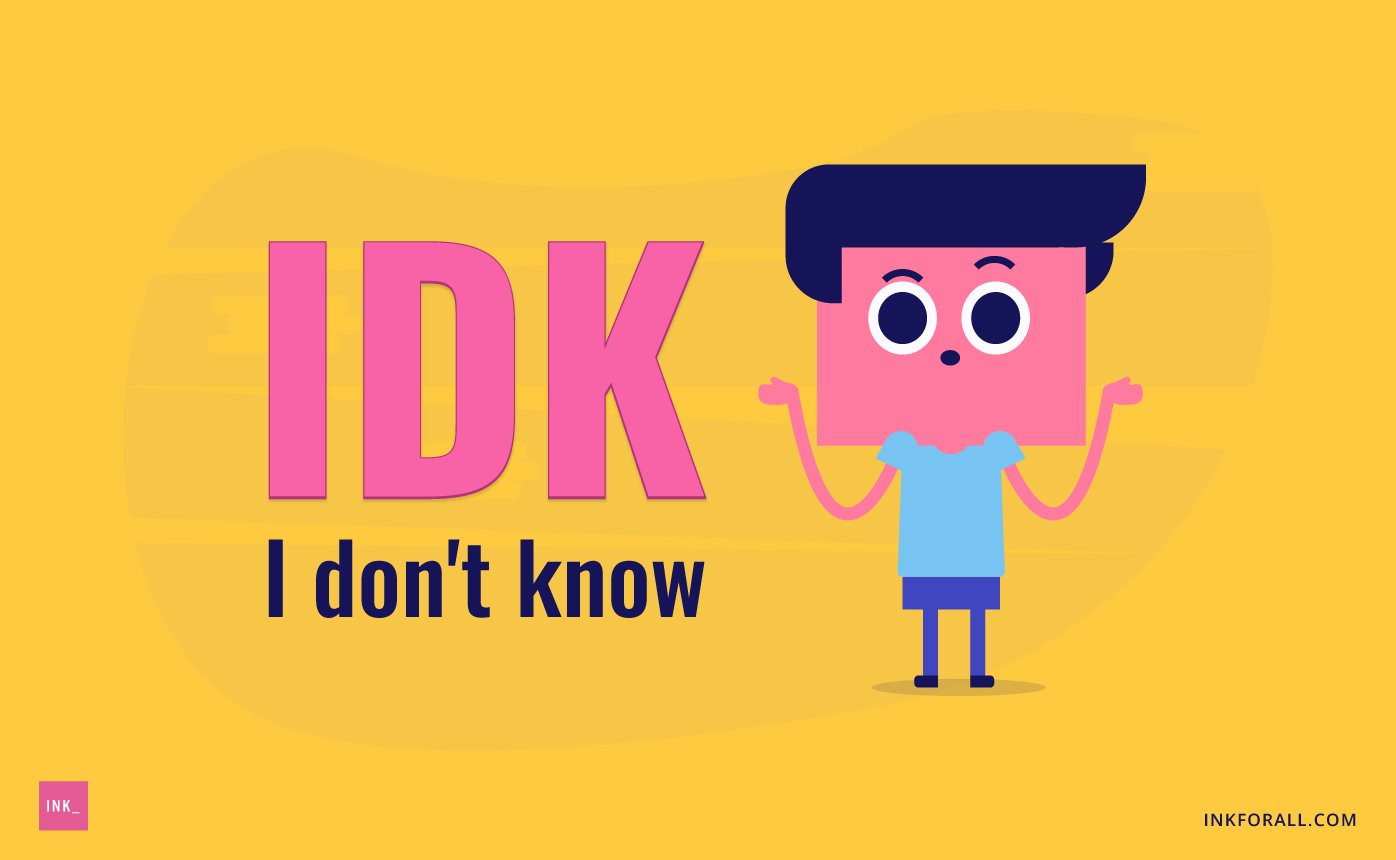
“IDK” is an initialism. Unlike an acronym (which is pronounced as a word, like NASA), an initialism is typically pronounced by its individual letters: I-D-K. In the context of texting and instant messaging, it serves as a functional placeholder for uncertainty.
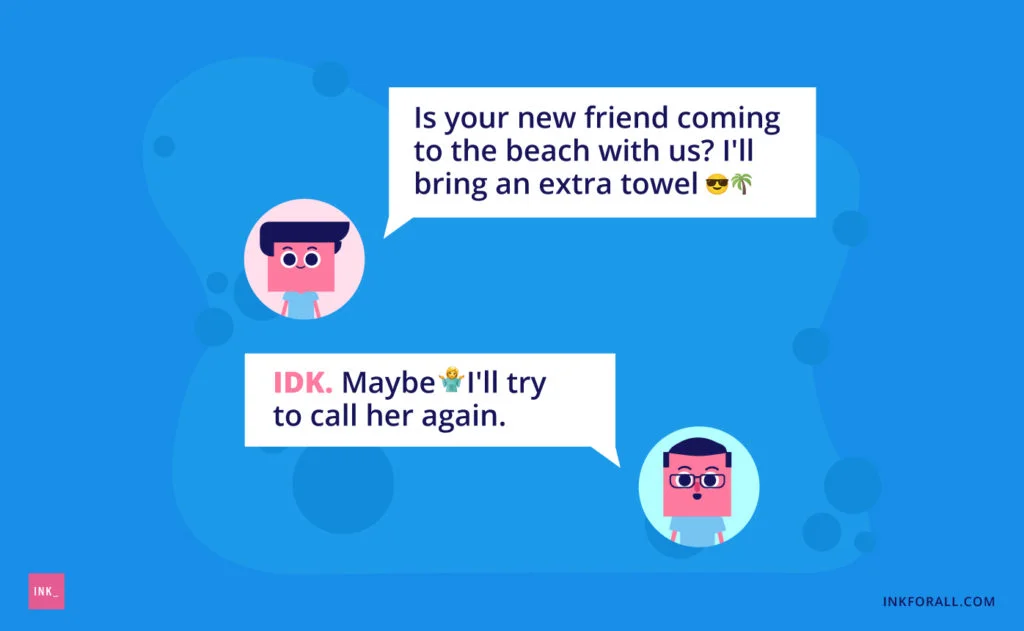
One of the unique features of IDK is its grammatical flexibility. It can function as a standalone sentence (A: “What time is the meeting?” B: “IDK.”), or it can be integrated into a larger sentence structure (“IDK if the server is back up yet”). In digital environments, lowercase “idk” is often perceived as more casual or indifferent, while uppercase “IDK” can sometimes imply emphasis or frustration, depending on the surrounding context.
Variations and Derivative Terms (IDDC, IDEK, IDKR)
The tech-savvy user often employs variations of IDK to convey specific emotional or logical states. These derivatives allow for more granular communication without sacrificing the speed of shorthands:
- IDEK (I Don’t Even Know): Used to express exasperation or a high level of confusion. It often appears in tech support threads or bug reports when a system behavior is particularly nonsensical.
- IDKR (I Don’t Know, Right?): A rhetorical variation used to agree with someone else’s confusion.
- IDDC (I Don’t Double Check): A more niche term used in coding or data entry contexts, though far less common than its parent term.
- IDKGL (I Don’t Know, Good Luck): Frequently used in peer-to-peer technical assistance when one user cannot solve a problem and is passing the responsibility back to the original asker.
The Social Nuances of IDK in Professional and Personal Environments
As digital communication tools like Slack, Microsoft Teams, and Discord have moved into the workplace, the line between casual slang and professional correspondence has blurred. The use of “IDK” in a professional tech environment requires an understanding of digital etiquette and tone.
Digital Etiquette: When to Use (and When to Avoid) Slang
In a high-stakes corporate environment or when communicating with a client, “IDK” can sometimes be perceived as unprofessional or lazy. It suggests a lack of effort to find the answer. However, within internal development teams or agile “sprints,” IDK is often viewed as a vital tool for rapid-fire communication.
In the tech industry, where “moving fast and breaking things” is a common mantra, brevity is often prioritized over formal syntax. Using “IDK” in a DevOps Slack channel when a build fails is an efficient way to signal that a developer is investigating but does not yet have an answer. The key is context: “IDK” is acceptable in synchronous (real-time) chat but is generally avoided in asynchronous, formal documentation or external emails.
Interpreting Tone in Text-Based Communication
The absence of non-verbal cues—such as facial expressions and vocal inflection—makes text-based communication prone to misunderstanding. Tech tools have attempted to solve this with emojis and “reactions,” but the shorthand itself carries weight.
For instance, replying with just “idk” can feel dismissive. Conversely, “idk yet, let me check the logs” provides a proactive technical context that softens the brevity. Understanding these subtle shifts in digital tone is a critical soft skill for anyone working in technology or digital project management today.
The Role of AI and Predictive Text in Shaping Modern Slang
We are currently entering a new era of digital communication dominated by Artificial Intelligence (AI) and Machine Learning (ML). These technologies are not just observing how we use “IDK”; they are actively reinforcing its usage.
How Algorithms Influence Quick-Reply Messaging
If you use Gmail or an iPhone, you have likely noticed “Smart Replies” or predictive text suggestions. When someone asks you a question via text, your OS might suggest “IDK” as a one-tap response. These algorithms are trained on massive datasets of human conversation. Because “IDK” appears so frequently in these datasets, the AI prioritizes it as a likely response.
This creates a feedback loop: humans use “IDK” because it’s fast; AI learns this and suggests “IDK” to make it even faster; humans click the suggestion, further increasing the term’s frequency in the digital data pool. This technological nudge ensures that abbreviations like IDK will remain relevant even as we move away from manual typing toward gesture-based or voice-to-text inputs.
The Future of Short-Form Communication in the Age of AI
As Large Language Models (LLMs) like ChatGPT become integrated into our messaging apps, the nature of shorthand may change again. We are seeing the rise of “prompt engineering,” where the precision of language is paramount. Will “IDK” survive in a world where AI can hallucinate an answer or find one in seconds?
Most likely, IDK will evolve into a “human-only” signal—a way to denote that the human behind the screen is currently at a loss, distinguishing their personal knowledge from the vast, instantly accessible knowledge of an integrated AI assistant.
Digital Literacy: Why Understanding Text Slang Matters for Security and Connectivity
In the broader scope of digital security and connectivity, understanding the nuances of text slang like “IDK” is a component of digital literacy. As we navigate a world of remote work and globalized tech teams, the ability to decode shorthand is essential for maintaining operational efficiency.
Avoiding Miscommunication in Remote Work Tech
In remote-first companies, communication happens almost entirely through text. A misunderstanding of a simple abbreviation can lead to project delays. For example, if a junior developer texts “IDK” to a senior lead regarding a security vulnerability, it might be interpreted as a lack of concern rather than a simple statement of fact. Tech leaders must establish a shared “vocabulary of uncertainty” to ensure that abbreviations facilitate, rather than hinder, the development pipeline.
Bridging the Generational Gap in the Digital Workforce
The tech workforce currently spans several generations, from Baby Boomers to Gen Z. Each generation has a different relationship with digital shorthand. While a Gen Z engineer might use “IDK” or “IDEK” fluidly across all platforms, a senior executive might find it jarring.
Digital literacy involves recognizing these generational preferences. Modern software tools are increasingly adding features to bridge this gap, such as “hover-over” definitions for internal company acronyms or AI-driven “summarization” tools that can translate a slang-heavy chat thread into a formal report.
In conclusion, “IDK” is much more than a lazy way to say “I don’t know.” It is a linguistic artifact of the 160-character SMS era, a tool for efficiency in the modern professional tech stack, and a data point for the AI models of the future. As technology continues to redefine the boundaries of human interaction, our shorthand will remain a vital, evolving bridge between the speed of our machines and the complexity of our thoughts.
aViewFromTheCave is a participant in the Amazon Services LLC Associates Program, an affiliate advertising program designed to provide a means for sites to earn advertising fees by advertising and linking to Amazon.com. Amazon, the Amazon logo, AmazonSupply, and the AmazonSupply logo are trademarks of Amazon.com, Inc. or its affiliates. As an Amazon Associate we earn affiliate commissions from qualifying purchases.