
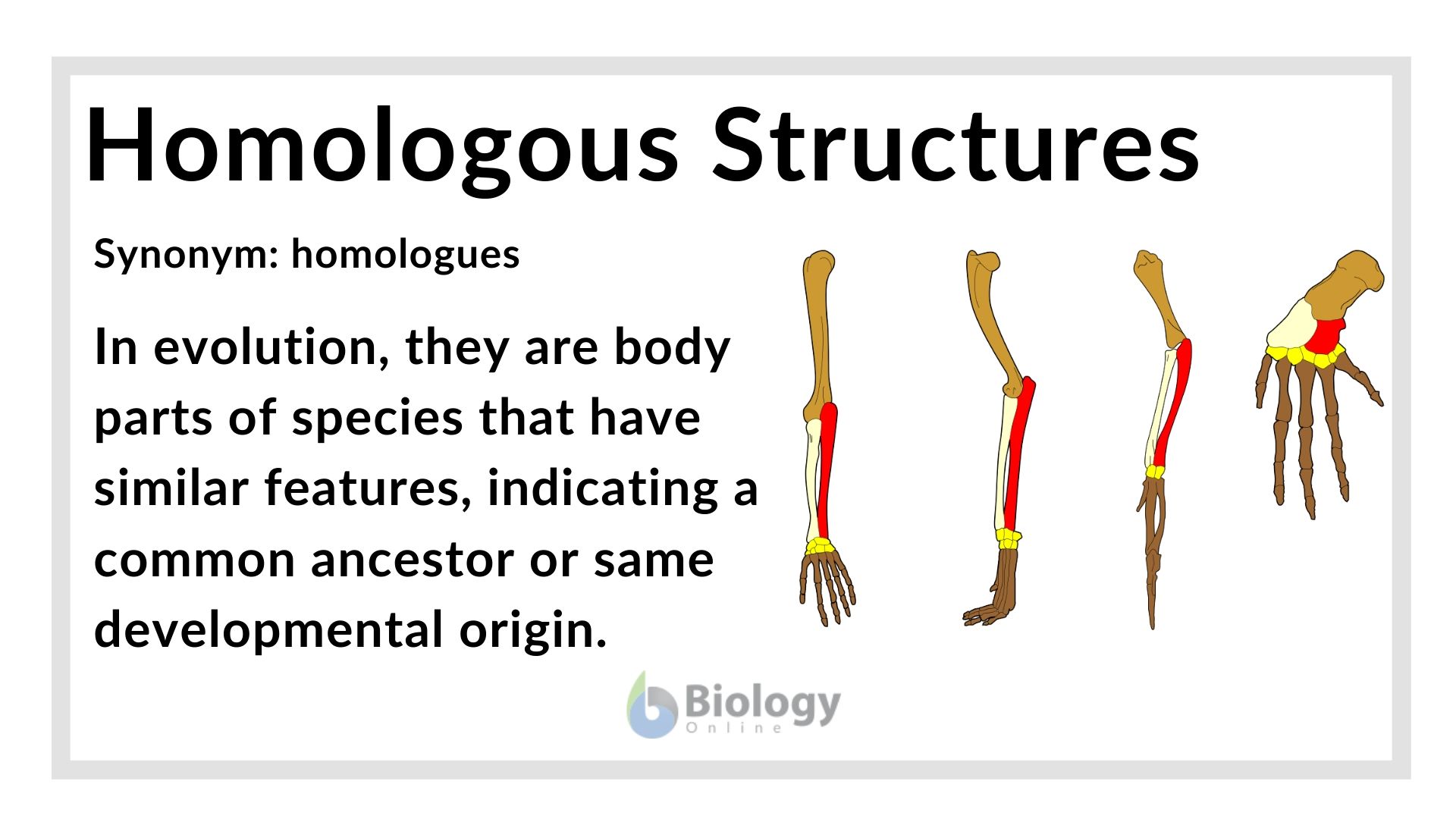
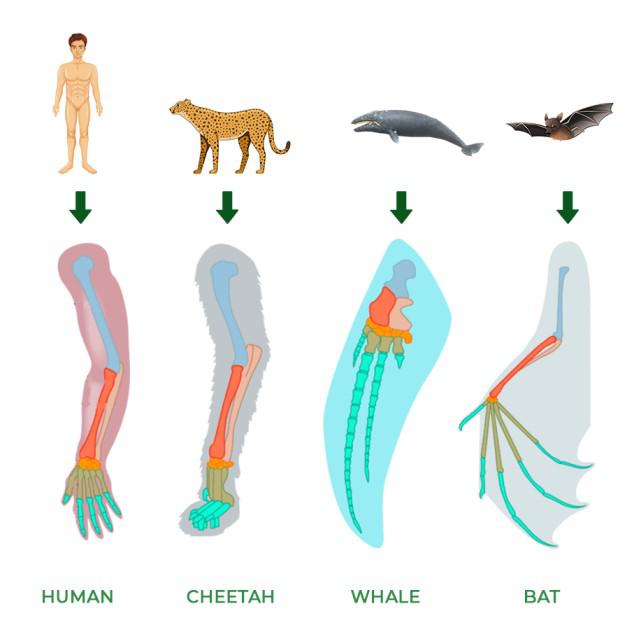
Homology, at its core, describes the existence of shared ancestry between a pair of structures or genes in different species. In biology, it is the bedrock principle that underpins our understanding of evolution, comparative anatomy, and genetics. However, the modern discovery, analysis, and application of homology are no longer confined to the microscope and anatomical diagrams. Today, understanding “what is homology in biology” is inextricably linked with advanced technology, sophisticated software, and powerful artificial intelligence, transforming it into a data-driven field at the forefront of biotechnological innovation.
Decoding Evolutionary Relationships Through Advanced Tech
The concept of homology posits that organisms share traits inherited from a common ancestor. While early biologists identified homologous structures through careful observation of morphology, the genomic revolution has shifted this paradigm. Modern biology leverages an unprecedented volume of data generated by advanced technologies to decode these evolutionary relationships at a molecular level, offering insights far beyond what was previously imaginable.

From Phenotype to Genotype: The Data Revolution
The transition from purely observational biology to data-intensive genomics is powered by breakthroughs in sequencing technologies. Next-Generation Sequencing (NGS) platforms, such as Illumina’s sequencers, and more recently, long-read technologies from Pacific Biosciences and Oxford Nanopore Technologies, generate terabytes of genomic and transcriptomic data. These technologies allow researchers to rapidly sequence entire genomes, exomes, or specific gene regions across vast numbers of species and individuals. The sheer scale and complexity of this data necessitate robust computational solutions. Without high-throughput sequencing and the computational infrastructure to process it, the detailed, molecular-level identification of homologous genes, proteins, and regulatory elements—which is the contemporary essence of homology—would be impossible. This data forms the fundamental input for all subsequent technological analyses, enabling comparisons that reveal deep evolutionary connections.
Bioinformatics: The Software Backbone of Homology Detection
Bioinformatics is the critical interdisciplinary field that marries biology with computer science, statistics, and mathematics. It provides the software tools and algorithms essential for sifting through vast biological datasets to identify, characterize, and interpret homologous relationships. These tools are the digital microscopes and sequencers of the computational biologist, making sense of the raw data flood.
Core Software Tools for Sequence Homology
The primary method for identifying homology in the post-genomic era is through sequence comparison. If two DNA or protein sequences share significant similarity, it suggests they descended from a common ancestral sequence. Several fundamental bioinformatics tools facilitate this:
- BLAST (Basic Local Alignment Search Tool): Developed by NCBI, BLAST is perhaps the most widely used algorithm for comparing biological sequences. Given a query sequence, BLAST rapidly searches sequence databases (like GenBank) to find regions of local similarity to known sequences. Its power lies in its heuristic approach, quickly identifying potential homologous sequences, allowing researchers to infer function, identify gene families, and reconstruct evolutionary histories.
- Multiple Sequence Alignment (MSA) Tools: Once potential homologous sequences are identified, tools like Clustal Omega, MAFFT, and MUSCLE are used to align multiple sequences simultaneously. MSA highlights conserved regions and identifies insertions or deletions (indels) that have occurred over evolutionary time, providing strong evidence for homology and helping to pinpoint functionally important residues or domains.
- Phylogenetic Software: To visualize and quantify evolutionary relationships inferred from homologous sequences, phylogenetic software such as MEGA (Molecular Evolutionary Genetics Analysis) or R packages like ‘ape’ and ‘phangorn’ are indispensable. These tools construct phylogenetic trees, which are branching diagrams illustrating the evolutionary divergence and relationships among groups of organisms or genes, based on the patterns of sequence similarity derived from MSAs.
Computational Methods for Structural Homology
Beyond sequence, homology can also manifest at the structural level, particularly for proteins. Two proteins can share a common evolutionary origin and structural fold even if their primary amino acid sequences have diverged significantly. Computational methods for predicting and comparing protein structures are crucial for identifying these “remote homologs.” Tools like DALI or VAST compare 3D protein structures to find similarities, often revealing evolutionary relationships that sequence-based methods might miss due to low sequence identity. These comparisons aid in understanding protein function, predicting new drug targets, and engineering novel proteins.
AI and Machine Learning in Predictive Homology
The advent of Artificial Intelligence (AI) and Machine Learning (ML) has revolutionized the study of homology, moving beyond simple comparison to sophisticated prediction and inference. AI algorithms excel at recognizing subtle patterns and complex relationships within massive datasets, making them ideally suited for the challenges of contemporary biological research.
AI for Functional Prediction and Gene Annotation
AI models can be trained on vast datasets of known gene sequences and their corresponding functions. By leveraging sequence homology, these models can predict the likely function of newly discovered or poorly characterized genes in different organisms. Machine learning algorithms, including Support Vector Machines (SVMs) and Random Forests, are employed to classify genes into families, predict protein-protein interaction domains, or identify specific functional motifs based on their sequence similarity to known homologs. This accelerates gene annotation, which is the process of attaching biological information to sequence data.
Deep Learning in Structural Homology and Beyond
Deep learning, a subset of AI, has made monumental strides in predicting protein 3D structures from their amino acid sequences. Projects like AlphaFold (DeepMind) and RoseTTAFold (University of Washington) have achieved accuracy levels approaching experimental methods. By generating highly accurate structural predictions, these tools greatly enhance our ability to identify structural homologs, even when sequence similarity is minimal. This allows researchers to infer evolutionary relationships and potential functions for proteins that previously defied characterization, opening new avenues in drug discovery and understanding disease mechanisms. Furthermore, deep learning is increasingly applied to identify homologous non-coding RNAs, regulatory elements, or even complex pathways across species, by learning intricate patterns within epigenetic modifications or gene expression data.
Digital Infrastructure and Security for Genomic Data
The technological pursuit of homology generates, processes, and stores colossal amounts of sensitive biological data. This necessitates robust digital infrastructure and stringent cybersecurity measures, transforming data management and protection into critical aspects of modern biological research.
Cloud Computing and High-Performance Computing
Analyzing extensive genomic datasets for homology requires immense computational power. Cloud computing platforms (e.g., AWS, Google Cloud, Azure) provide scalable resources for storage and analysis, allowing researchers to process data without maintaining proprietary supercomputers. High-Performance Computing (HPC) clusters are also crucial for running complex bioinformatics simulations, large-scale sequence alignments, and training sophisticated AI models, all of which are central to modern homology studies. The accessibility and elasticity of these infrastructures are paramount for global collaborative efforts in comparative genomics.
Cybersecurity and Data Privacy for Biological Information
The digital repositories holding genomic data, which often includes personal health information, are prime targets for cyberattacks. Understanding and utilizing homologous genes, particularly in personalized medicine, means handling highly sensitive patient data. Robust digital security protocols, including encryption, access controls, and intrusion detection systems, are essential to protect this information from breaches. Compliance with data privacy regulations such as GDPR (General Data Protection Regulation) and HIPAA (Health Insurance Portability and Accountability Act) is mandatory. These regulations dictate how biological data, including homologous sequences that can reveal individual predispositions or ancestry, must be collected, stored, and shared. Ensuring secure data sharing frameworks is a constant challenge, particularly in multi-institutional collaborations focused on comparative genomics.
The Future of Homology: Beyond Sequence Comparison with Emerging Tech
The technological landscape continues to evolve, promising even deeper insights into homology and its applications. Emerging technologies are pushing the boundaries of what can be discovered and analyzed.
Single-Cell Genomics and Metagenomics
Single-cell genomics allows the study of gene expression and regulatory elements in individual cells, enabling the identification of homologous cell types across different tissues, developmental stages, or even species. This provides a granular understanding of cellular evolution and differentiation. Metagenomics, the study of genetic material directly from environmental samples, is revealing homologous genes and pathways in unculturable microorganisms, dramatically expanding our understanding of the tree of life and the shared genetic heritage of microbial communities.
Advanced Visualization and Blockchain Integration
Sophisticated data visualization tools are being developed to help researchers navigate complex homology networks, phylogenetic trees, and 3D protein structures, transforming raw data into intuitive insights. Furthermore, the integration of blockchain technology is being explored for secure, decentralized, and auditable sharing of genomic and other biological data. This could ensure the integrity and traceability of homology data, fostering trust and collaboration while adhering to strict privacy requirements in a global research environment.
The answer to “what is homology in biology” today extends far beyond its fundamental definition. It encompasses a vast technological ecosystem of sequencing platforms, bioinformatics software, AI algorithms, robust digital infrastructure, and stringent security protocols, all working in concert to unravel the intricate tapestry of life’s shared evolutionary past and present.
aViewFromTheCave is a participant in the Amazon Services LLC Associates Program, an affiliate advertising program designed to provide a means for sites to earn advertising fees by advertising and linking to Amazon.com. Amazon, the Amazon logo, AmazonSupply, and the AmazonSupply logo are trademarks of Amazon.com, Inc. or its affiliates. As an Amazon Associate we earn affiliate commissions from qualifying purchases.