
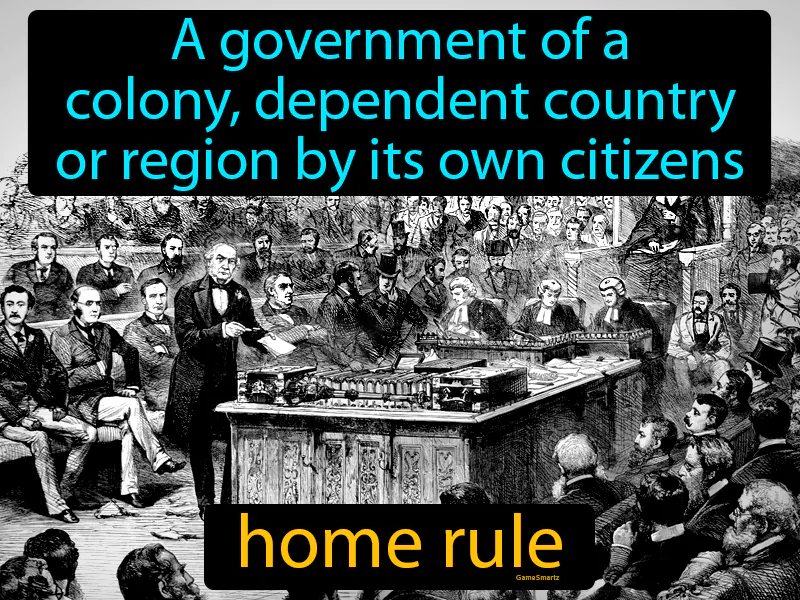
In its traditional, legalistic sense, “home rule” refers to the power of a local government to exercise a degree of self-governance, independent of a central authority. However, in the rapidly evolving landscape of the 21st century, the concept of Home Rule has migrated from the halls of city council to the digital infrastructure of our living rooms. In the context of technology, Home Rule represents a growing movement toward digital sovereignty—the ability of individuals and households to control their data, their devices, and their digital privacy without mandatory reliance on centralized cloud giants.

As we integrate Internet of Things (IoT) devices into every facet of our lives, the question of who truly “rules” the home has become a critical tech debate. Is it the homeowner, or is it the corporation that owns the servers powering the smart locks? This article explores the technological shift toward local control, the rise of decentralized ecosystems, and the tools available to those who wish to establish Home Rule over their digital lives.
The Evolution of Home Rule: From Physical Space to Digital Infrastructure
The concept of the “smart home” was initially marketed as a peak of convenience. By connecting lights, thermostats, and security cameras to the internet, users could manage their environments from anywhere in the world. However, this convenience came with a hidden cost: the loss of local autonomy. Most early smart devices were built on a “cloud-first” architecture, meaning every command sent to a lightbulb had to travel to a distant server and back.
Defining the Modern Smart Home Ecosystem
Today’s smart home ecosystem is a complex web of interconnected protocols and hardware. At its core, “Home Rule” in tech signifies the shift from a centralized model to a localized one. In a localized ecosystem, the “brain” of the house resides within the four walls of the property. This is achieved through a central hub—such as a dedicated server or a high-performance bridge—that processes information locally. By defining Home Rule through the lens of infrastructure, tech enthusiasts are moving away from proprietary “walled gardens” toward interoperable systems that prioritize the user’s intent over the manufacturer’s data-mining needs.
The Shift from Cloud-Dependency to Local Control
The dangers of cloud dependency became apparent when several high-profile companies discontinued support for older devices, effectively “bricking” hardware that consumers had paid hundreds of dollars for. Furthermore, server outages can leave a “smart” home stupid—unable to turn on lights or unlock doors. Technological Home Rule advocates for local control, where devices communicate via protocols like Zigbee, Z-Wave, or the newer Matter standard. These protocols allow devices to talk to each other and a local controller without ever needing an internet connection. This paradigm shift ensures that the home remains functional regardless of the manufacturer’s business health or internet stability.
Security and Privacy: Reclaiming Authority Over Personal Data
The most compelling argument for Tech-based Home Rule is the protection of privacy. In an era where data is the new oil, the home has become the ultimate frontier for data collection. Smart speakers, cameras, and even vacuum cleaners gather granular data about our daily habits, preferences, and even the physical layout of our homes. Without a Home Rule strategy, this data is often uploaded to the cloud, where it is vulnerable to breaches, government subpoenas, or sale to third-party advertisers.
The Risks of Third-Party Data Management
When a device requires a connection to a third-party server to function, the user essentially loses ownership of their behavioral data. High-profile leaks from security camera companies have shown that even “private” feeds can be accessed by unauthorized employees or hackers. Furthermore, the aggregation of data from multiple devices can create a scarily accurate profile of a household’s lifestyle. Home Rule solves this by ensuring that data stays within the local network. By eliminating the middleman, the risk of external data breaches is exponentially reduced.
Implementing Edge Computing for Maximum Privacy
Edge computing is the technical backbone of the Home Rule movement. By moving data processing to the “edge” of the network (the home itself) rather than a centralized data center, users gain both speed and security. Modern local servers are now powerful enough to handle complex tasks like facial recognition for security cameras or natural language processing for voice assistants entirely offline. When AI is hosted locally, your voice commands and video feeds never leave your encrypted local network, granting a level of privacy that cloud-dependent services simply cannot match.

The Tools of Autonomy: Software and Hardware for Local Governance
Transitioning to a Home Rule tech model requires a deliberate selection of software and hardware. While the mainstream market is dominated by “plug-and-play” cloud devices, a robust community of developers and engineers has built the tools necessary for true digital independence. These tools focus on open standards and user-empowerment rather than subscription-based models.
Open-Source Platforms: The Foundation of Home Tech Rule
The most prominent player in the Home Rule movement is Home Assistant. This open-source software acts as the central nervous system for a sovereign home. Unlike proprietary apps from tech giants, Home Assistant is local-first, privacy-focused, and highly customizable. It allows users to integrate thousands of different devices from hundreds of different manufacturers into a single, unified interface that runs on a local machine (like a Raspberry Pi or an Intel NUC). Other platforms like OpenHAB and Hubitat offer similar paths to autonomy, proving that you don’t need to sacrifice features to maintain control.
Essential Hardware for a Self-Sustaining Digital Environment
To achieve Home Rule, the hardware must support local communication. This means prioritizing devices that use local APIs or radio standards like Zigbee and Z-Wave.
- Local Hubs: Moving away from Google Home or Amazon Echo toward dedicated local coordinators.
- NAS (Network Attached Storage): Instead of relying on Google Photos or iCloud, a NAS allows a household to host their own private cloud, managing backups and media locally.
- Firewalls and Managed Switches: Advanced networking hardware like pfSense or Ubiquiti allows users to wall off “chatty” IoT devices, preventing them from communicating with external servers while still allowing them to function within the home network.
The Economic and Social Impact of Tech-Driven Home Rule
Beyond the technical benefits, Home Rule offers significant economic and social advantages. It challenges the “software-as-a-service” (SaaS) model that has dominated the industry for the last decade, shifting the power back to the consumer.
Reducing Long-Term Subscription Fatigue
One of the most frustrating trends in modern tech is the “subscriptionization” of hardware. Many companies now charge monthly fees to access basic features of devices you already own, such as cloud storage for cameras or advanced automation for thermostats. Home Rule eliminates this ongoing tax. While the initial setup of a local-first system might require a higher investment in terms of time or hardware costs, the long-term ROI is substantial. There are no monthly fees for local storage, and the software is often free and maintained by a global community of volunteers.
Democratizing Access to Advanced Automation
As the tools for local governance become more user-friendly, the ability to create a high-tech, sovereign home is no longer limited to computer scientists. The democratization of this technology means that the average consumer can now claim Home Rule. This shift forces major manufacturers to adapt. We are already seeing this with the adoption of “Matter,” a new industry standard backed by Apple, Google, and Amazon that facilitates local communication between devices. While these giants are unlikely to fully abandon the cloud, the pressure from the Home Rule movement is forcing them to provide more local-control options to remain competitive.
Conclusion: The Future of the Sovereign Home
What is Home Rule? In the tech world, it is the refusal to accept that convenience must come at the cost of privacy and control. It is a commitment to building a digital environment that serves the resident rather than the manufacturer. By leveraging open-source software, edge computing, and local communication protocols, we can build homes that are smarter, safer, and more resilient.
As we move further into a decade defined by AI and pervasive connectivity, the importance of Home Rule will only grow. It represents a vital check against the centralization of digital power and a roadmap for how we can enjoy the benefits of technology while maintaining our fundamental right to privacy. Establishing Home Rule isn’t just about a smarter lightbulb; it’s about who holds the keys to our digital future. Through intentional tech choices, we can ensure that our homes remain our castles—both in the physical world and the digital one.
aViewFromTheCave is a participant in the Amazon Services LLC Associates Program, an affiliate advertising program designed to provide a means for sites to earn advertising fees by advertising and linking to Amazon.com. Amazon, the Amazon logo, AmazonSupply, and the AmazonSupply logo are trademarks of Amazon.com, Inc. or its affiliates. As an Amazon Associate we earn affiliate commissions from qualifying purchases.