
In the dynamic and ever-evolving landscape of digital interaction, the term “hitbox” has become increasingly relevant, particularly within the realms of gaming, software development, and digital security. While often encountered in a gaming context, the underlying principle of a hitbox extends far beyond virtual battlegrounds, representing a fundamental concept in how digital entities define their presence and interact within a given space. This article delves into the multifaceted nature of hitboxes, exploring their technical underpinnings, practical applications across various domains, and their significant implications for user experience and system integrity.
The Technical Foundation of Hitboxes
At its core, a hitbox is a conceptual, invisible boundary that defines the area of an object or character in a digital environment. It’s not a visual element rendered on screen but rather a data structure that the system uses for collision detection and interaction. Understanding how these boundaries are defined and utilized is crucial to grasping their impact.

Defining the Invisible Boundary
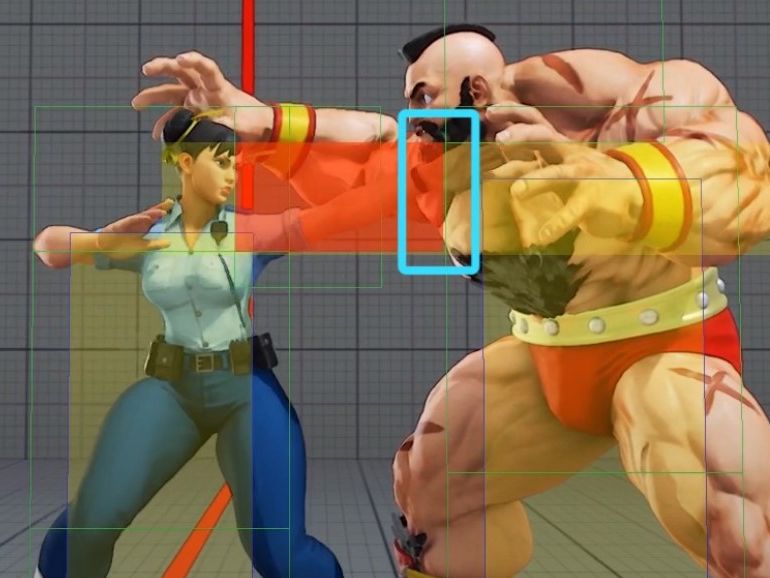
Hitboxes are typically represented by simple geometric shapes like rectangles, circles, or spheres. In more complex scenarios, particularly for animated characters, a series of interconnected hitboxes might be employed to accurately represent the various limbs and body parts. The size and shape of a hitbox are determined by the developers during the creation of the digital asset.
- Polygon and Vertex Definitions: For highly detailed or irregular shapes, hitboxes can be defined by a series of polygons, each consisting of vertices. This allows for more precise representation of complex forms, ensuring that interactions occur precisely where intended.
- Bounding Boxes: The simplest form of hitbox is a bounding box, a rectangular prism that completely encloses the object. While easy to implement, bounding boxes can sometimes be too broad, leading to inaccurate collisions or “false positives” where interactions occur outside the visible object.
- Bounding Spheres/Cylinders: Similar to bounding boxes, spheres and cylinders offer simpler collision detection for round or cylindrical objects. They are computationally less intensive than complex polygon definitions but may also sacrifice some accuracy for performance.
Collision Detection: The Engine of Interaction
The primary purpose of a hitbox is to facilitate collision detection. When two or more hitboxes occupy the same digital space, the system registers a collision. This event then triggers a pre-programmed response, dictated by the application’s logic.
- Algorithm Implementation: Various algorithms are used for collision detection, ranging from simple checks for overlapping bounding boxes to more sophisticated methods like the Separating Axis Theorem (SAT) for polygon-based collisions. The choice of algorithm significantly impacts performance and accuracy.
- Performance Considerations: In real-time applications, especially games with numerous objects and complex environments, efficient collision detection is paramount. Developers must balance the need for accuracy with the computational cost of these checks. Optimizations often involve spatial partitioning techniques, such as quadtrees or octrees, to quickly narrow down potential collision pairs.
- Hitbox Layers and Priorities: In some systems, hitboxes can be assigned different layers or priorities. This allows for fine-grained control over which types of collisions are registered and how they are handled. For example, a player character might have a “hurtbox” (where damage can be inflicted) and a “hurtbox” (that can inflict damage), and these might interact differently with other object hitboxes.
The Role of Hitboxes in Game Development
Within the gaming industry, hitboxes are arguably most famously utilized. They are the invisible determinants of whether a player’s attack lands, an enemy projectile hits its mark, or if a character collides with an environmental obstacle.
- Precision and Fairness in Combat: In fighting games and first-person shooters, precise hitboxes are crucial for a fair and responsive gameplay experience. Players rely on the visual representation of their character and attacks to correspond accurately with the underlying hitbox mechanics. Inaccurate hitboxes can lead to frustration and a perceived lack of skill-based gameplay.
- Character Animation Synchronization: Hitboxes are often synchronized with character animations. As a character performs an action, such as swinging a sword or firing a weapon, their hitboxes adjust accordingly. This ensures that the perceived timing of an attack matches the actual hitbox engagement.
- Environmental Interaction: Beyond combat, hitboxes are used to define interactions with the game world. This includes determining when a character can jump on a platform, when they might get stuck on a wall, or when they can pick up an item. The careful design of environmental hitboxes shapes the player’s movement and exploration capabilities.
- Visualizing the Invisible: While hitboxes are invisible by default, many games offer debug modes that allow players or developers to visualize them. This is invaluable for understanding hit registration issues, identifying exploits, and refining game mechanics.
Beyond Gaming: Hitboxes in Broader Tech Applications
The concept of hitboxes extends significantly beyond the realm of video games, playing a vital role in various other technological domains where precise interaction and spatial awareness are critical.
User Interface (UI) and User Experience (UX) Design
In the context of graphical user interfaces (GUIs), the principle of hitboxes is fundamental to how users interact with on-screen elements. Every button, link, or interactive element on a website or application has an associated clickable area, which essentially acts as its hitbox.
- Clickable Areas and Touch Targets: For web and mobile applications, the “hit area” of a UI element dictates where a user needs to click or tap to trigger an action. Developers carefully design these areas to be intuitive and forgiving, especially on touchscreens where precise aiming can be challenging.
- Accessibility Considerations: Larger and more generous hitboxes are a key aspect of accessible design. This ensures that users with motor impairments or those using assistive technologies can easily interact with the interface without frustration. Poorly designed, small hitboxes can render an application unusable for a significant portion of the user base.
- Hover Effects and Tooltips: Hitboxes also determine when hover effects are triggered or when tooltips appear. As the user’s cursor (or touch) enters the hitbox of an element, the associated visual feedback or informational content is displayed, enhancing usability and providing context.
Digital Security and Object Recognition
In the digital security and computer vision fields, hitboxes can be conceptualized as defining the boundaries of objects for detection, identification, and tracking purposes.
- Object Detection in Surveillance: In security systems, algorithms might draw bounding boxes (analogous to hitboxes) around detected objects like people, vehicles, or suspicious items in video feeds. This allows for automated alerts and easier analysis of events.
- Image and Video Annotation: For training machine learning models, annotators often draw bounding boxes around objects of interest in images and videos. These annotations serve as the “ground truth” for the model to learn from, essentially defining the hitbox of each object.
- Augmented Reality (AR) and Virtual Reality (VR): In AR and VR environments, hitboxes are crucial for seamless interaction between virtual objects and the real world, or between different virtual entities. They enable accurate placement, collision detection, and manipulation of virtual assets.
Robotics and Autonomous Systems
The ability to accurately perceive and interact with the physical world is paramount for robots and autonomous systems, and hitboxes play a role in this spatial reasoning.
- Sensor Data Interpretation: When robots process data from sensors like LiDAR or depth cameras, they create 3D representations of their environment. These representations can be thought of as complex hitboxes that the robot uses to navigate, avoid obstacles, and perform tasks.
- Path Planning and Navigation: Autonomous vehicles and drones rely on understanding the “space” occupied by obstacles and traversable areas. This information is derived from interpreting sensor data to define areas of exclusion (hitboxes of obstacles) and areas of passage.
- Robotic Manipulation: For robots performing tasks like picking up objects, precise understanding of the object’s dimensions and position (its hitbox) is critical for successful grasping and manipulation.
Optimizing Hitbox Implementation for Enhanced Performance and Experience
The effectiveness of any system relying on hitboxes hinges on their careful design and implementation. Poorly managed hitboxes can lead to bugs, user frustration, and performance bottlenecks.
The Balancing Act: Accuracy vs. Performance
As mentioned, there’s an inherent trade-off between hitbox accuracy and computational performance. Developers must find the sweet spot that delivers the desired level of fidelity without overwhelming system resources.
- Level of Detail (LOD) for Hitboxes: In large-scale simulations or games with many objects, developers might employ different levels of detail for hitboxes. Simpler, less accurate hitboxes might be used for distant objects, while more complex ones are reserved for those in close proximity or of critical importance.
- Spatial Partitioning Techniques: Techniques like quadtrees (2D) and octrees (3D) are essential for optimizing collision detection. These data structures divide the game world into smaller regions, allowing the system to quickly identify potential collision pairs and ignore vast swathes of the environment where no collisions are possible.
- Broad Phase and Narrow Phase Collision Detection: A common optimization strategy involves a two-phase approach. The “broad phase” quickly identifies potential collision pairs using simpler methods (e.g., checking bounding box overlaps). The “narrow phase” then performs more precise collision tests only on the pairs identified in the broad phase.
Debugging and Visualization Tools
The ability to visualize and debug hitboxes is indispensable for developers. It allows for the identification of issues and the fine-tuning of game mechanics.
- In-Game Debug Overlays: Many game engines and development tools provide features to render hitboxes on-screen during development or in specific debug modes. This visual feedback is invaluable for understanding why certain interactions are occurring or not occurring.
- Profiling and Performance Analysis: Tools that profile application performance can help identify which collision detection checks are consuming the most resources. This information guides optimization efforts.
- Automated Testing: For complex systems, automated testing frameworks can be developed to simulate various interaction scenarios and verify that hitboxes are functioning as expected.
The Future of Hitbox Technology
As technology advances, the sophistication of hitbox implementation is also evolving.
- Machine Learning for Dynamic Hitboxes: Future applications might see machine learning models dynamically adjusting hitbox parameters based on real-time environmental conditions or user behavior, leading to even more adaptive and responsive interactions.
- Procedural Generation of Hitboxes: For procedurally generated content, hitboxes will increasingly need to be generated dynamically and efficiently, ensuring that every generated asset has appropriate interaction boundaries.
- Cross-Platform Consistency: With the rise of cross-platform gaming and application development, ensuring consistent hitbox behavior across different hardware and operating systems will remain a significant challenge and area of focus.

Conclusion: The Ubiquitous Impact of Invisible Boundaries
From the frantic firefights of a virtual battlefield to the intuitive touch of a mobile app, the concept of the hitbox is a fundamental, albeit often unseen, component of our digital experiences. It is the invisible architecture that governs interaction, dictates outcomes, and shapes our perception of digital spaces. Whether in the pursuit of precise gameplay, intuitive user interfaces, or robust digital security, understanding and effectively implementing hitboxes is crucial for creating engaging, functional, and reliable technology. As our digital world continues to expand and become more complex, the principles of hitbox definition and collision detection will remain at the forefront of innovation, enabling seamless and meaningful interactions in ever-evolving technological frontiers.
aViewFromTheCave is a participant in the Amazon Services LLC Associates Program, an affiliate advertising program designed to provide a means for sites to earn advertising fees by advertising and linking to Amazon.com. Amazon, the Amazon logo, AmazonSupply, and the AmazonSupply logo are trademarks of Amazon.com, Inc. or its affiliates. As an Amazon Associate we earn affiliate commissions from qualifying purchases.