
Hill assist, also known as hill holder, hill start assist, or gradient assist, is a sophisticated automotive technology designed to enhance the driving experience, particularly in situations involving inclines. While seemingly a simple convenience, its underlying mechanisms and the impact it has on vehicle dynamics and driver confidence place it squarely within the realm of Tech. This article will explore the intricacies of hill assist, from its fundamental operation to its technological underpinnings, its various implementations, and its significant contributions to modern vehicle safety and usability.
The Fundamental Principle: Preventing Rollback
At its core, hill assist addresses a common driving challenge: preventing a vehicle from rolling backward when attempting to move from a standstill on an upward slope. This scenario is familiar to most drivers, especially those navigating hilly terrains or congested urban environments. Without assistance, a driver would typically need to coordinate the clutch, accelerator, and brake pedals with precise timing and pressure to avoid an undesirable rollback. This can be particularly stressful for novice drivers or during moments of distraction.

The Mechanics of Momentum
Understanding hill assist requires a basic grasp of physics. When a vehicle is stationary on an incline, gravity exerts a force pulling it downward. The engine’s torque, applied through the drivetrain, is what counteracts this force to propel the vehicle forward. In a manual transmission vehicle, the clutch acts as the crucial intermediary, allowing the driver to gradually engage the engine’s power. The delicate balance between engine power and gravitational pull is what enables a smooth start. In an automatic transmission vehicle, the torque converter plays a similar role, but the electronic control units (ECUs) managing the transmission also contribute to the overall starting behavior.
The Driver’s Dilemma
The manual coordination of pedals on a hill presents a distinct challenge. Imagine this scenario: you’re stopped on a steep incline. You need to release the brake pedal to move your foot to the accelerator. During this brief transition, the vehicle will naturally begin to roll backward unless sufficient engine power is immediately applied. For those less experienced, or even seasoned drivers in high-pressure situations, this transition can be jarring, leading to a sudden rollback, potential contact with the vehicle behind, or a stalled engine. This is precisely where hill assist intervenes, offering a technological solution to a mechanical problem.
Technological Implementation: Sensors and Control Systems
Hill assist technology is not a singular, monolithic system. Instead, it is an integrated feature that relies on a network of sensors and sophisticated control algorithms managed by the vehicle’s Electronic Control Units (ECUs). The complexity and precision of these systems are what make hill assist a remarkable feat of automotive engineering.
The Role of Sensors
The foundation of hill assist lies in its ability to accurately detect the vehicle’s inclination. This is primarily achieved through:
- Inclinometers (or Tilt Sensors): These devices, often integrated into the vehicle’s ABS (Anti-lock Braking System) or stability control modules, are specifically designed to measure the angle of the vehicle’s chassis relative to the horizontal plane. They provide real-time data on whether the vehicle is on a level surface, an incline, or a decline, and to what degree.
- Wheel Speed Sensors: These sensors, also integral to the ABS and traction control systems, monitor the rotational speed of each wheel. While their primary function is to prevent wheel lock-up during braking or skidding, they can also provide indirect information about the vehicle’s motion, including any unintended rollback.
- Brake Pressure Sensors: In some systems, sensors that monitor the hydraulic pressure applied to the brakes can also contribute to the hill assist logic. This helps the system understand how firmly the brakes are being applied by the driver.
- Transmission Position Sensors: For automatic transmissions, sensors indicating the gear selection (Park, Reverse, Drive, Neutral) are crucial for the system to determine when to engage its assist function.
The Brains of the Operation: ECUs and Algorithms
The data from these sensors is fed into the vehicle’s central computer systems, most notably the Electronic Control Unit (ECU) responsible for managing braking and vehicle stability. Sophisticated algorithms within these ECUs process the sensor inputs to:
- Detect an Inclined Start: When the vehicle is stationary and the inclinometer detects an upward angle, the system identifies a potential hill start scenario.
- Identify Driver Intent: The system infers driver intent based on several factors:
- The driver has their foot on the brake pedal (detected by brake pedal position sensors or the continued application of brake pressure).
- The driver is releasing the brake pedal and beginning to apply the accelerator pedal.
- The transmission is in a forward gear (Drive or 1st gear for manual).
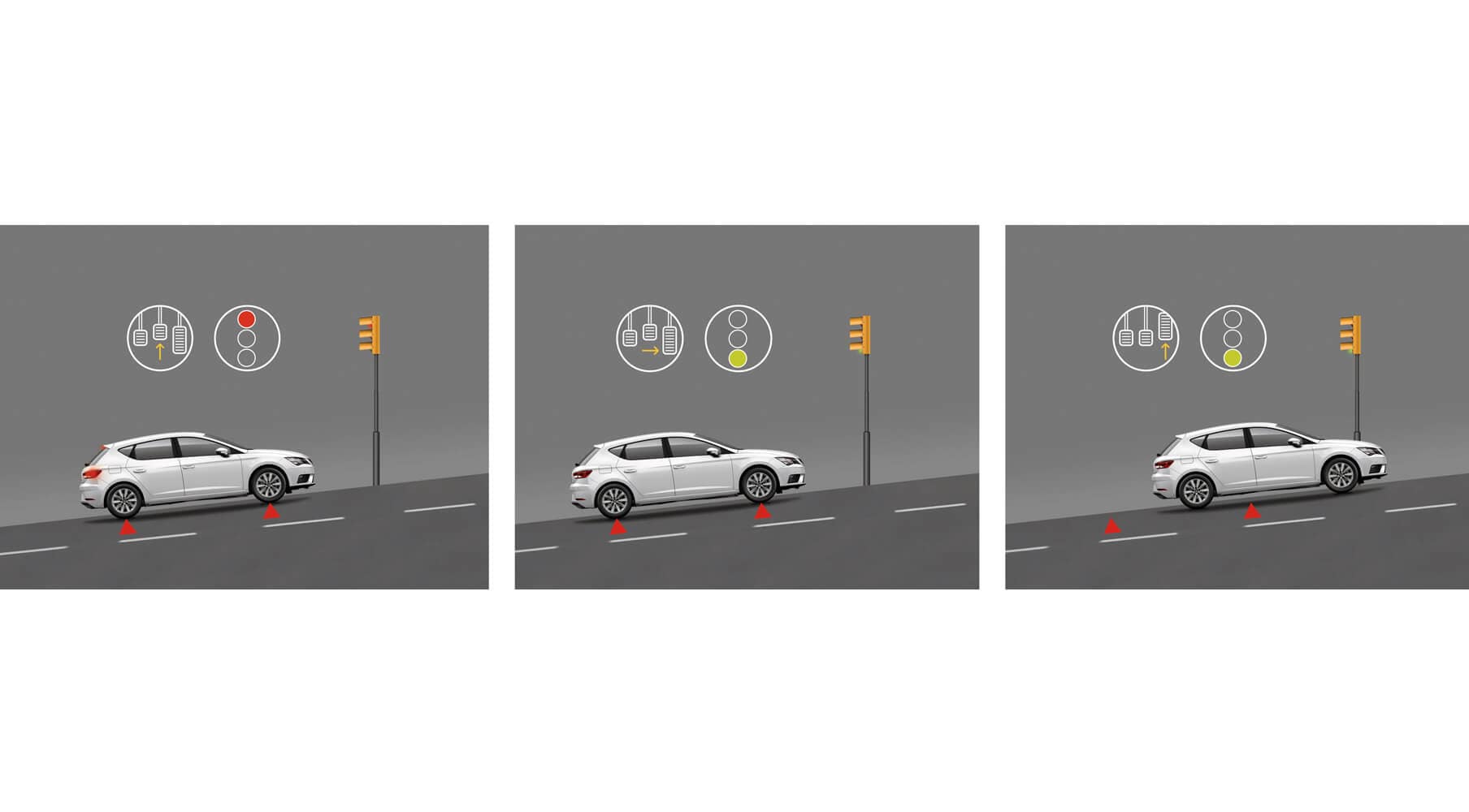
- Engage Brake Hold: Once an inclined start with driver intent is detected, the ECU commands the brake system to maintain brake pressure for a specific duration (typically 1-3 seconds). This holds the vehicle stationary, preventing rollback.
- Release Brakes Upon Acceleration: As the driver applies sufficient accelerator pedal pressure to overcome the incline, the ECU senses this increase in throttle input. It then gradually releases the brake pressure, allowing the vehicle to move forward smoothly.
The precise timing and pressure modulation are key. The system needs to hold the brakes long enough for the driver to transition their foot but not so long that it feels like the vehicle is being held back unnecessarily. Similarly, the release of the brakes must be coordinated with the application of engine power for a seamless departure.
Variations and Enhancements: Tailoring the Experience
Hill assist technology is not a one-size-fits-all solution. Manufacturers have developed various implementations and integrated it with other advanced driver-assistance systems (ADAS) to offer a more refined and versatile experience.
Manual vs. Automatic Transmissions
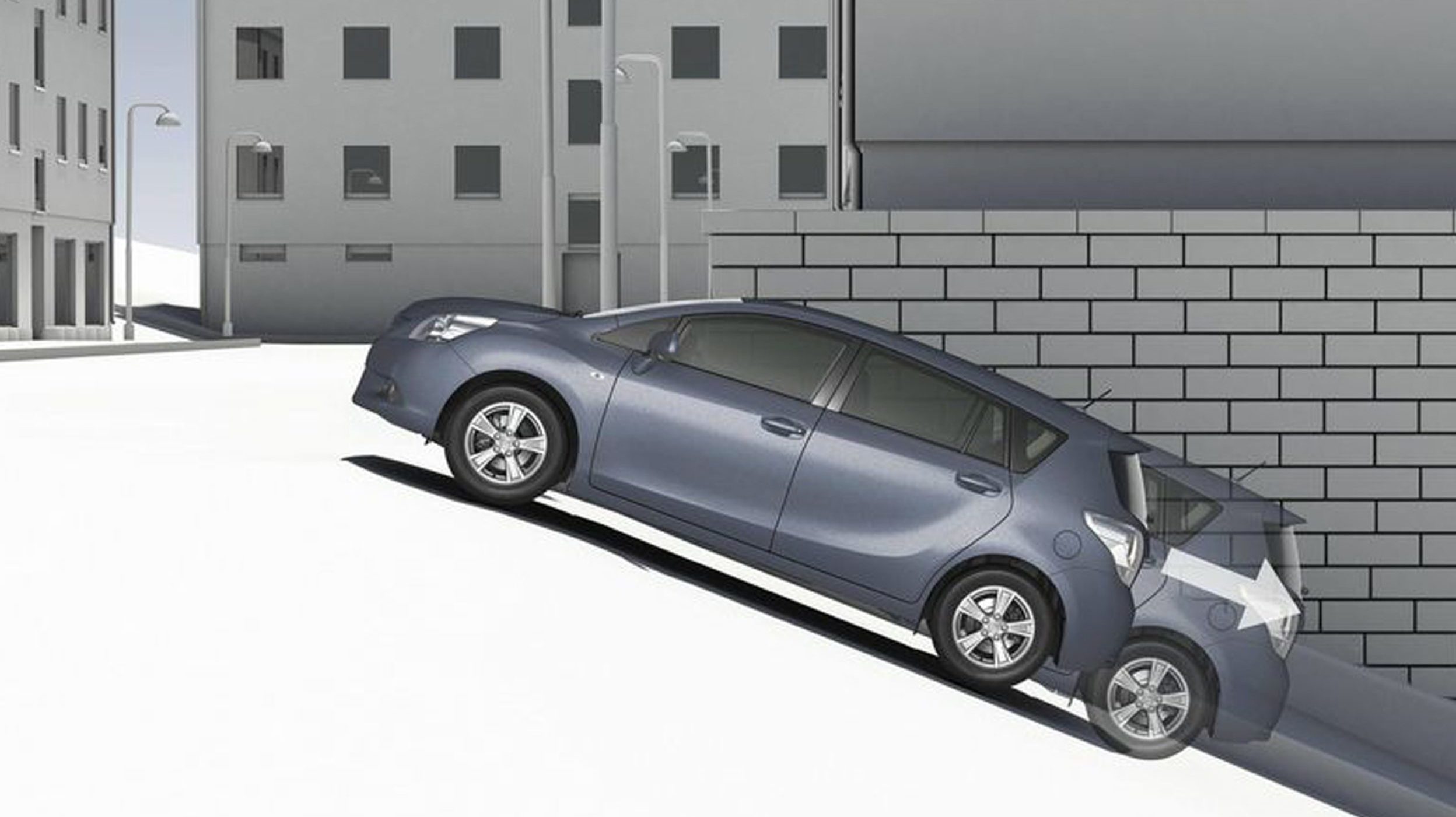
The fundamental principles of hill assist apply to both manual and automatic transmissions, but the implementation differs slightly:
- Manual Transmissions: Here, hill assist is particularly valuable as it removes the complex pedal coordination required for a smooth start. The system holds the brakes, giving the driver ample time to engage the clutch and apply throttle without worrying about rolling backward. This significantly reduces the learning curve for new manual transmission drivers and enhances the confidence of experienced ones.
- Automatic Transmissions: While automatics inherently have some ability to hold the vehicle on a slight incline due to the torque converter, hill assist enhances this capability, especially on steeper gradients. It provides a more definitive hold, preventing even the slightest creep backward, ensuring a more controlled and comfortable start. This is especially useful in stop-and-go traffic on hills.
Advanced Implementations and Integration with ADAS
Modern vehicles often integrate hill assist with other intelligent systems:
- Electronic Parking Brake (EPB) Integration: In vehicles equipped with an electronic parking brake, hill assist can leverage this system. When an incline is detected and the driver intends to move, the EPB can automatically engage. As the driver applies throttle, the EPB automatically releases, providing a smooth transition. This eliminates the need for a separate brake pedal hold in some designs.
- Adaptive Cruise Control (ACC) and Stop & Go: In vehicles with ACC that includes a “stop and go” function, hill assist often works in conjunction. When the vehicle comes to a stop behind another vehicle on an incline, the system will maintain the brake hold until the vehicle ahead moves and the driver resumes acceleration.
- Hill Descent Control (HDC) Complementarity: While HDC is designed for controlled descents, hill assist addresses the opposite scenario – controlled ascents. They are complementary technologies that contribute to overall vehicle control on varied topography.
- Selectable Modes: Some luxury vehicles may offer selectable modes for hill assist, allowing drivers to adjust the duration of the brake hold or the sensitivity of the system.
The evolution of hill assist showcases the automotive industry’s commitment to leveraging technology to simplify complex driving maneuvers and improve overall safety. It’s a testament to how computational power and sensor technology can be combined to create practical, everyday benefits for drivers.
The Impact of Hill Assist: Safety, Confidence, and Usability
The benefits of hill assist extend beyond mere convenience. It has a tangible impact on driver confidence, safety, and the overall usability of a vehicle, particularly in challenging environments.
Enhanced Safety and Accident Prevention
The most significant benefit of hill assist is its contribution to safety. By preventing unintended rollback, it directly reduces the risk of:
- Collisions with Vehicles Behind: This is particularly crucial in dense traffic where vehicles are often positioned very closely. A sudden rollback can lead to costly fender benders.
- Damage to Property: In parking lots or tight maneuvers on inclines, preventing rollback can avoid damage to surrounding vehicles, walls, or other structures.
- Pedestrian Safety: On roads with sidewalks or pedestrian areas, preventing a vehicle from rolling backward is essential for pedestrian safety.
The system acts as a digital guardian, providing an extra layer of security during critical moments.
Increased Driver Confidence and Reduced Stress
For many drivers, especially those new to driving or those who find challenging inclines stressful, hill assist is a transformative technology. It removes the mental burden of coordinating multiple pedals, allowing drivers to focus on traffic, road conditions, and their intended path. This leads to:
- Reduced Driving Anxiety: Especially for learners or those driving in hilly regions for the first time.
- Smoother Starts: Eliminating jerky movements and the potential for engine stalls.
- Greater Control: Drivers feel more in command of their vehicle, even in difficult situations.
This boost in confidence can lead to more relaxed and enjoyable driving experiences.
Improved Usability and Accessibility
Hill assist makes vehicles more accessible and usable for a wider range of drivers. It lowers the barrier to entry for operating vehicles with manual transmissions and makes driving in varied terrain less daunting for everyone. This is especially relevant in countries where manual transmissions are still prevalent or in regions characterized by significant elevation changes. The technology democratizes the ability to navigate challenging inclines with ease.
The Future of Driving Assistance
Hill assist, while a mature technology, continues to evolve as part of the broader trend towards autonomous and semi-autonomous driving. As vehicles become more intelligent, features like hill assist will likely become even more seamlessly integrated, working in concert with other ADAS to create a safer, more convenient, and ultimately, more enjoyable driving experience. It represents a fundamental step in making vehicles more intuitive and responsive to the driver’s needs and the environment.
aViewFromTheCave is a participant in the Amazon Services LLC Associates Program, an affiliate advertising program designed to provide a means for sites to earn advertising fees by advertising and linking to Amazon.com. Amazon, the Amazon logo, AmazonSupply, and the AmazonSupply logo are trademarks of Amazon.com, Inc. or its affiliates. As an Amazon Associate we earn affiliate commissions from qualifying purchases.