
The Dow Jones Industrial Average (DJIA), often simply called “the Dow,” stands as one of the most venerable and widely observed stock market indices globally. For over a century, it has served as a critical barometer of American economic health and corporate prosperity. Tracking its ascent, particularly its all-time highs, offers profound insights into periods of robust economic expansion, technological leaps, and shifts in investor sentiment. Understanding not just the number itself, but the context and drivers behind these peaks, is essential for any discerning investor or financial observer.
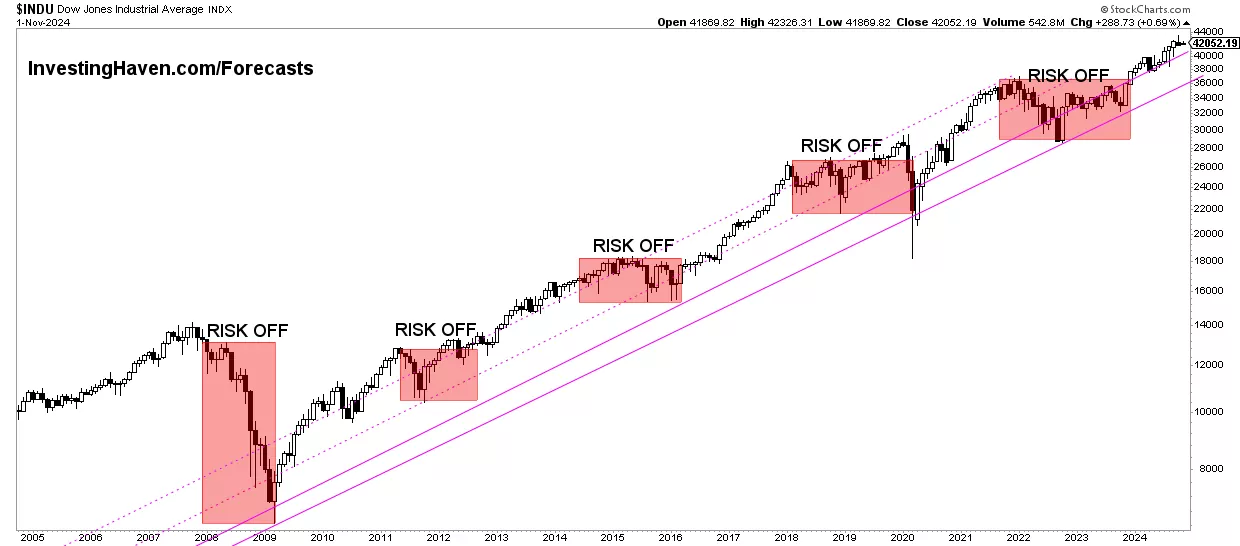
The highest point the Dow Jones Industrial Average has ever reached is a continually evolving figure, reflecting the dynamic nature of global markets and economic growth. As of recent market activity in the first half of 2024, the Dow has pierced and settled above the 40,000-point threshold, marking a significant psychological and historical milestone. This achievement not only represents the pinnacle of its nearly 130-year history but also underscores the remarkable resilience and long-term upward trajectory characteristic of the U.S. stock market despite intermittent corrections and crises.

This article delves into the significance of the Dow’s record highs, exploring what constitutes this iconic index, the forces that propel it to new pinnacles, and the implications these milestones hold for investors navigating the complex world of finance.
Understanding the Dow Jones Industrial Average: A Pillar of Market Insight
To appreciate the significance of the Dow’s record highs, one must first grasp its fundamental nature and its historical role in financial markets. Unlike broader indices such as the S&P 500, the Dow comprises a select group of companies, making its movements particularly symbolic.
A Legacy of Industrial Strength and Evolution
Conceived by Charles Dow in 1896, the Dow Jones Industrial Average initially tracked just 12 prominent American industrial companies. Its inception was rooted in the era of burgeoning industrial might, reflecting the economic backbone of a rapidly developing nation. Over the decades, the index has evolved significantly, broadening its composition to include a diverse array of companies from various sectors—technology, healthcare, finance, consumer goods—that are considered leaders in their respective industries. This evolution ensures its continued relevance as a gauge of the broader economy, even if its “industrial” moniker is now more historical than literal.
Currently, the DJIA consists of 30 large, publicly traded companies chosen by the editors of The Wall Street Journal. These companies are selected not merely for their size but for their reputation, sustained growth, and broad investor interest, making them bellwethers for the overall market. Changes to the index are rare but significant, reflecting major shifts in the U.S. economic landscape.
How the Dow is Calculated and Its Unique Characteristics
The Dow is a price-weighted index, a feature that distinguishes it from market-capitalization-weighted indices like the S&P 500. This means that stocks with higher share prices have a greater influence on the index’s movement than those with lower share prices, regardless of the company’s overall market value. A single dollar change in a higher-priced stock will impact the Dow more than a similar dollar change in a lower-priced stock.
This methodology, while historically significant, has been subject to criticism for not fully reflecting the true scale of a company’s market impact. Nevertheless, its long history and consistent methodology provide a continuous data series invaluable for studying market trends over more than a century. The “Dow Divisor,” a frequently adjusted number, ensures that the index’s value remains comparable even after stock splits, mergers, or changes in its component companies.
Its Enduring Role as a Market Barometer
Despite its methodological quirks, the Dow retains immense psychological importance. It is often the first number quoted on financial news, serving as a quick, albeit sometimes superficial, snapshot of market sentiment. Its movements can sway investor confidence, influence economic reporting, and even impact consumer behavior. For many, its record highs are a tangible sign of economic progress and a robust bull market, while sharp declines signal caution or distress. This emotional and symbolic weight ensures the Dow’s place at the forefront of financial discourse, even as sophisticated investors scrutinize a broader range of economic indicators.
Charting the Dow’s Historic Peaks: A Journey Through Economic Eras
The Dow’s journey to over 40,000 points is a testament to the enduring power of innovation, economic cycles, and market resilience. Each major milestone tells a story of specific economic conditions and investor optimism.
The Milestones that Shaped Its Ascent
From its humble beginnings below 50 points, the Dow has methodically, though not linearly, marched upward, puncturing significant psychological barriers along the way.
- 1,000 Points (1972): Took 76 years, marking a post-World War II economic boom.
- 10,000 Points (1999): Signified the dot-com bubble’s exuberance, driven by technology and globalization.
- 20,000 Points (2017): Achieved during a period of sustained post-financial crisis recovery and renewed corporate profitability.
- 30,000 Points (2020): A remarkable rebound from the initial COVID-19 pandemic shock, fueled by unprecedented fiscal and monetary stimulus.
- 40,000 Points (2024): This most recent peak reflects a confluence of factors, including robust corporate earnings, receding inflation concerns, and optimism surrounding artificial intelligence and other technological advancements.
Each of these milestones wasn’t just a number; it represented a period where underlying economic forces aligned to drive corporate valuations higher. They often coincided with strong GDP growth, low unemployment, and an environment conducive to business expansion.
The Most Recent Record: Over 40,000 Points
The breaching of the 40,000-point mark in 2024 is particularly noteworthy. It underscores a powerful belief among investors that the U.S. economy, despite facing persistent inflation, geopolitical tensions, and interest rate hikes, remains fundamentally strong. This level wasn’t achieved without volatility, highlighting the constant tug-of-war between optimism and caution in financial markets. It represents a collective belief in the future earnings power of America’s leading companies and the innovative capacity of the nation.
This particular peak has been supported by a narrative of “soft landing” – the idea that the Federal Reserve has successfully navigated inflation control without triggering a deep recession. Furthermore, the strong performance of technology and growth sectors, some of which are Dow components, has provided significant upward momentum.
Contextualizing Historical Peaks: More Than Just Numbers
It’s crucial to contextualize these record highs. While a higher number typically signifies growth, the real value for investors lies in understanding the purchasing power and real returns. A Dow at 40,000 in 2024 means something different than a Dow at 10,000 in 1999, given inflation and economic expansion. When adjusted for inflation, the “real” return from the Dow is what truly matters for an investor’s wealth accumulation.
Moreover, these peaks are often followed by corrections or consolidations, which are natural and healthy parts of market cycles. The focus should not solely be on the peak itself but on the underlying trends, the quality of economic growth, and the sustainability of corporate earnings that support such valuations.
What Drives the Dow to New Heights? The Engines of Growth
The forces that propel the Dow to record highs are multifaceted, ranging from fundamental economic principles to the more ephemeral currents of market psychology.
Corporate Earnings and Economic Growth
At its core, a stock market index like the Dow reflects the aggregate earnings power and future growth expectations of its component companies. When corporate profits are robust and growing, stock prices tend to rise. This is often tied to broader economic growth, characterized by strong GDP, low unemployment, rising consumer spending, and increased business investment. A healthy economy creates an environment where companies can sell more products and services, improve efficiency, and expand their operations, directly translating into higher stock valuations. Periods of significant innovation, like the internet boom or the current AI revolution, also provide new avenues for growth that boost earnings potential.
Monetary Policy and Interest Rates
The policies enacted by central banks, particularly the U.S. Federal Reserve, exert immense influence over financial markets. Low interest rates, for instance, make borrowing cheaper for companies, facilitating expansion and share buybacks. They also make bonds less attractive, pushing investors towards equities in search of higher returns. Conversely, rising interest rates, while intended to curb inflation, can dampen market enthusiasm by increasing borrowing costs and making fixed-income investments more appealing. The current environment, where the Fed has signaled a potential plateau or even future cuts in interest rates, has been a significant tailwind for the Dow’s recent ascent, as it lowers the discount rate for future earnings and reduces the cost of capital.
Technological Advancements and Innovation
Throughout history, technological breakthroughs have been powerful engines for economic growth and market appreciation. From the industrial revolution to the digital age, innovations create new industries, boost productivity, and generate immense wealth. The current era, dominated by advancements in artificial intelligence, biotechnology, and renewable energy, provides a fresh wave of growth opportunities that are reflected in the valuations of leading companies, many of which are Dow components or influence them. These innovations can lead to increased efficiency, new products, and expanded markets, fueling corporate profits and investor optimism.
Investor Sentiment and Market Psychology
While fundamentals provide the backbone, investor sentiment often dictates the short-to-medium-term trajectory of the market. Periods of record highs are frequently accompanied by strong bullish sentiment, often bordering on exuberance. Factors like “Fear Of Missing Out” (FOMO), positive news cycles, and a general sense of optimism can create a self-reinforcing loop where rising prices attract more buyers, pushing the index even higher. Conversely, fear and uncertainty can trigger sharp downturns. Understanding this psychological component is vital, as it can sometimes decouple market performance from underlying economic realities, at least temporarily.
Global Economic Factors and Geopolitics
In an increasingly interconnected world, global economic conditions and geopolitical stability also play a crucial role. Strong growth in major trading partners, stable commodity prices, and a peaceful international environment can bolster corporate earnings and investor confidence. Conversely, trade wars, conflicts, or global pandemics can introduce significant volatility and curb growth prospects. The Dow’s journey to 40,000 has occurred amidst a complex global backdrop, underscoring the market’s ability to compartmentalize or overcome various external pressures when domestic fundamentals remain strong.
The Implications of Record Highs for Investors
Record highs in the Dow Jones Industrial Average are often celebrated, but their implications for individual investors are nuanced and require a balanced perspective.
Validation of Economic Strength vs. “Bubble” Concerns
On one hand, record highs are often seen as a validation of the underlying strength of the economy and corporate America. They suggest that companies are innovating, generating profits, and that investor confidence is robust. This can encourage further investment and reinforce a positive economic outlook.
However, sustained record highs can also trigger concerns about market “overvaluation” or the formation of an asset bubble. When stock prices rise faster than corporate earnings or economic growth, some analysts and investors become wary that the market is running on speculative enthusiasm rather than sound fundamentals. The key is to assess whether the growth is sustainable and backed by genuine economic progress or if it’s primarily driven by speculative fervor.
The Importance of Diversification and Risk Management
For individual investors, record highs serve as a reminder of the importance of a well-diversified portfolio. While the Dow’s performance is compelling, relying solely on a single index or a few large-cap stocks can expose an investor to undue risk. A diversified portfolio, spread across different asset classes (stocks, bonds, real estate), geographies, and market capitalizations, helps mitigate risk and potentially smooth out returns over the long term.
Record highs can also be an opportune time for investors to rebalance their portfolios, taking some profits from overperforming assets and reallocating to those that might be undervalued or to maintain their desired asset allocation. This disciplined approach prevents a portfolio from becoming excessively concentrated in a particular sector or asset that has experienced significant recent gains.
Long-Term vs. Short-Term Perspective
The stock market is inherently volatile in the short term, but historically, it has demonstrated a consistent upward trend over extended periods. Record highs are exciting, but they are points on a much longer trajectory. Investors with a long-term perspective understand that market corrections and bear markets are inevitable parts of the investment cycle. Rather than reacting emotionally to every new high or dip, a long-term strategy focuses on consistent investing, compounding returns, and adhering to one’s financial goals regardless of short-term market fluctuations. The journey to 40,000 points highlights this historical truth: despite numerous crises and setbacks, the market has always found a way to recover and reach new heights.
Looking Ahead: Sustaining Momentum and Navigating Volatility
The journey beyond 40,000 points will undoubtedly be characterized by ongoing challenges and opportunities. Understanding the factors that will shape future market performance is crucial for informed decision-making.
The Role of Fundamentals vs. Speculation
Moving forward, the sustainability of the Dow’s growth will depend heavily on the underlying fundamentals. Continued strong corporate earnings, healthy economic growth, and productivity gains driven by innovation will be critical. If market gains largely outpace these fundamentals, the risk of a significant correction increases. Investors will need to closely monitor company balance sheets, revenue growth, and profit margins to differentiate between sustainable growth and speculative bubbles. The current enthusiasm around AI, for example, needs to translate into tangible earnings and productivity improvements across various sectors to justify current and future valuations.
Key Economic Indicators to Watch
Savvy investors keep a keen eye on a range of economic indicators. Inflation rates and the Federal Reserve’s stance on monetary policy (interest rate decisions) will continue to be paramount. Employment data, consumer spending reports, manufacturing indices, and housing market trends will offer insights into the health of the broader economy. Geopolitical developments and global trade dynamics also warrant close attention, as they can significantly impact corporate supply chains and profitability. A holistic view of these indicators helps paint a clearer picture of the market’s trajectory.

Preparing for Future Market Cycles
While reaching new highs is exhilarating, it is equally important to acknowledge that market cycles include corrections and bear markets. History teaches us that no bull run lasts forever, and periods of retrenchment are natural and often necessary to reset valuations. Investors should always be prepared for potential downturns by maintaining adequate emergency savings, investing within their risk tolerance, and avoiding over-leveraging. A well-constructed financial plan includes strategies for navigating both boom and bust cycles, ensuring that long-term goals remain achievable regardless of short-term market volatility.
In conclusion, the highest point the Dow Jones Industrial Average has ever reached is more than just a number; it’s a profound indicator of economic progress, corporate adaptability, and investor confidence. While celebrating these milestones, a professional and insightful approach demands an understanding of the complex interplay of economic fundamentals, monetary policy, technological innovation, and market psychology that drives them. For investors, it reinforces the enduring power of long-term investing, the necessity of diversification, and the wisdom of maintaining a disciplined strategy through all market conditions.
aViewFromTheCave is a participant in the Amazon Services LLC Associates Program, an affiliate advertising program designed to provide a means for sites to earn advertising fees by advertising and linking to Amazon.com. Amazon, the Amazon logo, AmazonSupply, and the AmazonSupply logo are trademarks of Amazon.com, Inc. or its affiliates. As an Amazon Associate we earn affiliate commissions from qualifying purchases.