
In the modern landscape of music production, the boundary between classical theory and cutting-edge technology has blurred. For producers, sound designers, and software developers, understanding the “harmonic minor scale” is no longer just a requirement for conservatory students; it is a vital component of the digital toolkit used to create tension, emotion, and cinematic depth. While music theory provides the map, technology provides the vehicle. This article explores the harmonic minor scale through the lens of modern music technology, examining how Digital Audio Workstations (DAWs), AI-driven composition tools, and advanced synthesis techniques have revolutionized our use of this hauntingly beautiful scale.

Understanding the Architecture: The Harmonic Minor Scale Meets Digital Audio Workstations (DAWs)
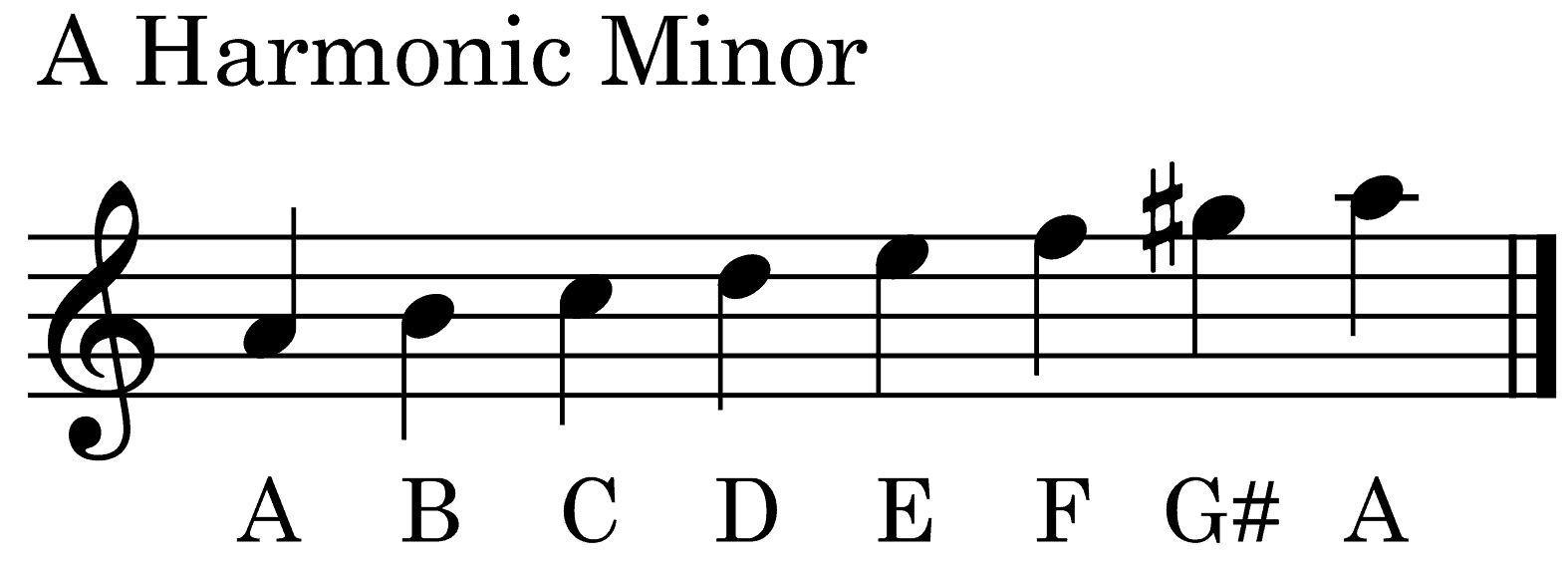
To leverage the harmonic minor scale in a tech-focused environment, one must first understand its structural DNA and how that translates to digital interfaces. Unlike the natural minor scale, the harmonic minor features a raised seventh note. This creates a distinctive “leading tone” that sits just a semitone below the tonic, resulting in an exotic, tension-filled interval known as the augmented second between the sixth and seventh degrees.
The Mathematical Framework of the Harmonic Minor
In a digital environment, music is often reduced to its mathematical essence. The harmonic minor scale follows a specific interval pattern: Whole, Half, Whole, Whole, Half, Augmented Second, Half (W-H-W-W-H-1.5-H). In MIDI terms, if we start on A (MIDI Note 57), the scale consists of A, B, C, D, E, F, and G#. The technology within modern DAWs allows producers to visualize these intervals not as notes on a staff, but as coordinates on a grid. This mathematical consistency makes the harmonic minor a favorite for algorithmic composition, where code-based constraints define the melodic possibilities.
Visualizing Intervals in the MIDI Editor
The MIDI Piano Roll is the primary interface for most modern composers. High-end DAWs like Ableton Live 11, FL Studio, and Logic Pro X now include “Scale Modes.” By selecting the harmonic minor within the DAW’s settings, the software highlights the “correct” notes on the grid. This tech-assisted workflow allows producers to experiment with complex melodic runs without a deep background in formal theory. The visual representation of the harmonic minor on a digital grid highlights the specific “gap” between the 6th and 7th degrees, allowing for the precise placement of notes to evoke specific emotional responses.
Automation and Quantization of Exotic Scales
One of the most powerful technological advantages of the digital age is the ability to automate scale changes. Using MIDI transformation tools, a producer can take a melody originally written in a natural minor and “quantize” it to the harmonic minor scale with a single click. This non-destructive editing process allows for rapid prototyping of moods. Furthermore, automation clips can be used to shift a track from a standard minor key into a harmonic minor key during a “drop” or a cinematic climax, using software to handle the complex transposition instantly.
Integrating AI and Algorithmic Tools for Harmonic Complexity
As Artificial Intelligence (AI) becomes more integrated into the creative process, the harmonic minor scale has become a benchmark for testing the “emotional intelligence” of generative algorithms. Because the scale carries such heavy cultural and emotional weight—often associated with neo-classical metal, Middle Eastern textures, or cinematic horror—AI tools must be precisely tuned to handle its unique intervals.
AI-Powered Melody Generators and Scale Constraints
Tools like Orb Composer, Captain Chords, and Google’s Magenta project use machine learning to suggest melodies based on user-defined parameters. When a user selects “Harmonic Minor” in these AI interfaces, the algorithm adjusts its probability matrices. It recognizes that the G# (in the key of A minor) serves as a functional magnet toward the tonic. Modern tech-driven creators use these AI tools to generate “seed” melodies, which they then refine. This synergy between human taste and algorithmic precision allows for the rapid generation of complex, dark-themed motifs that would traditionally take hours to compose.
Predictive Chord Progression Software
The harmonic minor is unique because it allows for the use of a Major V chord in a minor key (e.g., E Major in the key of A Minor). Software like Scaler 2 uses vast databases of musical history to suggest chord progressions that utilize this specific “V to i” resolution. This technology acts as a digital consultant, offering the user sophisticated harmonic choices that define the “dark” or “epic” sound associated with high-budget film scores and modern trap production.
Machine Learning in Genre-Specific Sound Design
In genres like Phonk or Dark Techno, the harmonic minor scale is a staple. Developers are now creating genre-specific AI plugins that are pre-conditioned on the harmonic minor scale. These tools analyze the spectral content of a track and suggest “blue notes” or accidental sharps that align with the harmonic minor framework. This is technology moving beyond mere utility and entering the realm of creative partnership.
Advanced Sound Design: Synthesis and the Harmonic Minor Scale
The intersection of synthesis and scale theory is where the harmonic minor truly shines. Because of its tense intervals, the scale interacts uniquely with different forms of synthesis, particularly when dealing with overtones and frequency modulation.
Frequency Modulation (FM) Synthesis and Microtonality
FM synthesis, popularized by the Yamaha DX7 and modern software like Native Instruments’ FM8, relies on the interaction of carriers and modulators. When playing harmonic minor melodies through an FM synth, the “closeness” of the leading tone to the tonic can create complex sidebands and dissonant textures. Modern digital synths allow for “Microtonal Mapping,” where the user can slightly detune the raised 7th of the harmonic minor to better match historical temperaments, a feat that would be impossible on a standard physical piano but is easily achieved via software.
Wavetable Synthesis for Dark Cinematic Textures
Wavetable synths like Serum or Vital allow for the visualization of sound waves as they morph. The harmonic minor scale, when applied to dark, evolving wavetables, creates a “cinematic” tension. Tech-focused sound designers often use “key-tracking” technology, where the position of the wavetable changes based on which note of the harmonic minor scale is played. This ensures that the raised 7th always sounds more aggressive or “sharper” than the tonic, reinforcing the scale’s inherent tension through timbre.
Polyphonic Expression (MPE) and Scale Mapping
MIDI Polyphonic Expression (MPE) is a relatively new technology that allows for per-note control over parameters like pitch bend and pressure. Controllers like the Roli Seaboard or the Ableton Push 3 allow performers to slide between the notes of the harmonic minor scale. The technology enables the user to “lock” the slide range to only the notes of the scale, ensuring that even during a chaotic physical performance, the output remains mathematically tethered to the harmonic minor’s structure.
Software Ecosystems and VST Plugins for the Modern Composer
For the professional producer, the harmonic minor scale is accessed through a sophisticated ecosystem of Virtual Studio Technology (VST) plugins designed to simplify and enhance the composing experience.
Real-Time Scale Correction and Autotune Applications
In the realm of vocal production, technology like Antares Auto-Tune or Celemony Melodyne has become indispensable. When a producer sets an Auto-Tune plugin to “Harmonic Minor,” the software’s DSP (Digital Signal Processing) engine instantly remaps the incoming vocal signal to the nearest note in that scale. This has led to the “exotic” vocal sound prevalent in modern pop and hip-hop, where the digital artifacts of the pitch correction highlight the augmented second interval, creating a distinctively “robotic yet emotional” aesthetic.
Top VSTs for Exploring Minor Scales
Several specialized plugins focus entirely on scale exploration. “Cthulhu” by Xfer Records allows users to trigger complex harmonic minor chords with a single key press. “Hookpad” by Hooktheory provides a web-based interface for visualizing how the harmonic minor functions within popular music, utilizing a database of thousands of songs. These tools represent the democratization of music theory through software, making the complex beauty of the harmonic minor accessible to anyone with a computer.
Integrating Scaler 2 and Captain Chords into Your Workflow
Modern workflows often start with “theory-assistance” plugins. By routing the MIDI output of a scale-aware plugin (like Scaler 2) into a high-end synthesizer, producers can “play” the harmonic minor scale with perfect accuracy. These plugins also offer “perform” modes, where technology generates complex arpeggios and riffs based on the harmonic minor, which can then be dragged and dropped directly into the DAW timeline as MIDI data.
The Future of Digital Composition: Why Theory Still Matters in a Tech-First World
As we look toward the future of music technology, the role of scales like the harmonic minor remains central. While AI can generate notes and software can correct pitches, the intent behind using the harmonic minor—the desire to create tension, mystery, and resolution—remains a human element facilitated by tech.
The evolution of “Smart MIDI” and the increasing sophistication of neural networks suggest a future where the harmonic minor scale is just one of many “mood presets” a producer can toggle. However, the most successful tech-driven musicians will be those who understand the why behind the scale. Technology has removed the barrier to entry for complex music theory, but it has also increased the demand for unique, high-quality compositions.
In conclusion, the harmonic minor scale is a perfect example of how ancient musical concepts are revitalized by modern technology. Whether it is being mapped onto a MIDI grid, processed through an AI melody generator, or modulated via FM synthesis, the scale continues to be a cornerstone of emotional expression in the digital age. By mastering the technological tools available, from DAWs to VSTs, today’s creators can harness the power of the harmonic minor to push the boundaries of what is possible in music production.
aViewFromTheCave is a participant in the Amazon Services LLC Associates Program, an affiliate advertising program designed to provide a means for sites to earn advertising fees by advertising and linking to Amazon.com. Amazon, the Amazon logo, AmazonSupply, and the AmazonSupply logo are trademarks of Amazon.com, Inc. or its affiliates. As an Amazon Associate we earn affiliate commissions from qualifying purchases.