
The global financial landscape is currently undergoing a structural transformation that hasn’t been witnessed in decades. For much of the last fifteen years, the market was defined by “easy money”—a period of near-zero interest rates, low inflation, and aggressive central bank intervention. Today, that era has ended, replaced by a complex environment of high-interest rates, persistent inflationary pressures, and a recalibration of asset valuations across every sector from equities to real estate. Understanding what is happening in the market requires a deep dive into the macroeconomic forces at play, the shifting dynamics of the stock market, and the evolution of personal wealth management strategies.

The Macroeconomic Landscape: Interest Rates, Inflation, and Central Bank Policy
At the heart of current market movements is the fundamental shift in monetary policy. Central banks, led by the Federal Reserve, have transitioned from a supportive role to a restrictive one in an effort to combat the highest inflation rates seen since the early 1980s. This shift has changed the “cost of capital,” which acts as the gravity for all financial assets.
The Persistence of Interest Rate Volatility
Interest rates are the most critical lever in the financial world. When rates rise, the present value of future cash flows decreases, leading to a natural downward pressure on stock prices, particularly in the growth and technology sectors. Currently, the market is grappling with the “higher for longer” narrative. While many investors initially expected a rapid return to low rates, sticky inflation in services and housing has forced central banks to maintain restrictive stances. This volatility in the bond market creates a ripple effect, making it more expensive for corporations to borrow and for consumers to finance large purchases like homes and vehicles.
Inflationary Pressures and the Consumer Price Index
While the headline Consumer Price Index (CPI) has cooled from its 2022 peaks, the underlying components remain complex. We are seeing a divergence between “goods” inflation, which has largely stabilized as supply chains recovered, and “services” inflation, which is driven by a tight labor market and rising wages. This wage-price spiral concern is what keeps market participants on edge. Investors are no longer just looking at the top-line numbers; they are dissecting core inflation to see if the downward trend is sustainable or if we are entering a period of secularly higher inflation that will require a permanent rethink of portfolio construction.
The Federal Reserve’s Balancing Act
The Federal Reserve is currently walking a tightrope between two risks: keeping rates too high for too long and causing a deep recession, or cutting rates too early and allowing inflation to become entrenched. This “soft landing” objective is the primary focus of market speculation. Every jobs report and retail sales print is scrutinized for signs of the economy cooling just enough to satisfy the Fed without collapsing. This sensitivity to data has led to increased short-term market volatility, where a single economic data point can shift billions of dollars in capital in a matter of minutes.
Equities and the Sector Rotation: From Big Tech to Value Stocks
The stock market has shown remarkable resilience in the face of rising rates, but the “under the hood” mechanics are changing. The concentration of gains in a handful of massive technology companies—often referred to as the “Magnificent Seven”—has reached historic levels. However, as the broader economy adjusts to the new interest rate environment, we are seeing the beginnings of a sector rotation.
The AI-Driven Rally and the Search for Sustainable Growth
Artificial Intelligence (AI) has become the primary catalyst for equity growth over the last year. Companies involved in semiconductor manufacturing, cloud infrastructure, and software integration have seen their valuations soar. However, the market is beginning to demand more than just “AI potential.” Investors are looking for actual revenue growth and margin expansion attributed to these technologies. As the “hype cycle” matures, we are seeing a narrowing of the winners, with capital flowing toward companies that can demonstrate tangible productivity gains from AI rather than just promising them in a slide deck.
Defensive vs. Aggressive Positions in a High-Rate Environment
In a high-rate environment, the “Growth at Any Price” (GAAP) model has been replaced by “Quality Growth.” This means investors are prioritizing companies with strong balance sheets, high free cash flow, and low debt-to-equity ratios. Defensive sectors, such as healthcare and consumer staples, which were largely ignored during the tech-heavy bull runs of the 2010s, are gaining renewed interest as safe havens. At the same time, the “Value” factor—investing in companies that are trading for less than their intrinsic worth—is becoming more relevant as the valuation gap between high-flying tech and traditional industry reaches extreme levels.
The Rebound of Small-Cap Stocks and Dividend Performers
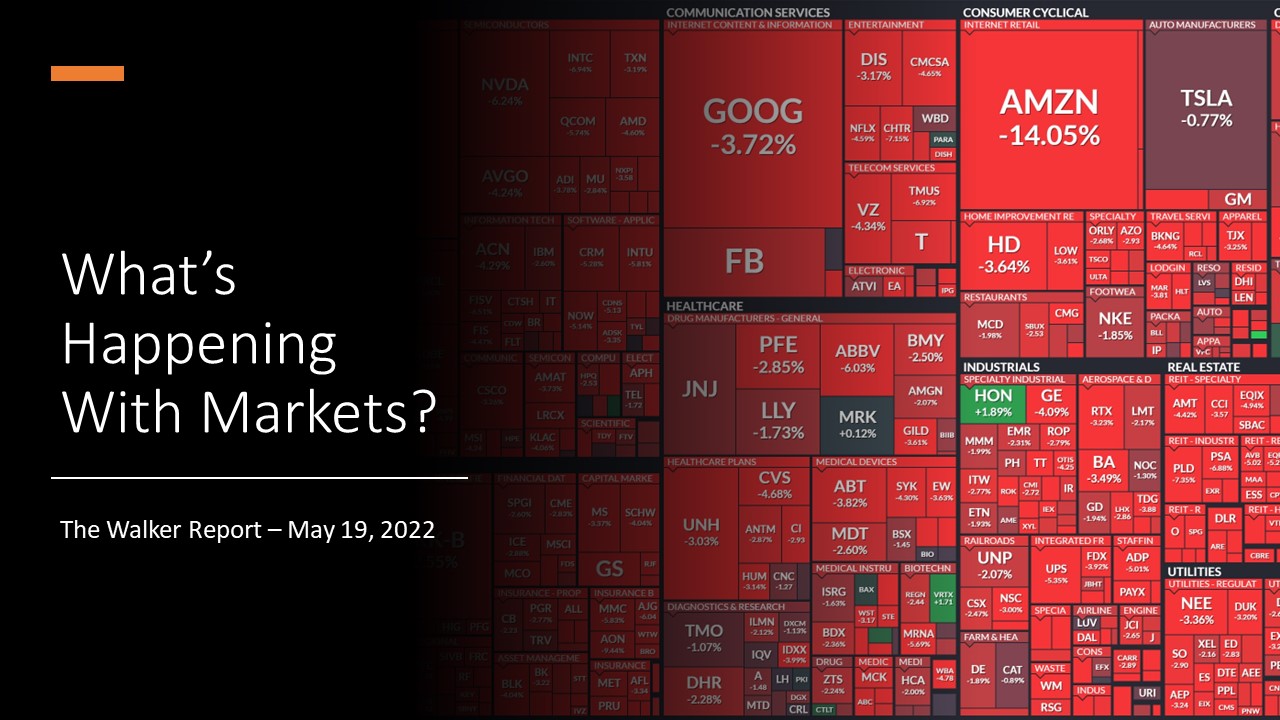
Small-cap stocks, as measured by indices like the Russell 2000, have historically been more sensitive to interest rate hikes because they often rely more heavily on external financing. As the market begins to price in the end of the rate-hiking cycle, there is growing interest in these smaller, domestic-focused companies. Additionally, dividend-paying stocks are reclaiming their role in the portfolio. When savings accounts offer 4% or 5% yields, stocks must offer competitive dividend growth to attract income-seeking investors. This competition for “yield” is a defining feature of the current market, forcing equity managers to be more selective than they have been in a decade.
Alternative Assets and the Evolution of Online Income
The modern market is no longer limited to stocks and bonds. Alternative assets and the gig economy have become integral components of the financial ecosystem, providing both diversification for investors and new avenues for income generation.
The Maturation of the Cryptocurrency Market
Cryptocurrency has transitioned from a fringe speculative asset to a regulated financial product. The introduction of Bitcoin and Ethereum ETFs (Exchange-Traded Funds) has allowed institutional capital—pensions, endowments, and wealth managers—to enter the space with ease. This “institutionalization” of crypto has reduced some of its extreme volatility while increasing its correlation with traditional tech stocks. What is happening in the market now is a focus on “utility” within the blockchain space, specifically in decentralized finance (DeFi) and tokenization of real-world assets like real estate and treasury bills.
Real Estate Realities: Navigating High Mortgage Rates
The real estate market is currently in a state of “frozen” equilibrium. High mortgage rates have discouraged existing homeowners from selling (as they don’t want to trade a 3% rate for a 7% rate), leading to a historic shortage of inventory. This has kept home prices high despite lower demand. For investors, the focus has shifted from residential flips to commercial real estate and multi-family units. However, the commercial sector, particularly office space, faces a structural crisis due to the permanence of remote work. Navigating the real estate market today requires a hyper-local approach and a focus on specialized niches like data centers or industrial logistics hubs.
The Rise of Side Hustles and the Passion Economy
On the income side of the equation, the “market” for labor is shifting. More individuals are diversifying their income streams through side hustles, digital products, and freelance platforms. This isn’t just about extra cash; it’s a response to the volatility of traditional employment. The growth of the creator economy and the accessibility of global marketplaces allow individuals to capitalize on niche skills. Whether through automated e-commerce, digital consulting, or content creation, the barrier to entry for generating online income has never been lower, yet the competition for attention has never been higher.
Personal Finance Strategies for a Shifting Economy
With so much movement in the macro and micro markets, individual financial strategy must adapt. The “set it and forget it” mentality of the 2010s is being replaced by a need for active management and strategic cash positioning.
High-Yield Savings and Fixed Income: Capturing Yield
One of the few silver linings of high interest rates is the return of the “risk-free” yield. For the first time in a generation, investors can earn a meaningful return on their cash without taking on market risk. High-yield savings accounts, Certificates of Deposit (CDs), and short-term Treasury bills are currently offering returns that compete with the long-term averages of the stock market. This has led to a significant shift in asset allocation, where “cash” is no longer just a drag on a portfolio but a strategic asset that provides both liquidity and income.
Managing Debt in an Era of Tight Credit
The cost of borrowing has skyrocketed, making debt management a top priority for both businesses and households. Credit card interest rates have hit record highs, and personal loans are more expensive than they have been in decades. In this market, the most effective “investment” for many is the repayment of high-interest debt. Simultaneously, the credit market is tightening; banks are becoming more selective with whom they lend to, which is slowing down consumer spending and forcing a more disciplined approach to personal leverage.

Long-Term Wealth Building Amidst Short-Term Volatility
Despite the noise, the fundamentals of wealth building remain consistent: diversification, low fees, and time in the market. However, the “diversification” of 2024 looks different than it did in 2014. A standard 60/40 (stocks/bonds) portfolio struggled in recent years as both assets fell in tandem. Today’s investors are looking toward “all-weather” portfolios that include commodities, inflation-protected securities, and global exposure. The key to navigating what is happening in the market is to distinguish between “market noise”—the daily fluctuations driven by headlines—and “market signals”—the long-term structural changes in how the world produces, consumes, and values capital.
The current market is a testing ground for discipline. The era of easy gains is behind us, and the future belongs to those who can navigate a more complex, high-rate, and data-driven environment. By focusing on quality, staying adaptable to new asset classes, and maintaining a rigorous focus on personal financial health, investors can not only survive this transition but find new opportunities for growth in an evolving global economy.
aViewFromTheCave is a participant in the Amazon Services LLC Associates Program, an affiliate advertising program designed to provide a means for sites to earn advertising fees by advertising and linking to Amazon.com. Amazon, the Amazon logo, AmazonSupply, and the AmazonSupply logo are trademarks of Amazon.com, Inc. or its affiliates. As an Amazon Associate we earn affiliate commissions from qualifying purchases.