
In the rapidly shifting landscape of financial technology, Google Pay has emerged as a cornerstone of the modern digital wallet ecosystem. Far from being a simple application for sending money, it represents a complex integration of Near Field Communication (NFC), sophisticated tokenization protocols, and cross-platform software engineering. As society moves toward a cashless paradigm, understanding the underlying technology, the security frameworks, and the architectural evolution of Google Pay is essential for anyone navigating the current tech landscape.
The Technological Evolution of Google’s Payment Infrastructure
The journey of Google Pay is a masterclass in software consolidation and brand pivoting. To understand what Google Pay is today, one must look at its lineage, which began with two distinct entities: Google Wallet and Android Pay.

From Fragmented Apps to a Unified Ecosystem
In 2011, Google Wallet was launched as one of the first major attempts to utilize NFC technology for mobile payments. However, the ecosystem was fragmented, hampered by carrier restrictions and a lack of widespread NFC-enabled terminals. Parallel to this, Android Pay was introduced in 2015, focusing specifically on point-of-sale transactions. In 2018, Google announced the unification of these services under the “Google Pay” brand, creating a seamless experience that synchronized payment information across Chrome, YouTube, the Play Store, and physical retail locations.
The Flutter Rewrite and Modern Architecture
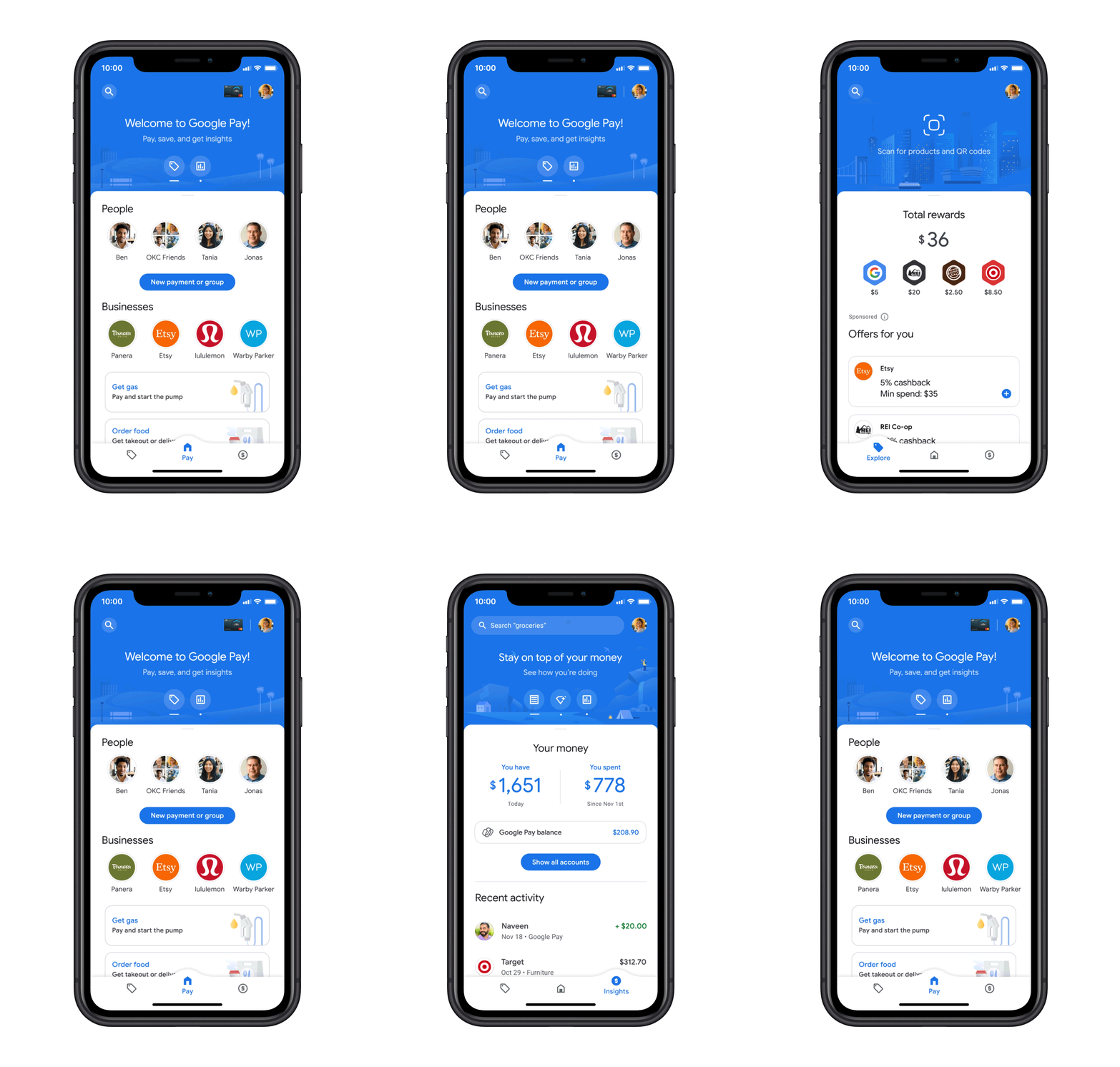
In 2020, Google Pay underwent a massive architectural overhaul. The development team transitioned the app’s codebase to Flutter, Google’s open-source UI software development kit. This was a significant technical decision; by moving to a single codebase for both Android and iOS, Google was able to ensure feature parity and accelerate the deployment of updates. This shift allowed for a more “social-centric” UI, moving the app beyond a static list of credit cards and into a dynamic interface that includes transaction histories categorized by AI, loyalty card integration, and peer-to-peer (P2P) messaging.
The Mechanics of Contactless Payments: NFC and HCE
At its core, Google Pay’s physical-world utility relies on Near Field Communication (NFC). This is a specialized subset of Radio Frequency Identification (RFID) technology that operates at a frequency of 13.56 MHz.
Near Field Communication (NFC) Protocols
When a user brings their smartphone near a contactless-enabled terminal, the two devices initiate a “handshake” using the ISO/IEC 14443 standard. This happens within a range of about four centimeters, creating a secure, short-range communication channel. Unlike Bluetooth, which requires manual pairing, NFC initiates connection automatically and nearly instantaneously, making it the ideal protocol for high-traffic retail environments.
Host Card Emulation (HCE)
A critical technical breakthrough for Google Pay was the implementation of Host Card Emulation (HCE). In the early days of mobile payments, the industry relied on a “Secure Element” (SE)—a physical chip inside the phone controlled by mobile carriers. This created a bottleneck for software developers. Google bypassed this by utilizing HCE, which allows a software application on the Android OS to mimic a smart card. This architectural shift moved the security logic to the cloud and the operating system’s secure software layers, allowing Google Pay to function on any NFC-enabled Android device regardless of the carrier or specific hardware chipsets.
Security at the Core: Tokenization and Encryption
The most common concern regarding digital wallets is security. Google Pay addresses this through a multi-layered approach that ensures sensitive financial data is never actually exposed during a transaction.
The Power of Tokenization
The pillar of Google Pay’s security is tokenization. When you add a credit or debit card to the app, Google Pay does not store the actual Primary Account Number (PAN) on the device. Instead, it communicates with the issuing bank to request a “Token”—a unique, device-specific Virtual Account Number (DAN).
When a payment is made, the app shares this token and a one-time dynamic security code with the merchant. Because the merchant never receives the actual card number, even if their database is breached, the data stolen is a useless, non-replicable token. This system effectively creates a “firewall” between the user’s real bank credentials and the retail environment.
Biometric Authentication and Device-Level Security
On the client side, Google Pay leverages the Android Keystore system and biometric prompts. Transactions above a certain threshold (or every transaction, depending on user settings) require authentication via fingerprint, facial recognition, or a secure PIN. This is governed by the FIDO (Fast IDentity Online) standards, which ensure that biometric data never leaves the device’s Trusted Execution Environment (TEE). If a device is lost or stolen, the “Find My Device” integration allows users to remotely wipe their payment credentials without needing to cancel their physical plastic cards, as the virtual token can be deactivated independently of the source account.
Integration Across the Digital Ecosystem
Google Pay is designed to be an invisible layer that facilitates transactions across various platforms, extending far beyond the smartphone.
Wear OS and the Internet of Things
The expansion into Wear OS (formerly Android Wear) represents the miniaturization of the payment stack. Smartwatches equipped with NFC can execute the same tokenization and HCE protocols as smartphones. This requires tight integration between the watch’s hardware and the Wear OS software to ensure that the “Secure Element” emulation remains robust even in a low-power, wearable environment.
The Google Pay API for Developers
For web and app developers, the Google Pay API serves as a bridge to reduce checkout friction. By integrating a few lines of code, e-commerce platforms can allow users to pay using the credentials stored in their Google Account. Technically, this involves the browser (Chrome) or the OS securely passing an encrypted payment payload to the merchant’s payment processor. This eliminates the need for users to manually enter 16-digit card numbers, significantly increasing conversion rates for businesses while maintaining the security of tokenized data.
Global Variations: NFC vs. UPI
It is important to note that the “Google Pay” experience varies significantly by region due to local technological infrastructures. In the United States and Europe, the focus is heavily on NFC-based “Tap and Pay.” In contrast, in markets like India, Google Pay (originally launched there as Tez) built its infrastructure on the Unified Payments Interface (UPI). This is a real-time payment system developed by the National Payments Corporation of India. In this context, Google Pay acts as a sophisticated wrapper for bank-to-bank transfers initiated via QR codes or mobile numbers, showcasing the platform’s ability to adapt its backend to different national fintech architectures.
AI, Machine Learning, and the Future of the Digital Wallet
As Google Pay moves forward, the integration of Artificial Intelligence (AI) and Machine Learning (ML) is transforming the app from a transaction tool into a financial management engine.
Automated Expense Tracking and OCR
Modern versions of Google Pay use Optical Character Recognition (OCR) and ML algorithms to parse digital receipts and transaction data. If a user grants permission, the app can scan a Gmail inbox for receipts or analyze transaction descriptions to categorize spending automatically. This metadata allows users to search for specific purchases—such as “what did I spend on coffee last month?”—using natural language processing (NLP).
Smart Incentives and Geofencing
The tech stack also utilizes geofencing technology. When a user enters a supported retail location, the app can surface relevant loyalty cards or “stacks” of digital coupons using location-based triggers. This requires a sophisticated balance between user privacy and utility, utilizing the Android “Fused Location Provider” API to minimize battery drain while maintaining high accuracy.

The Shift Toward a Comprehensive Identity Wallet
The future of Google Pay lies in its transition toward a full “Google Wallet” identity. This involves digitizing not just currency, but everything found in a physical wallet: transit passes, driver’s licenses, vaccination records, and car keys. Technically, this requires the implementation of the “Identity Credential” API and support for ISO 18013-5 (the standard for mobile driving licenses). By utilizing the most secure enclaves within modern smartphone processors, Google is positioning its payment platform to be the secure, encrypted repository for a user’s entire digital identity.
In conclusion, Google Pay is a sophisticated amalgamation of NFC hardware interaction, cloud-based tokenization, and cross-platform software development. By abstracting the complexities of banking infrastructure into a user-friendly interface, it has set the standard for how technology can simplify and secure the exchange of value in the 21st century. Whether through a smartwatch tap or a web-based API call, Google Pay continues to redefine the boundary between software and finance.
aViewFromTheCave is a participant in the Amazon Services LLC Associates Program, an affiliate advertising program designed to provide a means for sites to earn advertising fees by advertising and linking to Amazon.com. Amazon, the Amazon logo, AmazonSupply, and the AmazonSupply logo are trademarks of Amazon.com, Inc. or its affiliates. As an Amazon Associate we earn affiliate commissions from qualifying purchases.