
To the average user, Google is a search engine, a portal to the world’s information, and a ubiquitous presence in daily life. However, from a corporate identity and brand strategy perspective, the answer to “What is Google?” became significantly more complex in 2015. Today, Google is the primary subsidiary of Alphabet Inc., a massive conglomerate designed to house a diverse portfolio of businesses. Understanding “Google A” (Alphabet) requires a deep dive into how a single product transformed into a global identity that redefined the relationship between technology and branding.
The Evolution from Search Engine to Alphabet Inc.
The journey of Google is a masterclass in brand scaling. Founded in a garage in 1998, the company’s initial identity was singular: organize the world’s information. As the company grew, it began to acquire and develop technologies that felt increasingly distant from its core search business, ranging from life sciences to self-driving cars. This expansion created a “brand bloat” that necessitated a radical restructuring.
The 2015 Restructuring: Creating Alphabet
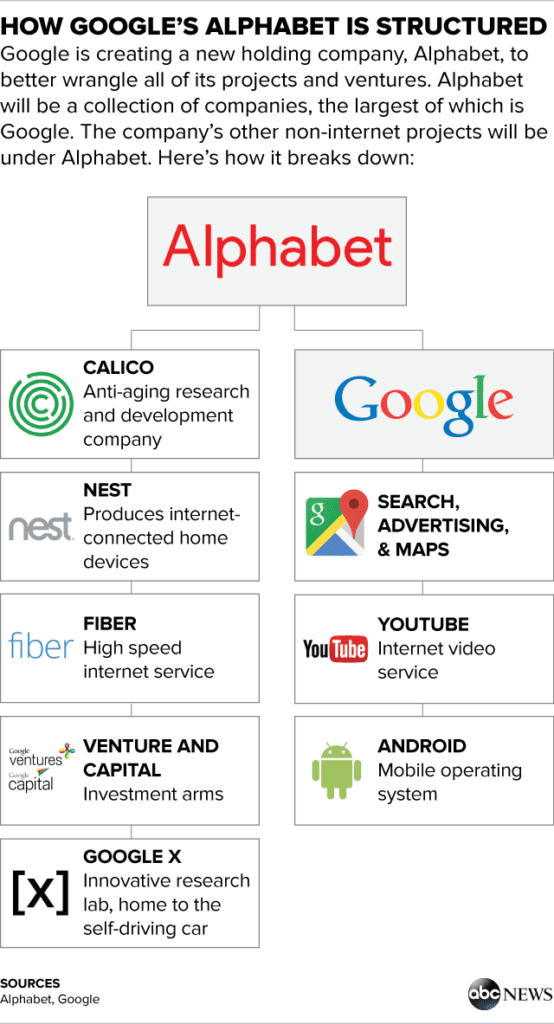
In August 2015, founders Larry Page and Sergey Brin announced the creation of Alphabet Inc. This move was not merely a legal reorganization; it was a strategic brand pivot. By making Google a subsidiary of Alphabet, the leaders allowed the core “Google” brand—Search, Maps, YouTube, Android, and Chrome—to remain focused on digital life. Meanwhile, “moonshots” like Waymo (autonomous vehicles) and Verily (life sciences) could develop their own unique brand identities under the Alphabet umbrella. This structure provided the “purity” that investors and consumers needed to understand the company’s diverse goals.
Why “Alphabet”? The Brand Philosophy
The name “Alphabet” was chosen for two primary reasons. First, it represents language, the core of how Google organizes information. Second, as Larry Page noted, it represents “Alpha-bet,” or an investment return above a benchmark. From a brand strategy standpoint, Alphabet acts as a “House of Brands” rather than a “Branded House.” It allows the parent company to stay in the background, providing a safety net for innovation while letting the consumer-facing Google brand maintain its friendly, accessible, and indispensable reputation.
Core Identity: The Power of the Google Brand
Despite the existence of Alphabet, “Google” remains one of the most valuable brand names in history. Its power lies not just in its market share, but in its psychological integration into the human experience. The brand has achieved the ultimate marketing milestone: becoming a generic trademark.
Brand Equity and the “Verb” Status
When a brand name becomes a verb—”I’ll google that”—it signifies a level of market dominance that is nearly impossible to disrupt. For Google, this “verb” status is a double-edged sword. While it represents total market capture, it also risks “genericide,” where a brand loses its legal trademark protection. To combat this, Google’s brand strategy focuses on constant innovation, ensuring that the “Google” experience remains superior to any generic alternative. This keeps the brand synonymous with “the best answer,” not just “any answer.”
Visual Identity and Minimalism
Google’s visual branding is a study in purposeful simplicity. The primary colors (blue, red, yellow, and green) suggest a sense of playfulness and accessibility, breaking away from the “corporate blue” typical of 20th-century tech giants like IBM. The 2015 logo redesign, which introduced a custom geometric sans-serif typeface called Product Sans, was a pivotal moment in its brand history. It was designed to look equally clear on a high-resolution monitor or a low-bandwidth smartwatch. This visual flexibility reinforces a brand promise of being “everywhere and for everyone.”
The House of Brands: Managing a Diverse Portfolio
Under the Alphabet structure, the “Google” brand is the engine that funds the rest of the ecosystem. However, managing the identities of its various arms requires a delicate balance between independence and synergy.
YouTube, Waymo, and Google Cloud
While YouTube is a subsidiary of Google, it maintains a distinct brand identity geared toward creators and entertainment. Its red-and-white aesthetic and “Broadcast Yourself” legacy are vital to its community-driven success. In contrast, Google Cloud leans into the professional, secure, and robust branding required for B2B (business-to-business) relationships. Then there are the “Other Bets” like Waymo. By not calling it “Google Auto,” the parent company protects the Google brand from the potential reputational risks of nascent technology while allowing Waymo to build a brand centered on safety and the future of transportation.
Balancing Innovation with Corporate Identity
The challenge for Alphabet is maintaining a cohesive corporate culture across such disparate ventures. The brand strategy here is one of “unconventionality.” Alphabet’s brand identity is built on the idea that “Google is not a conventional company. We do not intend to become one.” This ethos attracts top-tier talent who are encouraged to think beyond quarterly earnings. This internal branding is just as important as the external marketing, as it ensures that the spirit of the “Google” brand—innovation, curiosity, and scale—permeates every subsidiary under the Alphabet banner.
Brand Strategy in the Age of AI and Privacy
As we move deeper into the 21st century, the Google brand faces its greatest challenges yet: the rise of Artificial Intelligence and the heightening of global privacy concerns. The way Google navigates these will define the brand’s legacy for the next fifty years.
Maintaining Trust in a Data-Driven World
Trust is the most fragile component of brand equity. For a brand like Google, which thrives on personal data to provide personalized experiences, the “Privacy” narrative is central to its strategy. Recent branding efforts have shifted toward “Privacy by Design.” By rebranding its security features and emphasizing on-device processing, Google is attempting to pivot from a “data collector” to a “data protector.” This is a critical strategic move to ensure that the brand remains a “helpful” entity rather than an “intrusive” one.
The Shift Toward Human-Centric Branding and AI
With the emergence of Generative AI, Google is undergoing another brand evolution. The introduction of “Gemini” (formerly Bard) represents a shift from a search-based identity to an assistant-based identity. The brand strategy is no longer just about finding information; it’s about synthesis and creativity. Google is positioning itself as an “AI-first” company, but with a human-centric twist. The branding emphasizes how AI can save time, spark ideas, and solve complex problems, keeping the “Google” brand rooted in its original promise of being a helpful companion in the digital age.

Conclusion: The Perpetual Beta
So, what is Google? It is more than a search engine or a subsidiary of Alphabet. It is a living, breathing brand ecosystem that has mastered the art of evolution. Through the strategic use of its parent company, Alphabet, it has shielded its core identity from the volatility of high-risk ventures while maintaining its status as an essential utility.
The brilliance of the Google brand strategy lies in its “Perpetual Beta” mindset—the idea that the brand is never finished. It is constantly testing, refining, and adapting. Whether it is through the playful “Doodles” on its homepage or the sophisticated AI models driving its future, Google remains a masterclass in how a brand can stay relevant by being both a reliable constant and a daring innovator. In the alphabet of global business, Google remains the “A” that everyone knows, but Alphabet is the structure that ensures the story continues.
aViewFromTheCave is a participant in the Amazon Services LLC Associates Program, an affiliate advertising program designed to provide a means for sites to earn advertising fees by advertising and linking to Amazon.com. Amazon, the Amazon logo, AmazonSupply, and the AmazonSupply logo are trademarks of Amazon.com, Inc. or its affiliates. As an Amazon Associate we earn affiliate commissions from qualifying purchases.