
In the vast and ever-evolving digital landscape of Minecraft, new updates consistently introduce elements that challenge players’ perceptions of strategy, survival, and interaction within its blocky confines. Among the most formidable and enigmatic additions in recent years is the Warden, a blind, territorial behemoth residing in the game’s darkest depths. Unlike traditional hostile mobs designed for players to confront and defeat for specific loot, the Warden presents a unique paradigm. Its very existence is a testament to sophisticated game design, pushing players towards evasion rather than confrontation. The question of “what does the Warden drop in Minecraft” often leads to a surprising, and arguably counter-intuitive, answer that profoundly influences gameplay, resource management, and the overall technical structure of the Deep Dark biome.
This article delves into the specifics of the Warden’s drop, exploring not just the item itself, but the technical and design philosophies behind its singular reward, its strategic implications, and how this seemingly simple detail underscores complex game development decisions aimed at enriching the player experience in novel ways. We will dissect how this particular drop integrates into Minecraft’s intricate systems, from world generation to player-driven automation, and how it challenges conventional player engagement with hostile entities within the game’s framework.
The Elusive Warden: A Sentinel of the Deep Dark
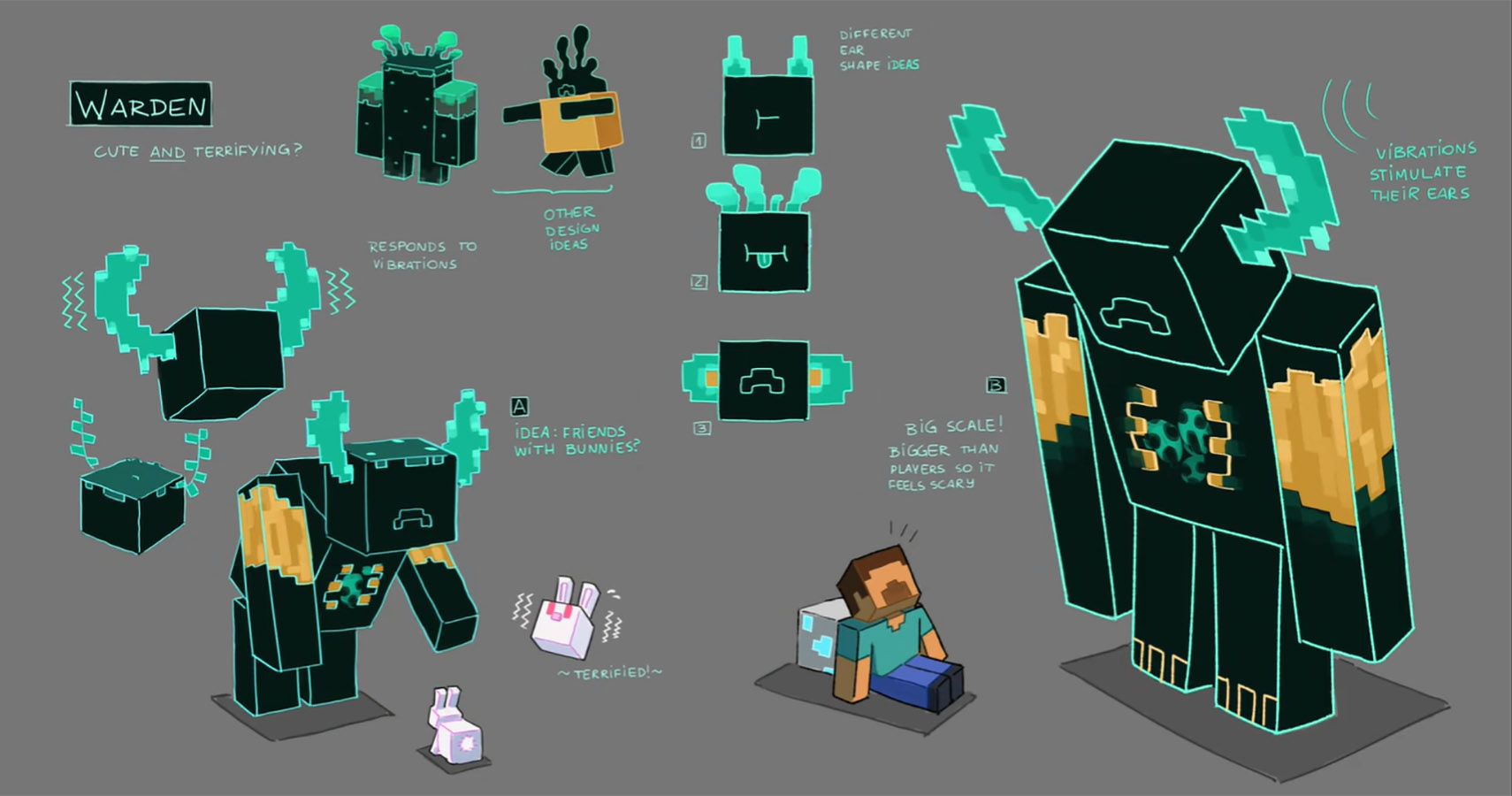
The Warden is not merely another hostile mob; it represents a significant shift in Minecraft’s environmental threat design. Introduced in The Wild Update (1.19), its purpose extends beyond simply attacking players to guarding the ancient cities and the sculk ecosystem. Understanding its drop requires first appreciating its role and the technical marvel behind its creation.
Introduction to the Warden’s Role and Environment
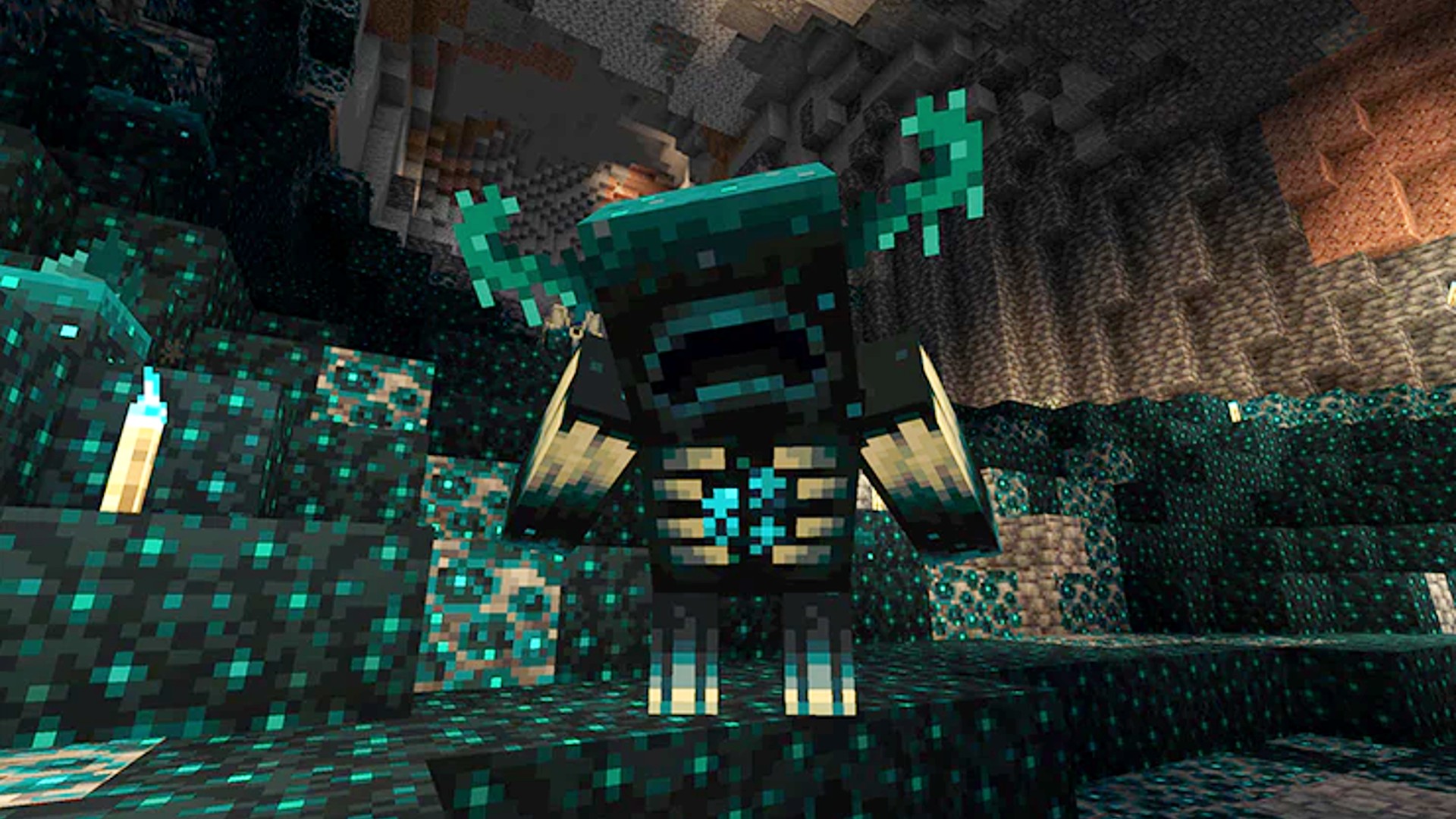
The Warden is exclusively found in the Deep Dark biome, a new subterranean area characterized by its eerie silence, profound darkness, and pervasive sculk blocks. These blocks—sculk sensors, sculk shriekers, and sculk catalysts—form a unique interconnected system. Sculk sensors detect vibrations, which can trigger sculk shriekers. Upon repeated shriek triggers, a Warden is summoned. This intricate chain reaction is a prime example of sophisticated in-game event scripting and environmental AI, where player actions directly dictate the emergence of a major threat. The Warden acts as a vigilant protector of this fragile, yet powerful, ecosystem, punishing those who make too much noise or linger too long. Its existence is a technical solution to make the Deep Dark a truly challenging and distinct area, requiring players to adapt their entire playstyle.
The Warden’s Unique Design Philosophy: Fear and Avoidance
From a game design perspective, the Warden was intentionally crafted to be unkillable in a conventional sense. While it can be defeated, the developers made it clear that confrontation is not the intended gameplay loop. This is reflected in its immense health pool (500 health points, equivalent to 250 hearts, making it the most durable mob in the game), its devastating attack power (enough to one-shot an unarmored player on normal difficulty), and its unique detection mechanics. Being blind, it relies entirely on sound and vibration, a technically impressive implementation of advanced mob AI. It can hear footsteps, item drops, projectile impacts, and even block placements/breaks. Its sonar-like ability to ‘sniff’ out players further enhances its predatory nature, creating an atmosphere of genuine dread. This design choice pushes players towards stealth mechanics, a less explored facet of Minecraft survival, highlighting a deliberate technical decision to diversify gameplay.
The Technical Implementation of Warden Spawning and Behavior
The Warden’s spawning mechanism is tied directly to the sculk shrieker’s activation state, a sophisticated event-driven system. Each shriek increases the player’s ‘darkness effect’ and summons the Warden after four shrieks (with certain cooldowns and conditions). This probabilistic summoning, coupled with the darkness effect that severely limits visibility, creates a dynamic and unpredictable encounter. Its AI includes complex pathfinding around obstacles, the ability to tunnel through certain blocks, and a persistent tracking system using sound cues. These elements require robust algorithms for real-time environmental analysis, player state monitoring, and mob decision-making, showcasing advanced programming within the game engine. The implementation of its sonic ‘sniffing’ and vibration detection also represents a complex auditory processing system for an in-game entity, setting a new benchmark for mob intelligence in Minecraft.
Unraveling the Warden’s Drop Table: A Singular Reward
Given the Warden’s formidable nature and the extreme risk involved in confronting it, players often speculate about a grand reward. However, the reality is far more nuanced and aligns perfectly with its avoidance-centric design. The Warden drops precisely one item, and it is singular in its purpose and significance.
The Sculk Catalyst: Core of the Deep Dark’s Ecosystem
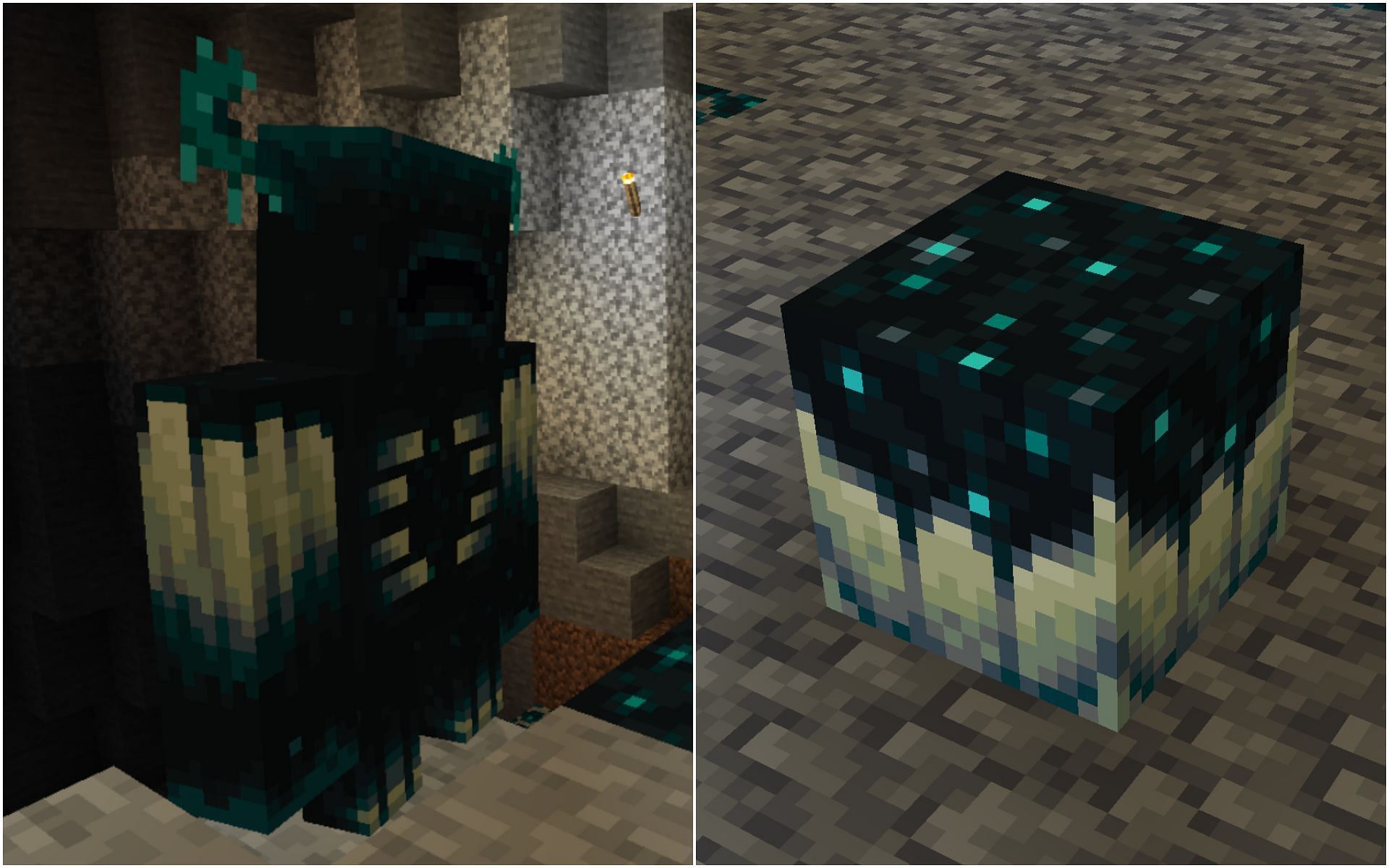
Upon defeating a Warden, it will drop exactly one Sculk Catalyst. This is the sole item players can obtain directly from this colossal entity. Unlike other boss-like mobs that drop powerful weapons, rare resources, or unique armor, the Sculk Catalyst serves a foundational purpose within the sculk biome itself. It is not a direct upgrade to player combat capabilities or resource gathering efficiency in the traditional sense, but rather a tool for environmental manipulation and resource generation of a different kind. This deliberate choice by the developers reinforces the idea that the Warden is not a resource farm but a guardian, and its ‘reward’ is tied to the very ecosystem it protects.
How the Sculk Catalyst Functions: Spreading the Biome
The Sculk Catalyst is an extremely unique block. When placed in the world, it actively spreads sculk blocks around it. This process is triggered when a mob dies within an 8-block radius of the catalyst. Instead of dropping its usual experience points, the dead mob’s experience is ‘absorbed’ by the Sculk Catalyst, causing sculk blocks (sculk, sculk sensors, sculk shriekers, and sculk veins) to generate on adjacent blocks. The amount of sculk generated is directly proportional to the experience points the mob would have dropped. This mechanism allows players to convert mob farms into sculk farms, effectively replicating and expanding the Deep Dark biome outside of its natural generation. This technical feature showcases dynamic world manipulation based on player-initiated events, offering unprecedented control over biome aesthetics and resource farming.
Technical Implications for Game Progression and World Generation
The Sculk Catalyst’s ability to spread sculk has profound technical implications. Firstly, it allows for ‘portable biome generation,’ where players can intentionally create sculk-infested areas anywhere in their world. This challenges traditional world generation which is static after initial creation. Secondly, it introduces a novel form of experience point conversion. Instead of directly gaining XP for enchanting or repairing, players can ‘invest’ XP into sculk growth. This adds another layer to resource management and player choice, where the trade-off between immediate XP gain and future sculk resource generation becomes a strategic decision. Technically, this requires real-time calculation of mob experience values, dynamic block placement, and a complex propagation algorithm to determine where and what type of sculk blocks are generated, integrating seamlessly into Minecraft’s chunk loading and block update systems.
Strategic Value and Gameplay Impact of the Sculk Catalyst
While not a traditional piece of loot, the Sculk Catalyst offers significant strategic advantages, particularly for players interested in advanced base design, automation, and unique resource acquisition. Its true value lies in its utility within broader technical systems.
Leveraging Sculk Catalysts for Resource Generation
The primary strategic use of the Sculk Catalyst is to create automated sculk farms. By combining a mob farm with a Sculk Catalyst, players can generate vast quantities of sculk blocks. Sculk sensors, for instance, are invaluable for advanced Redstone contraptions due to their ability to detect vibrations and emit Redstone signals. Sculk shriekers, though typically avoided, can also be utilized creatively for specific Redstone applications or even for intentionally summoning Wardens in controlled environments for repeat catalyst farming (though extremely risky). This transforms a mob drop into a cornerstone for an entirely new category of automated resource production, pushing the boundaries of what players can build and automate in Minecraft. It demonstrates a sophisticated game design decision where a ‘drop’ enables a meta-game of resource generation rather than being an end in itself.
Redstone Potential and Automation with Sculk Blocks
The sculk blocks generated by the catalyst, especially sculk sensors, are game-changers for Redstone engineers. Sculk sensors are wirelessly activated by a wide range of vibrations (walking, placing blocks, opening chests, etc.) and can transmit Redstone signals over short distances. This opens up possibilities for highly sensitive and complex automation systems, security systems, and responsive contraptions that were previously impossible or required much more elaborate designs. The ability to farm these sensors via the catalyst means that these advanced Redstone components are now reproducibly obtainable, fostering greater innovation in technical Minecraft builds. This integration of a mob drop into the core mechanics of Redstone represents a deep understanding of player ingenuity and a commitment to expanding the game’s technical capabilities.
Community Strategies and Advanced Game Mechanics
The introduction of the Sculk Catalyst has spurred incredible creativity within the Minecraft technical community. Players have developed intricate Warden farms, albeit incredibly dangerous ones, to consistently acquire catalysts. They’ve also engineered highly efficient sculk farms that maximize mob spawning and death rates around catalysts to generate sculk blocks at an unprecedented pace. These community-driven innovations demonstrate how a single, seemingly underwhelming mob drop can inspire complex, multi-layered technical solutions and strategies, proving the catalyst’s profound impact on advanced gameplay and pushing the boundaries of what the game’s engine can support in terms of complex interactions and automation.
The Philosophy Behind Minimal Drops: A Developer’s Perspective
The decision to give the Warden a single, non-combat-oriented drop is a deliberate and insightful one, reflecting a specific design philosophy aimed at enhancing the player experience through unique challenges.
Balancing Risk vs. Reward: Reinforcing the Avoidance Mechanic
From a technical game design standpoint, the minimal drop reinforces the Warden’s core design as an entity to be avoided, not farmed. If the Warden dropped extremely powerful gear or essential resources, players would inevitably devise efficient (and likely exploitative) methods to farm it, undermining the intended fear and avoidance mechanics. By offering a utility block that requires significant setup to yield benefits, the developers maintain the Warden’s status as a formidable environmental threat rather than just another loot source. This delicate balance of risk versus reward ensures that confronting the Warden remains a high-stakes decision, consistent with its lore and design intent.
The Role of Unique Drops in Game Economy and Player Motivation
The Sculk Catalyst also plays a unique role in Minecraft’s broader “game economy” and player motivation. Instead of providing instant gratification, it offers a pathway to long-term resource generation and advanced technical projects. This encourages a different type of player engagement—one focused on planning, infrastructure building, and understanding complex game mechanics. It shifts the motivation from immediate combat prowess to strategic resource management and creative engineering, broadening the appeal of the game to different playstyles and fostering a more diverse technical community.
Future Implications and Potential Updates
The existence of a block like the Sculk Catalyst suggests Mojang’s willingness to experiment with environmental manipulation and dynamic biome expansion. Future updates could potentially introduce more items with similar functions, allowing players to influence world generation and resource distribution in novel ways. Technically, this lays groundwork for more sophisticated in-game systems that interact with and modify the world based on player actions, opening doors for even more complex and player-driven environmental mechanics. The Warden’s drop is not just about its utility now, but a potential indicator of future game design directions.
Beyond the Drops: The Warden’s Broader Contribution to Minecraft’s Tech Landscape
While the Sculk Catalyst is its only drop, the Warden itself, as a technical achievement, contributes significantly to Minecraft’s evolving tech landscape in several other ways.
Enhancing Immersion Through Audio-Visual Design
The Warden’s design is a masterclass in using audio and visual cues to create immersion and instill fear. Its unique “sniffing” sound, deep thumping footsteps, chest heart animation, and the “darkness” effect are all meticulously crafted technical elements. The dynamic audio system, which accurately portrays the Warden’s position relative to the player using spatial audio, is crucial for its blind tracking mechanics. Visually, the darkness effect isn’t just a simple shader; it actively obscures vision, forcing players to rely on other senses, enhancing the survival horror aspect. These elements together demonstrate advanced technical integration of sound and graphics to serve a core gameplay loop.
Pushing the Boundaries of Mob AI and Detection Systems
The Warden’s AI is arguably one of the most sophisticated in Minecraft. Its reliance on vibrations, its ability to remember a player’s last known location, its “rage” mechanic (where it gets stronger the more it’s attacked), and its strategic tunneling demonstrate a level of complexity far beyond that of a typical zombie or skeleton. This pushes the boundaries of mob intelligence in the game, requiring advanced algorithms for sensory input processing, decision-making trees, and dynamic environmental interaction. It sets a new standard for intelligent adversaries within the blocky world, showcasing Mojang’s continuous innovation in game AI.
Impact on Modding and Custom Content Creation
The Warden’s unique mechanics and the sculk block system provide a rich new canvas for modders and custom content creators. The intricate interplay of sculk sensors, shriekers, and catalysts, coupled with the Warden’s AI, offers numerous hooks for creating new game modes, challenging maps, or custom mobs that interact with these systems. Modders can learn from and build upon these sophisticated mechanics to introduce their own complex environmental threats or utility blocks, further expanding Minecraft’s already vast custom content ecosystem. Technically, the modularity and well-defined interactions of these new features make them ideal for extension and modification by the community.
In conclusion, the answer to “what does the Warden drop in Minecraft” is not just the Sculk Catalyst, but a testament to sophisticated game design, advanced AI, and a commitment to expanding the technical possibilities within the game. The Warden is a multi-faceted contribution to Minecraft’s technological evolution, pushing the envelope for immersive gameplay, intricate mob behavior, and player-driven world modification. Its singular drop, far from being disappointing, serves as a catalyst (pun intended) for a new era of strategic building, automation, and environmental interaction within the game.
aViewFromTheCave is a participant in the Amazon Services LLC Associates Program, an affiliate advertising program designed to provide a means for sites to earn advertising fees by advertising and linking to Amazon.com. Amazon, the Amazon logo, AmazonSupply, and the AmazonSupply logo are trademarks of Amazon.com, Inc. or its affiliates. As an Amazon Associate we earn affiliate commissions from qualifying purchases.