
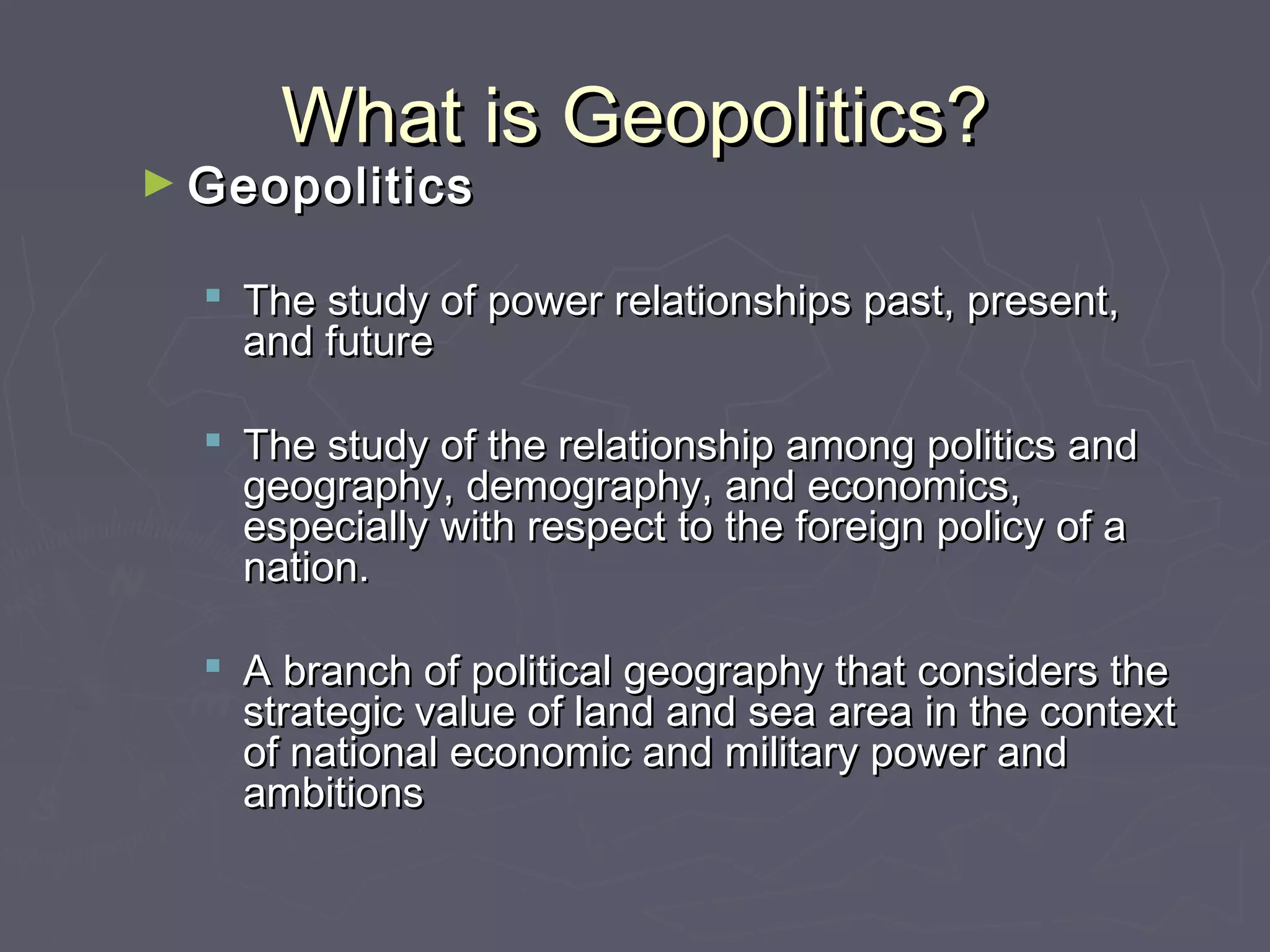
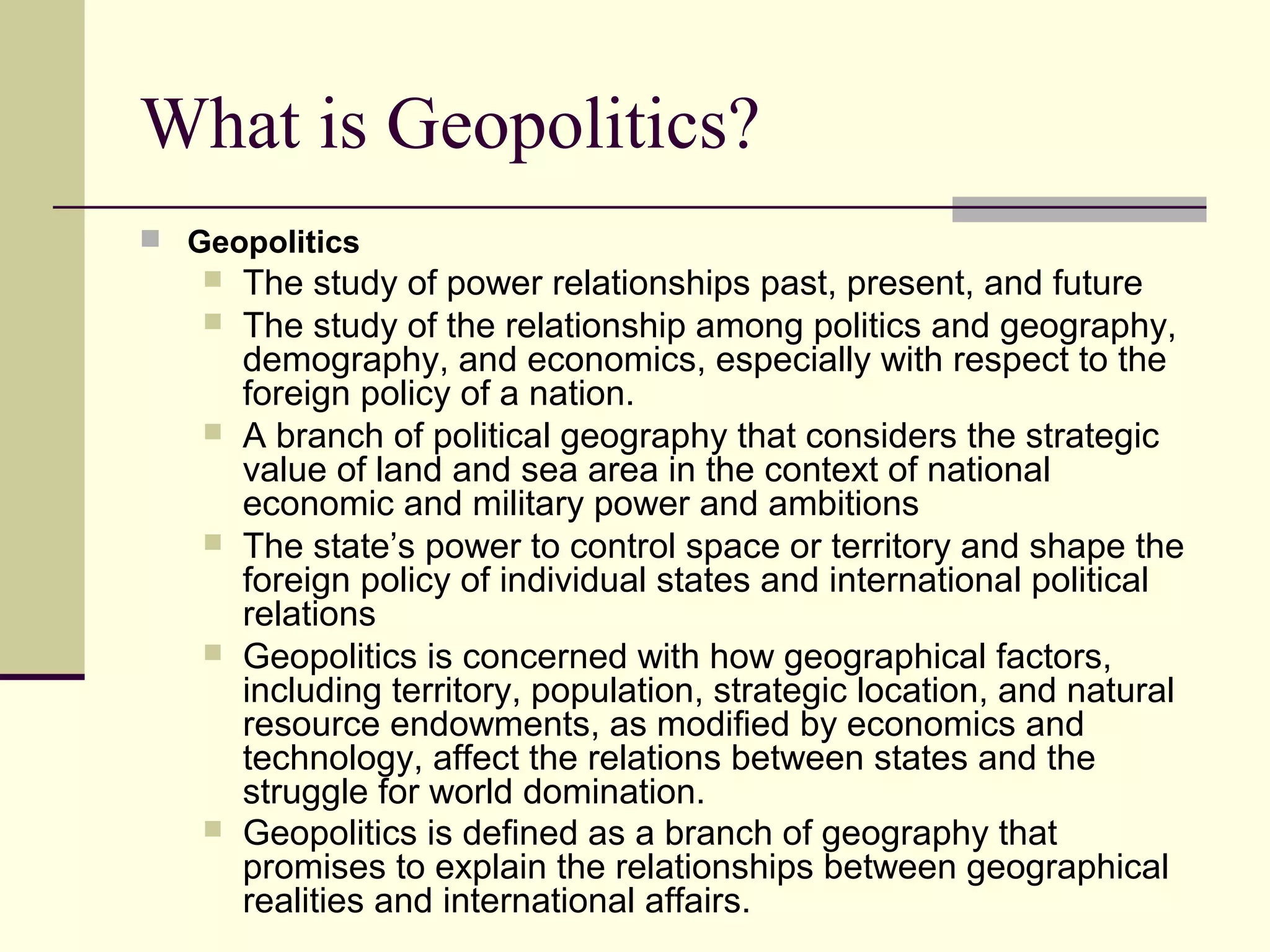
In the world of finance, few terms carry as much weight—or as much ambiguity—as “geopolitics.” When investors ask, “What does geopolitical mean?” they are rarely looking for a simple dictionary definition of geography and international relations. Instead, they are asking a fundamental question about the safety, growth, and volatility of their capital. In a financial context, geopolitics is the study of how the struggle for power, resources, and influence between nations dictates the flow of money across the globe.
Understanding the “geopolitical” landscape is no longer a niche requirement for diplomats; it is a core competency for anyone involved in personal finance, corporate strategy, or institutional investing. From the price of a gallon of gas to the valuation of Silicon Valley tech giants, the invisible hand of geopolitics is constantly at work, shifting the boundaries of what constitutes a “safe” investment.
Defining Geopolitics in a Financial Context
To understand geopolitics from a monetary perspective, one must look beyond the map. While geography provides the stage, the actors are sovereign states, and the script is written in the language of economic interest. In the financial world, geopolitics represents the intersection of geographic reality and political will, and how that intersection creates both risk and opportunity.
The Intersection of Geography, Power, and Capital
At its core, geopolitics refers to how a country’s location and natural resources influence its political and economic decisions. For a “Money” focused professional, this translates directly into supply chain stability and resource security. For example, a nation’s proximity to a major shipping lane, such as the Strait of Hormuz or the Malacca Strait, makes it a critical node in global trade. If political tensions rise in these areas, the “geopolitical risk” increases, leading to a spike in insurance premiums for shipping, higher costs for raw materials, and ultimately, a dip in the stock prices of companies reliant on those routes.
From Macroeconomics to Geopolitical Risk
While macroeconomics deals with interest rates, inflation, and unemployment, geopolitics introduces “exogenous shocks”—unpredictable events that originate outside the traditional economic cycle. A sudden trade embargo, a regional conflict, or a shift in a superpower’s foreign policy can render traditional economic models obsolete overnight. In the financial sector, “geopolitical risk” is often quantified through risk premiums. This is the extra return investors demand to compensate for the uncertainty of doing business in a politically volatile region. Understanding what is geopolitical means recognizing that “stable” markets are often just markets where the geopolitical tensions are currently dormant.
How Geopolitical Events Reshape Investment Landscapes
The global market is a highly sensitive organism that reacts instantaneously to shifts in international relations. When we speak of geopolitical influence on money, we are usually discussing three primary channels: energy, supply chains, and currency.
The Energy Market and Resource Nationalism
Perhaps no sector is more “geopolitical” than energy. Oil, natural gas, and now the minerals required for the green energy transition (like lithium and cobalt) are unevenly distributed across the globe. This creates a power imbalance where nations with high resource density can use their exports as diplomatic leverage.
When geopolitical tensions rise—such as the conflict between Russia and Ukraine or instability in the Middle East—global energy prices react violently. For the individual investor, this means that a portfolio’s performance may have less to do with a company’s earnings report and more to do with a pipeline decision thousands of miles away. “Resource nationalism,” where countries seize control of their natural assets to gain political advantage, remains one of the most significant geopolitical threats to international capital.
Supply Chain Fragility and Inflationary Pressures
The era of “hyper-globalization” was built on the assumption that geopolitical peace would last forever. This led to the creation of “just-in-time” supply chains that prioritized efficiency over security. However, recent geopolitical shifts—specifically the growing rivalry between the United States and China—have exposed the fragility of this model.
When two major economies enter a “decoupling” phase, it creates massive financial friction. Tariffs, export controls, and “blacklisting” of certain firms create inflationary pressures. For a business, this means higher operational costs; for a consumer, it means more expensive goods. Geopolitics, in this sense, acts as a hidden tax on global consumption.
Currency Volatility and the Role of the US Dollar
Geopolitics also dictates the “pecking order” of global currencies. The US Dollar has long served as the world’s reserve currency, a status derived from the United States’ geopolitical dominance and military strength. This provides the US with an “exorbitant privilege,” allowing it to borrow more cheaply than other nations.
However, as the world moves toward a more multipolar structure, we see the rise of “de-dollarization” efforts. Countries like China, Russia, and India are increasingly looking to settle trades in their own currencies. For a financial strategist, tracking these geopolitical shifts is essential for managing currency risk and understanding the long-term outlook for inflation and interest rates.
Navigating Geopolitical Risk in Personal and Corporate Finance
Given the volatility inherent in world events, how can one protect their financial interests? Navigating geopolitics requires a transition from a growth-only mindset to a risk-mitigation mindset.
Diversification as a Defense Strategy
The oldest rule in finance—diversification—takes on a new meaning in a geopolitical context. It is no longer enough to diversify across sectors (tech, healthcare, energy); one must also diversify across jurisdictions. Holding assets in different countries helps protect a portfolio against “country-specific risk.” If an investor is overly concentrated in a single market that suddenly faces international sanctions or internal upheaval, the financial damage can be catastrophic. Geopolitical awareness encourages investors to look at “frontier markets” and “emerging markets” through a lens of political stability, not just potential GDP growth.
Hedging Against Political Instability
For sophisticated investors and corporations, hedging is a primary tool for managing geopolitical mean. This involves using financial instruments like options, futures, and “safe-haven” assets to offset potential losses. Gold has historically been the ultimate geopolitical hedge. When the “geopolitical temperature” rises, capital tends to flee “risk-on” assets (like stocks) and seek refuge in “risk-off” assets (like gold or US Treasury bonds). Understanding these flows allows a person to position their money before the volatility hits the mainstream.
The Rise of “Friend-Shoring” and its Financial Implications
A new term has emerged in the geopolitical-financial lexicon: “Friend-shoring.” This is the practice of refocusing supply chains and investments toward countries that share similar political values and strategic interests. For a corporation, this might mean moving manufacturing from a geopolitical rival to a geopolitical ally. While this is often more expensive than the “offshoring” of the 1990s, it provides a “geopolitical insurance policy.” Investors are increasingly looking for companies that have “derisked” their operations by adopting these friend-shoring strategies.
The Future of Global Finance in a Multipolar World
As we look toward the middle of the 21st century, the definition of geopolitical is shifting again. We are moving away from a world dominated by a single superpower toward a “multipolar” world where several regions compete for economic and political dominance.
Emerging Markets and the Shift in Economic Power
The financial center of gravity is slowly shifting toward the East and the South. The growth of the BRICS nations (Brazil, Russia, India, China, and South Africa) and their expansion represents a massive geopolitical shift. For anyone interested in “Money,” this means that the investment opportunities of the next thirty years will likely look very different from those of the last thirty. Capturing this growth requires an understanding of the unique geopolitical nuances of these regions—from India’s demographic dividend to Southeast Asia’s manufacturing boom.

Digital Currencies and the Decentralization of Geopolitical Influence
Finally, technology is beginning to impact the geopolitical landscape of finance. The rise of Central Bank Digital Currencies (CBDCs) and even decentralized cryptocurrencies represents an attempt to bypass the traditional, geopolitically-controlled financial system (like the SWIFT network). If a nation can conduct trade outside the reach of another nation’s sanctions, the very nature of geopolitical leverage changes. This digital frontier will be one of the most important battlegrounds for global influence in the coming decade.
In conclusion, “what geopolitical mean” is a question of how power affects your pocketbook. It is the recognition that the world of money does not exist in a vacuum. It is influenced by borders, influenced by resources, and driven by the shifting alliances of nations. By integrating geopolitical analysis into financial planning, investors and businesses can move beyond reacting to the news and start anticipating the trends that will define the future of global wealth. Professionalism in finance today requires not just an eye for a balance sheet, but an eye on the world map.
aViewFromTheCave is a participant in the Amazon Services LLC Associates Program, an affiliate advertising program designed to provide a means for sites to earn advertising fees by advertising and linking to Amazon.com. Amazon, the Amazon logo, AmazonSupply, and the AmazonSupply logo are trademarks of Amazon.com, Inc. or its affiliates. As an Amazon Associate we earn affiliate commissions from qualifying purchases.