
The landscape of interactive entertainment has undergone a seismic shift over the last decade. We have moved from physical discs to digital downloads, and now, we are entering the era of pure streaming. At the forefront of this transition is NVIDIA GeForce NOW, a sophisticated cloud gaming service that challenges the traditional necessity of high-end local hardware. Unlike a traditional gaming PC or console, GeForce NOW shifts the heavy lifting of graphical processing from your desk to a remote data center, delivering high-fidelity gaming to almost any device with an internet connection.
In this comprehensive guide, we will explore the underlying technology of GeForce NOW, its unique position in the software market, and how it is redefining the way we perceive hardware limitations in the digital age.
1. The Technology Behind the Stream: How GeForce NOW Works
At its core, GeForce NOW is a “PC in the cloud.” To understand why it is a leader in the tech space, one must understand the infrastructure that powers it. While competitors often use customized console hardware, NVIDIA leverages its industry-leading graphics processing units (GPUs) to provide a true PC-level experience.
The Power of the Remote Data Center
When you launch a game on GeForce NOW, you aren’t running code on your local processor. Instead, a high-end NVIDIA server—often equipped with the equivalent of an RTX 4080—executes the game. The server captures the visual output, encodes it into a video stream, and sends it over the internet to your device. Conversely, your keyboard, mouse, or controller inputs are sent back to the server with millisecond precision. This “input-to-action” loop is the most critical technical hurdle in cloud gaming, and NVIDIA has optimized it through proprietary congestion control and frame-pacing technologies.
Network Requirements and Latency Management
For cloud gaming to be viable, the network must be robust. GeForce NOW requires a minimum of 15 Mbps for 720p at 60 FPS, and up to 45 Mbps for 4K streaming at 120 FPS. However, raw speed is less important than latency (ping). NVIDIA utilizes a global network of data centers to ensure that users are physically close to the hardware. By using advanced video codecs like H.265 and AV1, the service manages to compress high-resolution data without significant “macroblocking” or visual artifacts, maintaining a level of clarity that was previously thought impossible for streaming.
Device Versatility and Cross-Platform Integration
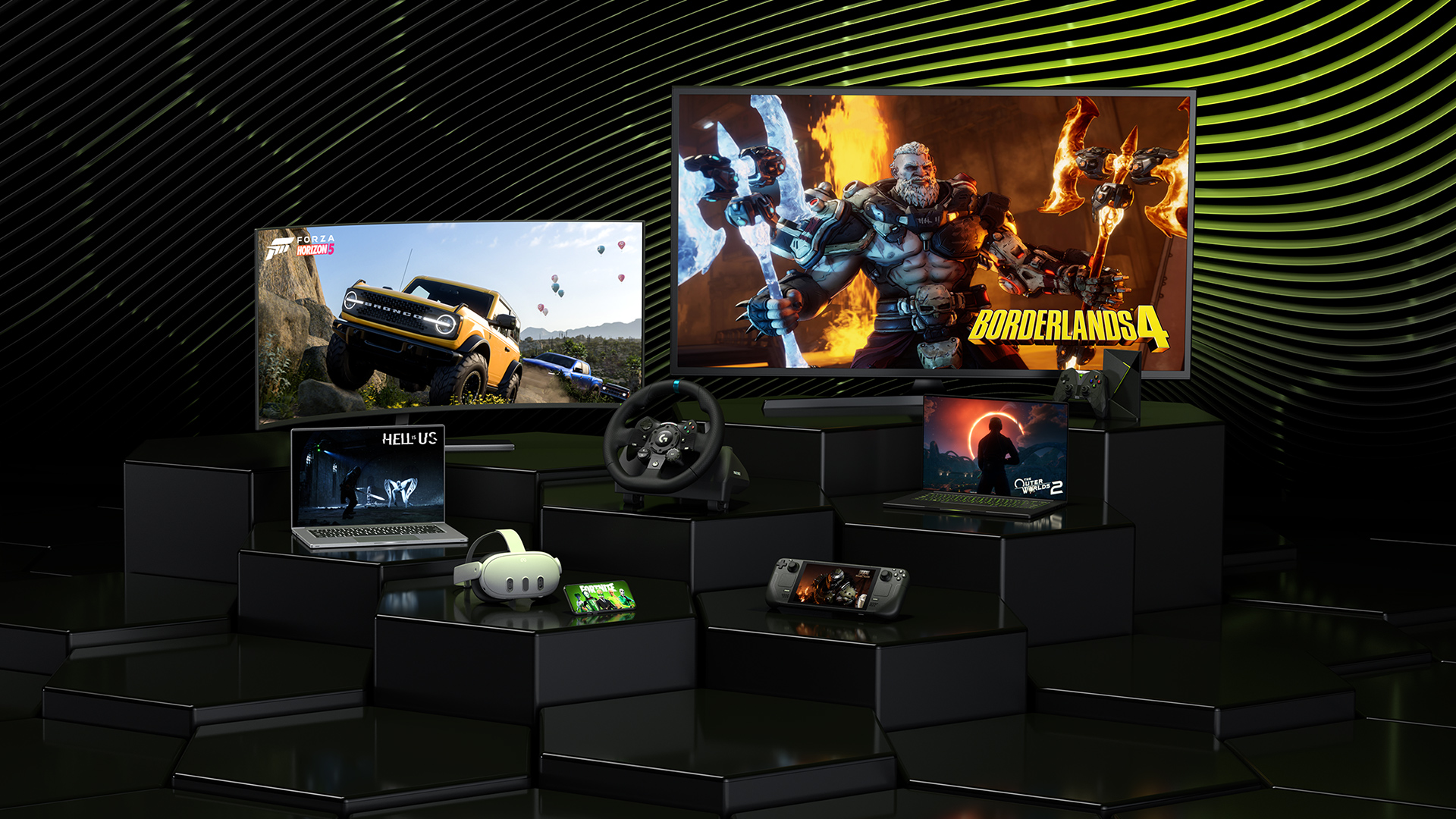
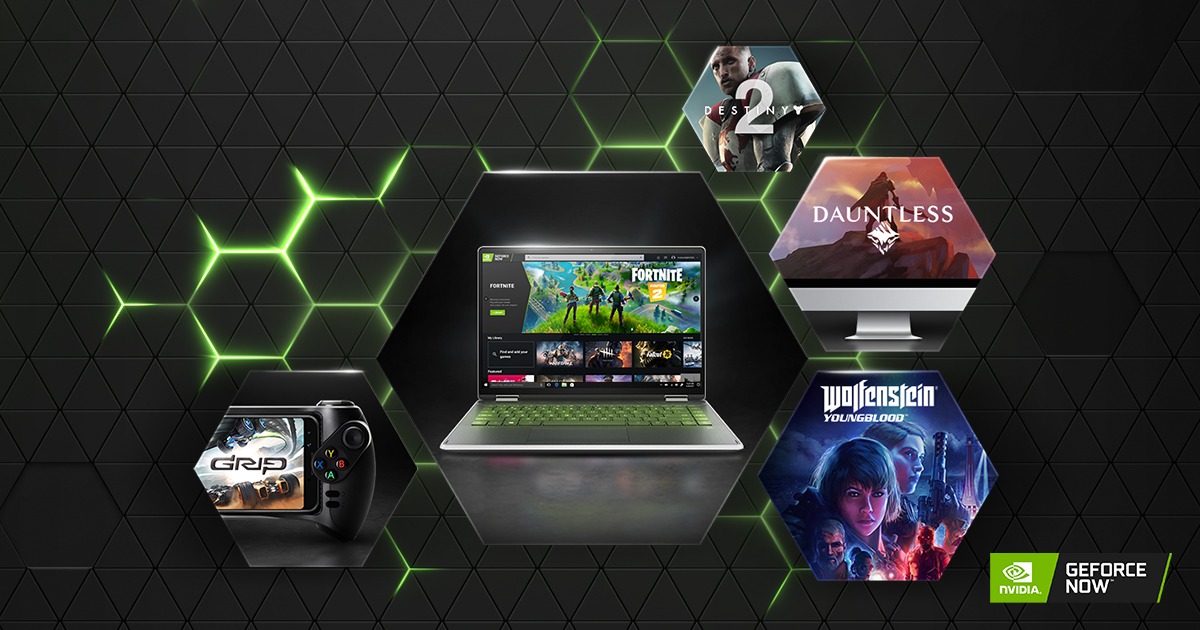
One of the most impressive tech feats of GeForce NOW is its platform-agnostic nature. Because the heavy processing happens remotely, the “client” device only needs to be capable of decoding video. This allows high-end AAA titles like Cyberpunk 2077 or Alan Wake 2 to run on low-powered Chromebooks, aging MacBooks, Android smartphones, and even smart TVs via integrated apps. This democratization of hardware is a significant trend in modern software, where the barrier to entry is no longer a $2,000 rig, but rather the quality of one’s digital infrastructure.
2. The “Bring Your Own Games” Ecosystem
Unlike Netflix or Xbox Game Pass, which operate on a subscription-based library model where you lose access to games if they leave the service, GeForce NOW follows a “Bring Your Own Games” (BYOG) philosophy. This distinction is crucial for gamers who value digital ownership and flexibility.
Integration with Digital Storefronts
GeForce NOW does not sell games. Instead, it connects to your existing libraries on Steam, the Epic Games Store, Ubisoft Connect, and GOG. This means that if you have spent years building a collection on Steam, you can simply log in and play those titles in the cloud. This interoperability ensures that your progress and achievements remain consistent across both local and cloud platforms, thanks to cloud-save synchronization.
The Growing Library and Publisher Support
While the BYOG model is a strength, it relies on publisher permission. NVIDIA must “opt-in” games to the service. Currently, the service supports over 1,800 titles, including massive free-to-play hits like Fortnite, Genshin Impact, and League of Legends. The recent inclusion of Microsoft’s PC Game Pass titles has further bolstered the library, making GeForce NOW a primary destination for those who want the performance of a high-end PC without the hardware maintenance.
Free vs. Premium Membership Tiers
NVIDIA offers a tiered system that reflects the technological capabilities of the user’s “virtual rig.”
- The Free Tier: Provides basic access to a standard gaming rig with one-hour session limits. This serves as a “proof of concept” for users to test their network.
- The Priority Tier: Offers “Premium Rigs” with RTX enabled, allowing for Ray Tracing and DLSS (Deep Learning Super Sampling), with 6-hour sessions and 1080p resolution.
- The Ultimate Tier: This is the pinnacle of cloud tech. Users get exclusive access to servers powered by RTX 4080-class GPUs, supporting up to 4K resolution at 120 FPS, or even 240 FPS in competitive modes. This tier also introduces G-SYNC technology in the cloud to reduce screen tearing.
3. Cutting-Edge Features: DLSS, Ray Tracing, and Reflex
GeForce NOW is not just about playing games; it’s about playing them at the highest possible fidelity. NVIDIA has ported its most advanced PC technologies to the cloud, ensuring that the visual experience rivals local hardware.
Ray Tracing in the Cloud
Ray Tracing is a computationally expensive rendering technique that simulates the physical behavior of light. In the past, this was only possible on expensive dedicated GPUs. GeForce NOW brings real-time shadows, reflections, and global illumination to devices that would otherwise melt trying to render them. By offloading these calculations to server-grade hardware, NVIDIA allows mobile and laptop users to experience the “cinematic” quality of modern gaming.
AI-Driven Performance with DLSS 3 and 3.5
Deep Learning Super Sampling (DLSS) is NVIDIA’s AI-powered feature that boosts frame rates by rendering at a lower resolution and upscaling using artificial intelligence. On GeForce NOW, particularly in the Ultimate tier, DLSS 3 (Frame Generation) and DLSS 3.5 (Ray Reconstruction) are game-changers. They allow the stream to remain fluid even when the network fluctuates, using AI to fill in the gaps and maintain a high-quality image without increasing the bandwidth load.
NVIDIA Reflex and Competitive Gaming
The biggest criticism of cloud gaming has always been “input lag”—the delay between pressing a button and seeing the action on screen. NVIDIA Reflex is a suite of technologies designed to optimize and measure system latency. In GeForce NOW, Reflex works to synchronize the game engine and the stream, reducing the “click-to-pixel” delay. In its 240Hz competitive mode, the service can actually achieve lower latency than many local 60Hz gaming setups, effectively silencing the argument that cloud gaming isn’t for competitive players.
4. The Future of Hardware Obsolescence
The rise of GeForce NOW signals a potential shift in the technology lifecycle. Traditionally, gaming hardware becomes obsolete every 3 to 5 years as software requirements increase. Cloud gaming offers a solution to this cycle of e-waste and expensive upgrades.
Decoupling Software from Physical Limits
As games become more demanding—utilizing AI, complex physics, and massive open worlds—the local hardware required to run them becomes more specialized. GeForce NOW essentially future-proofs the user. When NVIDIA upgrades its data centers from RTX 30-series to RTX 40-series (and eventually beyond), every subscriber gets an instant hardware upgrade without spending a dime on new components. This shift toward “Hardware as a Service” (HaaS) is a significant trend in the broader tech industry.
Sustainability and Energy Efficiency
There is also a growing conversation regarding the energy efficiency of centralized computing. High-end gaming PCs can pull upwards of 600–800 watts during intensive sessions. Data centers, while massive consumers of power, are often more efficient at a scale-per-user level. Furthermore, by extending the life of older laptops and tablets, GeForce NOW contributes to a reduction in the manufacturing demand for new consumer electronics, aligning with broader tech movements toward sustainability.
The Role of 5G and Wi-Fi 7
The future of GeForce NOW is intrinsically tied to the evolution of wireless technology. As 5G networks become more ubiquitous and Wi-Fi 7 begins to roll out with its lower latency and higher capacity, the “tether” to a physical ethernet cable will vanish. This will allow for true high-fidelity gaming on the go, transforming mobile devices from casual gaming machines into high-end workstations.

Conclusion
NVIDIA GeForce NOW is more than just a streaming service; it is a sophisticated manifestation of how cloud computing is dismantling the traditional barriers of the tech world. By combining the power of high-end RTX GPUs with advanced AI upscaling and low-latency networking, it offers a glimpse into a future where the device in your hand matters less than the connection it maintains.
Whether you are a professional gamer seeking 240 FPS performance or a casual user wanting to play the latest titles on an aging laptop, GeForce NOW provides a scalable, powerful, and technologically impressive solution. As the infrastructure of the internet continues to improve, the line between local and cloud computing will continue to blur, positioning NVIDIA at the very heart of the next digital frontier.
aViewFromTheCave is a participant in the Amazon Services LLC Associates Program, an affiliate advertising program designed to provide a means for sites to earn advertising fees by advertising and linking to Amazon.com. Amazon, the Amazon logo, AmazonSupply, and the AmazonSupply logo are trademarks of Amazon.com, Inc. or its affiliates. As an Amazon Associate we earn affiliate commissions from qualifying purchases.