
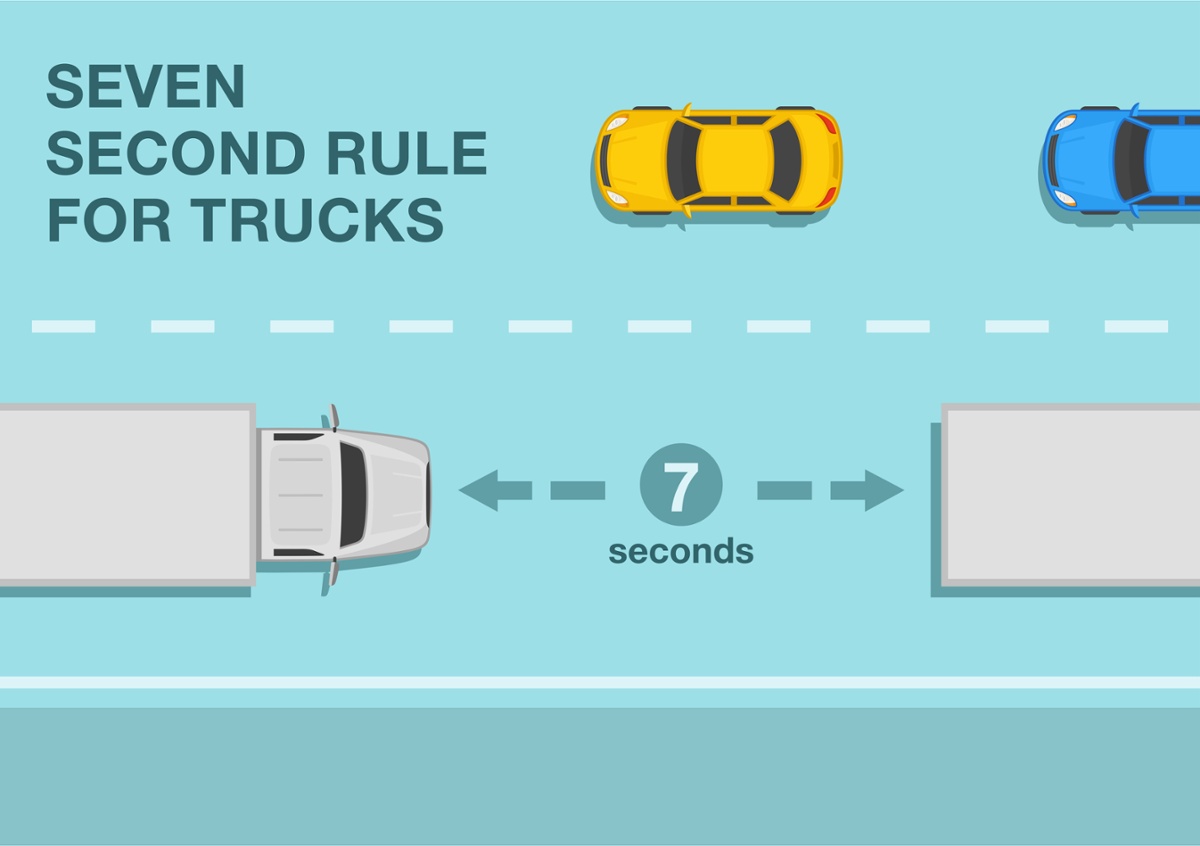
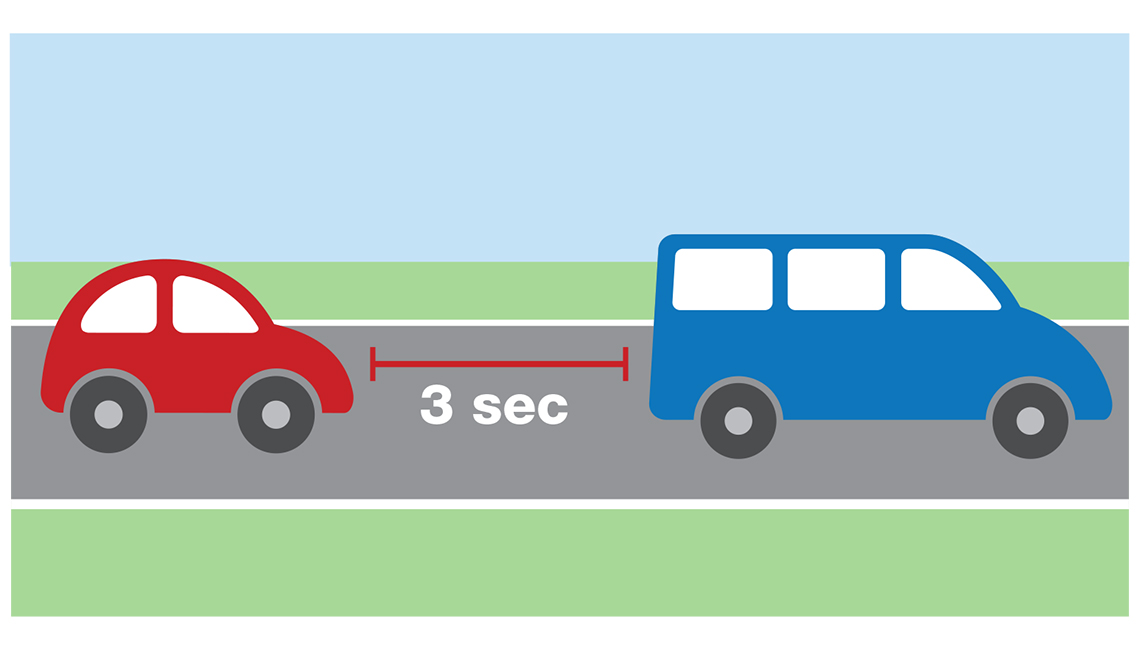
In the era of the manual internal combustion engine, “following distance” was a simple concept taught in driver’s education courses. It was the “three-second rule”—a mental calculation performed by a human driver to ensure a buffer of safety between their vehicle and the one ahead. However, as we transition into the age of Software-Defined Vehicles (SDVs), autonomous driving, and the Internet of Things (IoT), following distance has been redefined. It is no longer a subjective human estimation; it is a high-precision data point calculated in milliseconds by sophisticated neural networks and a suite of advanced sensors.

In the tech industry, following distance represents the pinnacle of real-time spatial computing. It involves a complex interplay between hardware capabilities, software latency, and predictive algorithms. Understanding following distance in this context requires a deep dive into how modern technology perceives the physical world and transforms it into actionable digital commands.
The Physics and Algorithms of Digital Proximity
At its core, the technological definition of following distance is the “Time to Collision” (TTC) metric processed by an onboard computer. Unlike a human who might be distracted or fatigued, an AI-driven system treats following distance as a dynamic variable that must be constantly optimized based on road conditions, tire friction, and vehicle weight.
Beyond the Three-Second Rule: The Role of Computer Vision
Modern vehicles utilize high-resolution cameras to interpret the visual field. Through a process called semantic segmentation, the vehicle’s software identifies objects—cars, trucks, cyclists, and pedestrians—and assigns them a bounding box. The following distance is calculated by analyzing the scale change of these bounding boxes over time. If the pixels representing the car in front expand rapidly, the computer vision system detects a reduction in distance and triggers a response. This process relies on “Optical Flow” algorithms, which track the motion of pixels between consecutive frames to estimate velocity and proximity with precision that far exceeds human capability.
Latency and Response Time in Autonomous Systems
In the tech world, distance is often a function of time. The “End-to-End Latency” of an Advanced Driver Assistance System (ADAS) is the time it takes for a sensor to capture data, for the processor to analyze it, and for the mechanical actuators to apply the brakes. A high-performance AI chip, such as those developed by NVIDIA or Tesla, must process these frames at 30 to 60 frames per second (FPS) to maintain a safe following distance. If the software stack experiences “jitter” or lag, the effective safe following distance must increase to compensate for the delayed digital response.
Sensor Fusion: The Hardware Behind the Distance
The most significant technological leap in maintaining following distance is “Sensor Fusion.” This is the process of combining data from multiple sensors to create a single, unified model of the environment. Because no single sensor is perfect, the tech industry relies on a redundant array of hardware to ensure that following distance is never miscalculated.
LiDAR vs. Radar: Mapping the Gap in Real-Time
The debate between LiDAR (Light Detection and Ranging) and Radar is central to how technology manages following distance. Radar has been the industry standard for decades; it uses radio waves to determine the distance and velocity of objects. It is excellent in bad weather, such as fog or heavy rain, but it lacks the high-resolution “shape” recognition of other sensors.
LiDAR, on the other hand, pulses millions of laser points per second to create a 3D “point cloud” of the surroundings. This allows the vehicle to know the following distance down to the centimeter. While companies like Waymo rely heavily on LiDAR for its precision, others argue that high-definition cameras combined with neural networks can achieve the same result at a lower cost. Regardless of the hardware choice, the objective remains the same: creating a high-fidelity digital map of the gap between vehicles.
Ultrasonic Sensors for Low-Speed Maneuvering
While LiDAR and Radar handle high-speed following distances on highways, ultrasonic sensors take over in “Stop-and-Go” traffic or parking scenarios. These sensors use high-frequency sound waves to detect objects in the immediate vicinity. In the context of modern tech, these sensors are integrated into “Traffic Jam Assist” features. This software allows a vehicle to follow the car in front at extremely close ranges—often just a few feet—with a level of granularity that prevents human-error fender benders in congested urban environments.
Adaptive Cruise Control (ACC) and the Logic of Space
The most practical application of following distance technology in consumer gadgets today is Adaptive Cruise Control (ACC). This is where software logic meets mechanical execution. ACC systems are governed by Control Theory, specifically Proportional-Integral-Derivative (PID) controllers or Model Predictive Control (MPC).
Dynamic Buffer Zones in Smart Infrastructure
In a technologically advanced ecosystem, following distance isn’t static. It is a “Dynamic Buffer Zone.” Smart cars adjust their distance based on GPS data and “crowdsourced” road friction reports. For example, if the vehicle’s cloud-connected software receives data that the road surface ahead is slippery due to ice, it automatically recalibrates the ACC to increase the following distance. This is a shift from reactive technology to proactive technology, where the car “knows” to increase its gap before the driver even sees the hazard.
Machine Learning and Predictive Following Behaviors
Modern ADAS platforms utilize Machine Learning (ML) to study human driving patterns. By analyzing millions of miles of driving data, these systems can predict when the vehicle in front is likely to decelerate. If the car in front shows “erratic” movement—tracked via telemetry data—the following vehicle’s AI may decide to categorize that driver as “high-risk” and increase the following distance as a precautionary measure. This represents a move toward “behavioral” tech, where the software isn’t just measuring distance, but assessing the quality of the objects it is following.
The Future of Connectivity: V2X and Zero-Latency Spacing
As we look toward the next decade of technology, the concept of following distance will undergo its most radical transformation yet through Vehicle-to-Everything (V2X) communication. This technology allows cars to “talk” to one another and to the infrastructure around them.
Vehicle-to-Vehicle (V2V) Communication
In a V2V-enabled environment, “following distance” as we know it may virtually disappear in favor of “platooning.” When two or more vehicles are digitally tethered via a high-speed 5G or 6G connection, the trailing vehicle receives acceleration and braking data from the lead vehicle instantly. Because the communication happens at the speed of light, the trailing vehicle can brake the exact millisecond the lead vehicle does. This “zero-latency” following allows for much smaller gaps between vehicles, which significantly improves aerodynamic efficiency and reduces traffic congestion.
Edge Computing and the Elimination of Human Error
The final frontier of following distance tech is the integration of Edge Computing. By processing data at the “edge” (the vehicle itself) rather than sending it to a centralized cloud server, the response time is minimized. When combined with smart city sensors—cameras mounted on traffic lights that broadcast the state of the intersection—the vehicle can adjust its following distance based on an upcoming red light that is still blocks away.
In this technological framework, following distance is no longer a safety margin for error; it is an optimized throughput variable. The goal of the tech industry is to move toward a “Vision Zero” future, where the precision of sensors and the speed of AI algorithms make collisions mathematically improbable.
Conclusion
What is following distance in the world of technology? It is the intersection of high-speed data processing, sensor accuracy, and predictive modeling. We have moved from the “three-second rule” to a world where 50 milliseconds of latency can be the difference between a successful autonomous maneuver and a system failure. As AI continues to evolve, our vehicles will not just follow the car in front; they will understand, predict, and communicate with it, turning the simple “gap” on the road into a highly sophisticated digital handshake. For the tech enthusiast and the professional engineer alike, following distance is the ultimate benchmark for the reliability of the autonomous future.
aViewFromTheCave is a participant in the Amazon Services LLC Associates Program, an affiliate advertising program designed to provide a means for sites to earn advertising fees by advertising and linking to Amazon.com. Amazon, the Amazon logo, AmazonSupply, and the AmazonSupply logo are trademarks of Amazon.com, Inc. or its affiliates. As an Amazon Associate we earn affiliate commissions from qualifying purchases.