
Flocculation is a cornerstone technology in the purification of water, a critical process that ensures the safety and potability of our most vital resource. Far from a simple filtering mechanism, it represents a sophisticated application of chemical and mechanical engineering principles designed to remove microscopic impurities that traditional filtration methods often miss. This fundamental process is indispensable across municipal water treatment plants, industrial wastewater management, and even certain environmental remediation efforts, underscoring its broad technological significance.
The Core Technological Process: Understanding Flocculation
At its heart, flocculation is the process by which small, suspended particles in water are caused to clump together into larger, heavier masses called “flocs,” which can then be more easily removed. This isn’t a spontaneous event; rather, it’s a carefully orchestrated sequence involving precise chemical introductions and controlled physical agitation, making it a prime example of applied chemical engineering.
From Coagulation to Floc Formation: The Precursor Stage
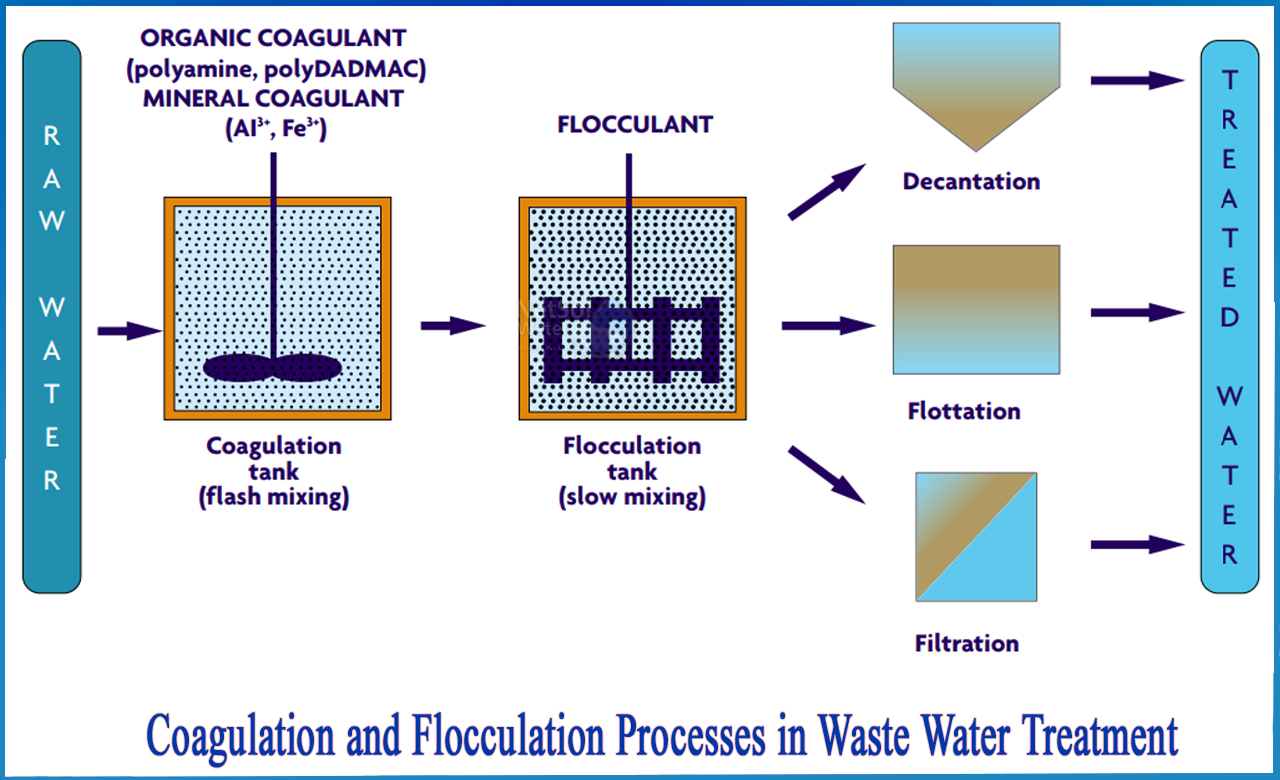
Before flocculation can occur, an initial step known as coagulation is almost always necessary. Raw water, whether from rivers, lakes, or groundwater sources, contains a multitude of suspended solids, ranging from clay and silt to organic matter and microorganisms. These particles are often extremely small, typically less than 1 micrometer, and carry a net negative electrical charge. Because like charges repel, these particles naturally resist coming together, remaining dispersed and stable in the water column.
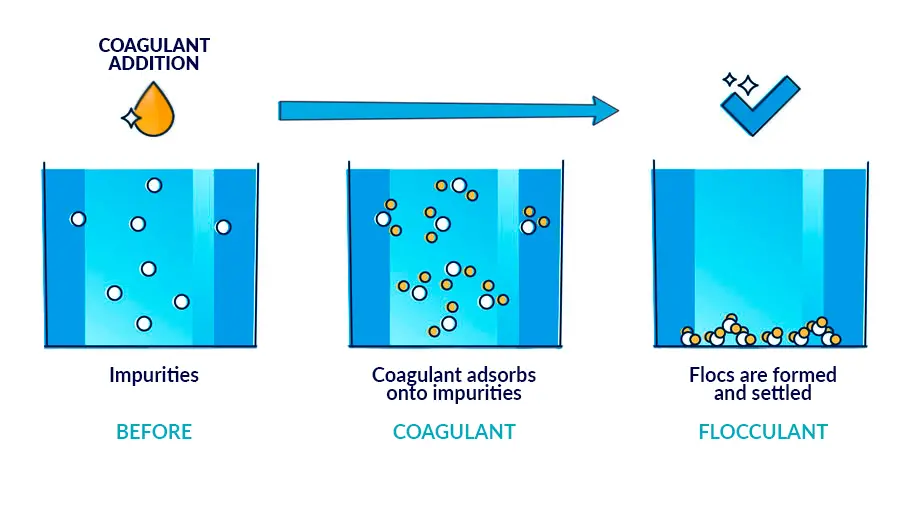
Coagulation technology addresses this challenge. It involves the rapid mixing of a chemical coagulant into the water. Common coagulants include aluminum sulfate (alum), ferric chloride, polyaluminum chloride (PAC), and various synthetic polymers. These chemicals introduce positively charged ions that neutralize the negative surface charges of the suspended particles. This neutralization destabilizes the particles, effectively eliminating their repulsive forces. Once destabilized, the particles are no longer able to resist collision and can begin to stick together. This initial, rapid aggregation of tiny, destabilized particles is the essence of coagulation, setting the stage for the subsequent flocculation process.
The Role of Mixing and Agitation: Mechanical Engineering in Action
Following coagulation, the water enters a flocculation basin, where mechanical energy is carefully applied to encourage the growth of flocs. This is where the physical technology of mixing becomes paramount. The goal is to provide gentle, prolonged agitation – typically through slow-moving paddles, turbines, or baffled channels – that facilitates particle collisions without tearing apart the fragile flocs that are beginning to form.
The design of flocculation basins and the speed of the mixers are critical parameters that directly impact the efficiency of the process. Too little mixing, and particles won’t collide frequently enough to form large flocs. Too much mixing, and the shear forces can break apart newly formed flocs, preventing them from growing to an optimal size. Modern water treatment facilities utilize sophisticated computational fluid dynamics (CFD) modeling to design and optimize these mixing regimes, ensuring uniform energy dissipation and maximizing floc growth while minimizing floc shear. This engineering ensures a balance between sufficient contact opportunities and the structural integrity of the burgeoning flocs. The ideal floc size is large enough to settle rapidly but not so large that it entraps excessive amounts of water or becomes overly fragile.
Key Chemical Flocculants and Their Mechanisms
While coagulants destabilize particles, true flocculants, often polymeric compounds, play a crucial role in binding these destabilized particles together. These polymers, which can be natural (e.g., starch-based) or synthetic (e.g., polyacrylamides), have long molecular chains with charged sites. They function through two primary mechanisms:
- Bridging: The polymer chains adsorb onto the surface of multiple individual particles, effectively “bridging” them together into larger aggregates. This mechanism is particularly effective with higher molecular weight polymers.
- Charge Patching: For some polymers, particularly cationic ones, they create “patches” of positive charge on the surface of negatively charged particles. These positive patches can then attract and bind with negatively charged areas of other particles, leading to aggregation.
The selection of the appropriate flocculant, its concentration, and the optimal pH range are crucial technical decisions, often determined through pilot testing and real-time monitoring of water quality. Overdosing can lead to issues such as polymer carryover into treated water, while underdosing results in poor floc formation and inefficient particle removal. This precise chemical control is a hallmark of the advanced engineering behind modern water treatment.
Applications and Significance in Modern Water Systems
Flocculation isn’t just a theoretical concept; it’s a practical, indispensable technology with profound implications for public health, environmental protection, and industrial operations worldwide. Its versatility and effectiveness make it a core component of diverse water treatment trains.
Municipal Water Treatment Plants: Guardians of Public Health
In urban and rural water supply systems, flocculation is a non-negotiable step in producing safe drinking water. After raw water undergoes preliminary screening and often pre-oxidation, it enters the coagulation-flocculation process. This step is critical for removing turbidity (cloudiness caused by suspended particles), color, algae, bacteria, viruses, and a significant portion of dissolved organic carbon. By effectively removing these impurities, flocculation not only makes the water aesthetically pleasing but also significantly reduces the microbial load, thereby preventing waterborne diseases. Furthermore, the removal of organic matter at this stage is crucial for reducing the formation of harmful disinfection byproducts when chlorine is later applied. The scale and automation of these municipal plants highlight advanced engineering in environmental protection.
Industrial Wastewater Management: Compliance and Resource Recovery
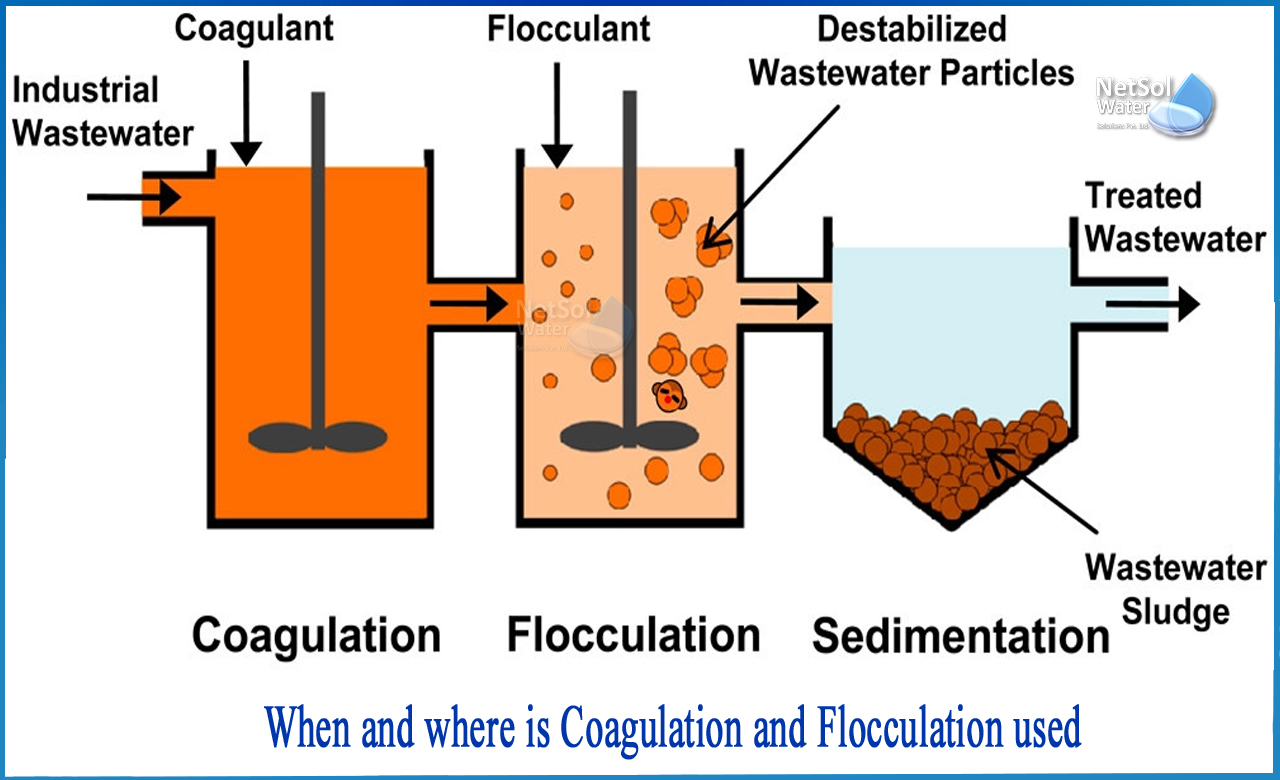
Industries, from manufacturing and mining to food processing and pharmaceuticals, generate vast quantities of wastewater containing a wide array of pollutants, including heavy metals, oils, greases, dyes, and fine suspended solids. Flocculation technology is extensively employed in industrial wastewater treatment to meet stringent discharge regulations and, increasingly, for resource recovery. For instance, in the mining industry, flocculation is used to clarify process water for reuse and to dewater tailings. In food processing, it helps remove organic matter and fats before discharge. The selection of flocculants in industrial settings is often more complex, requiring specialized polymers tailored to specific contaminants and pH conditions, demonstrating the adaptability and precision of this technological approach.
Environmental Impact and Public Health
Beyond direct water supply, the effectiveness of flocculation technology has broader environmental implications. By cleaning wastewater before discharge, it protects aquatic ecosystems from harmful pollutants. In cases of accidental spills or environmental contamination, mobile flocculation units can be deployed as part of remediation efforts. Ultimately, by providing a reliable and robust method for removing contaminants, flocculation is a silent hero in safeguarding public health and maintaining ecological balance, showcasing its critical role within environmental technology.
Advanced Flocculation Technologies and Innovations
The field of water treatment is constantly evolving, driven by the need for greater efficiency, sustainability, and resilience. Flocculation, while a mature technology, is also seeing significant innovation, integrating modern digital and chemical advancements.
Smart Dosing Systems: Precision through Automation
One of the most significant advancements is the integration of smart dosing systems for coagulants and flocculants. Historically, chemical dosing was often based on empirical rules or manual adjustments. Today, advanced sensors continuously monitor raw water characteristics such as turbidity, pH, alkalinity, and even zeta potential (a measure of particle charge). This real-time data is fed into sophisticated control algorithms and AI-powered systems that automatically adjust coagulant and flocculant dosages, optimizing the process for varying water conditions. This precision not only improves water quality but also reduces chemical consumption, leading to cost savings and minimizing the environmental footprint of treatment plants. This directly links to the broader themes of AI tools and digital control in technology.
Sustainable Flocculants: Eco-Conscious Chemistry
A growing area of research and development focuses on more sustainable and environmentally friendly flocculants. Traditional synthetic polymers, while effective, are sometimes derived from non-renewable resources and can have environmental concerns. Innovations include the development of biodegradable polymers, flocculants derived from natural sources (e.g., chitosan from shellfish, tannins from plants), and hybrid organic-inorganic coagulants. These “green chemistry” approaches aim to maintain or even enhance performance while reducing the ecological impact, reflecting a key trend in sustainable technology and environmental engineering.
Sensor-Based Monitoring and Digital Twins
Beyond smart dosing, the integration of advanced sensor technologies and the concept of “digital twins” are transforming flocculation. Optical sensors, spectrophotometers, and online particle counters provide real-time feedback on floc size, density, and settling characteristics. This data can be used to create “digital twins” – virtual models of the physical flocculation process – allowing operators to simulate different scenarios, predict performance, and optimize operations without disrupting the actual plant. This level of data-driven insight and predictive capability significantly enhances operational efficiency and resilience, aligning perfectly with concepts of IoT, big data, and advanced process control in tech.
Challenges and Future Outlook for Flocculation Technology
Despite its efficacy, flocculation technology faces ongoing challenges and opportunities for further advancement, particularly in an era of climate change and increasing water scarcity.
Optimizing Performance and Efficiency
The dynamic nature of raw water quality – influenced by rainfall, droughts, pollution events, and seasonal changes – presents a continuous challenge. Optimizing flocculation performance under these varying conditions requires adaptable technologies and sophisticated control strategies. Future research aims at developing even more resilient flocculants, adaptive mixing technologies, and highly integrated sensor-to-controller systems that can instantaneously respond to changes, further pushing the boundaries of autonomous and self-optimizing water treatment.
Regulatory Compliance and Cost Implications
Increasingly stringent water quality regulations demand even higher removal efficiencies for a wider range of contaminants, including emerging pollutants like microplastics and pharmaceutical residues. Flocculation technologies must evolve to meet these new benchmarks. Simultaneously, there’s pressure to reduce operational costs associated with chemical consumption, energy for mixing, and sludge disposal. Future innovations will likely focus on multi-functional flocculants, energy-efficient mixing designs, and integrated systems that reduce overall treatment complexity and cost while enhancing performance. This involves a careful balancing act between technological advancement, regulatory imperatives, and economic viability.
In conclusion, flocculation water treatment is a vital technological process, critical for public health and environmental sustainability. Its evolution from a basic chemical process to an integrated system involving smart sensors, AI-driven dosing, and sustainable chemistry underscores the dynamic nature of water technology and its continuous adaptation to meet present and future challenges.
aViewFromTheCave is a participant in the Amazon Services LLC Associates Program, an affiliate advertising program designed to provide a means for sites to earn advertising fees by advertising and linking to Amazon.com. Amazon, the Amazon logo, AmazonSupply, and the AmazonSupply logo are trademarks of Amazon.com, Inc. or its affiliates. As an Amazon Associate we earn affiliate commissions from qualifying purchases.