
In the complex landscape of global finance, interest rates serve as the heartbeat of the economy. They dictate the cost of borrowing, the incentive for saving, and the valuation of trillions of dollars in assets. Among the various structures of interest, the “floating rate”—also known as a variable or adjustable rate—stands as one of the most dynamic and influential mechanisms. Unlike a fixed rate, which remains constant throughout the life of a loan or investment, a floating rate moves in tandem with the broader market.
Understanding how floating rates function is essential for anyone navigating personal debt, corporate finance, or investment portfolios. As central banks adjust monetary policy to combat inflation or stimulate growth, floating rate instruments respond in real-time, creating both unique risks and strategic opportunities.
Understanding Floating Rates: Mechanics and Benchmarks
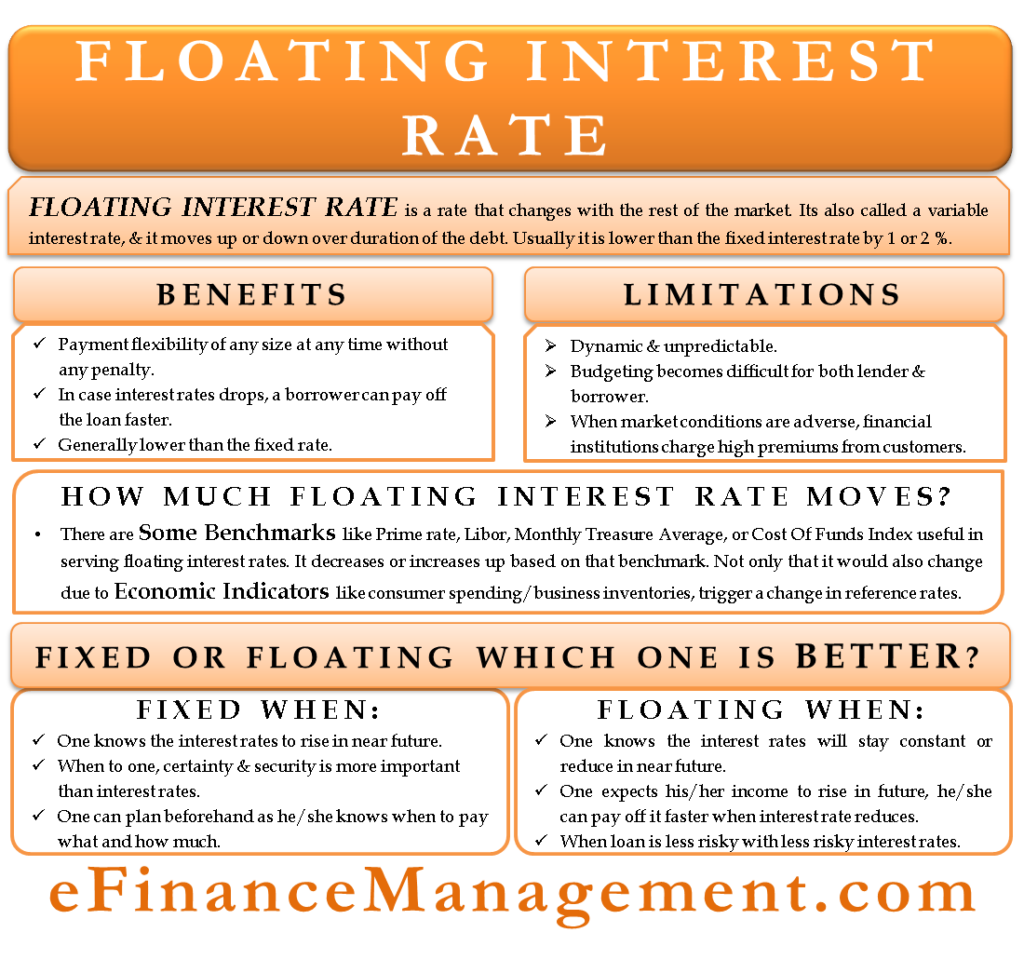
At its core, a floating rate is an interest rate that “floats” on top of a reference benchmark. It is designed to reflect the current cost of money in the open market, ensuring that the lender is compensated fairly for the prevailing economic conditions and that the borrower pays a rate consistent with the current environment.
How Floating Rates Differ from Fixed Rates
The primary distinction between fixed and floating rates lies in the distribution of interest rate risk. In a fixed-rate contract, the interest rate is locked at the inception of the agreement. If market rates rise later, the borrower benefits because they are paying a lower-than-market rate, while the lender loses out on potential income. Conversely, if rates fall, the borrower is “stuck” paying more than necessary.
A floating rate redistributes this risk. Because the rate adjusts periodically, the interest paid tracks the market. This protects the lender from being locked into low yields during periods of high inflation and protects the borrower from being overcharged if the economy cools and rates drop.
The Role of Benchmark Indices
A floating rate does not move randomly; it is pegged to a specific, transparent financial index. Historically, the London Interbank Offered Rate (LIBOR) was the global standard. However, due to structural vulnerabilities, the financial world has largely transitioned to the Secured Overnight Financing Rate (SOFR) in the United States and similar “risk-free” rates globally.
Other common benchmarks include:
- The Federal Funds Rate: The rate at which commercial banks borrow and lend their excess reserves to each other overnight.
- The Prime Rate: The base interest rate that commercial banks charge their most creditworthy corporate customers.
- Treasury Bill Rates: Short-term government debt yields that reflect the safest possible return on capital.
The Spread and Margin Component
A floating rate is typically expressed as “Benchmark + Margin.” The “margin” (or spread) is a fixed percentage added to the index to account for the borrower’s credit risk and the lender’s profit. For example, if a loan is priced at “SOFR + 2%” and the SOFR is currently at 3%, the borrower pays 5%. If SOFR climbs to 4%, the borrower’s rate automatically increases to 6%, while the 2% margin remains constant.
Floating Rates in Personal Finance: Mortgages and Loans
For the average consumer, floating rates are most commonly encountered in the form of debt products. While fixed-rate loans offer the peace of mind of predictable payments, floating-rate products often provide lower initial costs, making them an attractive—albeit volatile—option.
Adjustable-Rate Mortgages (ARMs)
In the real estate market, an Adjustable-Rate Mortgage (ARM) is the quintessential floating rate product. These loans usually begin with a “teaser” period—typically 3, 5, or 7 years—where the interest rate is fixed at a level lower than a standard 30-year fixed mortgage. After this period, the rate begins to float based on a benchmark index.
Borrowers often choose ARMs when they plan to sell the property or refinance before the fixed period ends. However, the “reset” can lead to “payment shock” if market rates have climbed significantly, significantly increasing the monthly mortgage obligation.
Credit Cards and Personal Lines of Credit
Most consumers are unaware that credit cards are almost exclusively floating-rate instruments. Most credit card agreements are tied to the Prime Rate. When the Federal Reserve raises interest rates, credit card APRs usually follow suit within one or two billing cycles. This makes carrying a balance on a credit card increasingly expensive during periods of monetary tightening, as the interest compounds at a higher rate.

Similarly, Home Equity Lines of Credit (HELOCs) and many personal lines of credit utilize floating rates. This allows banks to offer flexible borrowing limits while ensuring their profit margins are protected against fluctuations in the cost of capital.
Caps, Floors, and Protective Features
To protect consumers from extreme volatility, many floating-rate products include “caps” and “floors.”
- Periodic Caps: Limits how much the rate can change during a single adjustment period.
- Lifetime Caps: The maximum interest rate the loan can ever reach, regardless of how high the benchmark climbs.
- Floors: The minimum interest rate the lender will accept, ensuring that if market rates drop to zero, the lender still earns a basic return.
Investing in Floating Rate Securities
While floating rates can represent a risk to borrowers, they offer a sophisticated tool for investors looking to preserve capital and generate income in a rising-rate environment. In a traditional bond portfolio, rising interest rates are a threat because they drive down the price of existing fixed-coupon bonds. Floating rate securities solve this problem.
Floating Rate Notes (FRNs) and Corporate Bonds
Floating Rate Notes (FRNs) are debt instruments issued by governments or corporations where the coupon payment adjusts periodically. Because the coupon “resets” to reflect current market yields, the market price of an FRN tends to be much more stable than that of a fixed-rate bond. Investors in FRNs are essentially betting that rates will stay steady or rise; they gain higher income as the benchmark moves up, without the capital depreciation associated with long-term fixed bonds.
Floating Rate Funds and ETFs
For retail investors, the most accessible way to gain exposure to this asset class is through Floating Rate Exchange-Traded Funds (ETFs) or mutual funds. These funds typically invest in a diversified pool of “senior loans” or “bank loans.” These are private loans made by banks to companies, which are then packaged and sold to investors. Because these loans sit at the top of a company’s capital structure, they are considered “senior” and are often secured by collateral, providing a layer of safety alongside the variable income.
Hedging Against Inflation and Interest Rate Risk
Floating rate investments are often used as a hedge against inflation. Inflation typically leads central banks to raise interest rates to cool the economy. By holding floating-rate assets, an investor’s portfolio yield increases automatically as the central bank acts, helping the investor maintain purchasing power. This makes floating-rate assets a staple in “all-weather” portfolios designed to perform during various phases of the economic cycle.
Strategic Considerations: When to Choose Floating vs. Fixed
Deciding whether to opt for a floating or fixed rate is a strategic financial decision that depends on one’s outlook on the economy, risk tolerance, and time horizon. There is no one-size-fits-all answer, but rather a set of trade-offs based on market conditions.
Analyzing the Economic Cycle
The stage of the economic cycle is the most critical factor. In a “low and rising” rate environment—often seen at the beginning of an economic recovery—floating rates can be dangerous for borrowers but lucrative for lenders. Conversely, when rates are at historical highs and expected to fall (during a recession or economic slowdown), borrowers may prefer floating rates to benefit from future decreases, while investors might want to “lock in” high fixed rates before they disappear.
Debt Management Strategies
For businesses, the choice between fixed and floating debt is a matter of cash flow management. A company with highly predictable, stable cash flows might prefer a fixed rate to ensure they can meet their obligations without surprises. A company with high growth or one that expects to pay off its debt quickly might choose a floating rate to take advantage of lower initial costs and avoid the “prepayment penalties” often associated with fixed-rate commercial loans.
For individuals, the decision often comes down to the “spread.” If the gap between a fixed-rate mortgage and an ARM is narrow (e.g., only 0.25%), the risk of a floating rate rarely outweighs the small savings. However, if the spread is wide (e.g., 2% or more), the monthly savings from a floating rate can be substantial, provided the borrower has a plan for when the rate resets.
The Role of Financial Forecasts
While no one can predict the future of interest rates with certainty, looking at the “Dot Plot” from the Federal Reserve or the yield curve can provide clues. An “inverted yield curve,” where short-term rates are higher than long-term rates, often suggests that the market expects rates to fall in the future. In such a scenario, a floating-rate borrower might experience short-term pain followed by long-term gain.
Conclusion: The Dynamic Nature of Floating Rates
The concept of a floating rate is a testament to the fluidity of modern finance. It removes the stagnation of fixed-term contracts and introduces a system where capital is priced according to its immediate value. For the borrower, it offers flexibility and potential savings, albeit with the burden of uncertainty. For the investor, it provides a defensive shield against the corrosive effects of rising rates and inflation.
As we navigate an era of significant economic shifts—from the “lower-for-longer” years to the aggressive hiking cycles of the 2020s—mastering the mechanics of floating rates is no longer just for Wall Street traders. Whether you are signing a mortgage, managing a credit card, or diversifying an investment portfolio, understanding the “float” is essential to maintaining financial stability and capitalizing on the ever-changing tides of the global money market.
aViewFromTheCave is a participant in the Amazon Services LLC Associates Program, an affiliate advertising program designed to provide a means for sites to earn advertising fees by advertising and linking to Amazon.com. Amazon, the Amazon logo, AmazonSupply, and the AmazonSupply logo are trademarks of Amazon.com, Inc. or its affiliates. As an Amazon Associate we earn affiliate commissions from qualifying purchases.