
In the world of mechanical engineering and heavy-duty transport, there is a technique that bridges the gap between raw machine power and human precision. This technique is known as “floating gears.” While the average driver of a passenger car relies heavily on the clutch pedal to transition between speeds, professional operators—particularly those in the commercial trucking and performance racing industries—often employ the art of shifting without the clutch.
Floating gears is not merely a “trick”; it is a sophisticated method of rev-matching that requires a deep understanding of drivetrain harmonics, rotational speeds, and transmission architecture. In this exploration of automotive technology, we will dissect the mechanics of floating gears, the engineering behind it, and why it remains a critical skill in the age of increasingly automated systems.

The Mechanical Engineering Behind Floating Gears
To understand how a driver can change gears without disengaging the engine from the transmission, one must first understand the internal components of a manual gearbox. Most modern gearboxes utilize a series of gears that are constantly in mesh, but only one set is “locked” to the output shaft at any given time.
Understanding Synchromesh vs. Constant Mesh
In standard passenger vehicles, “synchromesh” transmissions use small friction rings (synchronizers) to match the speed of the gear to the speed of the shaft before they lock together. This makes shifting smooth and forgiving. However, in heavy-duty applications, such as Class 8 trucks, transmissions are often “non-synchronized.” In these systems, there is no mechanical helper to align speeds. Floating gears becomes a necessity here, as the driver must manually align the rotational speed of the engine with the rotational speed of the transmission’s internal shafts.
The Role of the Input and Output Shafts
The transmission consists of an input shaft (driven by the engine) and an output shaft (driven by the wheels). When you “float” a gear, you are essentially finding the exact moment when the input shaft and the output shaft are rotating at a synchronized speed. At this precise “zero-load” point, the gear lever can be moved out of one gear and into the next without the need for a clutch to break the connection. It is a feat of kinetic synchronization that requires millisecond-perfect timing.
The Physics of RPM Matching and Kinetic Equilibrium
The core technology behind floating gears is “rev-matching.” Every gear ratio in a transmission has a specific relationship with the engine’s Revolutions Per Minute (RPM). If you are traveling at 40 mph in 3rd gear at 2,500 RPM, 4th gear might require the engine to be at 1,800 RPM at that same road speed.
Calculating the “Sweet Spot”
Floating gears requires the driver to manipulate the throttle to bring the engine to that 1,800 RPM mark exactly as they move the shifter. If the RPMs are too high, the gears will clash (grind). If they are too low, the transmission will resist the shift. The “sweet spot” is the point of kinetic equilibrium where the torque load on the transmission is neutralized. This “zero-moment” allows the sliding clutch (or dog clutch) to slip over the gear teeth without friction or resistance.
The Impact of Torque Load on Gear Selection
You cannot float a gear while the engine is actively accelerating or decelerating the vehicle. Under “load,” the gear teeth are pressed firmly against each other to transfer power. To float, the driver must momentarily lift off the accelerator—this creates a fraction of a second where the gears are neither pushing nor being pushed. This is the window of opportunity where the gear can be “slipped” out of its current position.
Practical Applications in Heavy-Duty Tech
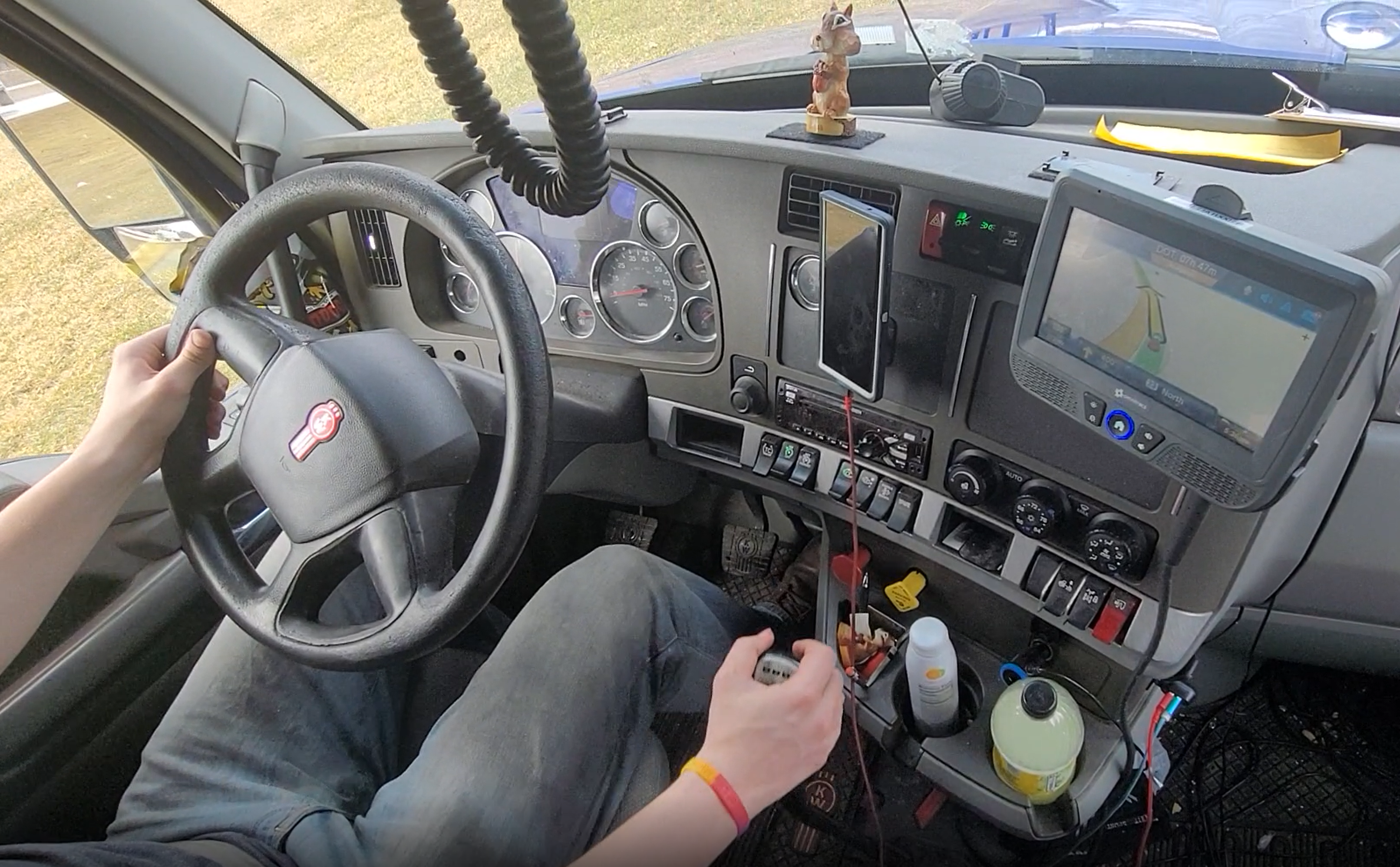
While floating gears is an impressive display of skill, it serves a functional purpose in industrial and commercial technology. In the world of long-haul logistics, the equipment is designed for durability and efficiency over hundreds of thousands of miles.
Commercial Trucking and the 18-Speed Transmission
In a standard 18-speed heavy-duty transmission, using the clutch for every single shift would lead to massive driver fatigue and significant wear on the clutch release bearing. Professional drivers use the clutch only for starting from a dead stop and stopping. By floating the remaining gears, they maintain momentum and reduce the physical strain on their left leg. This technological mastery allows for smoother transitions of weight, which is vital when hauling 80,000 pounds of cargo.
Reducing Mechanical Stress on Hydraulic Clutch Systems
Every time a clutch is depressed, the pressure plate, throw-out bearing, and linkage are subjected to mechanical stress and heat. In a high-torque environment, the clutch is a “wear item.” By floating gears, the driver bypasses these components entirely during the shift cycle. When executed correctly, floating gears actually extends the lifespan of the clutch assembly, reducing maintenance costs and downtime for commercial fleets.
The Risks and Maintenance Protocols of Improper Shifting
Despite its benefits, floating gears is a high-stakes maneuver. If the synchronization is off by even a few dozen RPMs, the resulting metal-on-metal contact can lead to catastrophic failure. Understanding the risks is a key part of mastering this automotive technology.
Detecting Premature Synchro Failure
If a driver attempts to float gears in a transmission equipped with synchronizers (like those in most pickup trucks or sports cars), they risk burning out the synchro rings. Synchronizers are designed to handle the speed differential when the clutch is in; forcing them to align speeds while the engine is still connected causes them to wear down rapidly. The first sign of this failure is “notchy” shifting or the transmission popping out of gear under load.
Lubrication and Heat Management in Float-Shifted Gearboxes
Because floating gears relies on the sliding of dog teeth and gear collars, proper lubrication is paramount. Transmission fluid in these systems doesn’t just lubricate; it acts as a cooling agent. High-precision shifting creates localized friction. If the fluid is old or the level is low, the heat generated during a “missed” float can weld components together or cause “blueing” of the metal, indicating structural weakening due to extreme temperatures.
The Future: From Manual Floating to Automated Manual Transmissions (AMTs)
As we move further into the 21st century, the “human” element of floating gears is being replaced by sophisticated software and actuators. The technology is evolving from a physical skill into a digital algorithm.
How Algorithms Replace Human Feel
Modern Automated Manual Transmissions (AMTs) essentially “float gears” on behalf of the driver. These systems use high-speed sensors to monitor engine RPM, road speed, and throttle position. A central computer (ECU) then calculates the perfect shift point and uses pneumatic or electric actuators to move the gears. This provides the efficiency of a manual gearbox with the ease of an automatic, ensuring that every shift is a perfect “float” without the risk of human error.
The Transition to Fully Electric Powertrains
The ultimate evolution of this technology may lead to its obsolescence. Electric Vehicles (EVs) typically utilize single-speed reductions rather than multi-gear transmissions. In an EV, there are no gears to float because the electric motor provides a broad torque curve that eliminates the need for shifting. However, for the foreseeable future, the internal combustion engine—and the complex transmissions that support it—will continue to rely on the principles of gear floating, whether controlled by a seasoned driver or a high-speed processor.
Conclusion
Floating gears is a testament to the intricate relationship between mechanical design and operational precision. It is a technique that demands respect for the physics of rotation and the durability of hardened steel. Whether it is a veteran trucker navigating a mountain pass or an engineer designing the next generation of automated gearboxes, the principles of rev-matching and torque-neutral shifting remain at the heart of automotive efficiency. Understanding “what is floating gears” is more than just learning a driving habit; it is gaining insight into the very soul of mechanical synchronization.
aViewFromTheCave is a participant in the Amazon Services LLC Associates Program, an affiliate advertising program designed to provide a means for sites to earn advertising fees by advertising and linking to Amazon.com. Amazon, the Amazon logo, AmazonSupply, and the AmazonSupply logo are trademarks of Amazon.com, Inc. or its affiliates. As an Amazon Associate we earn affiliate commissions from qualifying purchases.