
In the rapidly evolving landscape of technology, we often marvel at the capabilities of Large Language Models, autonomous vehicles, and predictive analytics. However, beneath the slick user interfaces and complex neural networks lies a foundation of classical mathematics that makes these innovations possible. One of the most critical tools in this mathematical arsenal is the First Derivative Test. While typically introduced in a high school or college calculus classroom, the First Derivative Test has transitioned from a theoretical exercise to a fundamental component of algorithmic optimization, machine learning, and digital signal processing.
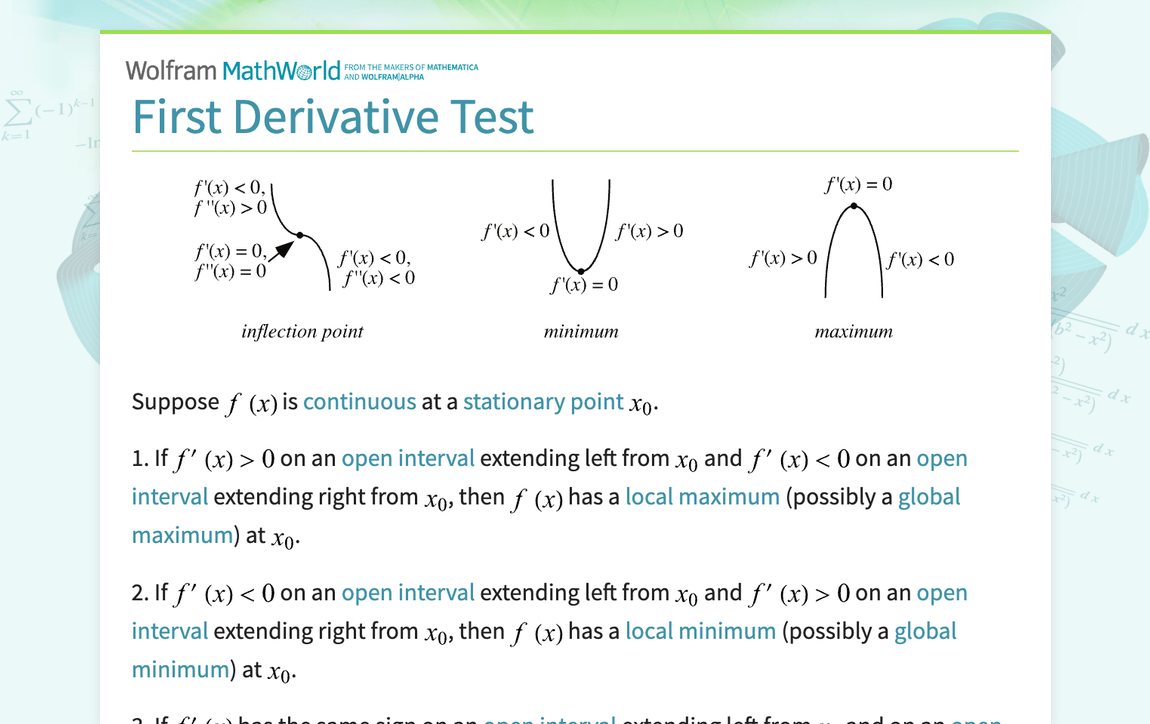
In the tech sector, optimization is the name of the game. Whether a developer is trying to minimize the latency of a cloud application or a data scientist is attempting to reduce the “loss” or error of a predictive model, they are essentially performing calculus. The First Derivative Test provides the logical framework for identifying local maxima and minima—the peaks and valleys of performance—within any given function or system.
1. Understanding the Mechanics: The Core of Algorithmic Optimization
Before exploring its applications in high-end software, it is essential to define what the First Derivative Test is from a technical perspective. In calculus, the derivative of a function represents the rate of change. When we talk about the “First Derivative Test,” we are referring to a method used to determine where a function reaches its highest and lowest points (local extrema).
The Logic of Change
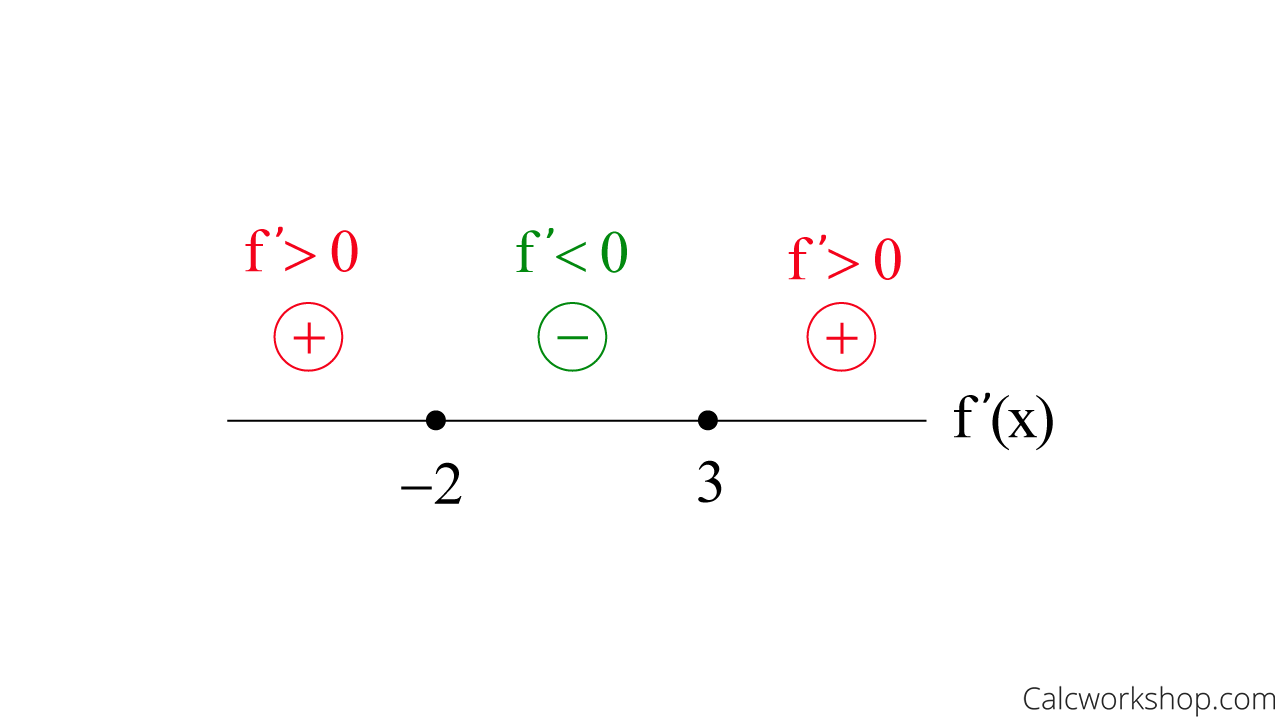
At its simplest, if you have a function $f(x)$ that represents a process—perhaps the battery consumption of a mobile app relative to CPU usage—the first derivative $f'(x)$ tells you how that consumption is changing at any specific point. If $f'(x)$ is positive, the consumption is increasing; if it is negative, it is decreasing.
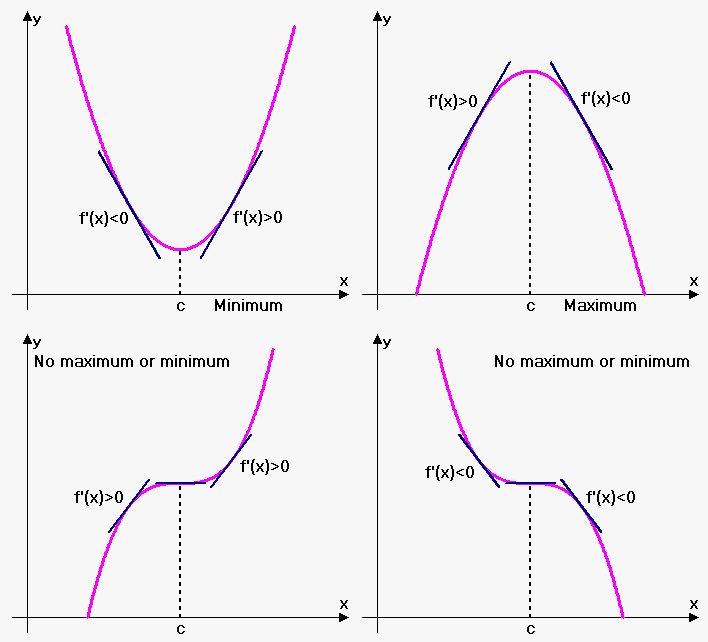
The First Derivative Test states that if a function’s derivative changes from positive to negative at a specific point, that point is a local maximum. Conversely, if it changes from negative to positive, it is a local minimum. If the derivative is zero, we call it a “critical point.” For a tech professional, these critical points are the “sweet spots” where a system is operating at peak efficiency or minimum cost.
From Continuous Math to Discrete Code
In software engineering, we rarely deal with smooth, continuous lines on a chalkboard. Instead, we deal with discrete data points. However, the principles of the First Derivative Test are applied through numerical differentiation. Algorithms are programmed to “test” the slope of data trends. By calculating the difference between sequential data packets, a system can identify a “peak” in network traffic or a “valley” in server availability, allowing for automated load balancing and resource allocation.
2. Gradient Descent: The Engine of Artificial Intelligence
The most prominent application of the First Derivative Test in modern technology is within the field of Artificial Intelligence (AI) and Machine Learning (ML). Specifically, it serves as the conceptual parent of “Gradient Descent,” the optimization algorithm used to train neural networks.
Minimizing the Loss Function
When a machine learning model is being trained, it is essentially trying to solve a massive optimization problem. The model makes a prediction, compares it to the actual result, and calculates the “Loss”—the margin of error. To make the model smarter, we need to minimize this loss.
This is where the First Derivative Test becomes an active tool rather than a passive observation. The “Gradient” in Gradient Descent is simply a multi-variable generalization of the first derivative. By calculating the gradient of the loss function, the algorithm determines which direction it needs to move to reach the “global minimum”—the point where the error is as low as possible.
Stochastic Gradient Descent and Real-Time Tuning
In tech environments where datasets are massive (Big Data), calculating a pure derivative for every single point is computationally expensive. This led to the development of Stochastic Gradient Descent (SGD) and other variants like Adam optimization. These tools use the logic of the First Derivative Test to make “best guesses” about the slope of the function, allowing AI models to learn faster. Without the ability to find the “zero point” of an error slope, modern AI would be incapable of refining its logic, leaving us with static, unteachable software.
3. Digital Signal Processing and Computer Vision
Beyond the world of AI, the First Derivative Test is a staple in Digital Signal Processing (DSP) and Computer Vision, two fields that define how our gadgets perceive the physical world.
Edge Detection in Photography
When you take a photo with a modern smartphone, the device’s software performs thousands of calculations to sharpen the image. One of the most common methods for “edge detection”—identifying where one object ends and another begins—is based on derivatives.
An edge in a digital image is essentially a sharp change in pixel intensity. By applying a derivative-based filter (like the Sobel operator), the software looks for the “maximum” rate of change in color or brightness. By identifying these peaks via the logic of the First Derivative Test, the camera’s processor can trace the outlines of faces, buildings, or landscapes, enabling features like Portrait Mode and Augmented Reality (AR) overlays.
Audio Compression and Synthesis
Similarly, in audio technology, the First Derivative Test helps in the compression and reconstruction of sound waves. To store high-quality audio in small MP3 or AAC files, software must identify which parts of the sound wave are changing rapidly and which are redundant. By analyzing the “slope” of the sound wave, encoders can prioritize data allocation to the most complex parts of the signal, ensuring that the listener hears a crisp, high-fidelity sound even at lower bitrates.
4. Hardware Optimization and Thermal Management
Technology isn’t just about software; it’s about the physical hardware that runs it. The First Derivative Test plays a surprising role in the physical maintenance of servers, laptops, and mobile devices through automated thermal management.
Proportional-Integral-Derivative (PID) Controllers
Most modern tech hardware utilizes what is known as a PID controller to manage fan speeds and CPU throttling. The “D” in PID stands for “Derivative.” These controllers monitor the temperature of a chip. If the temperature starts rising rapidly, the “Derivative” component of the controller senses the steep positive slope (the rate of change) and preemptively ramps up the cooling systems before the hardware reaches a critical thermal threshold.
This predictive capability is a direct application of the First Derivative Test’s logic: by understanding the direction and magnitude of the change, the system can intervene at the “critical point” to prevent hardware failure. This ensures that your gaming laptop or a high-density data center doesn’t overheat during periods of intense computation.
Battery Longevity and Charging Algorithms
Modern fast-charging technology also relies on these principles. Charging a lithium-ion battery is a non-linear process. As the battery approaches 80% to 90% capacity, the internal resistance changes. Smart charging circuits use derivative-based algorithms to monitor the rate of voltage change. When the derivative of the voltage curve begins to flatten out (approaching a local maximum), the charger reduces the current to prevent chemical degradation of the battery cells, significantly extending the lifespan of our gadgets.
5. The Future of Optimization: Quantum Computing and Beyond
As we look toward the future of technology, the First Derivative Test continues to evolve. In the burgeoning field of Quantum Computing, researchers are developing “Quantum Natural Gradient” descents. While the physics of quantum bits (qubits) differs vastly from classical bits, the goal remains the same: finding the optimal state of a system by analyzing its derivatives.
Automating the Math: The Rise of Autograd
In the current tech stack, developers rarely have to perform the First Derivative Test by hand. Libraries such as PyTorch, TensorFlow, and JAX have “Autograd” (automatic differentiation) engines. These tools allow developers to define complex functions, and the software automatically calculates the derivatives in the background. This abstraction has lowered the barrier to entry for tech innovation, allowing software engineers to build powerful, optimized systems without needing a PhD in mathematics, even though the math remains the “ghost in the machine.”
Conclusion: The Persistent Relevance of Calculus
The First Derivative Test is far more than a relic of 17th-century mathematics; it is the silent engine driving the 21st-century tech revolution. From the way our social media feeds are optimized to keep us engaged, to the way our self-driving cars identify obstacles on the road, the ability to find “extrema”—to seek the best and minimize the worst—is what makes technology “smart.”
As we move deeper into the era of AI and hyper-efficient hardware, the principles of the First Derivative Test will remain indispensable. For the tech professional, understanding this concept is not just about passing a test; it is about understanding the very language of optimization that allows us to push the boundaries of what software and hardware can achieve. In a world of infinite data, the first derivative is our compass, pointing us toward the peaks of performance and the valleys of efficiency.
aViewFromTheCave is a participant in the Amazon Services LLC Associates Program, an affiliate advertising program designed to provide a means for sites to earn advertising fees by advertising and linking to Amazon.com. Amazon, the Amazon logo, AmazonSupply, and the AmazonSupply logo are trademarks of Amazon.com, Inc. or its affiliates. As an Amazon Associate we earn affiliate commissions from qualifying purchases.