
Final velocity is a cornerstone concept in physics, fundamentally describing the speed and direction of an object at a specific point in time after it has undergone acceleration. While seemingly a basic scientific term, its accurate calculation and understanding are absolutely critical across myriad technological domains, forming the bedrock upon which complex systems, from sophisticated software simulations to advanced robotic platforms and intricate aerospace engineering, are designed and operated. In essence, it tells us where something will be and how fast it will be moving, a prediction essential for any engineered system involving motion.
The Kinematic Foundation in Technology
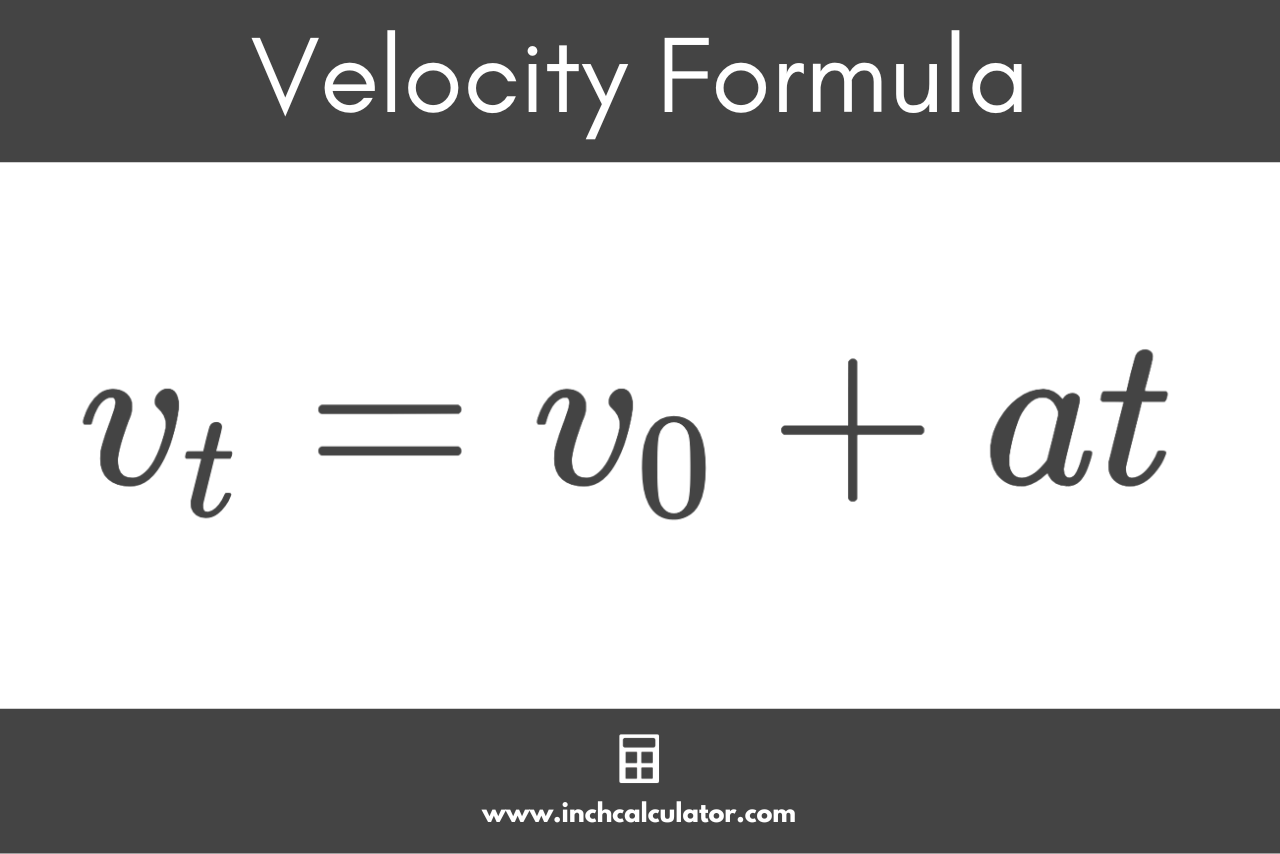
At its heart, final velocity ($v$) is derived from an object’s initial velocity ($u$), the acceleration ($a$) it experiences, and the time ($t$) over which this acceleration occurs, often represented by the equation $v = u + at$. This simple formula, along with others like $v^2 = u^2 + 2as$ (where $s$ is displacement) and $s = ut + 0.5at^2$, forms the backbone of kinematics – the study of motion without considering the forces causing it. For technology, these equations are not just abstract formulas; they are the core algorithms embedded in countless applications.
In a technological context, understanding final velocity allows engineers and developers to predict the behavior of objects, design systems that interact precisely with their environment, and ensure the safety and efficiency of moving parts. Without the ability to accurately determine an object’s speed and direction at a future moment, the development of everything from ballistic missile guidance systems to the smooth animation of characters in a video game would be impossible. It’s the difference between a robot precisely picking up an item and crashing into it, or a self-driving car smoothly navigating traffic versus causing an accident.
Final Velocity in Software Development and AI
The principles of final velocity are deeply integrated into the digital realm, powering simulations, artificial intelligence, and software tools across various industries.
Physics Engines in Gaming and Simulation
The vibrant, interactive worlds of modern video games, virtual reality (VR) environments, and industrial simulations owe their realism to sophisticated physics engines. These software modules are built upon kinematic equations, among others, to compute the movement, collisions, and interactions of virtual objects. When a character jumps, a ball bounces, or a car races around a track, the physics engine is constantly calculating the final velocity of every object involved for the next frame of animation. This ensures that objects accelerate, decelerate, and respond to forces in a believable manner. Developers leverage these engines (e.g., Unity’s PhysX, Unreal Engine’s Chaos, Havok) to script complex scenarios where final velocity determines trajectory, impact force, and subsequent motion, critical for both player immersion and functional training simulators for pilots, surgeons, or engineers.
Robotics and Autonomous Systems
For robots and autonomous vehicles, final velocity is not merely a descriptive concept but a critical input for real-time decision-making and control. Self-driving cars continuously calculate the final velocity of other vehicles and pedestrians to predict their future positions and plan safe maneuvers. Industrial robots performing assembly tasks must calculate the precise final velocity required to pick up components and place them accurately without damage. Drones use final velocity estimations for stable flight, obstacle avoidance, and precise landing. Artificial intelligence algorithms, particularly those in path planning and trajectory optimization, rely heavily on final velocity calculations. Machine learning models can be trained on vast datasets to predict optimal final velocities in complex, dynamic environments, allowing autonomous systems to adapt and perform robustly in unpredictable situations. This allows for adaptive cruise control to maintain safe distances, or for robotic arms to perform delicate surgeries with unparalleled precision.
Digital Design and Engineering Software
In Computer-Aided Design (CAD) and Computer-Aided Engineering (CAE) software, final velocity calculations are foundational for simulating the performance of physical designs. Aerospace engineers use specialized software to model the flight dynamics of aircraft and rockets, where final velocity is paramount for trajectory prediction, fuel consumption analysis, and re-entry simulations. Automotive engineers simulate crash tests by modeling the final velocities of vehicle components during impact, helping design safer cars. Civil engineers use structural analysis software to predict how buildings and bridges will react to various loads, including dynamic loads that involve changes in velocity. These digital tools allow for iterative design and virtual testing, significantly reducing the cost and time associated with physical prototyping, all while ensuring optimal performance and safety based on accurate velocity predictions.
Gadgets, Apps, and Real-World Tech Applications
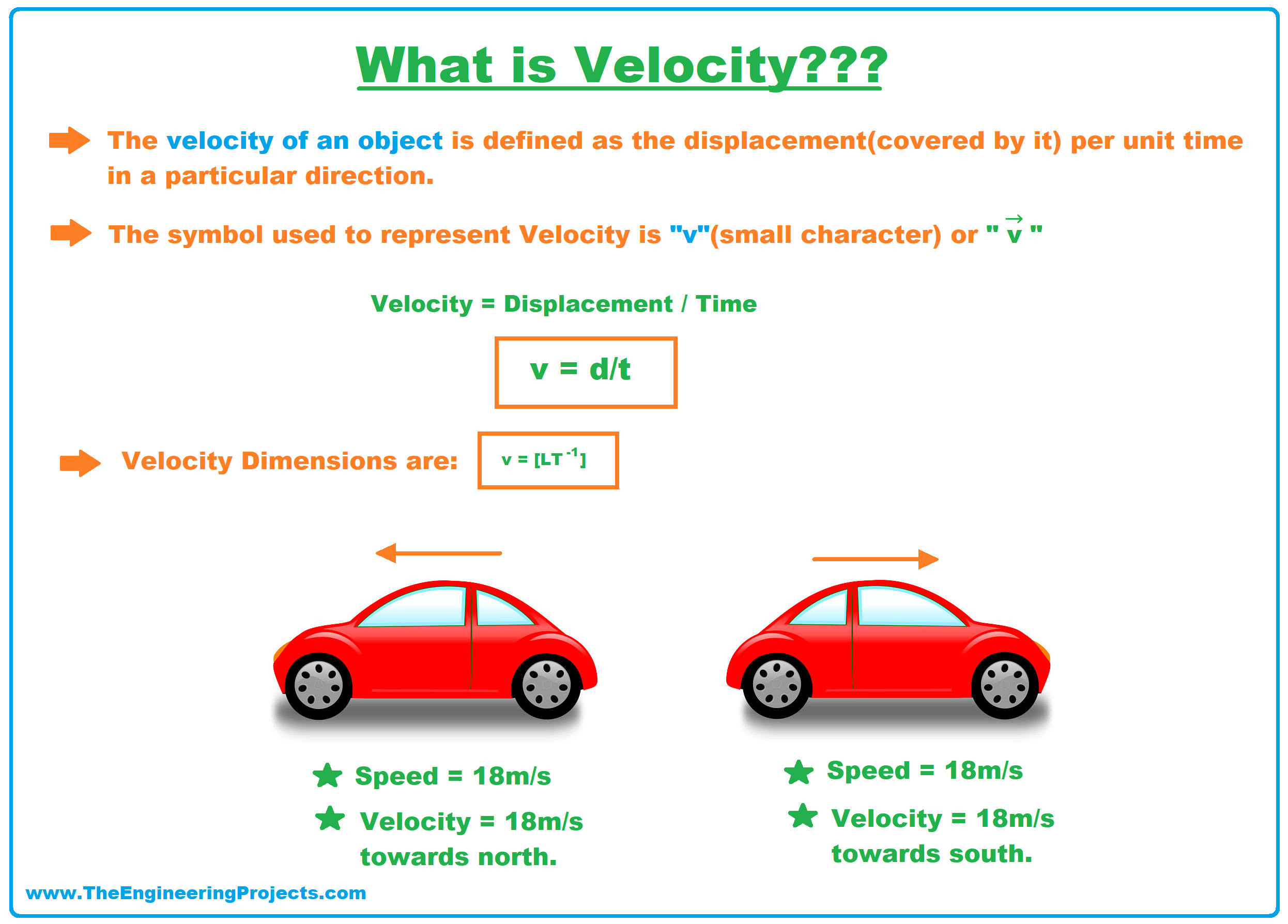
Beyond software and AI, final velocity plays a direct and tangible role in the functionality of many everyday and specialized technological devices and applications.
Sports Tech and Wearables
The booming industry of sports technology and wearable devices heavily relies on final velocity data. GPS trackers in smartwatches and dedicated sports devices calculate a runner’s or cyclist’s instantaneous and average velocity, providing insights into pace and performance. Accelerometers and gyroscopes in smart sports equipment (e.g., smart baseball bats, golf clubs) measure the swing speed, providing final velocity metrics at the point of impact, helping athletes refine their technique. Speed guns used in baseball or tennis directly measure the final velocity of a thrown or hit ball. Specialized apps then collect, analyze, and visualize this data, enabling athletes and coaches to make data-driven decisions to optimize training regimes, prevent injuries, and enhance competitive performance.
Aerospace and Rocketry
Perhaps no field exemplifies the critical importance of final velocity more than aerospace engineering. For rockets launching satellites into orbit, precise calculations of final velocity are essential for achieving the correct orbital parameters. Any deviation can result in the satellite failing to reach its intended orbit or even re-entering the atmosphere. During planetary exploration missions, spacecraft performing complex maneuvers like orbital insertion, atmospheric entry, descent, and landing (EDL) rely on incredibly accurate final velocity predictions and real-time adjustments to ensure a safe and successful outcome. For instance, the final velocity relative to the landing surface determines whether a rover touches down gently or crashes. Control systems constantly adjust thrust and orientation based on sensed and desired velocities to meet target parameters.
Automotive Safety Systems
Modern automobiles are replete with sophisticated safety systems that leverage final velocity. Adaptive Cruise Control (ACC) systems use radar or lidar sensors to measure the relative velocity of vehicles ahead, adjusting the car’s speed to maintain a safe following distance. Automatic Emergency Braking (AEB) systems calculate the required deceleration and apply brakes if a collision is imminent, aiming for a final velocity of zero (relative to the obstacle) before impact. Lane Keeping Assist (LKA) and collision avoidance systems constantly monitor the vehicle’s velocity relative to lane markers and other objects to prevent unintended departures or collisions. These systems represent a critical application of final velocity principles in preventing accidents and enhancing passenger safety.
The Future of Velocity Prediction and Control
The technological frontier continues to push the boundaries of how final velocity is understood, predicted, and controlled.
Advanced AI and Predictive Analytics
The evolution of artificial intelligence, particularly in areas like deep learning and reinforcement learning, promises even more sophisticated approaches to velocity prediction. AI models can analyze vast amounts of sensor data in real-time, learning complex patterns and making highly accurate predictions of final velocities in dynamic, chaotic environments where traditional kinematic equations might struggle due to unforeseen variables. This allows for truly adaptive control systems in autonomous platforms, enabling them to navigate increasingly complex and unpredictable scenarios with greater safety and efficiency. Consider AI systems that can predict the final velocity of multiple, interacting objects in a crowded urban environment, optimizing the path of an autonomous delivery drone.
Miniaturization and Sensor Integration
The continuous miniaturization of sensors (e.g., Inertial Measurement Units – IMUs, high-resolution cameras, LiDAR, radar) and their seamless integration into smaller, more ubiquitous devices are enhancing the accuracy and immediacy of velocity data capture. From micro-drones navigating tight spaces to tiny medical robots performing internal diagnostics, the ability to precisely measure and predict final velocity at a granular level is expanding. This enables more precise control over micro-movements and opens doors for entirely new applications in fields like micro-robotics and advanced prosthetics, where even slight deviations in velocity can have significant consequences.
Quantum Computing’s Potential
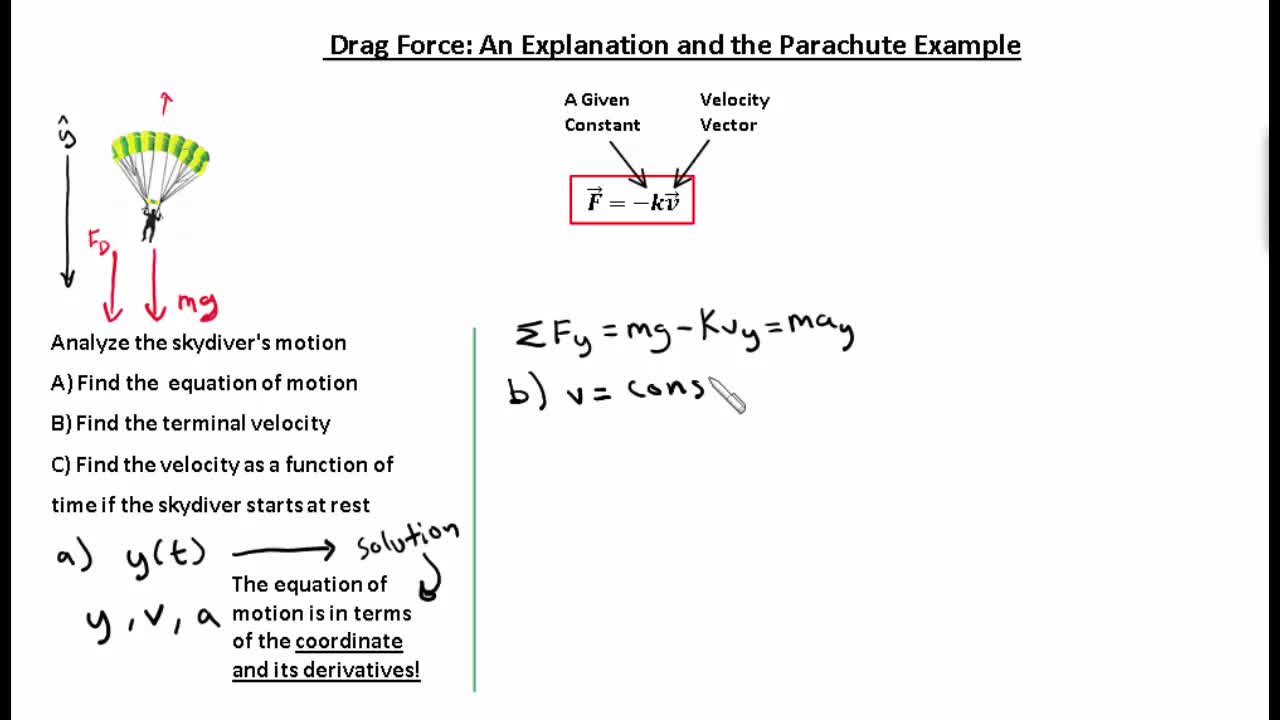
While still in its nascent stages, quantum computing holds theoretical promise for revolutionizing complex velocity calculations. For scenarios involving many interacting particles or objects (multi-body problems), classical computers can reach their limits. Quantum computers, with their ability to process vast numbers of possibilities simultaneously, could potentially simulate and predict final velocities in incredibly intricate systems with unprecedented speed and accuracy, opening new frontiers for complex simulations in astrophysics, materials science, and advanced robotics, where every minute change in velocity can dramatically alter outcomes.
aViewFromTheCave is a participant in the Amazon Services LLC Associates Program, an affiliate advertising program designed to provide a means for sites to earn advertising fees by advertising and linking to Amazon.com. Amazon, the Amazon logo, AmazonSupply, and the AmazonSupply logo are trademarks of Amazon.com, Inc. or its affiliates. As an Amazon Associate we earn affiliate commissions from qualifying purchases.