
In the realm of business finance and commercial real estate, few terms are as ubiquitous yet misunderstood as FF&E. Standing for Furniture, Fixtures, and Equipment, FF&E represents the movable tangible assets that a business uses to operate daily but which are not permanently attached to the structure of the building. For entrepreneurs, investors, and financial officers, understanding FF&E is not merely an exercise in terminology; it is a critical component of capital budgeting, tax strategy, and business valuation.
When a company moves into a new space or evaluates its net worth, it must distinguish between the “bones” of the property and the tools used to generate revenue. This distinction has profound implications for how a business manages its cash flow and reports its financial health to stakeholders.
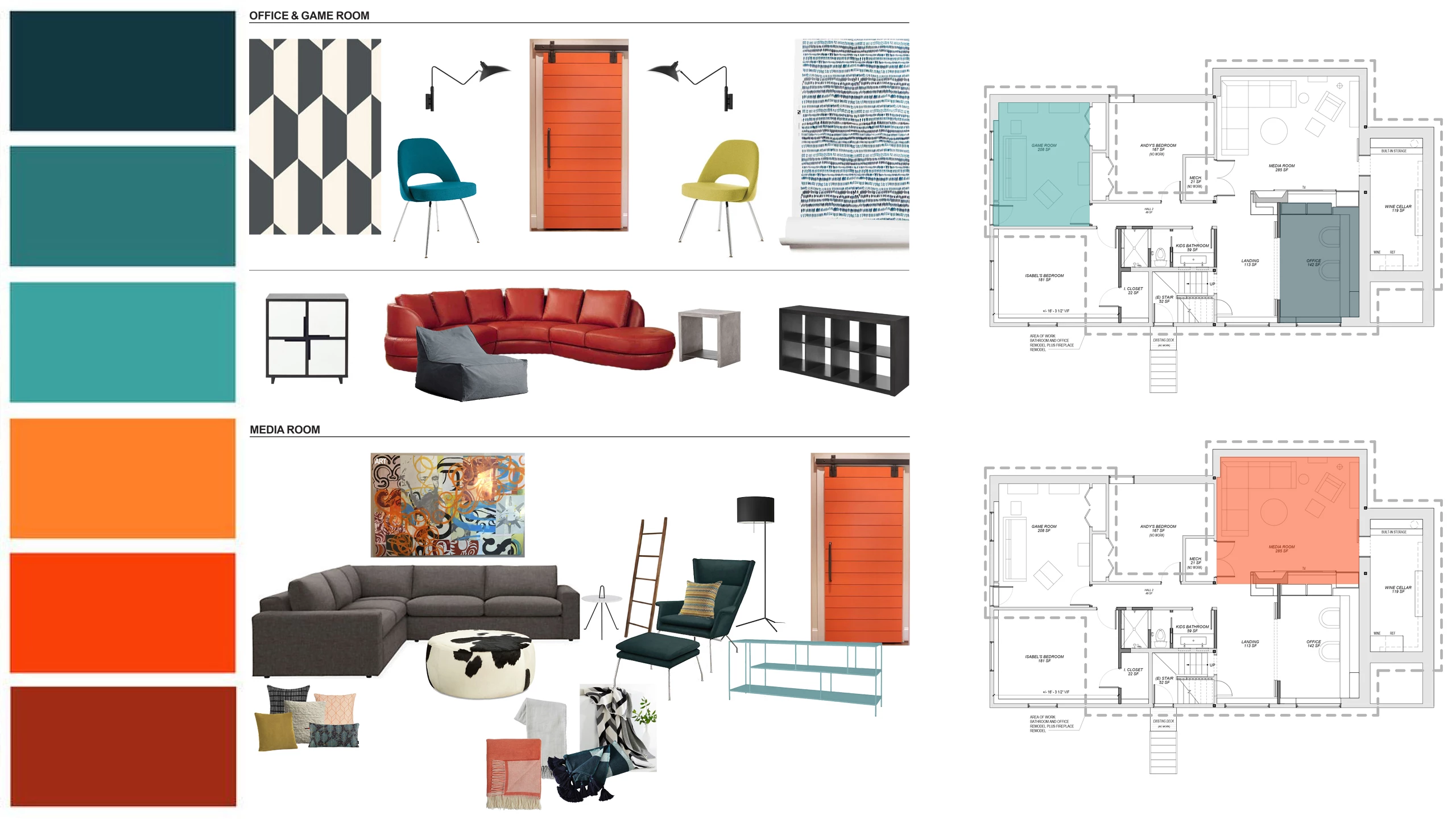
Defining FF&E: More Than Just Office Decor
To understand the financial weight of FF&E, one must first categorize what falls under this umbrella. Generally, FF&E includes items that have a lifespan of more than one year but are subject to wear and tear. These are categorized as non-current assets on a balance sheet.
The “F” in Furniture: Enhancing Productivity and Space
Furniture is perhaps the most visible component of FF&E. This category includes desks, chairs, tables, bookcases, and sofas. In a hospitality context, such as a hotel, this extends to beds and dressers. From a financial perspective, furniture is a capital investment designed to facilitate the primary functions of the business. Unlike inventory, which is meant to be sold for profit, furniture is an “enabling asset.” Its value lies in its utility over a multi-year period, and its cost is recovered through the revenue-generating activities of the employees who use it.
The “F” in Fixtures: Distinguishing Personal Property from Real Estate
Fixtures are often where the most confusion arises. In real estate law, a “fixture” is usually something attached to the building. However, in the context of FF&E and business finance, we look at “trade fixtures.” These are items installed by a tenant to conduct their unique business—such as specialized lighting, partitions, or decorative elements—that can be removed without damaging the building’s structural integrity.
The financial distinction is vital: if an item is considered part of the real estate (like a HVAC system or plumbing), it is depreciated over a much longer period (often 27.5 or 39 years). If it is classified as FF&E, it can often be depreciated much faster, providing immediate tax relief.
The “E” in Equipment: Powering Operational Efficiency
Equipment encompasses the machinery and tools required for production or service delivery. This includes computers, servers, printers, telecommunication systems, and specialized machinery like industrial ovens in a restaurant or diagnostic tools in a medical clinic. In the modern “Money” landscape, equipment often represents the largest portion of a startup’s initial capital expenditure (CapEx). Because technology evolves rapidly, the “E” in FF&E often carries a shorter “useful life” in accounting terms, requiring frequent replacement and strategic reinvestment.
The Role of FF&E in Accounting and Tax Strategy
From a financial management perspective, FF&E is a powerful lever for optimizing a company’s tax liability and managing the balance sheet. It is not just a list of items; it is a pool of capital that must be managed with precision.
Depreciation: Turning Expenses into Tax Advantages
Depreciation is the accounting process of allocating the cost of a tangible asset over its useful life. For FF&E, this is a non-cash expense that reduces taxable income. Business owners must work closely with financial advisors to determine the “useful life” of their assets according to IRS or local tax authority guidelines. For example, while a building might take decades to depreciate, office furniture is typically depreciated over seven years, and computer equipment over five. By accelerating this depreciation, businesses can keep more cash in their pockets during the early, critical years of operation.
Capital Expenditure (CapEx) vs. Operating Expense (OpEx)
A fundamental rule in business finance is the separation of CapEx and OpEx. Purchasing FF&E is a Capital Expenditure. It is an investment in the business’s future capacity. Conversely, repairing a broken chair or paying for a software subscription is often an Operating Expense.

Managing the ratio between these two is vital for a company’s financial health. High CapEx in FF&E can signal growth and expansion to investors, but it also requires significant upfront liquidity. Smart financial managers often analyze the “Return on Assets” (ROA) to ensure that the money tied up in FF&E is actually driving a proportional increase in profit.
Section 179 Deductions and Accelerated Depreciation
In many jurisdictions, specifically the United States, tax codes like Section 179 allow businesses to deduct the full purchase price of qualifying FF&E during the year it was purchased, rather than spreading it out over several years. This is a massive “Money” strategy for small to mid-sized businesses. It allows a company to buy necessary equipment—say, $100,000 worth of new servers—and deduct that entire amount from their gross income, potentially moving the company into a lower tax bracket and significantly boosting year-end cash flow.
Valuing FF&E for Mergers, Acquisitions, and Sales
When a business is bought or sold, the value of its FF&E is often a point of intense negotiation. It is rarely as simple as looking at the original receipts.
Book Value vs. Fair Market Value
There is often a wide gap between “Book Value” (the original cost minus accumulated depreciation) and “Fair Market Value” (what the items would actually sell for on the open market). In many cases, equipment might be fully depreciated on the books (Value = $0) but still be in excellent working condition and worth thousands of dollars. Conversely, high-end furniture might have a high book value but a low resale value due to changing trends. Financial analysts must conduct a physical inventory and appraisal to ensure the purchase price of a business accurately reflects the physical assets being transferred.
The Importance of Accurate Asset Registers
For a business to be “investment-ready,” it must maintain a meticulous asset register. This ledger lists every piece of FF&E, its purchase date, cost, location, and current depreciation status. A disorganized asset register can lead to “ghost assets”—items that are still on the books but have been lost, stolen, or broken. This not only skews financial reports but can also lead to overpaying on property taxes and insurance premiums.
Liquidation Value in Distressed Scenarios
In business finance, we also consider the “liquidation value” of FF&E. If the business were to fail tomorrow, what could the furniture and equipment be sold for at an auction? This is a key metric for lenders. When a bank provides a business loan, they often use FF&E as collateral. They are less interested in the “value in use” and more interested in the “quick-sale value,” which is typically 10% to 50% of the original cost.
Strategic Management of FF&E for Long-Term Growth
Beyond accounting and taxes, FF&E management is about strategic capital allocation. How a company handles its physical assets can be a competitive advantage.
The Lifecycle Management of Physical Assets
Successful businesses don’t just buy FF&E; they manage its lifecycle. This involves planning for “refresh cycles.” For instance, a tech-heavy firm might plan to replace all “E” (Equipment) every three years to maintain peak performance, while a law firm might refresh its “F” (Furniture) every ten years to maintain a prestigious brand image. Budgeting for these cycles ensures that the business doesn’t face a sudden, massive cash drain when equipment inevitably fails.
Financing Options: Leasing vs. Purchasing FF&E
A major financial decision for any business is whether to buy FF&E outright or lease it.
- Purchasing offers total ownership and the benefit of depreciation deductions, but it ties up significant capital.
- Leasing preserves cash flow and allows for easier upgrades (especially for technology), but it often costs more in the long run and doesn’t build equity.
From a “Money” perspective, the choice depends on the company’s current cash position, its cost of capital, and the expected obsolescence of the asset.
Impact on Company Valuation and Exit Strategy
When preparing for an exit or a public offering, the state of a company’s FF&E speaks volumes to potential buyers. Well-maintained, modern FF&E suggests a business that is forward-thinking and operationally sound. Conversely, outdated or dilapidated equipment can be a “red flag,” indicating that the owners have been “bleeding the company dry” by neglecting necessary reinvestment. In a high-stakes sale, the quality and valuation of FF&E can easily swing the final deal price by hundreds of thousands, if not millions, of dollars.
By mastering the nuances of FF&E, business owners and financial professionals ensure that their physical environment is not just a place of work, but a finely tuned financial engine that supports growth, minimizes tax burdens, and maximizes overall enterprise value.
aViewFromTheCave is a participant in the Amazon Services LLC Associates Program, an affiliate advertising program designed to provide a means for sites to earn advertising fees by advertising and linking to Amazon.com. Amazon, the Amazon logo, AmazonSupply, and the AmazonSupply logo are trademarks of Amazon.com, Inc. or its affiliates. As an Amazon Associate we earn affiliate commissions from qualifying purchases.