
In the vast and intricate world of financial markets, understanding various indices and their derivatives is crucial for both investors and traders. Among the most iconic and widely followed benchmarks is the Dow Jones Industrial Average (DJIA), a barometer for the health of the U.S. economy. While many are familiar with the DJIA itself, fewer understand its powerful derivative counterpart: the Dow Jones Futures Index, more commonly known as E-mini Dow futures. These instruments serve as a vital mechanism for hedging, speculation, and price discovery, reflecting real-time sentiment about the future direction of the broader market. Far from a mere statistical curiosity, Dow Jones futures offer a dynamic and leveraged avenue for participating in market movements, playing a critical role in the strategies of institutional players and sophisticated individual traders alike. This article will delve into the essence of what Dow Jones futures represent, how they operate, and why they are such an integral component of the global financial landscape.
Understanding the Dow Jones Industrial Average (DJIA)
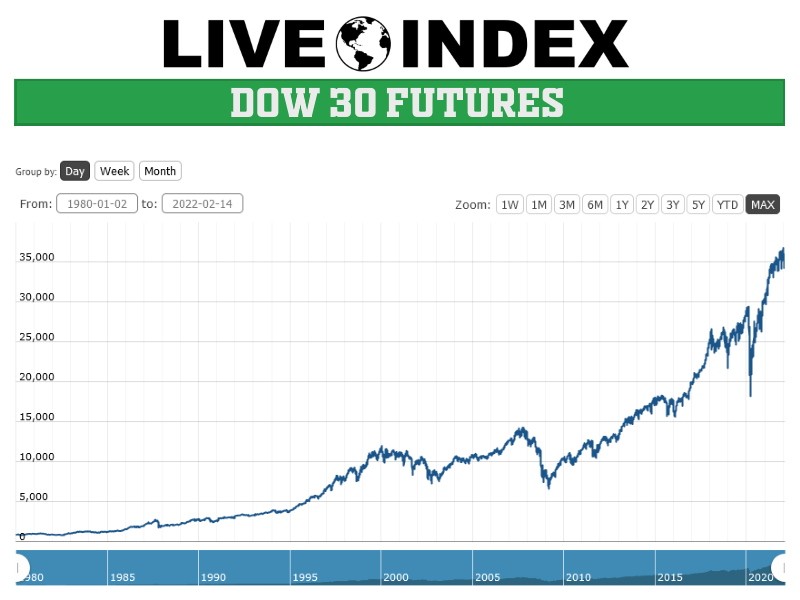
Before we can fully grasp the intricacies of Dow Jones futures, it’s essential to have a solid understanding of its underlying benchmark: the Dow Jones Industrial Average. Established in 1896 by Charles Dow, the DJIA is one of the oldest and most recognized stock market indices in the world, renowned for its enduring legacy and significant influence on market perception.
A Legacy of Market Representation
The DJIA is not a broad market index in the way the S&P 500 is. Instead, it comprises 30 large, publicly owned companies trading on the New York Stock Exchange (NYSE) and NASDAQ. These companies are typically leaders in their respective industries and are selected to represent various sectors of the U.S. economy. Over its long history, the composition of the Dow has evolved, with companies being added or removed to maintain its relevance and reflect shifts in industrial dominance. From its early days dominated by industrial giants like General Electric to today’s mix including technology titans like Apple and Microsoft, the DJIA has continually adapted, striving to offer a snapshot of American economic vitality. Its movements are often highlighted in daily news, serving as a quick reference point for how the stock market performed.
Price-Weighted Index
A key characteristic that distinguishes the DJIA from many other indices, such as the S&P 500 (which is market-capitalization weighted), is its price-weighted methodology. In a price-weighted index, stocks with higher share prices have a greater impact on the index’s value than stocks with lower share prices, regardless of their market capitalization. This means that a one-dollar change in a high-priced stock will move the index more than a one-dollar change in a low-priced stock. To account for stock splits and other corporate actions that change share prices but not a company’s fundamental value, a “Dow Divisor” is used to ensure the index’s continuity. This unique calculation method means that while it’s called an “industrial average,” it’s not a simple average of its components’ prices, nor does it directly reflect the total market value of its constituent companies.
Limitations and Criticisms
Despite its historical significance and widespread recognition, the DJIA faces several criticisms. Its primary limitation stems from its small sample size of only 30 companies. Critics argue that such a limited number of stocks cannot adequately represent the vast and diverse U.S. economy. This can lead to a less comprehensive view compared to broader indices like the S&P 500, which includes 500 companies, or the Russell 2000, which tracks small-cap stocks. Furthermore, its price-weighted methodology can sometimes lead to distortions, as a company with a high stock price but relatively small market cap might have more influence than a company with a lower stock price but massive market cap. Despite these critiques, the DJIA remains an influential psychological benchmark, often influencing market sentiment and investor confidence.
The Mechanics of Futures Contracts
To truly understand Dow Jones futures, one must first grasp the fundamental principles of futures contracts themselves. Futures are a class of financial derivatives that play a crucial role in modern finance, enabling participants to manage risk and speculate on future price movements of various assets.
Definition and Purpose
A futures contract is a standardized legal agreement to buy or sell a specific commodity or financial instrument at a predetermined price on a specified date in the future. These contracts are traded on organized exchanges, ensuring transparency and regulatory oversight. The primary purposes of futures contracts are two-fold: hedging and speculation. Hedging allows producers and consumers of a commodity (or holders of a financial asset) to lock in a price for a future transaction, thereby mitigating price risk. For example, an airline might use fuel futures to lock in the cost of jet fuel months in advance. Speculation, on the other hand, involves taking on price risk in the hope of profiting from anticipated price movements. Traders who believe the price of an asset will rise might buy a futures contract, expecting to sell it at a higher price before expiration, or vice-versa.
Key Components of a Futures Contract
Every futures contract is characterized by several standardized components. The underlying asset refers to the commodity or financial instrument upon which the contract is based (e.g., crude oil, gold, stock index). The expiration date is the specific date in the future when the contract matures and is either settled or offset. Contract size defines the specific quantity of the underlying asset covered by one contract (e.g., 100 ounces of gold, 1,000 barrels of oil, or a specific multiplier for an index). The tick value represents the minimum price fluctuation of a contract and its corresponding monetary value. Finally, futures contracts often involve physical delivery for commodities or cash settlement for financial instruments like stock indices. For index futures, cash settlement is the norm, meaning no actual shares exchange hands; instead, the difference between the contract price and the index value at expiration is paid in cash.
Leverage and Risk
One of the most compelling, yet perilous, aspects of futures trading is leverage. When buying or selling a futures contract, traders are not required to pay the full value of the underlying asset upfront. Instead, they deposit a smaller amount, known as margin, with their broker. This margin acts as collateral, allowing traders to control a much larger value of the underlying asset than their initial outlay. For example, with a margin of $5,000, a trader might control a futures contract worth $100,000. While leverage can significantly amplify potential gains, it equally amplifies potential losses. A small adverse price movement can quickly erode a trader’s margin, potentially leading to margin calls (requests for additional funds) or even losses exceeding the initial investment. This inherent magnification of risk underscores why futures trading is generally considered suitable for experienced investors with a robust understanding of market dynamics and stringent risk management strategies.
Introducing the Dow Jones Futures Index (E-mini Dow Futures)
Now that we understand both the DJIA and the mechanics of futures contracts, we can specifically address the Dow Jones Futures Index. In practice, when people refer to the “Dow Jones Futures Index,” they are almost invariably talking about E-mini Dow futures contracts. These are electronically traded contracts that provide exposure to the performance of the Dow Jones Industrial Average.
What are E-mini Dow Futures?
E-mini Dow futures are standardized, exchange-traded derivative contracts that allow traders to bet on the future price of the Dow Jones Industrial Average. The “E-mini” prefix signifies that these are electronically traded mini-sized contracts, making them more accessible to a broader range of traders than their larger, traditional counterparts. They are primarily traded on the Chicago Mercantile Exchange (CME Group) Globex platform, offering nearly 24-hour trading liquidity from Sunday evening through Friday afternoon. Each E-mini Dow futures contract represents a specific monetary value multiplied by the current value of the DJIA. Their existence allows market participants to gain exposure to the Dow Jones Industrial Average’s movements without buying all 30 underlying stocks individually.
How They Track the DJIA
E-mini Dow futures are designed to track the movements of the Dow Jones Industrial Average very closely. The price of a futures contract is derived from the underlying index, and market forces of supply and demand for the futures contract typically ensure that its price remains highly correlated with the cash index (the “spot” DJIA value). However, it’s important to note that the futures price is not identical to the spot index price. There is often a difference, known as the basis, which can be positive (contango) or negative (backwardation). This basis reflects factors like interest rates, dividends paid by the underlying stocks, and market expectations about the future. For example, if traders expect higher dividends or lower interest rates in the future, the futures price might trade at a discount to the spot price. Conversely, expectations of higher future growth or borrowing costs might lead to a premium. The futures price also incorporates the cost of carry, which accounts for the cost of holding the underlying assets until the future date.
Contract Specifications
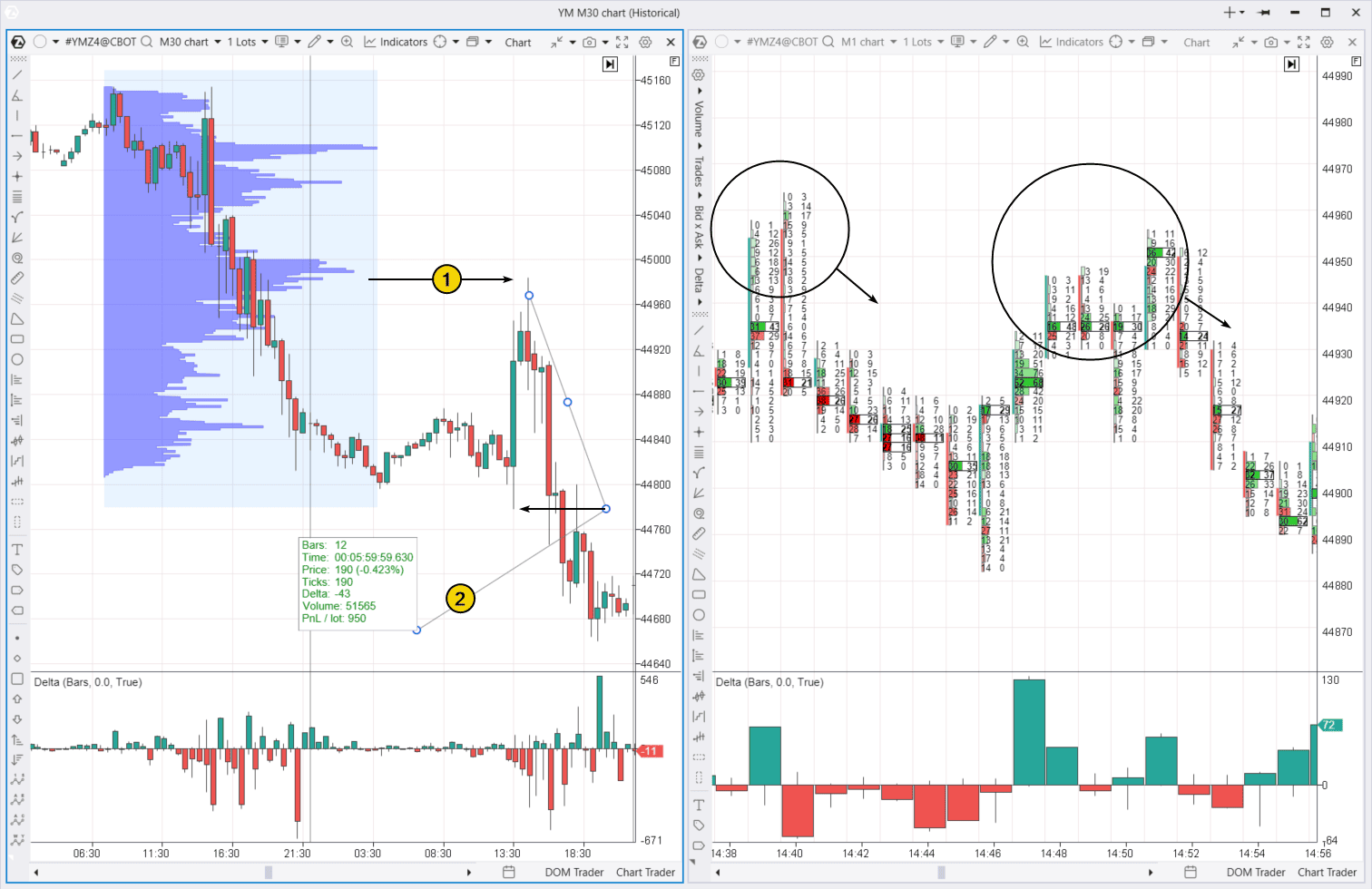
E-mini Dow futures contracts are highly standardized by the exchange. A common contract size for the E-mini Dow is a multiplier of $5 per point of the DJIA. This means that if the DJIA moves by one point, the value of one E-mini Dow contract changes by $5. For instance, if the DJIA moves from 35,000 to 35,001, the contract value increases by $5. The minimum price fluctuation, or “tick,” for E-mini Dow futures is typically 1 point, translating to a $5 change per contract. Contracts are generally available for quarterly expiration cycles (March, June, September, December), allowing traders to choose a timeframe that aligns with their outlook. The nearly 24-hour trading access means that traders can react to global news events and overnight market developments without waiting for the traditional U.S. stock market opening.
The Role of Exchanges
Futures contracts, including E-mini Dow futures, are traded on regulated exchanges like the CME Group (which includes the Chicago Board of Trade, CBOT, and the New York Mercantile Exchange, NYMEX, in addition to the Chicago Mercantile Exchange, CME). These exchanges provide a centralized, transparent marketplace where buyers and sellers can meet. They also act as clearinghouses, guaranteeing the performance of each contract by becoming the buyer to every seller and the seller to every buyer. This crucial function eliminates counterparty risk, ensuring that obligations are met even if one party defaults. The exchange also sets the standardization for contract specifications, trading hours, and margin requirements, fostering an orderly and fair trading environment.
Why Traders and Investors Utilize Dow Jones Futures
Dow Jones futures are not merely a theoretical construct; they are a highly practical and versatile financial instrument employed by a diverse range of market participants for various strategic objectives. Their utility extends beyond simple speculation, encompassing sophisticated risk management techniques and contributing to market efficiency.
Hedging Portfolio Risk
One of the primary uses of Dow Jones futures, particularly by institutional investors and portfolio managers, is hedging. Hedging involves taking an offsetting position in a futures contract to protect an existing portfolio against adverse price movements. For instance, a fund manager holding a diversified portfolio of large-cap U.S. stocks that closely tracks the DJIA might anticipate a short-term market downturn. Instead of selling off individual stocks, which could incur high transaction costs and trigger capital gains taxes, the manager could sell (go short) E-mini Dow futures contracts. If the market indeed falls, the loss in the equity portfolio would be offset, at least partially, by the profits from the short futures position. Conversely, if the market rises, the losses on the short futures position would be offset by gains in the equity portfolio. This allows managers to maintain their long-term equity holdings while temporarily mitigating systematic market risk.
Speculation and Directional Trading
For individual traders and proprietary trading firms, Dow Jones futures offer a powerful tool for speculation and directional trading. Due to their high liquidity and leverage, futures contracts enable traders to profit from anticipated price movements in the DJIA. If a trader believes the Dow is poised for an upward move, they can buy (go long) E-mini Dow futures contracts. If their prediction is correct, they can sell the contracts at a higher price for a profit. Conversely, if they anticipate a decline, they can sell (go short) futures contracts, aiming to buy them back at a lower price. This ability to easily go both long and short, combined with leverage, makes futures particularly attractive for those seeking to capitalize on short-term market trends or intra-day volatility. However, this also means that speculation carries significant risk, as incorrect predictions can lead to substantial losses amplified by leverage.
Price Discovery and Market Sentiment
Dow Jones futures also play a crucial role in price discovery and reflecting market sentiment, especially during non-traditional stock market hours. Since E-mini Dow futures trade almost 24 hours a day, their movements often provide an early indication of how the broader U.S. stock market might open. For example, if significant global news breaks overnight, the reaction will typically be seen first in the futures market. This futures trading activity helps “discover” prices by incorporating all available information and expectations before the regular stock market session begins. Traders and investors closely watch futures prices as a bellwether, using them to gauge pre-market sentiment and to adjust their strategies for the upcoming trading day. This constant interaction between global events and futures prices contributes to overall market efficiency and transparency.
Liquidity and Accessibility
Compared to trading the individual 30 stocks of the DJIA, E-mini Dow futures offer superior liquidity and accessibility. The E-mini Dow contracts are among the most actively traded equity index futures in the world, ensuring that traders can enter and exit positions quickly and efficiently, usually with minimal slippage. This high liquidity makes it easier to manage large positions without significantly impacting the market price. Furthermore, the electronic trading platform (CME Globex) provides broad accessibility, allowing traders from around the globe to participate almost round-the-clock. This combination of liquidity, leverage, and global accessibility makes Dow Jones futures an attractive and efficient instrument for market participants looking to gain exposure to the U.S. large-cap market.
Risks and Considerations in Futures Trading
While Dow Jones futures offer significant opportunities for profit and risk management, they also come with inherent risks that demand careful consideration and a disciplined approach. Engaging in futures trading without a comprehensive understanding of these risks can lead to substantial financial losses.
High Volatility and Leverage
The very mechanisms that make futures contracts attractive—high volatility and leverage—are also their greatest sources of risk. Futures markets can experience rapid and dramatic price swings, often exacerbated by breaking news, economic data releases, or geopolitical events. When coupled with leverage, these price movements can result in amplified gains but also amplified losses. A seemingly small percentage move in the underlying index can translate into a significant percentage loss on the capital initially put down as margin. For instance, if a contract requires 5% margin, a 1% adverse move in the underlying asset equates to a 20% loss on the margin. This means that capital can be eroded very quickly, and in highly volatile periods, losses can even exceed the initial margin amount.
Margin Requirements and Calls
Futures trading requires traders to maintain a certain amount of capital in their account, known as margin. There are typically two types of margin: initial margin (the amount required to open a position) and maintenance margin (the minimum amount that must be kept in the account to hold the position). If the market moves against a trader’s position and the account equity falls below the maintenance margin level, the broker will issue a margin call. This demands that the trader deposit additional funds to bring the account back up to the initial margin level, usually within a short timeframe. Failure to meet a margin call can result in the broker automatically liquidating the trader’s position at market price, potentially locking in significant losses, regardless of whether the market later recovers. Understanding and meticulously managing margin requirements is paramount to surviving in futures markets.
Market Gaps and Slippage
Futures markets, despite their 24-hour nature, are still susceptible to market gaps and slippage, particularly during periods of extreme volatility or between trading sessions. A market gap occurs when the market opens at a price significantly different from its previous closing price, leaving a “gap” on the price chart. This can happen overnight due to unexpected news. Slippage refers to the difference between the expected price of a trade and the price at which the trade is actually executed. While in normal market conditions slippage is minimal, during fast-moving markets or periods of low liquidity, orders (especially stop-loss orders) might be filled at a price worse than intended. This can lead to larger-than-expected losses, as protective stops might not be triggered at the exact desired level, making it challenging to control risk precisely.
The Importance of Risk Management
Given the magnified risks associated with futures trading, a robust and disciplined risk management strategy is not just advisable, but absolutely essential. This includes:
- Stop-Loss Orders: Utilizing stop-loss orders to automatically close a losing position once it reaches a predetermined price point, thereby limiting potential losses. However, as noted above, stops are not always guaranteed to execute at the exact desired price.
- Position Sizing: Carefully determining the appropriate number of contracts to trade based on the account size and risk tolerance. Never risking more than a small percentage of total capital on any single trade.
- Diversification: While futures can be used to hedge, overly concentrated positions in a single futures contract can expose traders to undue risk.
- Continuous Education: The futures market is dynamic. Staying informed about economic indicators, geopolitical events, technical analysis, and evolving trading strategies is crucial.
- Emotional Discipline: Avoiding impulsive decisions driven by fear or greed. Sticking to a predefined trading plan and risk management rules, even when faced with market turbulence.
Conclusion
The Dow Jones Futures Index, predominantly represented by E-mini Dow futures, stands as a critical and powerful instrument in the global financial arena. It offers market participants a highly liquid, leveraged, and accessible means to gain exposure to the performance of the venerable Dow Jones Industrial Average. From institutional investors hedging multi-million dollar portfolios against systemic risk, to individual traders seeking to capitalize on short-term directional movements, these contracts serve a diverse range of strategic objectives. They play an indispensable role in price discovery, providing a constant pulse on market sentiment even outside traditional trading hours.
However, the allure of amplified gains through leverage comes hand-in-hand with equally amplified risks. The potential for rapid capital erosion, margin calls, and execution complexities like market gaps and slippage necessitates a profound respect for the market’s power. Successful engagement with Dow Jones futures is not merely about understanding their mechanics but critically, about mastering the art of disciplined risk management, continuous learning, and emotional control. For those equipped with the knowledge, capital, and a rigorous strategy, Dow Jones futures offer a dynamic and efficient pathway to participate in the ebb and flow of one of the world’s most watched financial benchmarks.
aViewFromTheCave is a participant in the Amazon Services LLC Associates Program, an affiliate advertising program designed to provide a means for sites to earn advertising fees by advertising and linking to Amazon.com. Amazon, the Amazon logo, AmazonSupply, and the AmazonSupply logo are trademarks of Amazon.com, Inc. or its affiliates. As an Amazon Associate we earn affiliate commissions from qualifying purchases.