
Fermat’s Last Theorem stands as one of the most famous problems in the history of mathematics, a deceptively simple statement that defied proof for over three centuries. While its immediate context is pure number theory, the enduring quest for its solution and the underlying mathematical concepts have profound, albeit indirect, connections to the foundational principles of modern technology, particularly in areas like digital security, algorithmic development, and computational mathematics. Understanding this theorem, therefore, offers a unique lens through which to appreciate the intricate relationship between abstract mathematical pursuit and concrete technological advancement.
The Theorem’s Simple Statement, Profound Impact on Mathematical Pursuit
At its core, Fermat’s Last Theorem is an assertion in number theory, a branch of mathematics concerned with the properties and relationships of integers. Pierre de Fermat, a 17th-century French mathematician, famously jotted down this statement in the margin of a copy of Diophantus’s Arithmetica around 1637.
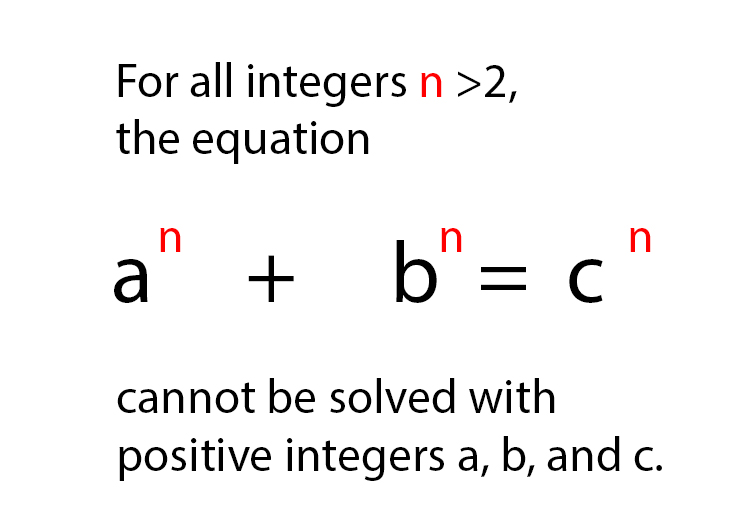
The theorem states that no three positive integers a, b, and c can satisfy the equation aⁿ + bⁿ = cⁿ for any integer value of n greater than 2.
A Historical Challenge in Number Theory
To put this into perspective, for n = 2, the equation a² + b² = c² describes Pythagorean triples (like 3² + 4² = 5² or 5² + 12² = 13²), which have infinitely many integer solutions. Fermat’s claim was that as soon as the exponent n increases to 3 or more, no such integer solutions exist. He famously added a note in the margin: “I have discovered a truly marvelous proof of this, which this margin is too narrow to contain.” This tantalizing claim, coupled with the absence of his proof, launched a massive intellectual undertaking that spanned generations of mathematicians.
For centuries, mathematicians tirelessly attempted to prove or disprove the theorem. They tackled specific cases for n (like n = 3, 4, 5), each proof demanding new techniques and insights. This relentless pursuit, while not directly yielding the proof of Fermat’s Last Theorem itself, led to the development of entirely new mathematical fields and tools. Concepts like ideal numbers, elliptic curves, and modular forms, which would later become crucial for cryptographic algorithms and advanced computational models, saw significant development partly in response to the challenge posed by Fermat. The theorem became a crucible for mathematical innovation, pushing the boundaries of what was conceivable in number theory and algebra.
The Computational Dimension: Exploring and Proving Complex Mathematical Statements
While Fermat’s Last Theorem predates the digital age by centuries, the quest to prove it, and similar number theoretic problems, highlights the evolving role of computation in mathematical discovery and verification. The intricate nature of number theory problems often involves searching for patterns, testing hypotheses, and verifying complex calculations—tasks where computational power has become indispensable.
Early Explorations and Algorithmic Thinking
Even before electronic computers, the efforts to verify or refute Fermat’s Last Theorem for specific exponents involved extensive, painstaking calculations. These efforts, carried out by hand, effectively represented early forms of algorithmic thinking. Mathematicians devised systematic procedures to test integer combinations or to search for counterexamples. The logical steps involved in these manual computations laid the groundwork for how we approach problem-solving in computing today: breaking down a complex problem into smaller, manageable steps, defining clear rules for each step, and repeating processes.
For instance, the proof for n = 4 was given by Fermat himself using his method of infinite descent, a proof technique that is inherently algorithmic in its iterative nature. Euler later proved the case for n = 3. Each specific case required ingenious methods that, in essence, were specialized algorithms for integer manipulation and verification.
Modern Computational Aids in Mathematical Research
With the advent of computers, the landscape of mathematical research, particularly in number theory, transformed dramatically. While Andrew Wiles’s eventual proof of Fermat’s Last Theorem in 1994-1995 was conceptual and highly abstract, relying on deep connections between elliptic curves and modular forms (conjectured by Taniyama-Shimura-Weil), computational tools played a significant supporting role in related research.
Computers are routinely used today to:
- Test hypotheses: Verify specific instances of mathematical conjectures for large numbers, providing empirical evidence or counterexamples.
- Generate data: Explore properties of mathematical objects (like prime numbers or elliptic curves) that can then inspire new theories.
- Assist in complex calculations: Perform tedious algebraic manipulations or high-precision arithmetic required in certain proofs or investigations.
- Formal verification: In some cases, automated theorem provers and proof assistants are used to formally verify steps in complex mathematical proofs, ensuring their correctness with a level of rigor that human error might compromise.

The methods developed to search for large prime numbers, or to analyze the properties of specific number sets, are direct applications of computational mathematics rooted in number theory. These techniques, while not directly proving Fermat’s Last Theorem, benefited immensely from the intellectual landscape cultivated by such challenging problems.
Beyond Pure Math: Number Theory’s Role in Digital Security
Perhaps the most tangible connection between the abstract world of number theory, exemplified by problems like Fermat’s Last Theorem, and the practical domain of technology lies in digital security. The very foundations of modern cryptography are built upon the properties of large prime numbers and other number theoretic concepts.
Cryptography and the Search for Prime Numbers
Public-key cryptography, the backbone of secure internet communication (e.g., HTTPS, secure email, digital signatures), relies heavily on the computational difficulty of certain number-theoretic problems. For example, the RSA algorithm, one of the earliest and most widely used public-key cryptosystems, derives its security from the practical impossibility of factoring extremely large composite numbers into their prime factors within a reasonable timeframe.
The underlying mathematics involves:
- Prime Number Generation: Cryptographic systems require the generation of very large prime numbers, a task that relies on sophisticated algorithms and probabilistic tests (like the Miller-Rabin test).
- Modular Arithmetic: Operations are performed within a finite field of integers modulo n, where n is a product of large primes. This arithmetic is a direct application of number theory.
- Euler’s Totient Function: This function, which counts the number of positive integers less than or equal to n that are relatively prime to n, is fundamental to key generation and encryption/decryption processes in RSA.
While Fermat’s Last Theorem itself isn’t directly used in these algorithms, the deep study of integers, primes, congruences, and modular arithmetic—all stimulated and advanced by problems like Fermat’s—provided the essential toolkit for cryptographers to design secure communication protocols. The intellectual rigor applied to understanding number-theoretic relationships has yielded practical methods for protecting digital data.
The Theoretical Foundations of Secure Computing
The ongoing pursuit of mathematical understanding, exemplified by the centuries-long quest to solve Fermat’s Last Theorem, continually enriches the theoretical underpinnings of computer science. The abstract structures and reasoning methods developed in number theory contribute to a robust theoretical framework for secure computing.
Beyond specific algorithms, the entire paradigm of computational complexity, which evaluates how difficult it is to solve certain problems, draws heavily from theoretical mathematics. The ‘hard problems’ upon which cryptography is based (e.g., integer factorization, discrete logarithm) are problems whose computational difficulty has been extensively studied through a number-theoretic lens. Understanding why certain problems are hard for computers is as crucial as understanding how to solve others efficiently. This knowledge directly informs the design of secure protocols and the assessment of their resilience against attack.
The Legacy of a Solved Problem: Driving Innovation
The ultimate proof of Fermat’s Last Theorem by Andrew Wiles in the 1990s was not just a triumph of human intellect but also a testament to the cumulative nature of mathematical knowledge. Wiles’s proof linked number theory with highly abstract areas of geometry and analysis, demonstrating deep connections across disparate mathematical fields. This interdisciplinary approach is increasingly mirrored in modern technological innovation.
Inspiring Algorithmic Development
The methods developed over centuries to tackle Fermat’s Last Theorem, from modular arithmetic to the study of specific number classes, have directly influenced the development of algorithms used in various computing contexts. Algorithms for primality testing, integer factorization, and solving Diophantine equations (integer equations) are all products of number theory research. These algorithms are not just academic exercises; they are fundamental components of:
- Data compression and error correction: Number theory aids in designing efficient codes.
- Random number generation: Crucial for simulations, cryptography, and various computational processes.
- Computational Number Theory Libraries: Software libraries for advanced mathematical computations often contain highly optimized algorithms derived from centuries of number theory research.

Fostering Interdisciplinary Collaboration
Wiles’s proof itself was a monumental interdisciplinary feat, drawing on work from many areas of mathematics. This mirrors the collaborative and interdisciplinary nature of modern technological advancement. Solving grand challenges, whether in mathematics or technology, often requires insights from multiple fields. The legacy of Fermat’s Last Theorem thus extends beyond its specific statement to inspire a continuous push for deeper understanding and connections, which inevitably benefits the theoretical foundations upon which technology is built. It reminds us that even the most abstract mathematical inquiries can, over time, provide the intellectual bedrock for the most practical and impactful technological innovations.
aViewFromTheCave is a participant in the Amazon Services LLC Associates Program, an affiliate advertising program designed to provide a means for sites to earn advertising fees by advertising and linking to Amazon.com. Amazon, the Amazon logo, AmazonSupply, and the AmazonSupply logo are trademarks of Amazon.com, Inc. or its affiliates. As an Amazon Associate we earn affiliate commissions from qualifying purchases.